If your home was built before 1980 or if you’re living in one of Riverside’s many mobile homes there’s a real chance asbestos is somewhere inside it. We provide licensed asbestos abatement in Riverside, NY, so you know exactly what you’re dealing with before anyone picks up a tool.
I needed a professional consultation explanation of procedure for safe removal of Asbestos in my apartment complex. Without having an account yet, I was very impressed with the caring, knowledgeable and generous advice offered by Jessica, and will look forward to doing business in the future. Thank you so much! I feel much more informed about a sometimes scary endeavor. Peace. Nancy Silva Mineola, NY.
Mia Munoz
Used this company to clean up some water flood in my house. They were fast and easy to work with.very professional, Would recommend to anyone!
Nini Valle
Great company, had a flood and they responded quickly and efficiently. Billed my insurance company directly. I highly recommend this company!
joe colapietro, jr
I had pipe freeze in my basement right before a snow storm and they made to within an hour to help start the clean up process. They we by our side throughout the entire process and even helped with the insurance company. They did such a great job with the cleanup, repair, remidiation, I contracted them to perform the repairs and finishes in the basement. They came with enough manpower and material to get the job done. Leo and Jessica were nothing but a pleasure to deal with!!
Cristian Arredondo c
I had some water damage in my home and Green Island was able to take care of my issue quickly and effectively. I am very pleased with the work they did. They responded quickly and were very professional.
Michael M
Outstanding service! From the office to the field crew everyone was friendly, helpful and responsive. I highly recommend Green Island Group.
You stop guessing. That’s the first thing. When you’re living in a home that was built in the 1950s or 1960s or a mobile home that’s been sitting on a Riverside lot for decades you don’t always know what’s inside the walls, under the floor, or above the ceiling. The uncertainty alone is exhausting, and the stakes are too high to leave it unresolved.
Riverside has one of the highest concentrations of mobile homes on Long Island, making up roughly 44% of the hamlet’s housing units. Mobile homes built before 1980 commonly contain asbestos in ceiling panels, wall boards, duct insulation, and floor tile backing materials that look completely normal until they’re disturbed. Once you have a professional survey and a licensed abatement completed, you know your home is clear. You can renovate, sell, or simply breathe easier.
The revitalization happening along Flanders Road is also pushing renovation activity throughout Riverside. If you’re doing any kind of work on an older property even something as routine as pulling up old flooring or replacing a popcorn ceiling New York State requires that asbestos be assessed and addressed before the work begins. Getting that done right the first time keeps your project moving and keeps you out of a regulatory problem you didn’t see coming.
We are a Long Island-based environmental services company specializing in asbestos abatement, removal, and remediation. We work across Suffolk County, including Riverside and the surrounding East End communities Hampton Bays, Flanders, Northampton, and Riverhead. This isn’t a franchise operation routing your call through a national center. We’re a local team that knows the building stock in this part of the county.
We’re fully licensed by the New York State Department of Labor Asbestos Control Bureau and operate in compliance with Industrial Code Rule 56 on every job. That means certified workers, proper containment, air monitoring throughout the process, and documentation you can actually use whether you’re closing a sale, satisfying a lender, or moving forward with a renovation.
The homes in and around Riverside from older single-family properties near the Peconic River to mobile homes throughout the hamlet are exactly the kind of properties we’ve been working in for years. We know where asbestos tends to hide in these structures, and we know how to remove it safely.
No Surprises Here's What the Job Actually Looks Like
It starts with an inspection. Before anything is removed, a certified inspector surveys your property and collects samples from materials that are likely to contain asbestos floor tiles, ceiling texture, pipe insulation, duct wrap, adhesives, and more. The samples go to an accredited lab, and you get a clear report of what was found and where.
If asbestos-containing materials are identified, we put together a scope of work that outlines exactly what needs to be abated, how the containment will be set up, and what the process will look like from start to finish. Under New York State’s Industrial Code Rule 56, all of this work requires licensed contractors and certified workers and we handle that compliance entirely on your end. You don’t need to navigate the paperwork with the NYS Department of Labor. That’s our job.
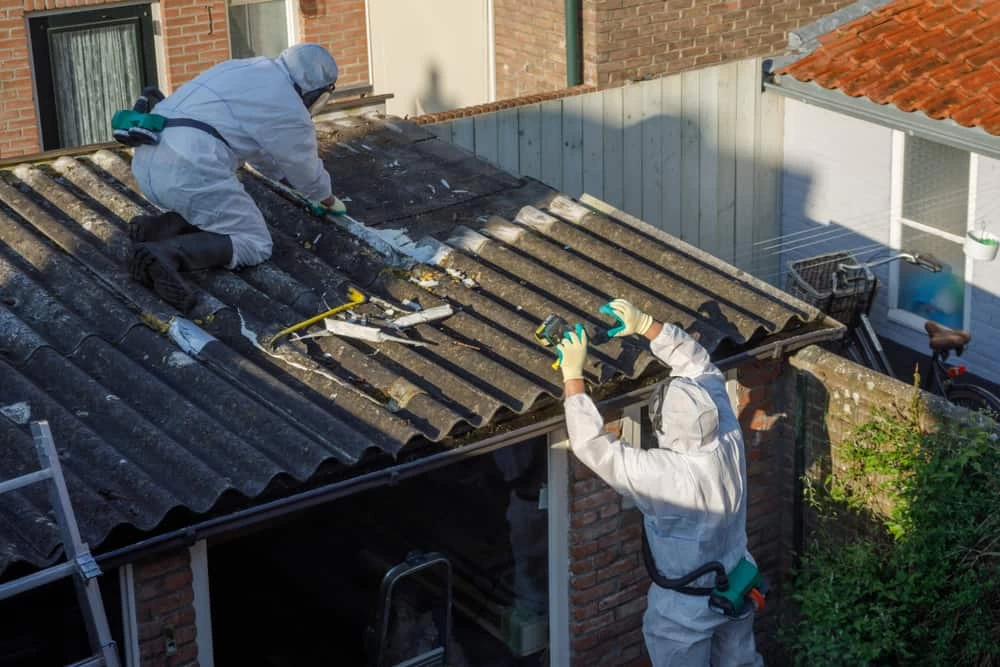
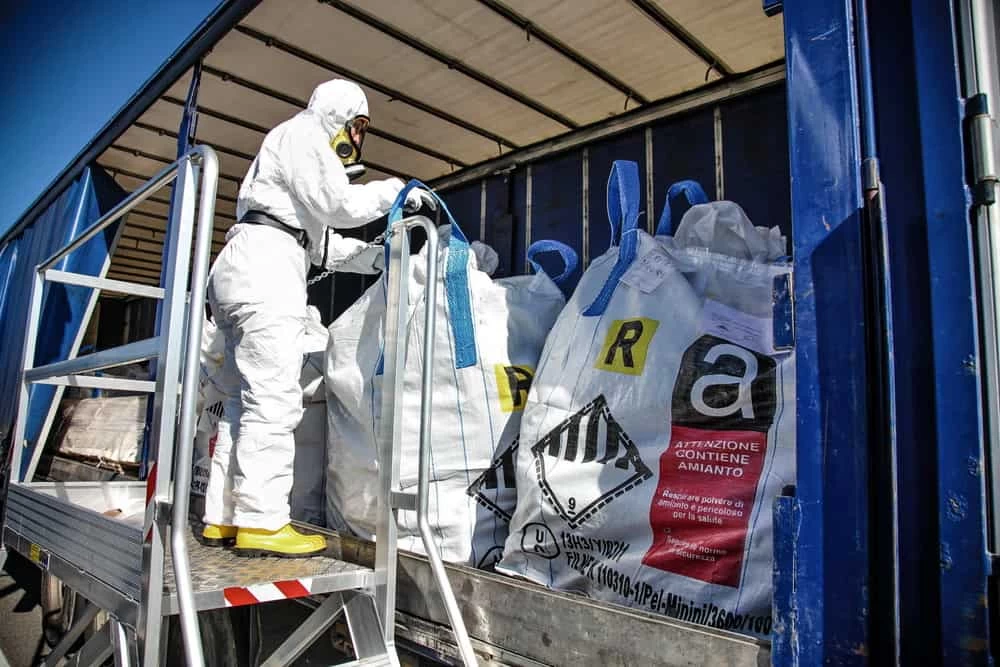
The abatement itself involves sealing off the work area, using negative air pressure and HEPA filtration to prevent fiber migration, and removing the materials using wet methods to keep fibers from becoming airborne. Once the work is complete, air clearance testing is performed before containment comes down. All asbestos-containing waste is packaged, labeled, and transported to a licensed disposal facility in accordance with NYSDEC regulations which matters especially in Riverside, given its location within the Peconic Estuary watershed. When it’s done, you receive full project documentation.
Asbestos Tile and Popcorn Ceiling Removal Riverside NY
What We Handle and Why It Matters in Riverside Specifically
Asbestos abatement isn’t one-size-fits-all, and in Riverside, the range of materials we encounter reflects the age and variety of the housing stock. Asbestos tile removal is one of the most common jobs we do here vinyl floor tiles and the adhesive mastic beneath them were standard in homes and mobile homes built through the 1970s, and they’re still in place in a lot of Riverside properties that haven’t been fully renovated. Asbestos popcorn ceiling removal is another frequent request, particularly from homeowners preparing to sell or update a home that hasn’t been touched since the 1960s or 1970s.
Beyond floors and ceilings, we also handle pipe and boiler insulation, duct wrap, roofing materials, textured wall coatings, and siding. If you’re involved in a demolition or major renovation especially on a property within the Riverside Brownfield Opportunity Area a full asbestos survey is legally required before any structural work begins, and we can coordinate that from the first call.
For Riverside’s mobile home residents specifically, we want to be direct: mobile homes built before 1978 are among the highest-risk structures for asbestos-containing materials. If you’re renovating, selling, or dealing with a deteriorating unit, don’t assume it’s clean. A professional inspection is a straightforward step that takes the uncertainty off the table entirely and protects anyone who enters that space.
Do I need an asbestos inspection before renovating my Riverside, NY home?
Yes and in New York State, it’s not optional. Under Industrial Code Rule 56, any demolition, renovation, or repair work that could disturb building materials requires a professional asbestos survey before work begins. This applies regardless of how small the project is or how old the building is. The rule exists because asbestos fibers are invisible and odorless you can’t tell by looking at a floor tile or ceiling texture whether it contains asbestos.
In Riverside specifically, this requirement is especially relevant given the age of the housing stock and the active renovation activity happening throughout the hamlet. If you’re pulling up flooring, opening walls, replacing insulation, or doing any demo work on a home built before 1980, get the inspection done first. It protects your health, keeps your contractor legally covered, and prevents a stop-work order that could derail your timeline.
Is asbestos common in mobile homes in Riverside, NY?
It’s more common than most people expect. Mobile homes built before 1978 to 1980 the period during which federal asbestos regulations began to take effect frequently contain asbestos in ceiling and wall panels, floor tile systems and their backing adhesives, duct insulation, and roofing materials. These materials were standard in manufactured housing during that era, and many of them are still in place in mobile homes that haven’t undergone major renovation.
With approximately 44% of Riverside’s housing units being mobile homes, this is a real and widespread concern in the hamlet. If your mobile home is from that era and you’re planning any interior work, a professional inspection is the right first step. Even if the materials are in good condition and not currently releasing fibers, disturbance during renovation can change that quickly. We can assess what’s there and tell you exactly what needs to be addressed before work proceeds.
How much does asbestos abatement typically cost for a home in Suffolk County?
The cost depends primarily on what materials are involved, how much of it needs to be removed, and how accessible the work area is. For a straightforward asbestos tile removal in a single room, costs typically start in the range of $2,000 to $4,000. A more extensive project such as pipe insulation removal, a full popcorn ceiling abatement across multiple rooms, or a whole-home survey with multi-material abatement can range from $5,000 to $15,000 or more.
In Riverside, the variety of housing types affects the range significantly. Mobile home abatement projects often involve confined spaces and non-standard materials, which can affect both the time and the approach. Single-family homes from the mid-20th century may have asbestos in multiple locations that aren’t immediately visible. The most accurate way to get a real number is to have a licensed inspector assess the property first that inspection gives you a clear picture of what’s actually there, and a written estimate follows from that.
What happens to the asbestos after it's removed from my property?
All asbestos-containing waste is regulated from the moment it leaves your property to the moment it reaches a licensed disposal facility. Under NYSDEC regulations specifically 6 NYCRR 360 and 364 asbestos waste must be double-bagged in approved packaging, properly labeled, and transported by a licensed waste hauler to an approved facility. It cannot go into a standard dumpster or be disposed of through regular construction debris channels.
This matters especially in Riverside, where the hamlet sits within the Peconic Estuary watershed. The Peconic River runs along the northern boundary of the hamlet, and improper disposal of hazardous materials in this area carries real environmental consequences and real regulatory exposure for the property owner. We handle all waste packaging, labeling, transport coordination, and disposal documentation as part of the abatement process. You receive records confirming that everything was handled in compliance with state law.
Can I remove asbestos myself in New York State, or does it have to be a licensed contractor?
New York State law is clear on this. Any asbestos abatement project beyond a very limited scope and in most renovation or demolition contexts must be performed by a contractor licensed by the NYS Department of Labor Asbestos Control Bureau, with certified workers on-site throughout the job. Homeowners are technically permitted to bring small, double-bagged quantities of asbestos-containing material to certain transfer facilities, but that exception is narrow and does not apply to renovation projects where materials are being disturbed.
Attempting to remove asbestos-containing materials without proper containment, air monitoring, and certified personnel puts you, your family, and anyone else in the building at risk of fiber exposure. It also puts you at risk of regulatory penalties and can create liability issues if you’re selling the property. The cost of doing it wrong in health terms, legal terms, and remediation terms consistently exceeds the cost of hiring a licensed contractor from the start.
How do I know if my Riverside home has asbestos before I start any work?
The only way to know for certain is to have samples collected and tested by an accredited laboratory. Visual inspection alone cannot confirm or rule out asbestos many asbestos-containing materials look identical to materials that don’t contain it. A certified asbestos inspector will identify suspect materials throughout your property, collect samples using proper protocols, and submit them to a lab for analysis. You get a written report with the results and a clear breakdown of what was found and where.
In Riverside, the combination of older construction and a high proportion of mobile home housing means the probability of encountering asbestos-containing materials is meaningfully higher than in newer communities. If your home was built or last renovated before 1980, the inspection is worth doing before any renovation work begins not after you’ve already disturbed something. It’s a straightforward process, it gives you a defensible record, and it removes the guesswork from a decision that has real health consequences.