When asbestos turns up mid-renovation in a home off Route 207, you don’t need a sales pitch you need a licensed crew that knows exactly what to do next. We’re NYS DOL-certified and ready around the clock.
I needed a professional consultation explanation of procedure for safe removal of Asbestos in my apartment complex. Without having an account yet, I was very impressed with the caring, knowledgeable and generous advice offered by Jessica, and will look forward to doing business in the future. Thank you so much! I feel much more informed about a sometimes scary endeavor. Peace. Nancy Silva Mineola, NY.
Mia Munoz
Used this company to clean up some water flood in my house. They were fast and easy to work with.very professional, Would recommend to anyone!
Nini Valle
Great company, had a flood and they responded quickly and efficiently. Billed my insurance company directly. I highly recommend this company!
joe colapietro, jr
I had pipe freeze in my basement right before a snow storm and they made to within an hour to help start the clean up process. They we by our side throughout the entire process and even helped with the insurance company. They did such a great job with the cleanup, repair, remidiation, I contracted them to perform the repairs and finishes in the basement. They came with enough manpower and material to get the job done. Leo and Jessica were nothing but a pleasure to deal with!!
Cristian Arredondo c
I had some water damage in my home and Green Island was able to take care of my issue quickly and effectively. I am very pleased with the work they did. They responded quickly and were very professional.
Michael M
Outstanding service! From the office to the field crew everyone was friendly, helpful and responsive. I highly recommend Green Island Group.
Most asbestos discoveries in Rock Tavern don’t happen during a planned inspection. They happen when a contractor pulls up old vinyl tile in a 1970s split-level, or when someone starts cutting into a basement ceiling and the work stops cold. That moment is stressful, and the last thing you need is to spend hours figuring out who’s actually licensed to handle it.
When the job is done right, you get more than a clean space. You get a written clearance certificate from an independent industrial hygienist a third party whose only job is to confirm the air is clean before anyone moves back in. That document matters whether you’re staying put, finishing a renovation, or trying to close a real estate deal in the New Windsor market.
Rock Tavern’s housing stock spans several decades of construction, and a lot of those homes especially those built between the late 1950s and early 1990s contain materials that were completely standard at the time. Popcorn ceilings, pipe insulation, floor tiles, joint compound. None of that makes your home unsafe if it’s left undisturbed. But the moment renovation starts, the rules change. Knowing what you’re dealing with, and having a crew that handles it properly, is what turns a stressful discovery into a resolved problem.
We’ve been doing this work for over 12 years. Not as a franchise, not as a national brand running a template operation as an independently owned company that has built our reputation on doing the job correctly and being able to prove it.
The credentials here aren’t self-reported. We hold the NYS Department of Labor Asbestos Contractor License required under 12 NYCRR Part 56 the specific credential that makes asbestos abatement legal in New York State, including right here in Orange County where Rock Tavern is located. Every technician on our crew holds individual NYS Asbestos Handler Certification. These aren’t internal badges. They’re state-issued, publicly verifiable, and renewed through ongoing training.
Beyond licensing, we’ve completed work for NYS OGS, DASNY, and county governments that vet every contractor before a contract is signed. Those institutions don’t hire on faith. For a Rock Tavern homeowner who wants to know they’re not taking a risk on an unknown crew, that track record speaks for itself.
It starts with a call any time of day or night, because asbestos discoveries don’t wait for business hours. If your contractor stopped work at 4 p.m. on a Friday and told you there’s something in the floor, you can reach us the same evening. From there, a certified industrial hygienist comes in to test and confirm what you’re dealing with before any removal work begins. You don’t want a crew pulling material based on a visual guess.
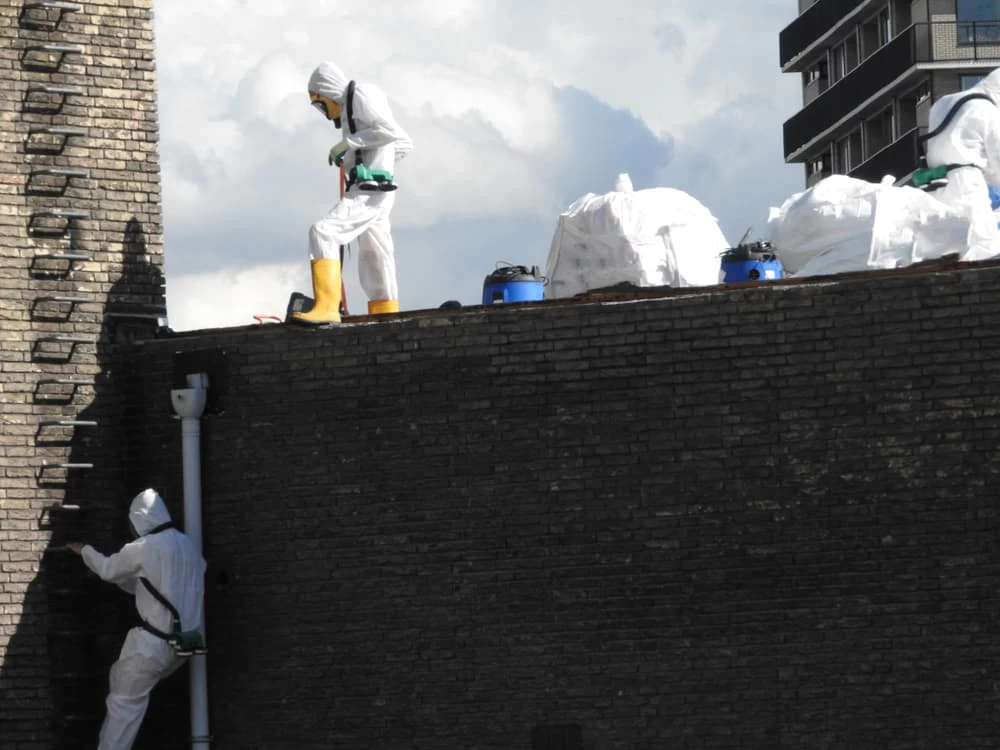
Once the scope is confirmed, the work area gets sealed off with proper containment negative air pressure systems, physical barriers, full protective protocol under NYS Code Rule 56. This isn’t a shortcut process. It’s a regulated one, and that regulation exists for good reason. In Rock Tavern, where many homes were built during the peak decades of asbestos use and have been renovated multiple times since, the actual scope of the problem sometimes reveals itself once containment is in place. The process accounts for that.
After removal, a separate independent industrial hygienist not someone on our payroll performs air monitoring and issues the clearance certificate. That document is what your general contractor, your real estate attorney, and the Town of New Windsor need to see before work resumes or a sale closes. Everything is documented, everything is compliant, and nothing gets handed off incomplete.
Asbestos doesn’t show up in just one place. In older Rock Tavern homes especially those along the established residential streets off Route 207 and in neighborhoods that predate the Aerie Preserve development it tends to show up in several places at once. Vinyl asbestos floor tiles, particularly the 9×9 and 12×12 inch formats common in mid-century construction. Popcorn acoustic ceiling finishes. Pipe and boiler insulation in basements. Roofing felt. Joint compound behind drywall. We handle all of it under one licensed contractor, which means you’re not coordinating between multiple crews or waiting on separate schedules.
For homeowners in Brittany Terrace or in properties near the Stone Castle Road corridor, the material profile can be different manufactured housing and light industrial structures have their own asbestos footprint, and the removal process adapts accordingly. The scope is always confirmed before work begins, so you know exactly what’s being removed and why.
We also handle the situations that combine asbestos with other hazards mold, lead paint, water damage from a spring flood or a burst pipe. Orange County’s Hudson Valley winters and wet springs make multi-hazard scenarios genuinely common. Having one licensed crew manage the full scope means faster resolution and one point of accountability from start to finish. We offer financing up to $200,000 at 0% APR for qualifying projects, and direct insurance billing is available when the work is connected to a covered loss.
Does asbestos abatement in Rock Tavern require a special state license?
Yes and this is one of the most important things to verify before hiring anyone. New York State requires a specific NYS Department of Labor Asbestos Contractor License under 12 NYCRR Part 56 to legally perform asbestos abatement anywhere in the state, including Rock Tavern and the surrounding New Windsor area. This is a separate credential from a general contractor license, and most general contractors don’t hold it. Individual workers also need to carry NYS Asbestos Handler Certification, which requires a minimum of 32 hours of initial training plus annual refresher courses.
The NYS DOL Asbestos Control Bureau actively enforces these requirements statewide. If you hire someone without the proper license and the work is discovered during a permit inspection or a real estate transaction, you could be looking at serious complications no valid clearance documentation, potential fines, and work that may need to be redone by a licensed contractor anyway. Our license is publicly verifiable on the NYS DOL website. You shouldn’t have to take anyone’s word for it.
How do I know if my Rock Tavern home actually contains asbestos materials?
You can’t tell by looking. Asbestos-containing materials were used in dozens of standard building products, and many of them look identical to non-asbestos versions. The only way to confirm is through laboratory testing by a certified industrial hygienist. If your home was built or significantly renovated between the late 1950s and early 1990s a very common construction window for homes in the Rock Tavern and New Windsor area there’s a reasonable chance asbestos-containing materials are present somewhere.
The most common places they show up in homes of that era are 9×9 and 12×12 vinyl floor tiles, popcorn acoustic ceiling texture, pipe and boiler insulation in basements, roofing felt, and joint compound. None of these are automatically dangerous if they’re in good condition and left undisturbed. The risk comes when renovation work disturbs them cutting, sanding, demolition, or even aggressive scrubbing can release fibers. If you’re planning any renovation work in Rock Tavern, getting a professional assessment before the first tool comes out is the right move.
What does asbestos abatement actually cost for an Orange County home?
The honest answer is that it depends on what’s being removed and how much of it there is. For asbestos popcorn ceiling removal, typical pricing in the New York metro area runs roughly $3 to $8 per square foot. Vinyl asbestos tile removal generally falls in the $5 to $15 per square foot range. Pipe and boiler insulation removal is often priced per linear foot, typically $25 to $75 depending on accessibility and condition. A single-room project might come in under $3,000. A full basement or whole-house scope can reach $15,000 to $30,000 or more.
The scope gets confirmed before any work begins, so you’ll have a clear number before anything is committed. For projects where the cost is a real concern especially when asbestos turns up unexpectedly mid-renovation we offer 0% APR financing up to $200,000 for qualifying projects. If the abatement is tied to a storm, flood, or fire event, direct insurance billing is also available, which takes the claims navigation off your plate entirely.
How long does asbestos removal take, and can my family stay home during the work?
That depends on the size of the project and how many materials are being addressed. A single-room tile or ceiling removal can often be completed in one to two days. Larger scopes a full basement, multiple rooms, or combined asbestos and mold remediation can take several days to a week. You’ll know the timeline before work starts.
As for staying home: in most cases, the affected area is sealed off with containment barriers and negative air pressure systems, which are designed to prevent fibers from migrating into the rest of the house. Whether your family can remain in the home during abatement depends on the location of the work and the size of the containment zone. In Rock Tavern, where the average household includes more than three people many of them children this is one of the first questions families ask, and it’s a fair one. We’ll give you a straight answer based on your specific project, not a blanket reassurance.
What is a clearance certificate, and why do I need one after asbestos removal?
A clearance certificate is a written document issued by an independent industrial hygienist someone who is not affiliated with the abatement contractor confirming that post-removal air monitoring shows fiber levels are within safe limits. Under New York State regulations, this step is required before an abated space can be legally reoccupied. It’s not optional, and it’s not something the abatement crew can issue for their own work. The independence is the point.
For Rock Tavern homeowners going through a real estate transaction, this document is often what the buyer’s attorney, lender, or home inspector needs to see before a closing can move forward. If you’re pulling renovation permits through the Town of New Windsor, the clearance documentation may also be required before work in the affected area can resume. We coordinate the independent hygienist as part of every project, so you’re not left tracking down that piece on your own after the crew leaves.
Can spring flooding or water damage in my basement disturb asbestos materials?
It can, and this is a scenario that comes up more than most Rock Tavern homeowners expect. Orange County’s Hudson Valley location means wet springs, heavy snowmelt, and periodic basement flooding are a real part of life for a lot of older homes in this area. When water gets into a basement that has vinyl asbestos floor tiles, pipe insulation, or older mechanical systems, it can soften, loosen, or physically disturb materials that were previously stable. A tile that was sealed and intact before a flood may be lifted, cracked, or degraded afterward.
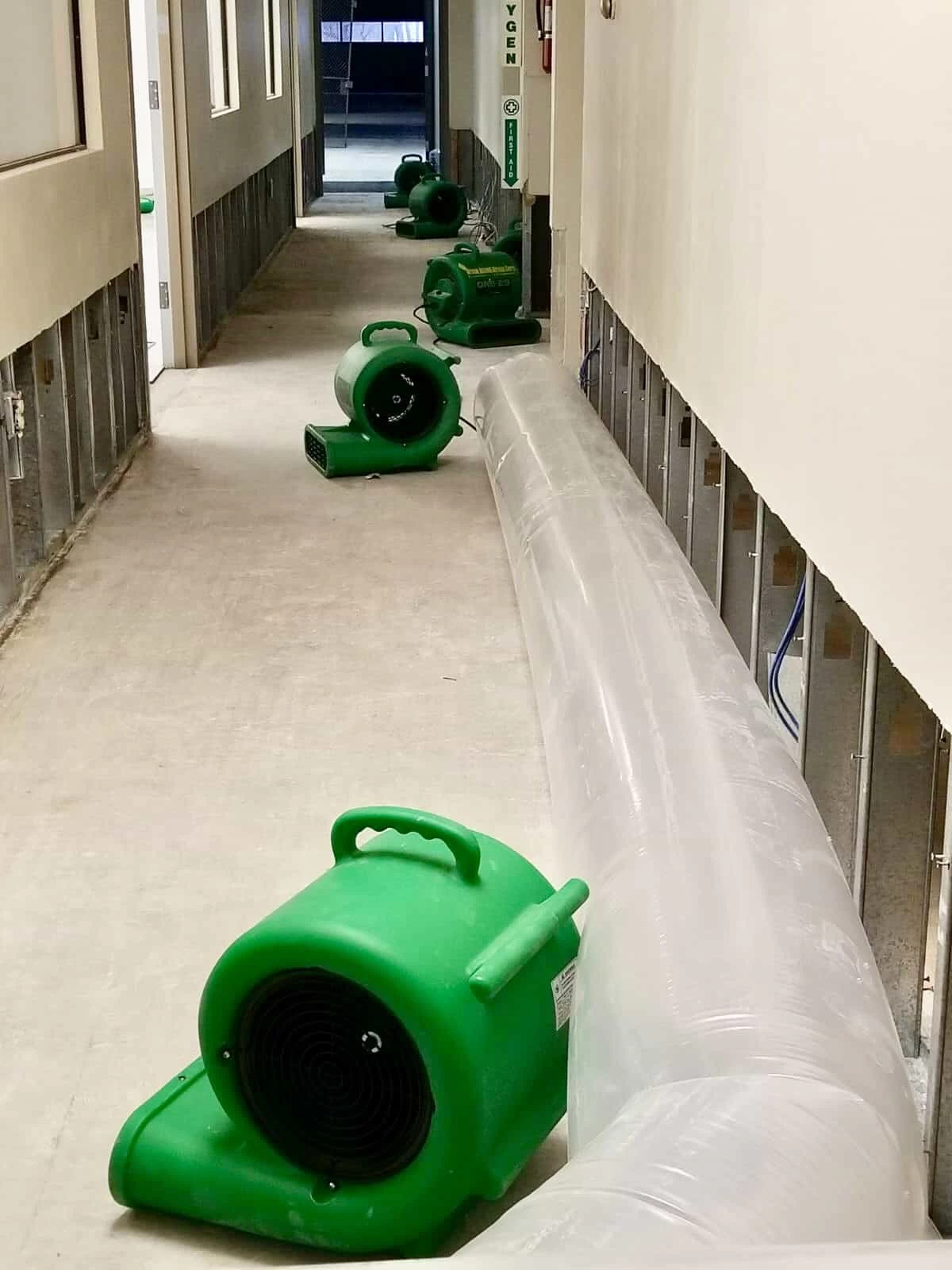
The problem is that water damage and asbestos abatement typically get treated as separate issues, which means separate contractors, separate schedules, and a longer timeline before your space is usable again. We handle both under one roof asbestos abatement, mold remediation, and water damage restoration are all within scope. If your basement took on water this spring and you’re not sure what you’re dealing with, a professional assessment is the right first step before any cleanup or renovation work begins.