Your 1960s Roe Park Home Deserves a Clean Bill of Health
Most homes in Roe Park were built right in the middle of peak asbestos use and if yours hasn’t been tested, you may not know what’s hiding behind the walls, under the floors, or wrapped around the pipes. We handle asbestos abatement from inspection to air clearance, so you’re not left guessing.
I needed a professional consultation explanation of procedure for safe removal of Asbestos in my apartment complex. Without having an account yet, I was very impressed with the caring, knowledgeable and generous advice offered by Jessica, and will look forward to doing business in the future. Thank you so much! I feel much more informed about a sometimes scary endeavor. Peace. Nancy Silva Mineola, NY.
Mia Munoz
Used this company to clean up some water flood in my house. They were fast and easy to work with.very professional, Would recommend to anyone!
Nini Valle
Great company, had a flood and they responded quickly and efficiently. Billed my insurance company directly. I highly recommend this company!
joe colapietro, jr
I had pipe freeze in my basement right before a snow storm and they made to within an hour to help start the clean up process. They we by our side throughout the entire process and even helped with the insurance company. They did such a great job with the cleanup, repair, remidiation, I contracted them to perform the repairs and finishes in the basement. They came with enough manpower and material to get the job done. Leo and Jessica were nothing but a pleasure to deal with!!
Cristian Arredondo c
I had some water damage in my home and Green Island was able to take care of my issue quickly and effectively. I am very pleased with the work they did. They responded quickly and were very professional.
Michael M
Outstanding service! From the office to the field crew everyone was friendly, helpful and responsive. I highly recommend Green Island Group.
The renovation you’ve been planning doesn’t have to stay on hold. Once asbestos-containing materials are properly identified, removed, and cleared, your contractor can move forward without liability hanging over the project. That’s the most immediate and practical outcome your timeline gets back on track.
For homeowners in Roe Park specifically, the housing stock tells the story. The median construction year in this area is 1968, and roughly half of all homes in Roe Park were built before 1960. That means floor tiles, pipe insulation, popcorn ceilings, and joint compound installed during that era have had decades to age, crack, and in some cases become friable. Abatement doesn’t just remove a material it removes a slow-building risk that worsens every time that material is disturbed.
There’s also the real estate angle. Homes in Roe Park move fast some going pending in under three weeks. If you’re selling, clearance documentation from a licensed contractor is what keeps an asbestos disclosure from derailing your deal or handing a buyer leverage to renegotiate. That paperwork is an asset, and it travels with the property.
More Than 5,000 Projects. Every License That Matters.
Green Island Group is a full-service environmental remediation contractor serving New York City, Long Island, and the Westchester County communities in between including Roe Park and the broader surrounding area. We hold a NYS Department of Labor Asbestos Handling License, NYC DEP contractor licensing, EPA certification, and NYS DEC compliance for disposal. That’s not a list of marketing badges those are the credentials that determine whether abatement work is legal, documented, and defensible.
Beyond licensing, we’re M/WBE certified by the NYS Office of General Services and an approved contractor for New York State agencies a vetting standard that goes well beyond what a basic license requires. With more than 5,000 completed projects across the metro area, our team has worked in homes that look exactly like the ones throughout Roe Park. The experience shows in how we scope a job, not just how we finish one.
From First Call to Final Clearance Here's the Honest Walkthrough
It starts with a free on-site inspection. A licensed inspector comes to your Roe Park home, assesses the materials in question, and gives you a real scope not a phone estimate based on square footage. For a 1960s home in this area, that typically means checking floor tiles, ceiling texture, pipe and duct insulation, joint compound, and sometimes roofing materials. You’ll know exactly what’s there and what, if anything, needs to come out.
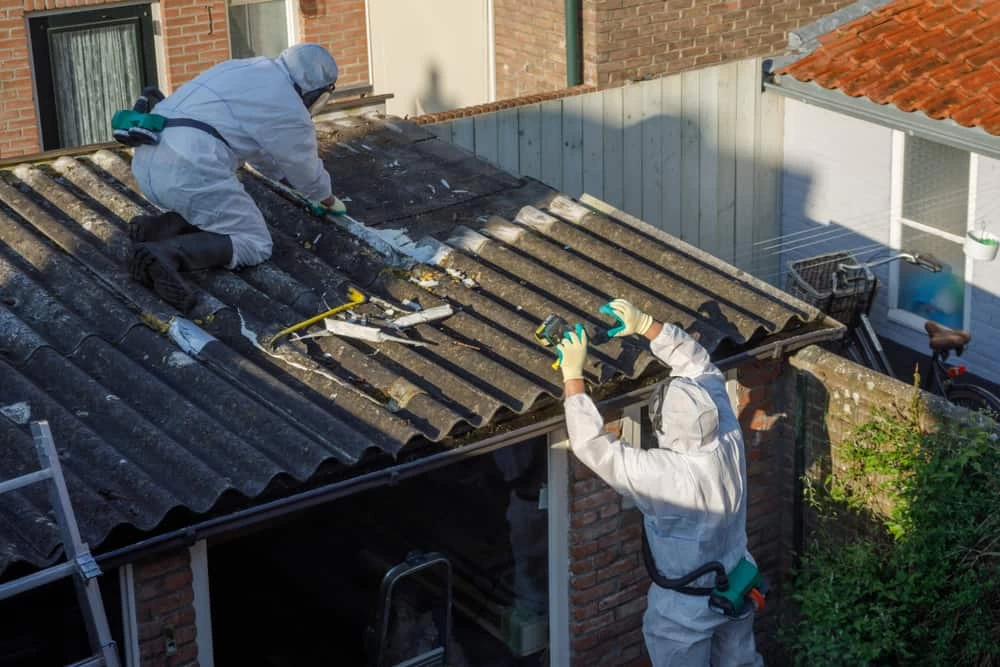
If abatement is needed, we establish full containment before any material is disturbed. That means negative air pressure, sealed work zones, and protective barriers that prevent fiber migration into the rest of your home. Every worker on-site holds an individual NYS DOL asbestos handler or supervisor certification not just the company license, but personal credentials for each person doing the work. The Town of Cortlandt’s Code Enforcement Division oversees building permits for renovation and demolition work in Roe Park, and our process is built to satisfy both local permit requirements and NYS Industrial Code Rule 56 at every stage.
Once the material is removed, it’s disposed of through NYS DEC-certified channels. Then comes air clearance testing independent confirmation that fiber counts have dropped to safe levels. You receive the documentation when the job is done. That’s the green light for your contractor, your insurer, or your buyer’s attorney.
Every Material Type Found in Roe Park Homes Handled in One Scope
A postwar home in Roe Park doesn’t usually have just one asbestos-containing material. It has several. We handle the full range: 9×9 and 12×12 vinyl asbestos floor tiles, acoustic spray ceiling texture, pipe and duct insulation, drywall joint compound, roofing felt, exterior transite siding, and boiler or furnace insulation. If it was standard in a 1960s build, we’ve removed it and we can handle all of it under a single scope rather than requiring you to coordinate multiple contractors.
This matters especially for the renovation-driven scenarios that are most common in this area. A kitchen gut, a bathroom overhaul, a basement finishing project, or an HVAC replacement in a Roe Park home built between 1950 and 1978 has a real probability of uncovering ACMs mid-project. We can step in, contain and remove what’s found, and get your general contractor back on schedule without the project falling apart around a compliance issue.
For homeowners dealing with water damage which in this part of Westchester often means freeze-related pipe bursts during hard winters we also handle the restoration side. When a burst pipe disturbs original pipe wrap insulation, abatement and restoration need to happen together. We work directly with insurance carriers and manage billing on your behalf, which removes one significant burden from an already stressful situation.
Does my Roe Park home actually need asbestos testing before I renovate?
If your home was built before 1980 which describes the majority of properties in Roe Park testing before a renovation isn’t just a good idea, it’s a legal requirement in New York State. NYS Industrial Code Rule 56 requires that any renovation or demolition work involving materials that may contain asbestos be preceded by a proper inspection conducted by a licensed professional. Skipping that step doesn’t just create a health risk it creates a compliance violation that can stop a project, trigger fines, and expose a homeowner to liability.
The practical reality is that the materials most commonly disturbed during a renovation floor tiles, ceiling texture, pipe insulation, joint compound are exactly the materials that were routinely made with asbestos in homes built during the 1950s, 1960s, and 1970s. In Roe Park, where the median construction year is 1968, that covers most of the housing stock. A free on-site inspection before your project starts is the only way to know what you’re actually dealing with and it costs you nothing upfront.
How much does asbestos removal typically cost in Westchester County?
The honest answer is that cost depends heavily on scope what materials are present, how much of them there are, and how accessible they are. A single room of vinyl floor tile removal is a fundamentally different job from whole-home pipe insulation abatement before a major renovation. In Westchester County, where labor costs and regulatory compliance requirements are higher than in many other parts of the state, professional abatement projects can range from a few hundred dollars for a small, isolated removal to several thousand for a multi-material scope in a larger home.
What drives cost in Roe Park specifically is that older homes in this area often have asbestos in more than one location. A 1960s single-family home may have floor tiles in the kitchen, popcorn ceiling in the living room, and pipe wrap in the basement all at once. Getting a free on-site inspection before you commit to anything is the most reliable way to understand your actual scope and get a number that reflects your specific situation rather than a ballpark that may not apply.
What happens if a contractor disturbs asbestos during a renovation in Roe Park?
If asbestos-containing material is disturbed without proper containment and a licensed abatement contractor on-site, the project has to stop. Under NYS Industrial Code Rule 56, disturbing ACMs without a licensed contractor present is a violation and depending on the extent of the disturbance, it can trigger an emergency response requirement. The renovation cannot legally continue until the area is assessed, contained, and cleared by a licensed professional. In practice, this means your general contractor has to walk off the job and you’re left coordinating an emergency abatement while the project sits open.
This scenario is more common in Roe Park than most homeowners expect, because older homes in this area frequently contain asbestos in locations that aren’t obvious until walls come down or floors come up. The cleanest way to avoid it is a pre-renovation inspection before demolition starts not after. We offer free on-site inspections for exactly this reason, and the inspection can usually be completed quickly enough that it doesn’t delay your project start date.
Do I need to leave my home during asbestos abatement in Roe Park?
It depends on the size and location of the work area. For a contained, single-room removal a kitchen floor tile project, for example it’s sometimes possible for the rest of the home to remain occupied with proper containment in place. For larger scopes, or for work in central areas like hallways, basements, or HVAC systems that affect air circulation throughout the house, temporary displacement is the safer and more practical choice. We’ll give you a clear recommendation based on the specific scope at your property, not a one-size-fits-all answer.
What’s non-negotiable in every case is the containment setup. Negative air pressure, sealed work zones, and HEPA filtration are required to prevent fiber migration into areas of the home that aren’t being abated. In a Roe Park winter when homes are sealed tight against the cold and air circulation is limited proper containment is even more critical because there’s less natural ventilation to dilute any escaped fibers. The post-abatement air clearance test is what confirms the rest of your home is safe before anyone re-enters the work area.
Can asbestos abatement help protect my home's value before I sell in Roe Park?
Yes and in a market that moves as quickly as Roe Park’s, it can protect a significant amount of value. Homes in this area have been selling fast, with some going pending in under three weeks. In that environment, an unresolved asbestos disclosure can give a buyer’s attorney leverage to renegotiate, push for a price reduction, or walk away entirely. Proactive abatement before listing removes that leverage and replaces it with documentation a licensed contractor’s clearance record showing that the issue was professionally addressed and the air was tested and cleared.
For a home valued at $600,000 or more, which is typical for Roe Park, the cost of professional abatement is modest relative to what a failed deal or a forced price reduction would cost. Buyers in this market are educated and represented by attorneys who know what asbestos disclosure language means. Coming to the table with clearance documentation already in hand is a straightforward way to protect your asking price and keep the transaction on track.
How do I verify that an asbestos contractor is actually licensed to work in Roe Park, NY?
New York State maintains a public database through the NYS Department of Labor where you can look up any licensed asbestos contractor by name. It takes about two minutes and tells you whether the company’s license is current, what type of license they hold, and whether there are any disciplinary actions on record. For work in Roe Park, which falls under the Town of Cortlandt’s jurisdiction, the applicable license is the NYS DOL Asbestos Handling License and every contractor performing abatement work in New York State is required to hold one.
Beyond the company license, individual workers on the job are also required to hold personal NYS DOL certifications as asbestos handlers or supervisors. Asking a contractor to confirm both the company license and individual worker certifications before signing anything is completely reasonable and any legitimate operator will provide that information without hesitation. Our full license stack, including NYS DOL, EPA certification, and NYS DEC disposal compliance, is verifiable through public records. That’s not a marketing claim it’s a checkable fact, and you should check it for any contractor you’re considering.