Your 1960s Hurley Ranch Home Deserves a Real Answer
If your Rolling Meadows home was built in the 1960s or 70s, asbestos is likely somewhere inside it and Green Island Group has the NYS DOL license to handle it safely, legally, and completely.
I needed a professional consultation explanation of procedure for safe removal of Asbestos in my apartment complex. Without having an account yet, I was very impressed with the caring, knowledgeable and generous advice offered by Jessica, and will look forward to doing business in the future. Thank you so much! I feel much more informed about a sometimes scary endeavor. Peace. Nancy Silva Mineola, NY.
Mia Munoz
Used this company to clean up some water flood in my house. They were fast and easy to work with.very professional, Would recommend to anyone!
Nini Valle
Great company, had a flood and they responded quickly and efficiently. Billed my insurance company directly. I highly recommend this company!
joe colapietro, jr
I had pipe freeze in my basement right before a snow storm and they made to within an hour to help start the clean up process. They we by our side throughout the entire process and even helped with the insurance company. They did such a great job with the cleanup, repair, remidiation, I contracted them to perform the repairs and finishes in the basement. They came with enough manpower and material to get the job done. Leo and Jessica were nothing but a pleasure to deal with!!
Cristian Arredondo c
I had some water damage in my home and Green Island was able to take care of my issue quickly and effectively. I am very pleased with the work they did. They responded quickly and were very professional.
Michael M
Outstanding service! From the office to the field crew everyone was friendly, helpful and responsive. I highly recommend Green Island Group.
You stop guessing. That’s the first thing. When a licensed crew has inspected your home, removed what needs to go, and handed you documented air clearance results, the uncertainty that’s been sitting in the back of your mind especially if you’ve been living in a Rolling Meadows ranch home that hasn’t been touched since it was built in 1968 finally has an answer.
For homeowners in Rolling Meadows and the surrounding Town of Hurley, the risk isn’t abstract. Homes built during the postwar suburban expansion of the 1960s routinely used asbestos in floor tiles and the black mastic adhesive beneath them, in pipe insulation wrapped around boilers and heating systems, in acoustic ceiling texture, and in the joint compound behind drywall seams. These materials weren’t rare. They were standard. And in a neighborhood like Rolling Meadows, where many homes haven’t had a full renovation in decades, there’s a good chance more than one of them is present.
The other thing that changes is your renovation timeline. Under NYS Industrial Code Rule 56, any home built before 1974 which covers every house in this subdivision requires an asbestos survey before permitted renovation work can begin. Getting that handled by a licensed contractor upfront means your project doesn’t stall at the permit stage. It also means the contractor you hire to renovate your kitchen or gut your basement isn’t walking into a situation that could shut the job down mid-work.
The License Isn't Optional and Neither Is Our Standard
We hold the NYS DOL Asbestos Handling License the specific, state-issued credential required by law for any asbestos abatement work in New York. This isn’t a general contractor license. It isn’t a trade association membership. It’s the credential enforced by the NYS DOL Asbestos Control Bureau, and it’s what separates legal abatement from work that puts you, your family, and your neighbors at risk.
We already serve Rolling Meadows, the Town of Hurley, and the surrounding Ulster County communities. When you call, you’re not explaining your location to someone who’s never heard of Route 209 or the Ashokan Reservoir. You’re talking to a team that has worked in homes throughout this region, understands what’s typically inside a 1960s Ulster County ranch, and knows the regulatory requirements that apply to your specific address.
Beyond asbestos, we hold IICRC certification for water and fire damage restoration, NYS DOL Mold certification, and USEPA Lead and RRP certifications. In older Rolling Meadows homes where asbestos, mold, and moisture issues often show up together, that cross-disciplinary scope matters.
No Guesswork Here's Exactly What We Do in Your Home
It starts with an inspection. A licensed technician walks through your home, identifies materials that may contain asbestos, and collects samples for laboratory analysis. In a Rolling Meadows home from the late 1960s, that typically means checking the basement for pipe and boiler insulation, the floors for vinyl tile and mastic adhesive, the ceilings for acoustic texture, and the walls for joint compound. The inspection is thorough because the materials in homes of this era show up in more than one place.
Once testing confirms what’s present, we handle the NYS DOL permit application and regulatory notification required under Industrial Code Rule 56. The Albany District Office of the NYS DOL Asbestos Control Bureau has jurisdiction over Ulster County we know their process, their paperwork, and their timelines. You don’t have to figure that out on your own.
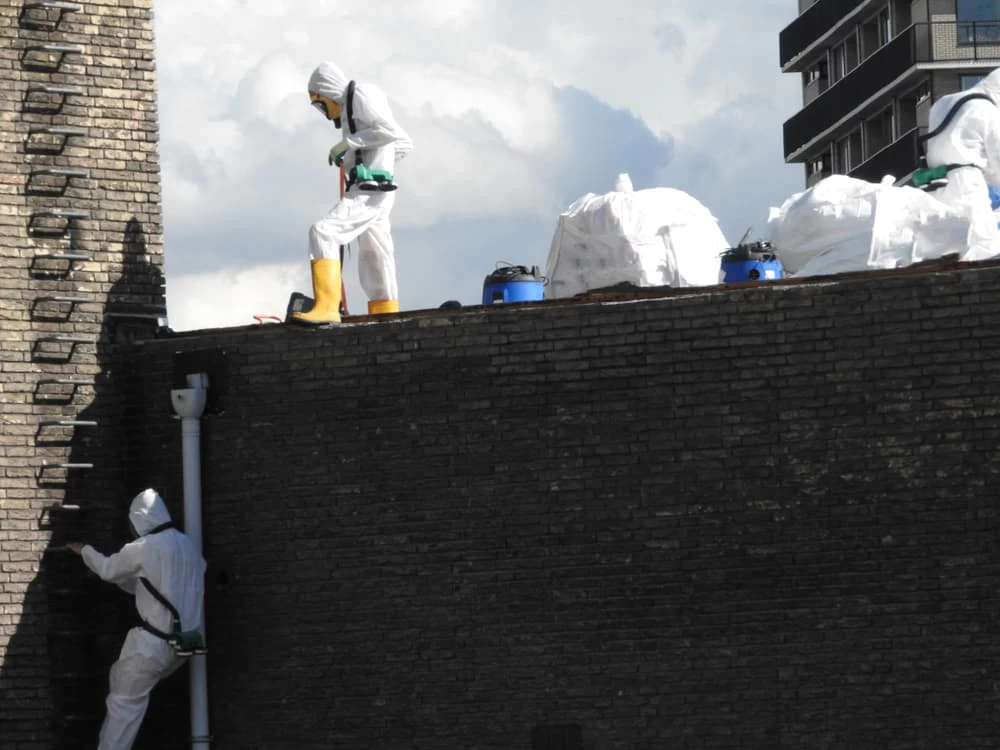
The removal itself is done under full containment negative air pressure, HEPA filtration, sealed work zones so the rest of your home stays clean while the work is happening. Disposal follows state-mandated protocols for asbestos waste. When the work is complete, we conduct post-abatement air clearance testing. You receive written documentation of the results. That report is yours to keep for your own records, for your insurance company, and for any future buyer who wants proof that the work was done right.
Asbestos Removal Services for Rolling Meadows Homes
Every Material, Every Location Handled to NYS Standard
The most common asbestos-containing materials we find in Rolling Meadows homes are vinyl floor tiles and the black mastic adhesive beneath them, pipe and boiler insulation in basements, popcorn or textured acoustic ceilings, joint compound on drywall seams, and in some cases vermiculite attic insulation. These aren’t rare findings in a 1960s subdivision they’re expected. Our abatement services cover all of them, whether you’re dealing with one material in one room or multiple materials across the whole house.
For homeowners preparing to sell, we provide the clearance documentation that satisfies buyer due diligence and real estate disclosure requirements. For homeowners mid-renovation, we coordinate directly with your general contractor to minimize disruption to your project timeline. And for anyone dealing with asbestos discovered after water damage a flooded basement that disturbed pipe insulation, or freeze-thaw moisture that crumbled old ceiling material we handle both the asbestos abatement and the water damage restoration, so you’re not managing two separate contractors.
We also bill insurance directly. If your situation involves a covered loss, we handle the coordination with your adjuster so you’re not stuck in the middle. Every project includes permit management, licensed removal, proper disposal, and written air clearance documentation all under one NYS DOL licensed roof.
Does my Rolling Meadows home actually need an asbestos survey before renovating?
If your home was built before 1974 which covers every property in the Rolling Meadows subdivision then yes, New York State requires an asbestos survey before any demolition, remodeling, renovation, or repair work begins. This is not a recommendation. It’s a legal requirement under NYS Industrial Code Rule 56, enforced by the NYS DOL Asbestos Control Bureau’s Albany District Office, which has jurisdiction over all of Ulster County.
The practical consequence of skipping this step is significant. If asbestos is discovered mid-renovation by your general contractor, work stops. The job site becomes a potential liability. You’re now dealing with an emergency abatement situation instead of a planned one which costs more, takes longer, and disrupts your project in ways that could have been avoided entirely. Getting the survey done before permits are pulled is the right sequence, and it’s the one we recommend to every Rolling Meadows homeowner who calls us before a renovation.
What does asbestos abatement actually cost for a home in Rolling Meadows?
The honest answer is that it depends on what’s present and how much of it there is. A single room with asbestos floor tiles and mastic adhesive typically runs in the $1,500 to $3,000 range. A popcorn ceiling in a primary living space is similar. When you’re dealing with pipe insulation throughout a basement, multiple flooring materials, or a combination of ceiling and wall materials which is common in a 1960s ranch home that hasn’t been renovated the total can reach $5,000 to $15,000 or more depending on scope.
What drives cost up isn’t the removal itself it’s the number of materials, the square footage, and the complexity of containment required. Homes in Rolling Meadows tend to be single-story ranch or Cape Cod layouts, which actually simplifies containment in some cases compared to multi-story structures. The best way to get an accurate number is to have a licensed inspector assess what’s actually in your home rather than estimating based on age alone. We provide that assessment and walk you through what the numbers mean before any work begins.
How long does asbestos abatement take, and can I stay in my home during the work?
Whether you can stay in your home depends entirely on where the work is happening and how extensive it is. For targeted projects a single bathroom floor, one section of ceiling it’s sometimes possible to remain in the home with proper containment separating the work zone from your living space. For larger projects involving multiple rooms or whole-house materials, temporary relocation during active abatement is the safer and more practical choice.
In terms of timeline, most residential projects in Rolling Meadows run one to three days for the abatement work itself. Add the time required for permit processing with the NYS DOL before work begins typically a few business days to a week depending on project type and post-abatement air clearance testing, which happens after removal is complete and before containment is removed. We give you a clear timeline at the start so you can plan around it. No vague estimates, no moving targets.
What happens if asbestos is found in my basement after a flood or water damage?
This is more common in the Town of Hurley and Rolling Meadows than many homeowners realize. The region’s geography sitting between the Hudson River and the Catskill Mountains, with the Ashokan Reservoir partially within the town means basements in this area are genuinely exposed to moisture intrusion, seasonal flooding, and freeze-thaw cycles that can disturb materials that were previously stable. Pipe insulation on older boilers and heating systems, floor adhesives, and ceiling materials in basements can all become friable meaning they release fibers when they get wet or physically disturbed by water damage.
When that happens, you’re dealing with two problems at once: the water damage itself and the asbestos that’s now been disturbed. We handle both. We’re IICRC certified for water damage restoration in addition to holding the NYS DOL Asbestos Handling License, so you’re not coordinating two separate contractors while your basement sits wet. We assess what’s been disturbed, contain and remove the asbestos under proper protocol, and address the underlying moisture issue all under one project.
How do I know the asbestos is really gone after the work is done?
This is the question that matters most, and the answer is air clearance testing. After abatement is complete and before containment is removed, air samples are collected from the work area and analyzed by an independent laboratory. The results confirm whether airborne asbestos fiber levels meet the clearance standards required by New York State. If they do, you receive written documentation. If they don’t, work continues until they do that’s not negotiable under NYS law, and it’s not something we skip.
The documentation you receive at the end of the project isn’t just a piece of paper. For Rolling Meadows homeowners, it’s a real estate asset. When you eventually sell your home, a buyer’s inspector or attorney may ask whether asbestos was present and what was done about it. Having a dated, licensed abatement record with passing air clearance results answers that question definitively. It protects your sale, your timeline, and your liability and it’s included in every project we complete.
Is asbestos abatement something my homeowner's insurance might cover in Rolling Meadows?
It depends on the circumstances and your specific policy. Asbestos abatement that’s required as part of a planned renovation is generally not covered it’s treated as a maintenance or compliance cost. But when asbestos is disturbed as a direct result of a covered loss a basement flood, storm damage, a burst pipe that damages insulation there’s a reasonable case that the abatement work associated with that damage falls within your claim.
The challenge for most homeowners is navigating that conversation with an adjuster while also managing the remediation itself. We bill insurance directly, which means we handle the coordination with your carrier so you’re not stuck translating between a contractor’s scope of work and an adjuster’s coverage questions. We document everything what was found, where, what was removed, and what the post-abatement air results showed in a format that insurance companies recognize and work with. If you’re in Rolling Meadows and you’ve had a water or storm event that disturbed materials in your home, the first call is to us, not to your insurance company. We’ll help you understand what you’re dealing with before that conversation happens.