When Your Rombout Ridge Home Holds a Hidden Hazard
Older homes throughout Rombout Ridge hide asbestos in places most people never think to look until a renovation stops cold or a home inspection flags something serious. We respond fast, handle the paperwork, and get your home back to safe.
I needed a professional consultation explanation of procedure for safe removal of Asbestos in my apartment complex. Without having an account yet, I was very impressed with the caring, knowledgeable and generous advice offered by Jessica, and will look forward to doing business in the future. Thank you so much! I feel much more informed about a sometimes scary endeavor. Peace. Nancy Silva Mineola, NY.
Mia Munoz
Used this company to clean up some water flood in my house. They were fast and easy to work with.very professional, Would recommend to anyone!
Nini Valle
Great company, had a flood and they responded quickly and efficiently. Billed my insurance company directly. I highly recommend this company!
joe colapietro, jr
I had pipe freeze in my basement right before a snow storm and they made to within an hour to help start the clean up process. They we by our side throughout the entire process and even helped with the insurance company. They did such a great job with the cleanup, repair, remidiation, I contracted them to perform the repairs and finishes in the basement. They came with enough manpower and material to get the job done. Leo and Jessica were nothing but a pleasure to deal with!!
Cristian Arredondo c
I had some water damage in my home and Green Island was able to take care of my issue quickly and effectively. I am very pleased with the work they did. They responded quickly and were very professional.
Michael M
Outstanding service! From the office to the field crew everyone was friendly, helpful and responsive. I highly recommend Green Island Group.
When asbestos abatement is done right, you get more than a clean space you get written proof that it’s safe. Post-abatement air clearance documentation matters whether you’re staying put, selling, or just want to know your family isn’t breathing something harmful. That paperwork protects you in a real estate transaction and gives you something concrete to show a buyer, an inspector, or your own peace of mind.
A lot of the homes in Rombout Ridge were built during the 1950s through the 1970s the same era when asbestos was standard in pipe insulation, floor tiles, boiler wrap, and ceiling textures. Those materials don’t always look dangerous. They can sit quietly for decades until a renovation opens a wall, a basement floods after a heavy storm, or a heating system replacement exposes old pipe wrap that nobody knew was there.
That’s where things get complicated fast. The freeze-thaw cycles this area sees every winter stress older building materials in ways that can turn stable asbestos into something airborne. If water intrusion is already part of the picture which is a real seasonal risk in the hilly terrain of Rombout Ridge you may be dealing with both water damage and asbestos at the same time. We handle both, in a single mobilization, without you having to coordinate two separate contractors during an already stressful situation.
12 Years, 5,000 Projects, and We Know Rombout Ridge
We’ve been completing asbestos abatement and environmental remediation projects across New York State for over 12 years more than 5,000 projects in total. That’s not a number pulled from a brochure. It reflects a real body of work across the kinds of homes, schools, and commercial properties that define this region.
In Rombout Ridge and the surrounding Dutchess County area, that means mid-century ranches and split-levels, older condo developments throughout Fishkill town, and properties that have been sitting on the same lot since the IBM East Fishkill facility drew families to this part of the county in the 1960s. We hold the NYS Department of Labor Asbestos Contractor License required to legally perform this work in New York State, and our MWBE certification makes us an approved contractor for state and municipal projects credentials you can verify independently through the NYS DOL’s online contractor listing.
When you call, you’re not reaching a call center. You’re reaching a team that knows Rombout Ridge, understands Code Rule 56 enforcement through the Albany district office, and has worked in the exact type of housing stock you’re dealing with.
From First Call to Final Air Clearance Here's What to Expect
The process starts with an assessment. Before anything is removed, the material needs to be confirmed. If you already have a test result from a home inspector or a third-party lab, bring it. If not, we can walk you through the testing step so you’re not guessing about what you’re dealing with or where it is.
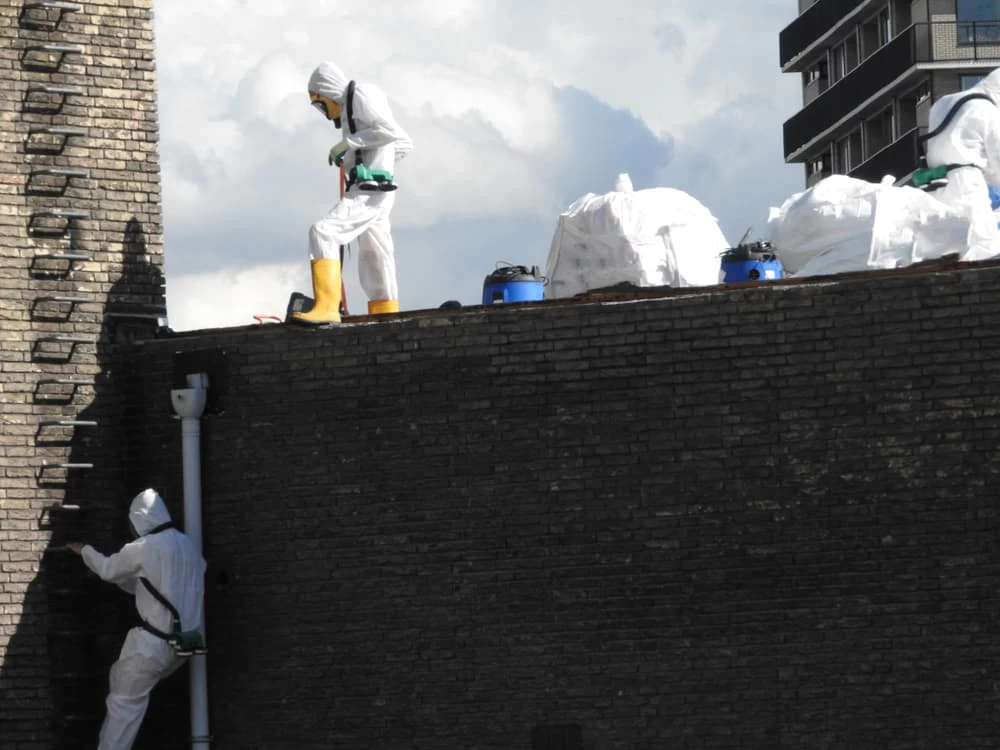
Once the scope is confirmed, the project is filed with the NYS Department of Labor’s Asbestos Control Bureau a required notification under Industrial Code Rule 56 that applies to all regulated abatement work in New York State, including Dutchess County. This isn’t optional, and any contractor skipping it is putting you at legal risk, not just themselves. The abatement area is contained using negative air pressure and HEPA filtration to prevent fibers from spreading to the rest of your home during removal. For homes in Rombout Ridge particularly older properties with basements, crawl spaces, and aging mechanical systems containment setup is taken seriously because the materials most commonly found in this housing stock, pipe insulation and floor tile in particular, require careful handling to avoid disturbing fibers unnecessarily.
After removal, all waste is sealed, transported by a licensed hauler, and disposed of at an approved facility under NYS DEC regulations. Then comes air clearance testing independent confirmation that the space is safe before anyone reoccupies it. You’ll receive documentation of the results. That’s the finish line, and it’s not crossed until the air test clears.
Asbestos abatement in Rombout Ridge covers the full range of materials common to this area’s housing stock. That includes asbestos tile removal the 9×9-inch vinyl floor tiles that were standard in kitchens, bathrooms, and basements of homes built from the 1950s through the 1970s. It includes asbestos popcorn ceiling removal, pipe and boiler insulation, siding materials, and roofing components depending on the scope of the project. If you’re not sure what you have, that conversation starts at the assessment phase, not after a contract is signed.
We also handle the situations that don’t fit neatly into a scheduled renovation. If a storm event or basement flood has disturbed older mechanical insulation in your crawl space which is a real scenario for homes in the hilly terrain of Rombout Ridge we’re available around the clock, including nights and weekends. That 24/7 availability isn’t a marketing line. A customer specifically documented a two-hour response time from initial call to crew on-site.
For homeowners navigating an insurance claim alongside an abatement need, we bill insurance companies directly. If water damage and asbestos are both in the picture, we handle both under one roof asbestos remediation, mold remediation, and water damage restoration without the handoff to a second contractor. For a Rombout Ridge homeowner already managing a stressful property event, that matters more than most people realize until they’re in it.
Does my Rombout Ridge home built in the 1960s likely contain asbestos?
If your home was built between roughly 1940 and 1980, there’s a real chance asbestos-containing materials are present somewhere in the structure. In Rombout Ridge and the broader Fishkill area, a significant number of homes were built during the 1950s through 1970s the period when IBM’s East Fishkill facility was drawing workers and families to southwestern Dutchess County. Those homes are now 50 to 70 years old, and the materials used during that era routinely included asbestos in pipe insulation, vinyl floor tiles, boiler wrap, ceiling textures, and certain siding and roofing products.
The important distinction is that not all asbestos is immediately dangerous. Materials that are intact and undisturbed are generally considered stable. The risk increases when those materials are damaged, deteriorating, or disturbed during renovation work. If you’re planning any renovation in a Rombout Ridge home of that age opening walls, replacing floors, updating an HVAC system a professional inspection before you start is worth doing. It’s far less disruptive than stopping mid-project when a contractor finds something unexpected.
How much does asbestos removal cost in Dutchess County, NY?
Most residential asbestos abatement projects in New York fall somewhere between $1,300 and $3,100, with the state average sitting around $2,200. That said, pricing in the Hudson Valley and Dutchess County has increased over the past few years roughly 8 to 12 percent driven by updated NYS DOL licensing requirements, higher disposal fees, and the expectation of post-abatement air clearance testing as part of a complete job.
What you’re actually paying for is compliance. Asbestos abatement in New York is regulated under Industrial Code Rule 56, and the contractor performing the work needs to hold a current NYS DOL Asbestos Contractor License, file project notifications with the state, use licensed waste haulers, and dispose of materials at approved facilities. Skipping any of those steps creates legal exposure for you as the property owner not just the contractor. If you see a quote that’s dramatically lower than the range above, it’s worth asking exactly what’s included and whether the contractor is fully licensed through the NYS DOL.
What happens if asbestos is discovered during a home renovation in Rombout Ridge?
Work stops. That’s the right call, and a responsible contractor will make it without being asked. Once a material is suspected or confirmed to contain asbestos, continuing to disturb it without proper containment and removal protocols creates a genuine health and legal liability for you, your contractor, and anyone else in the space.
The next step is confirmation through testing, either from a sample you already have or from a new sample taken by a qualified professional. Once the material is confirmed, a licensed abatement contractor files a notification with the NYS DOL Asbestos Control Bureau required under Code Rule 56 before regulated work begins and sets up containment before anything is removed. In Rombout Ridge, mid-renovation asbestos discoveries are most common in homes built before 1980, particularly during kitchen and bathroom remodels where old floor tiles are being pulled, or during basement work where pipe insulation is disturbed. The timeline from discovery to clearance depends on the scope, but a straightforward residential project can often be completed and air-cleared within a few days of mobilization.
Do I need to leave my home during asbestos abatement in Rombout Ridge?
It depends on the scope and location of the work, but for most residential abatement projects, temporary relocation from the affected area is the standard recommendation. If the work is confined to a basement or a single room, it may be possible to remain in other parts of the home but that depends on the containment setup, the type of material being removed, and how well the work area can be isolated from the rest of the living space.
For families with children particularly households in the Beacon City School District or Wappingers Central School District areas erring on the side of caution during abatement is the right approach. The containment barriers and negative air pressure systems used during the job are designed to prevent fiber migration, but the safest position is to be out of the immediate area while work is underway. Your abatement contractor should give you a clear timeline before work begins so you can plan accordingly, and the post-abatement air clearance test is the documented confirmation that it’s safe to return not just a verbal assurance.
Can asbestos abatement be combined with water damage restoration after a flood?
Yes, and in many cases it needs to be. Water intrusion and asbestos exposure often happen together in older homes, particularly in Rombout Ridge where the hilly terrain and local watershed create real stormwater and flooding risk during heavy rain seasons and snowmelt. When water gets into a basement or crawl space that has older mechanical systems pipe insulation, boiler wrap, or vinyl floor tiles from the 1950s through 1970s it can disturb materials that were previously stable and turn a water damage event into an asbestos event simultaneously.
The challenge with handling these situations through two separate contractors is coordination. Each one is waiting on the other, and the delay extends the time your home is unsafe and uninhabitable. We handle both asbestos abatement and water damage restoration in-house, which means a single assessment, a single mobilization, and a single point of contact through the entire process. If mold is also a factor which it often is when water intrusion goes unaddressed for more than 24 to 48 hours that’s covered under the same roof as well.
How do I verify that an asbestos contractor in Dutchess County is properly licensed?
The NYS Department of Labor maintains a publicly searchable Asbestos Contractors Listing on their website. You can look up any contractor by name and confirm whether they hold a current, active NYS DOL Asbestos Contractor License before you sign anything. This takes about two minutes and is worth doing particularly in a regulated market like New York where the licensing requirements are specific and enforced by the Albany district office of the Asbestos Control Bureau, which covers Dutchess County.
Beyond the contractor license, the workers performing the abatement need to hold individual NYS DOL Asbestos Handler licenses, and the supervisor on-site needs an Asbestos Supervisor license. These are separate credentials from the company license. A legitimate contractor won’t hesitate to provide this information. If someone is vague about their licensing status or can’t point you to a verifiable record, that’s a meaningful red flag not a minor administrative detail. Choosing an unlicensed or underqualified contractor doesn’t just risk a poor outcome. It can create legal liability for you as the property owner if the work isn’t performed and documented in compliance with Code Rule 56.