Most Roosevelt homes were built before asbestos was banned — and the materials are still there. We handle asbestos abatement the right way: licensed, documented, and done so your renovation, sale, or repair can actually move forward.
I needed a professional consultation explanation of procedure for safe removal of Asbestos in my apartment complex. Without having an account yet, I was very impressed with the caring, knowledgeable and generous advice offered by Jessica, and will look forward to doing business in the future. Thank you so much! I feel much more informed about a sometimes scary endeavor. Peace. Nancy Silva Mineola, NY.
Mia Munoz
Used this company to clean up some water flood in my house. They were fast and easy to work with.very professional, Would recommend to anyone!
Nini Valle
Great company, had a flood and they responded quickly and efficiently. Billed my insurance company directly. I highly recommend this company!
joe colapietro, jr
I had pipe freeze in my basement right before a snow storm and they made to within an hour to help start the clean up process. They we by our side throughout the entire process and even helped with the insurance company. They did such a great job with the cleanup, repair, remidiation, I contracted them to perform the repairs and finishes in the basement. They came with enough manpower and material to get the job done. Leo and Jessica were nothing but a pleasure to deal with!!
Cristian Arredondo c
I had some water damage in my home and Green Island was able to take care of my issue quickly and effectively. I am very pleased with the work they did. They responded quickly and were very professional.
Michael M
Outstanding service! From the office to the field crew everyone was friendly, helpful and responsive. I highly recommend Green Island Group.
The contractor can finally start. The permit gets approved. The home sale doesn’t fall apart at the inspection table. That’s what proper asbestos abatement actually does for you — it unblocks everything else that’s been on hold.
For Roosevelt homeowners specifically, this matters more than most people realize. The vast majority of homes in this hamlet were built between the 1940s and 1970s, which means the flooring under your carpet, the texture on your bedroom ceiling, and the wrap around your basement pipes were all installed during the peak era of asbestos use in American construction. These aren’t rare edge cases — they’re standard features of mid-century South Shore homes, and they show up constantly during renovations, boiler replacements, and pre-sale inspections.
The South Shore’s humidity and proximity to the coast also work against you over time. Moisture accelerates deterioration in asbestos-containing materials, and once those materials start breaking down, the risk of fiber release goes up. Addressing it now — before a renovation disturbs it, before a water event makes it worse — is the move that protects your family and keeps your project timeline intact.
We are a licensed asbestos abatement contractor serving Roosevelt and the surrounding South Shore Nassau County communities — including Freeport, Baldwin, Uniondale, Lakeview, and Hempstead. We hold all required New York State Department of Labor licenses under 12 NYCRR Part 56, and every crew member working on your job is individually certified.
What that means practically: we’re not figuring this out as we go. We’ve worked in the Cape Cods and ranch homes that line the streets off Babylon Turnpike and Nassau Road throughout Roosevelt. We know what materials are typically present in these properties, we know what the Town of Hempstead building department requires for documentation, and we know how to get your project cleared and closed out without delays.
Roosevelt homeowners have dealt with enough contractors who treat this area as an afterthought. We don’t. This community is core territory for us, and we bring the same licensed crew, the same process, and the same documentation to every job here — no exceptions.
It starts with a site assessment. We come out, look at the materials in question, and tell you plainly what’s there, what needs to be tested, and what the scope of work looks like. If testing is needed, samples go to an accredited lab. You get results, not guesses.
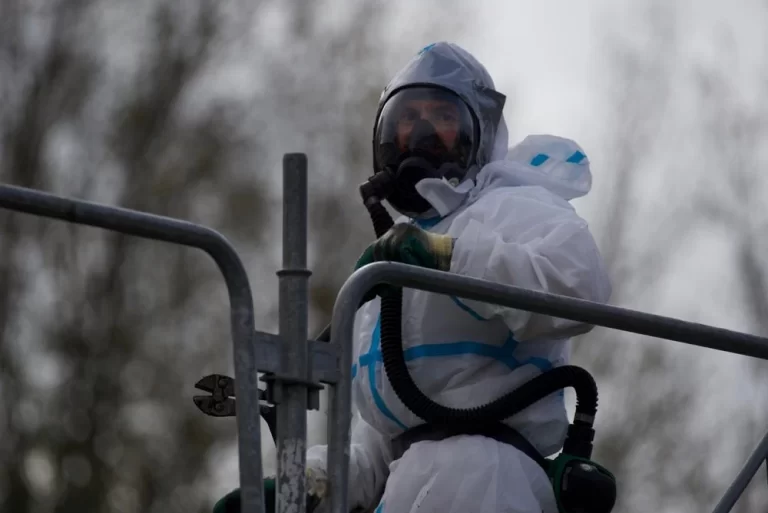
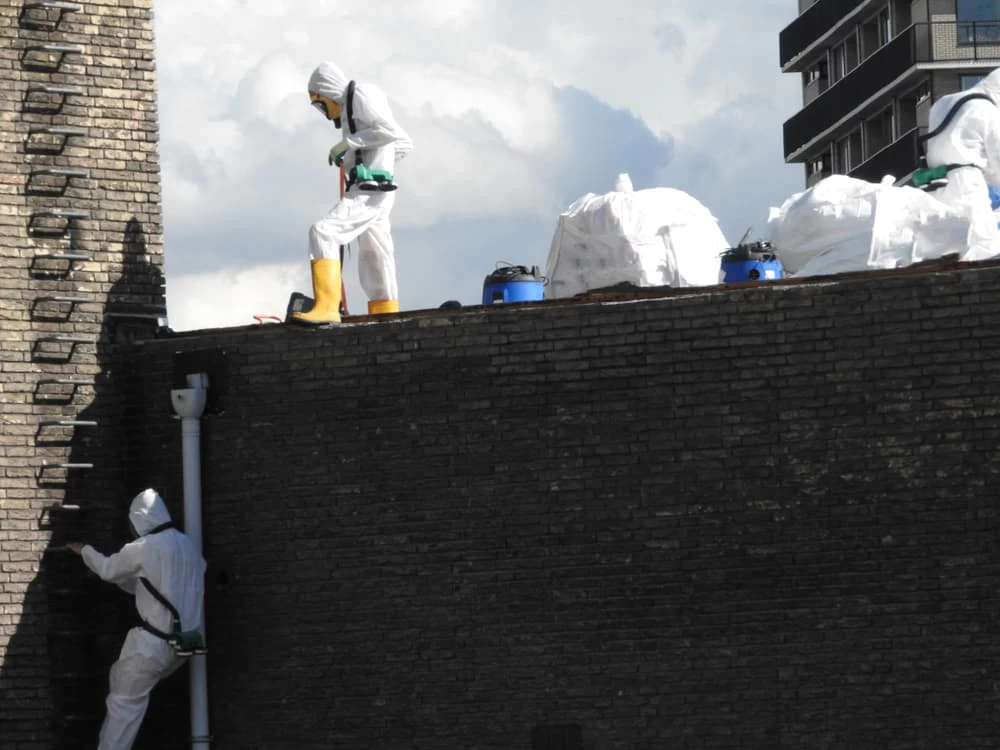
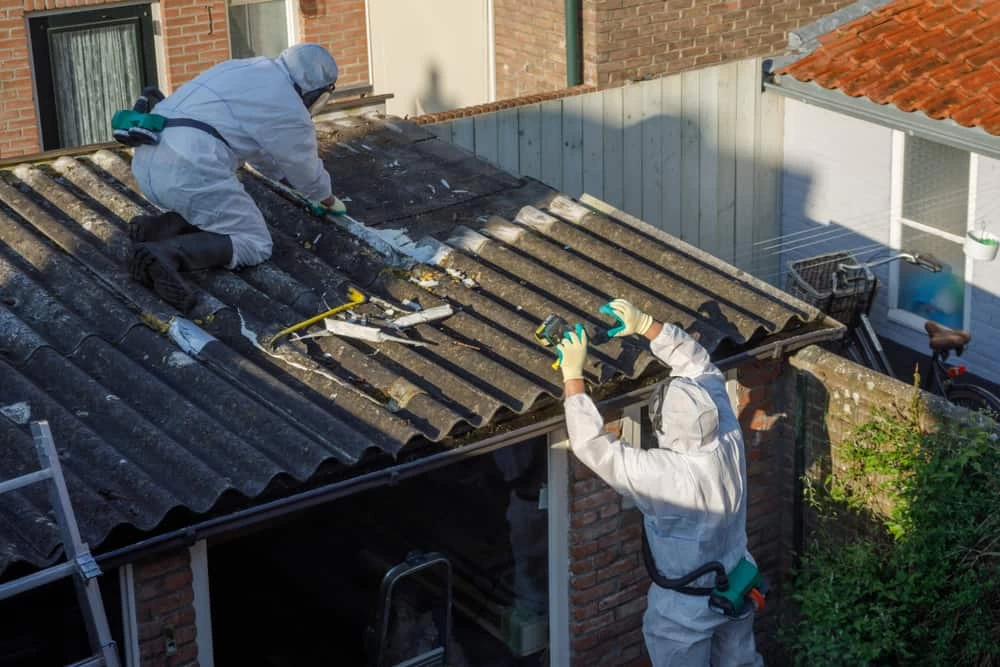
Once the scope is confirmed and the project is filed with the New York State Department of Labor — which is a legal requirement for regulated abatement work in New York — we set up containment. That means negative air pressure, sealed work zones, and proper personal protective equipment for every worker on site. During removal, we use wet methods to keep fibers from becoming airborne. For vinyl asbestos tile jobs, which are extremely common in Roosevelt’s mid-century housing stock, that includes both the tiles and the black mastic adhesive underneath — because the adhesive frequently contains asbestos too, and leaving it behind creates a problem for your next contractor.
When the removal is done, an independent air monitoring technician — not our crew — collects clearance air samples. If the results pass, containment comes down. If they don’t, we address it before anything is opened up. After that, you receive a complete documentation package: the NYSDOL notification confirmation, waste disposal manifests, air monitoring data, and your final clearance report. That paperwork is what satisfies the Town of Hempstead building department, your lender, and any future buyer of your home.
Built Around What Roosevelt Homes Actually Contain
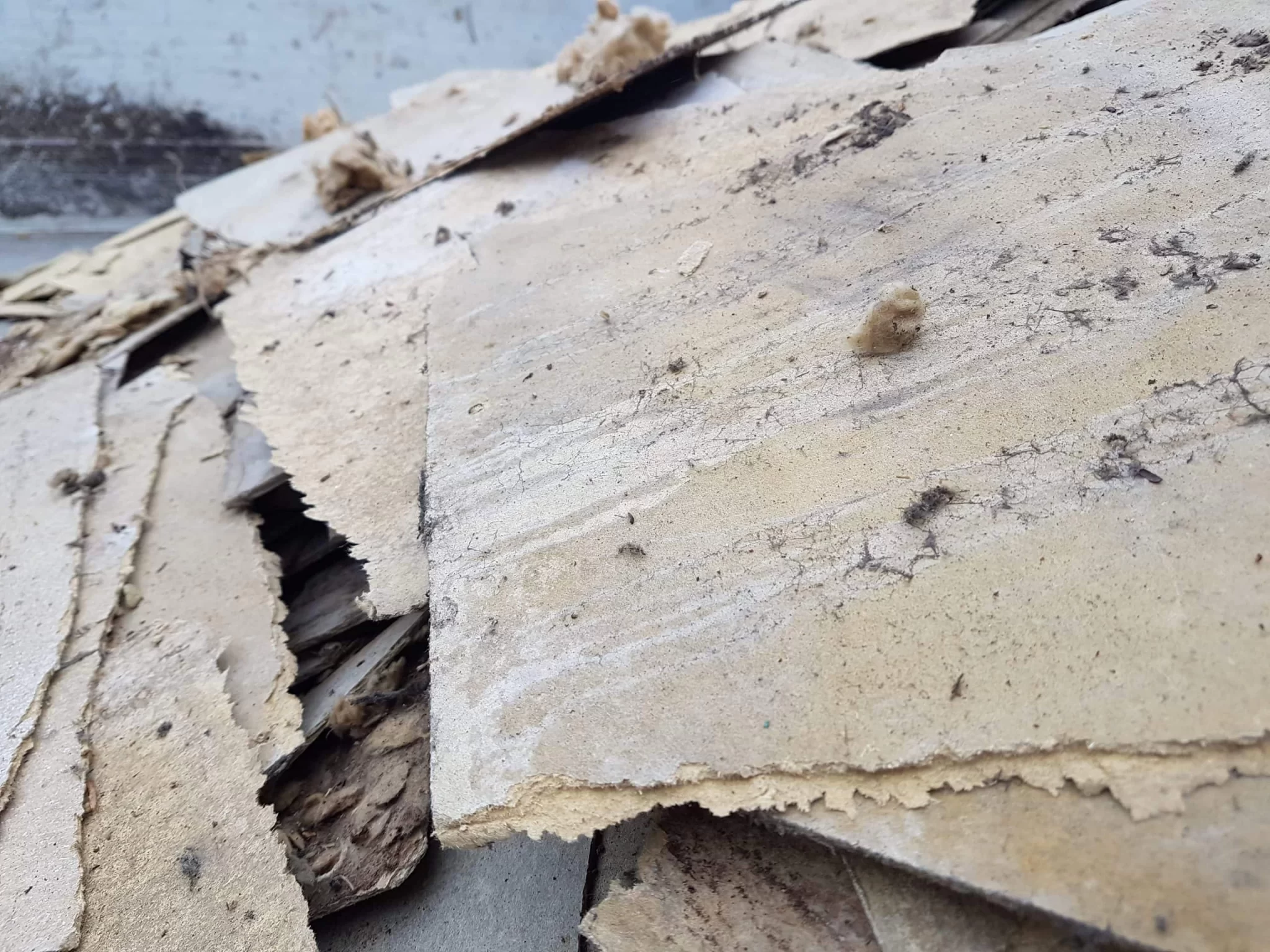
The asbestos-containing materials we remove most often in Roosevelt are the same ones that show up in mid-century South Shore homes across Nassau County. Nine-by-nine vinyl asbestos floor tiles — found under carpet, under hardwood, and as finished floors in kitchens and basements throughout the hamlet — are one of the most common. Popcorn ceilings applied between the 1950s and 1970s are another. Pipe and boiler insulation in older heating systems, asbestos cement siding and roofing shingles, and pre-1977 drywall joint compound round out the list of materials we encounter regularly on jobs in this area.
Each material type has its own compliant removal process, and we follow NYSDOL-approved procedures for all of them. Asbestos popcorn ceiling removal requires full containment and wet methods to prevent fiber release during scraping. Asbestos tile removal includes the mastic. Pipe insulation removal in basements is handled carefully given how often those spaces are used for storage or finishing projects. We don’t cut corners on any of it — because the air monitoring and clearance testing at the end of the job will catch it if we did.
If you’re selling your Roosevelt home, refinancing, pulling a renovation permit through the Town of Hempstead, or just dealing with a contractor who won’t touch the job until asbestos is addressed, we can scope the work, file the paperwork, and get you the documentation you need to move forward.
Do I need a permit for asbestos removal in Roosevelt, NY?
Technically, it’s not a traditional building permit — it’s a project notification filed with the New York State Department of Labor. Under 12 NYCRR Part 56, any regulated asbestos abatement project involving more than 10 linear feet or 25 square feet of asbestos-containing material must be filed with NYSDOL before work begins. This is a legal requirement, not optional, and it applies to residential jobs in Roosevelt just as it does anywhere else in New York State.
Where the Town of Hempstead building department comes in is on the renovation or demolition permit side. If you’re pulling a permit for a renovation — new flooring, a gut rehab, a basement finishing project — the building department will want to see documentation that asbestos has been assessed and, if present, properly handled. We manage the NYSDOL notification filing and provide the post-project documentation your permit requires, so you’re not left navigating that process on your own.
How much does asbestos abatement typically cost for a Roosevelt home?
Cost depends on what materials are present, how much of them there are, and how accessible they are. A single room of vinyl asbestos tile removal in a Roosevelt Cape Cod or ranch home typically runs in the range of $1,500 to $3,500, depending on square footage and whether the mastic adhesive underneath also tests positive — which it frequently does in homes of this era. Popcorn ceiling removal in a standard bedroom runs similarly. Larger projects involving multiple rooms, pipe insulation, or full pre-demolition abatement can reach $8,000 to $15,000 or more.
What you should expect from us is a written, itemized estimate — not a ballpark figure over the phone. The estimate breaks out material quantities, labor, air monitoring fees, disposal costs, and documentation. We provide detailed written estimates before any work is authorized, and the price you’re quoted is the price you pay.
How do I know if my Roosevelt home has asbestos in the floor tiles or ceiling?
The most reliable indicator is age. If your home was built before 1980 — which covers virtually every residential structure in Roosevelt — you should assume that original flooring, ceiling texture, and pipe insulation may contain asbestos until testing proves otherwise. The nine-by-nine inch floor tiles found in thousands of Roosevelt kitchens, bathrooms, and basements are a well-known asbestos-containing product from the mid-century era. The same goes for the spray-applied popcorn texture on ceilings installed between the 1950s and 1970s.
Visual inspection alone cannot confirm or rule out asbestos. The only way to know for certain is to have a sample collected by a qualified professional and sent to an accredited laboratory for analysis. The process is straightforward and relatively inexpensive compared to the cost of disturbing the material without knowing what’s in it. If you’re planning any renovation that will involve sanding, scraping, or removing these materials, testing first is always the right call.
Can a general contractor or handyman remove asbestos in New York State?
No — not legally, and not safely. New York State law requires that regulated asbestos abatement be performed by a contractor holding a valid NYSDOL asbestos abatement license, using workers who are individually certified as asbestos handlers or supervisors. A general contractor or handyman who is not licensed for asbestos abatement cannot legally perform this work, regardless of how experienced they are in other trades.
This matters for Roosevelt homeowners because the consequences of unlicensed abatement go beyond the work itself. If asbestos is improperly removed — without containment, without air monitoring, without clearance sampling — you can be left with contamination in your home and no documentation to prove the work was done correctly. That creates a liability problem that follows the property. It can complicate a future sale, create issues with your insurer, and in some cases expose you to personal liability. Hiring a licensed contractor and getting the paperwork is not just about compliance — it’s about protecting yourself.
What happens to the asbestos waste after it's removed from my home?
Asbestos waste is classified as hazardous material and has to be handled accordingly from the moment it comes out of your home. During removal, all asbestos-containing material is wetted down, double-bagged in approved heavy-duty plastic bags, and labeled with the required hazardous waste markings. It cannot go into your regular trash or a standard dumpster — it has to be transported by a licensed hauler to an approved disposal facility.
In Nassau County, disposal is governed by both EPA regulations and NYSDOL requirements. We handle the entire waste chain: packaging, labeling, transport coordination, and disposal at a licensed facility. You receive a waste disposal manifest as part of your final documentation package, which is the paper trail showing that the material left your property legally and went where it was supposed to go. That manifest is part of what lenders, building departments, and future buyers may ask to see.
Does asbestos abatement need to happen before I can sell my Roosevelt home?
Not always — but more often than people expect. If a home inspector flags suspected asbestos-containing materials during a buyer’s inspection, the buyer’s lender may require abatement before they’ll approve the mortgage. FHA and VA loans in particular have strict requirements around known hazardous materials, and a flagged asbestos issue can stall or kill a closing entirely if it’s not addressed quickly.
For Roosevelt homeowners, this scenario comes up regularly because of the age of the housing stock. A home built in the 1950s or 1960s that still has original floor tiles, popcorn ceilings, or basement pipe wrap is almost certain to get flagged. The difference between a sale that closes on time and one that falls apart often comes down to how fast the abatement contractor can respond, scope the job, file the NYSDOL notification, and get the clearance report into the hands of the lender. We have handled this exact situation for South Shore homeowners in Roosevelt and surrounding areas, and we understand what the timeline looks like and what documentation is required to satisfy the parties involved.