If your home was built before 1980 — whether it’s one of the original Alvord-era Colonials or a mid-century ranch off Northern Boulevard — asbestos abatement isn’t something you want to wing. We handle it the right way, fully licensed under New York State Industrial Code Rule 56, from the first test to the final clearance certificate.
I needed a professional consultation explanation of procedure for safe removal of Asbestos in my apartment complex. Without having an account yet, I was very impressed with the caring, knowledgeable and generous advice offered by Jessica, and will look forward to doing business in the future. Thank you so much! I feel much more informed about a sometimes scary endeavor. Peace. Nancy Silva Mineola, NY.
Mia Munoz
Used this company to clean up some water flood in my house. They were fast and easy to work with.very professional, Would recommend to anyone!
Nini Valle
Great company, had a flood and they responded quickly and efficiently. Billed my insurance company directly. I highly recommend this company!
joe colapietro, jr
I had pipe freeze in my basement right before a snow storm and they made to within an hour to help start the clean up process. They we by our side throughout the entire process and even helped with the insurance company. They did such a great job with the cleanup, repair, remidiation, I contracted them to perform the repairs and finishes in the basement. They came with enough manpower and material to get the job done. Leo and Jessica were nothing but a pleasure to deal with!!
Cristian Arredondo c
I had some water damage in my home and Green Island was able to take care of my issue quickly and effectively. I am very pleased with the work they did. They responded quickly and were very professional.
Michael M
Outstanding service! From the office to the field crew everyone was friendly, helpful and responsive. I highly recommend Green Island Group.
You stop wondering. That’s the real outcome. No more guessing whether the floor tiles your contractor pulled up last spring were safe, or whether the popcorn ceiling in the basement is something you should be worried about. When asbestos abatement is handled properly — with a licensed contractor, documented air clearance, and a complete paper trail — you move forward with actual confidence instead of a nagging question in the back of your head.
For homeowners in Roslyn Estates specifically, that documentation matters more than most people realize. This is one of the highest-value residential markets in Nassau County, and buyers’ attorneys look closely at everything. If you’re renovating, preparing to list, or settling an estate, a certified clearance report from a licensed abatement contractor isn’t just peace of mind — it’s a transaction-protecting document.
The housing stock in Roslyn Estates also creates specific risks worth understanding. The mid-1950s ranch and split-level homes built throughout the village are exactly the construction era where 9-inch vinyl asbestos floor tiles and textured ceiling materials were standard. The older Alvord-era homes often have original pipe and boiler insulation in the basement that hasn’t been touched in decades. Neither is automatically dangerous — but both need a proper assessment before anyone starts swinging a hammer.
We’re a Nassau County–based asbestos abatement and environmental remediation company. We work throughout the North Shore — Roslyn Estates, Roslyn, East Hills, Flower Hill, Manhasset, and the surrounding villages — and we’ve been doing this long enough to know what’s typically hiding in the walls, floors, and mechanical rooms of homes built in this area.
We’re licensed by the New York State Department of Labor, as required under Industrial Code Rule 56. That’s not a marketing point — it’s the legal baseline for anyone doing this work in New York, and it’s something you should verify with every contractor you talk to. We also carry full insurance and handle every step of the process in-house, with our own licensed technicians. No subcontracting, no handoffs.
When you’re dealing with a home in Roslyn Estates — whether it’s a Colonial on The Oaks or a split-level closer to Mineola Avenue — you want someone who already understands the building type, the era, and what to look for. That’s what we bring.
It starts with a certified asbestos survey. Under New York State law, this step is required before any renovation, demolition, or repair work begins on a building where asbestos may be present. A licensed inspector assesses your home, collects samples from suspect materials — floor tiles, ceiling texture, pipe insulation, joint compound, roofing — and sends them to an accredited lab. You get a written report that tells you exactly what you’re dealing with.
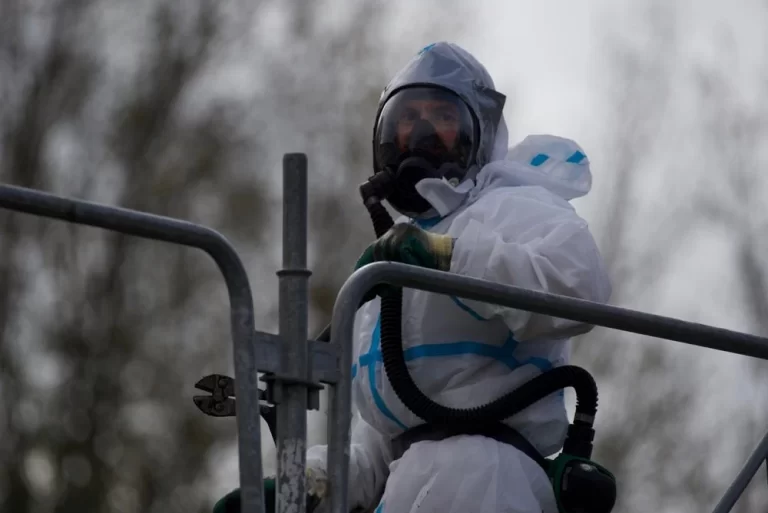
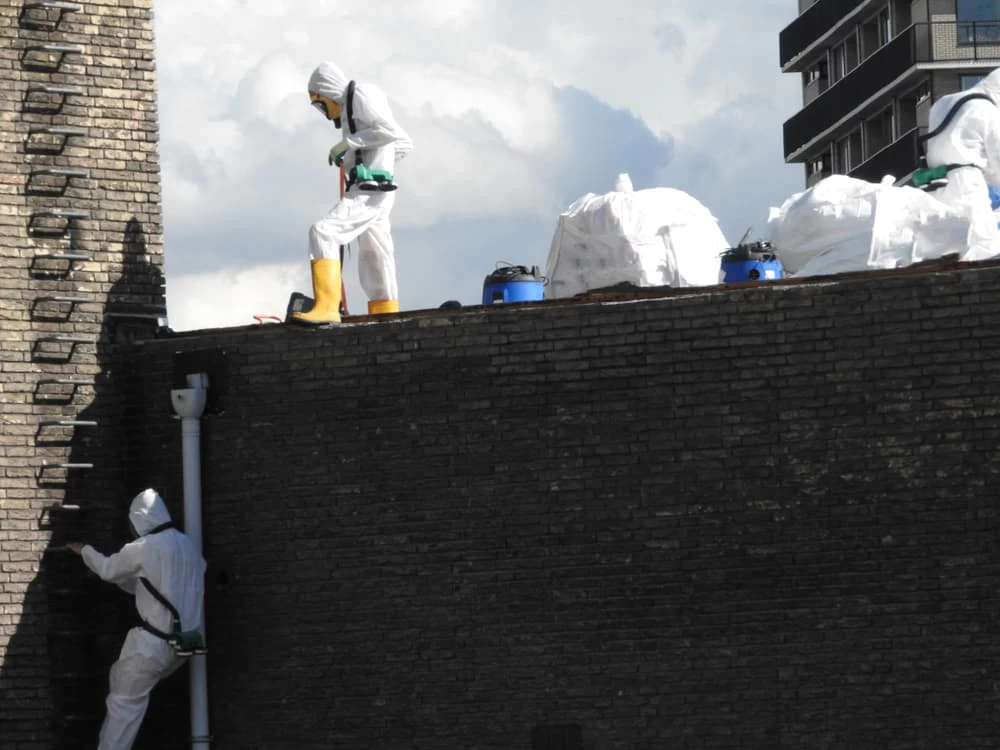
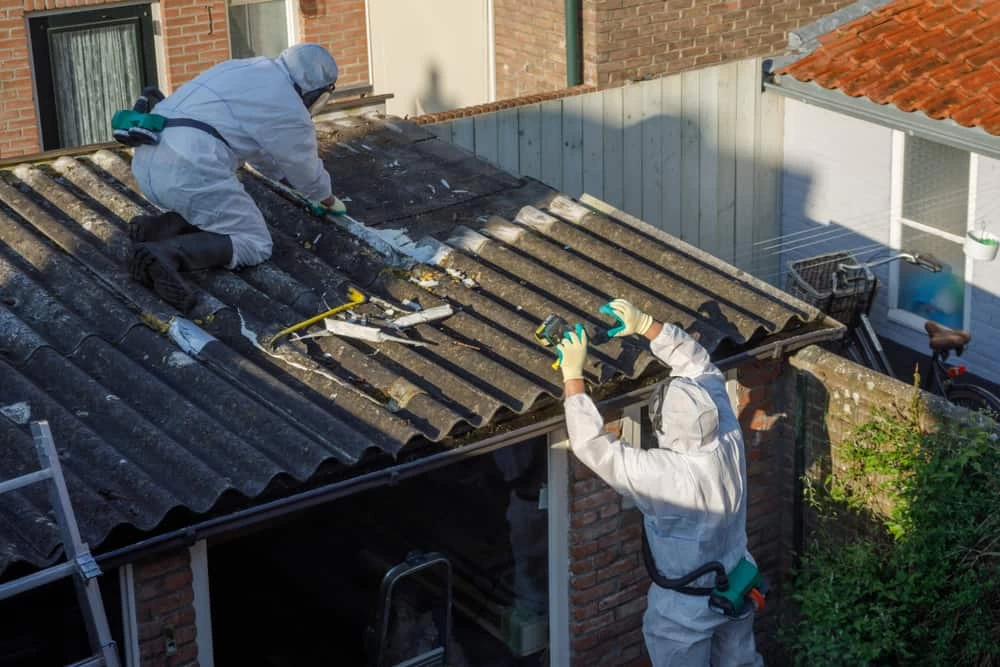
If abatement is needed, we build a scope of work based on what was found. We handle the required agency notifications, set up proper containment, and remove or encapsulate the materials according to ICR 56 standards. Everything is bagged, labeled, and transported to a licensed disposal facility — there’s a manifest for that too, which becomes part of your documentation package.
Once removal is complete, an independent certified industrial hygienist conducts post-abatement air clearance testing. This is a third-party confirmation — not something we test ourselves — that airborne fiber levels are back to safe levels before containment comes down and your space is reoccupied. That clearance certificate is the document your real estate attorney, your buyer, or your own peace of mind will rely on. In a community like Roslyn Estates, where renovation projects tend to be significant in scale, getting that documentation right from the start saves a lot of headaches later.
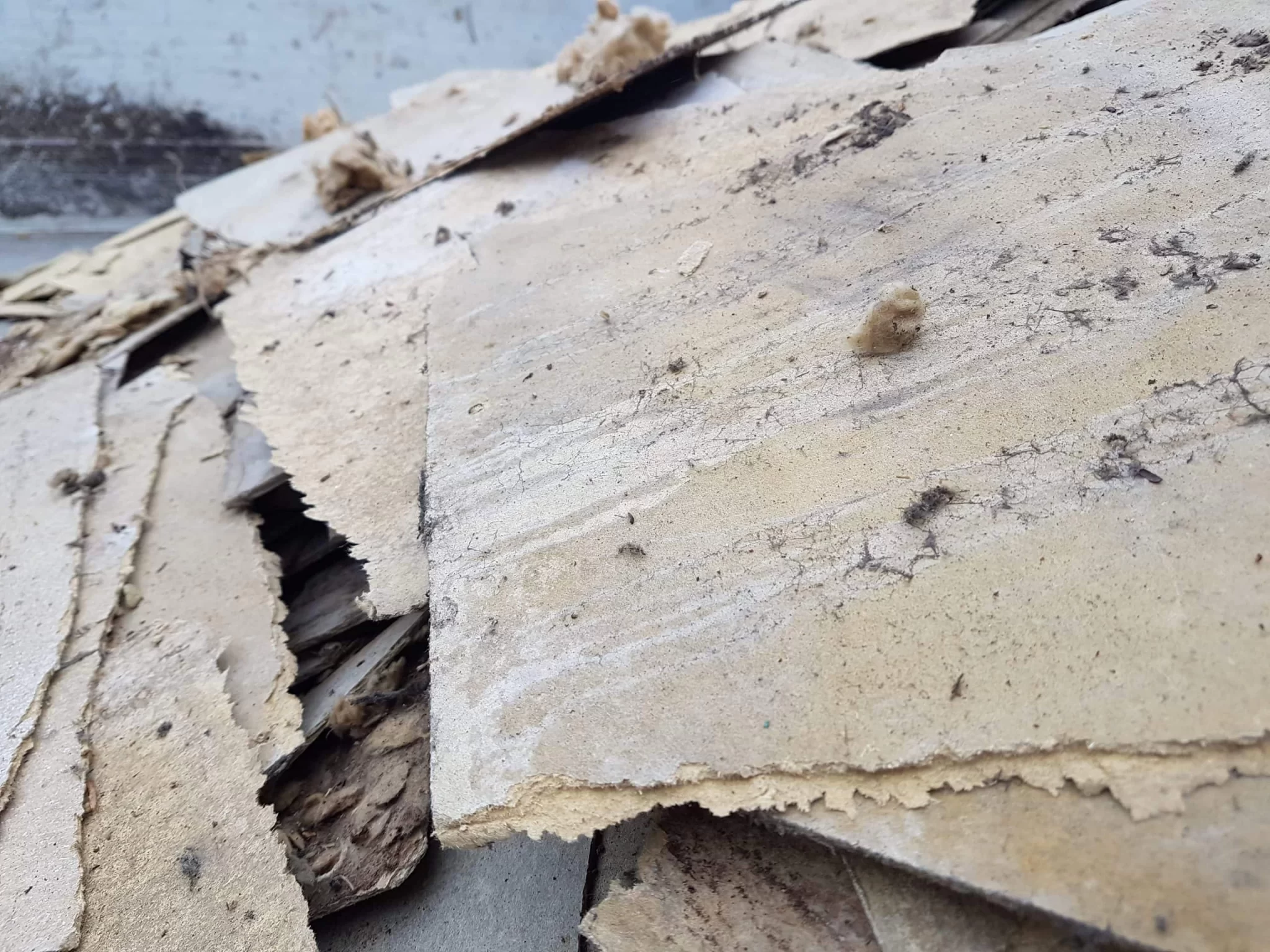
The two most common asbestos abatement needs we see in Roslyn Estates are floor tile removal and popcorn ceiling removal — and that lines up directly with the village’s housing history. The ranch and split-level homes built here in the mid-1950s were constructed during the peak era for both materials. Nine-inch vinyl asbestos tiles were the standard subfloor covering, and textured ceiling coatings applied through the 1970s routinely contained chrysotile asbestos. If those materials are intact and undisturbed, they may not pose an immediate risk — but the moment a renovation disturbs them, the rules change.
Beyond tile and ceiling work, we also handle pipe and boiler insulation removal, which is especially relevant in the older Alvord-era Colonial homes throughout Roslyn Estates. Many of these properties still have original steam heat systems with insulation that was applied before asbestos was understood as a hazard. Basement renovations, HVAC replacements, and mechanical system upgrades are the most common triggers for discovery in these homes.
Every project we complete in Roslyn Estates includes the full documentation package: pre-abatement survey, abatement plan, agency notification records, air clearance certificate, and waste disposal manifests. Whether you’re renovating, selling, or just want to know what’s in your home, that paperwork is what makes the whole process defensible — and in Nassau County’s real estate market, defensible matters.
Is asbestos actually common in Roslyn Estates homes built in the 1950s?
Yes — more common than most homeowners in Roslyn Estates expect. The mid-century ranch and split-level homes built throughout the village during the 1950s were constructed during a period when asbestos-containing materials were standard across residential construction. Nine-inch vinyl floor tiles, textured ceiling coatings, pipe insulation, and joint compound all frequently contained asbestos during this era. It wasn’t a corner-cutting measure — it was simply the material available and widely used at the time.
The important thing to understand is that the presence of asbestos doesn’t automatically mean you have a problem. Materials that are intact, in good condition, and undisturbed are generally considered stable. The risk increases when materials are damaged, deteriorating, or about to be disturbed by renovation work. If you’re planning any kind of project — a kitchen update, a basement conversion, a heating system replacement — a certified survey before you start is both legally required in New York State and genuinely the smartest first step.
Do I legally need an asbestos test before renovating my home in Roslyn Estates?
Under New York State Industrial Code Rule 56, a certified asbestos survey is required before renovation, demolition, or repair work begins on any building where asbestos-containing materials may be present. For homes in Roslyn Estates built before 1980 — which covers the majority of the village’s housing stock — that requirement applies broadly. It’s not a suggestion, and it’s not something a general contractor can waive or skip on your behalf.
What this means practically is that if you hire a contractor to gut your kitchen or finish your basement without first completing a survey, you’re creating legal exposure for yourself and potentially putting your household at risk. If asbestos is disturbed without proper containment and licensed removal, the NYS Department of Labor’s Asbestos Control Bureau can issue stop-work orders, fines, and enforcement actions. Getting the survey done first is a straightforward way to protect yourself, keep your project on schedule, and stay on the right side of state law.
What does asbestos abatement actually cost for a home in Nassau County?
It depends on what materials are involved and how much needs to be removed. For a single-room project — one bathroom with suspect floor tiles, or a small section of popcorn ceiling — costs can start in the low thousands. For a more comprehensive project covering multiple materials across a larger home, such as floor tiles throughout a first floor, ceiling texture in multiple rooms, and pipe insulation in the basement, you’re typically looking at a range of $15,000 to $40,000 for a 1,500 square foot home in Nassau County.
In Roslyn Estates, where homes tend to be larger and renovation projects more substantial in scope, it’s worth getting a detailed scope of work from a licensed contractor before making any assumptions about cost. The survey comes first — it tells you exactly what you’re dealing with — and the abatement quote follows from that. What homeowners here consistently find is that the cost of proper abatement is a fraction of what a failed real estate transaction or a renegotiated sale price would cost, especially in a market where homes regularly sell above seven figures.
How long does asbestos abatement take, and can my family stay in the house?
The timeline depends on the scope of the project. A focused single-room abatement might be completed in one to two days. A larger project involving multiple materials — floor tiles, ceiling texture, and pipe insulation across several areas of the home — can take several days to a week or more. The process involves setting up proper containment, completing the removal, and then waiting for independent air clearance testing results before the containment comes down.
During active abatement, the affected areas of the home are sealed off and under negative air pressure, which means the rest of the house may still be livable depending on the scope and location of the work. That said, for larger projects or work in central areas of the home — basements, main living floors — many families find it more practical to stay elsewhere during the active removal phase. We’ll give you a clear picture of what to expect before work begins so you can plan accordingly, and we’ll communicate throughout the project so there are no surprises on timing.
What happens if asbestos is found unexpectedly during a renovation in Roslyn Estates?
Stop work immediately. That’s the right call — and it’s also what New York State law requires. If a contractor opens a wall, pulls up flooring, or removes ceiling material and encounters something that looks like it could be asbestos, all work in that area should stop until a licensed inspector can assess and sample the material. Continuing to disturb suspect material without containment and proper handling creates real health risk and serious regulatory liability.
This situation comes up more often than people expect in Roslyn Estates, particularly during basement renovations and HVAC replacements in the older Colonial homes, where original pipe insulation may not have been identified in a prior survey. We respond quickly to these mid-project discovery situations — we can dispatch a licensed technician to assess the material, and if abatement is needed, we can mobilize to contain and remove it so your renovation can continue. The key is not to minimize it or hope for the best. A quick call gets you answers fast.
How do I know if the asbestos abatement contractor I hire in Roslyn Estates is actually licensed?
You can verify it directly through the New York State Department of Labor’s online contractor license database. Any legitimate asbestos abatement contractor operating in New York State is required to hold a valid NYS DOL license under Industrial Code Rule 56 — and that license is publicly searchable. It takes about two minutes to check, and it’s worth doing before you sign anything or let anyone start work in your home.
This matters more than it might seem. Unlicensed contractors — or general contractors who disturb asbestos-containing materials without realizing what they’re dealing with — cannot provide the documentation that a licensed abatement produces. That means no certified air clearance report, no waste disposal manifests, and no paper trail. In Roslyn Estates, where home values are high and real estate transactions are closely scrutinized, that missing documentation can become a serious problem when you go to sell. A licensed contractor gives you a defensible, documented record that the work was done correctly — and that’s what actually protects you long-term.