If your home was built before 1980 and you’re renovating, selling, or dealing with flood damage from the Blind Brook, asbestos abatement isn’t a maybe it’s the first call you need to make.
I needed a professional consultation explanation of procedure for safe removal of Asbestos in my apartment complex. Without having an account yet, I was very impressed with the caring, knowledgeable and generous advice offered by Jessica, and will look forward to doing business in the future. Thank you so much! I feel much more informed about a sometimes scary endeavor. Peace. Nancy Silva Mineola, NY.
Mia Munoz
Used this company to clean up some water flood in my house. They were fast and easy to work with.very professional, Would recommend to anyone!
Nini Valle
Great company, had a flood and they responded quickly and efficiently. Billed my insurance company directly. I highly recommend this company!
joe colapietro, jr
I had pipe freeze in my basement right before a snow storm and they made to within an hour to help start the clean up process. They we by our side throughout the entire process and even helped with the insurance company. They did such a great job with the cleanup, repair, remidiation, I contracted them to perform the repairs and finishes in the basement. They came with enough manpower and material to get the job done. Leo and Jessica were nothing but a pleasure to deal with!!
Cristian Arredondo c
I had some water damage in my home and Green Island was able to take care of my issue quickly and effectively. I am very pleased with the work they did. They responded quickly and were very professional.
Michael M
Outstanding service! From the office to the field crew everyone was friendly, helpful and responsive. I highly recommend Green Island Group.
Most Rye Brook homeowners don’t discover asbestos because they went looking for it. They find it mid-renovation when a contractor pulls up a 1960s kitchen floor, or after Blind Brook floods the basement and the pipe insulation around the boiler starts coming apart. Either way, the project stops. And until a licensed contractor clears it, nothing moves forward.
When asbestos abatement is done right, you get your timeline back. Your renovation contractor can re-enter the space. Your real estate closing can proceed. Your insurance claim can close. That’s the real outcome not just a safer home, but a situation that’s no longer frozen.
Rye Brook’s housing stock is one of the most asbestos-dense in Westchester County. Over 70% of homes here were built before 1975, which means vinyl floor tiles, acoustic ceiling texture, pipe insulation, and drywall joint compound from that era are extremely common. These aren’t hypothetical risks. They’re the materials sitting inside the walls and under the floors of ranch homes, split-levels, and cape cods all across this village. Getting a professional assessment before you swing a hammer or list the property is the decision that protects everything that comes after.
We hold a full New York State Department of Labor asbestos handling license, which is the specific credential required for any abatement work performed in Rye Brook and across Westchester County. That’s not a technicality it’s the legal baseline, and it’s something you should verify before you hire anyone. Our license is a public record you can look up by name.
Beyond our company license, every single worker we send to a job site carries an individual NYS DOL certification. That matters because state law requires it and because the alternative is a crew that’s technically illegal to be doing the work, regardless of what other companies’ marketing says.
We’ve completed over 5,000 abatement projects across the New York metro area, including throughout southeastern Westchester and Rye Brook specifically. We handle asbestos abatement, water damage restoration, mold remediation, and lead removal all in-house, with no subcontracting on core work. For Rye Brook homeowners dealing with the combined fallout of a flood event and asbestos disturbance, that single point of contact matters more than most people realize until they’re in the middle of it.
It starts with a free on-site inspection. We send a representative to your Rye Brook property, assess the materials in question, and tell you plainly what you’re dealing with whether that’s confirmed asbestos-containing material, a suspect material that needs lab testing, or something that doesn’t require action at all. You won’t be charged for that conversation, and you won’t be pressured into a scope you don’t need.
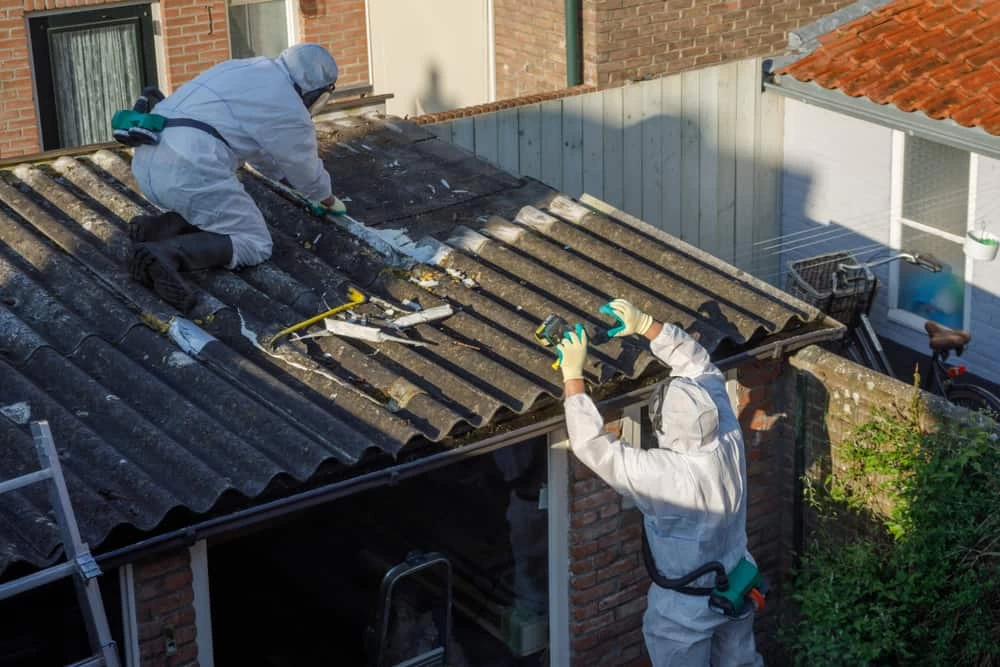
If abatement is required, we establish a full containment zone before any work begins. Negative air pressure is maintained throughout meaning air flows into the work area, not out into the rest of your home. HEPA-filtered air scrubbers run continuously. The affected materials are removed, sealed, and transported to a NYS DEC-approved disposal facility with a documented waste manifest, which is a chain-of-custody record required under state law. This is not optional paperwork it’s a compliance requirement that unlicensed or out-of-state operators frequently skip.
After removal, post-abatement air clearance testing is conducted. If the space passes and it needs to pass before containment comes down you receive formal clearance documentation. That document is what your renovation contractor, your real estate attorney, your lender, and your insurance adjuster will ask for. We provide it as a standard deliverable on every project, not as an add-on.
Built for Rye Brook's Homes, Not a Generic Checklist
The asbestos materials most commonly found in Rye Brook properties are specific to the postwar construction era that defines this village. Nine-by-nine vinyl asbestos floor tiles are extremely common in ranch and split-level homes from the 1950s and 1960s. Popcorn acoustic ceiling texture the kind sprayed onto ceilings in homes built through the late 1970s is another frequent find. Pipe and duct insulation around older boilers and hot water systems is a third, and it’s the one most likely to be disturbed when Blind Brook flooding reaches a basement mechanical room. We handle asbestos tile removal, asbestos popcorn ceiling removal, pipe insulation abatement, and drywall joint compound remediation the full range of what Rye Brook’s housing stock actually contains.
For homeowners preparing to sell, our clearance documentation satisfies the requirements of buyers’ attorneys, title companies, and mortgage lenders operating in Westchester County’s real estate market. For homeowners dealing with water damage, our ability to handle both the asbestos abatement and the water damage restoration under one contract means you’re not managing two separate crews, two separate timelines, and two separate insurance claims processes. We work directly with insurance carriers and handle billing on your behalf, which removes a significant burden at exactly the moment when you have the least capacity to manage it.
Rye Brook falls under NYS Industrial Code Rule 56 not NYC DEP jurisdiction. Any contractor referencing an ACP-5 form for work in this village is either confused or out of their depth. We operate under the correct regulatory framework for Westchester County and maintain full compliance with NYS DEC waste disposal requirements on every project.
Does my Rye Brook home actually need asbestos testing before I renovate?
If your home was built before 1980 and you’re planning any work that disturbs floors, ceilings, walls, or mechanical systems, testing before you start isn’t just a good idea in many cases it’s legally required under NYS Industrial Code Rule 56. The rule applies to renovation and demolition work in New York State, and it places the compliance obligation on the contractor performing the work. That means if your contractor disturbs asbestos-containing material without a prior inspection, both of you may be exposed to liability.
In Rye Brook specifically, the risk is high because of the village’s housing stock. More than half of all homes here were built between 1950 and 1970 the peak era for asbestos use in residential construction. Floor tiles, ceiling texture, pipe insulation, and joint compound from that period routinely test positive. A pre-renovation inspection from a licensed contractor gives you a clear answer before work begins, not a problem to manage after the fact.
How much does asbestos removal typically cost in Westchester County?
The cost depends on the type of material, how much of it there is, and how accessible it is. A single room of vinyl asbestos floor tile removal in a Rye Brook ranch home might run $1,500 to $4,000. A full popcorn ceiling removal across multiple rooms or a larger pipe insulation abatement project can run $5,000 to $15,000 or more. These aren’t arbitrary numbers they reflect the containment setup, air monitoring, labor, and disposal costs that licensed abatement under NYS Rule 56 actually requires.
What you shouldn’t do is choose a contractor based on the lowest quote without understanding what’s included. A quote that doesn’t include post-abatement air clearance testing, waste manifests, and formal clearance documentation is not a complete quote it’s a starting point that will cost you more later. In a real estate market where Rye Brook homes regularly sell above $800,000, spending $5,000 to $10,000 on proper abatement and clearance documentation is a straightforward investment in protecting the sale.
What happens if flooding from Blind Brook disturbs asbestos in my home?
This is one of the more specific scenarios that comes up in Rye Brook more than almost anywhere else in Westchester County. When floodwater reaches a pre-1980 home, it can wet and degrade pipe insulation around boilers and hot water systems, loosen vinyl asbestos floor tiles, and damage ceiling materials turning what was previously an intact, manageable material into an active fiber-release hazard. Once that happens, the water damage restoration work cannot safely proceed until the asbestos is addressed first.
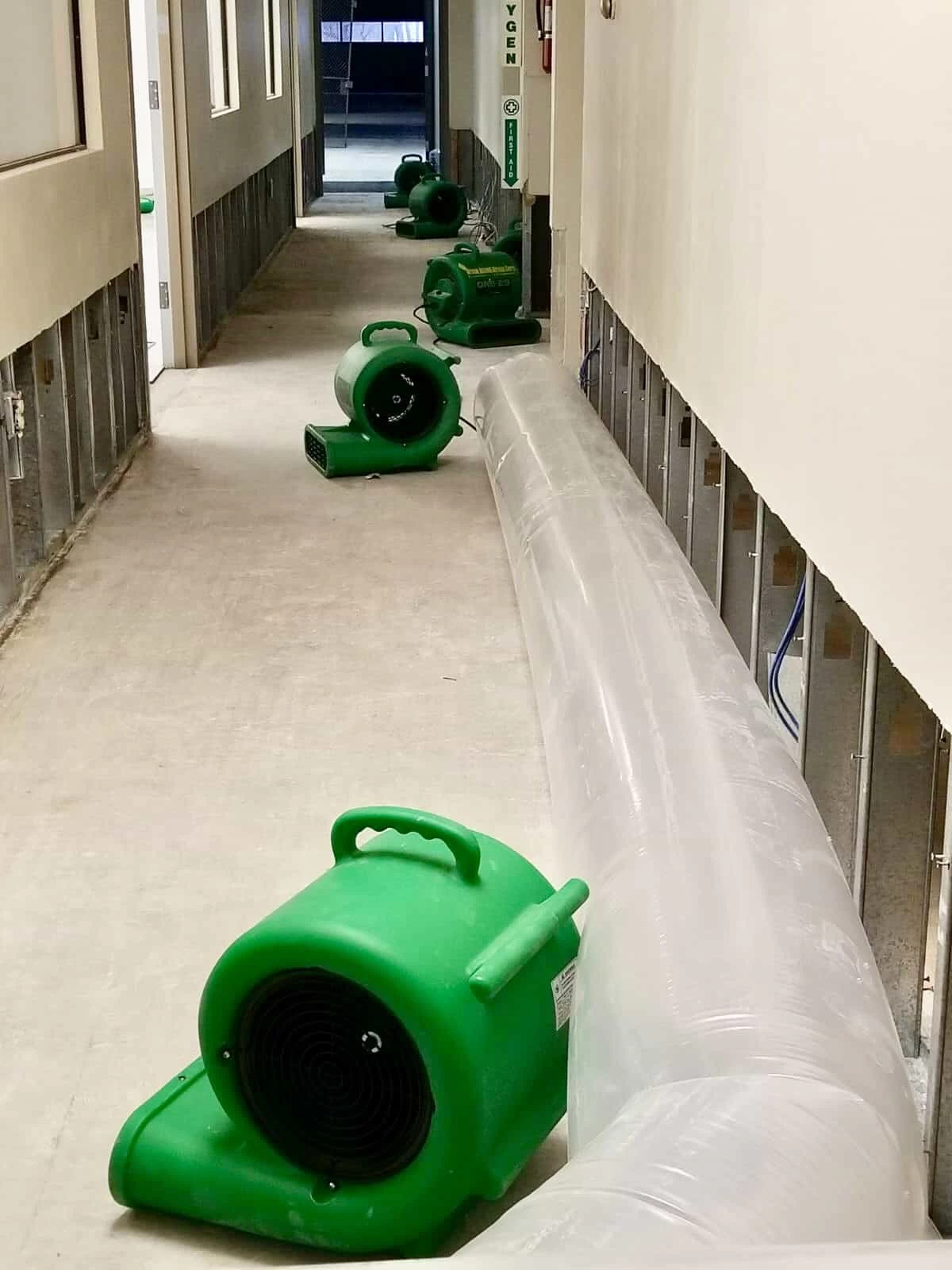
The sequence matters: asbestos abatement has to come before drywall removal, flooring tear-out, or any other restoration work that would further disturb the affected materials. We handle both asbestos abatement and water damage restoration, which means you’re not coordinating two separate contractors with two separate schedules. The abatement is completed and cleared first, then restoration work begins and we manage the insurance documentation for both, which is often where homeowners lose the most time in a flood recovery situation.
Can I stay in my house while asbestos abatement is being done?
It depends on the scope and location of the work. For a contained project say, asbestos tile removal in a basement or a single room many homeowners can remain in the home as long as they stay out of the work area and the containment is properly sealed. For larger projects involving multiple rooms, HVAC-adjacent materials, or ceiling work that affects shared air space, temporary relocation is often the safer and more practical choice.
We’ll tell you plainly what makes sense for your specific project before work begins. For Rye Brook families with children in the Blind Brook school district who are working around school schedules and daily routines, that conversation matters. The containment protocol negative air pressure, sealed barriers, HEPA filtration is engineered to prevent fiber migration into the rest of your home. But the honest answer is that the right call depends on your layout, the scope of work, and how sensitive your household is to disruption. You’ll get a straight answer on that during the free inspection.
How do I verify that an asbestos contractor is actually licensed to work in Rye Brook?
Rye Brook is under New York State DOL jurisdiction not New York City DEP, not a county-level agency. The license you need to ask for is a NYS Department of Labor asbestos handling license, issued under Industrial Code Rule 56. This is a public record. You can verify any contractor’s license status on the NYS DOL website using the company name or license number. If a contractor can’t give you a specific license number, that’s your answer.
Beyond the company license, New York State also requires individual worker certifications for every asbestos handler and supervisor on a job site. That means it’s not enough for the company to be licensed every person who enters your home in protective gear needs to hold their own NYS DOL certification. Ask for both. A legitimate contractor will have no hesitation providing that documentation. One that hedges or redirects is worth walking away from, regardless of how competitive their quote is.
Does asbestos abatement need to be done before listing a home for sale in Rye Brook?
There’s no blanket New York State law that requires asbestos abatement before selling a home, but the practical reality in Rye Brook’s real estate market makes it a serious consideration. Buyers’ attorneys in Westchester County are increasingly focused on environmental disclosures, and lenders and title companies are paying closer attention to asbestos findings in pre-1980 properties. If a buyer’s inspector identifies suspect materials during due diligence, you’re looking at price renegotiations, delayed closings, or deals that fall apart entirely.
Sellers who complete abatement before listing and have the clearance documentation in hand are in a much stronger position. That document shows buyers, their attorneys, and their lenders that the issue was identified, professionally remediated by a licensed contractor, and verified by post-abatement air testing. In a market where Rye Brook homes carry significant value and buyers are sophisticated, that paper trail is worth more than the cost of the abatement itself. We provide that documentation as a standard part of every completed project.