Saddle Rock Estates homes were built in an era when asbestos was standard. If you’re renovating, selling, or just concerned — certified asbestos abatement is the only safe next step.
I needed a professional consultation explanation of procedure for safe removal of Asbestos in my apartment complex. Without having an account yet, I was very impressed with the caring, knowledgeable and generous advice offered by Jessica, and will look forward to doing business in the future. Thank you so much! I feel much more informed about a sometimes scary endeavor. Peace. Nancy Silva Mineola, NY.
Mia Munoz
Used this company to clean up some water flood in my house. They were fast and easy to work with.very professional, Would recommend to anyone!
Nini Valle
Great company, had a flood and they responded quickly and efficiently. Billed my insurance company directly. I highly recommend this company!
joe colapietro, jr
I had pipe freeze in my basement right before a snow storm and they made to within an hour to help start the clean up process. They we by our side throughout the entire process and even helped with the insurance company. They did such a great job with the cleanup, repair, remidiation, I contracted them to perform the repairs and finishes in the basement. They came with enough manpower and material to get the job done. Leo and Jessica were nothing but a pleasure to deal with!!
Cristian Arredondo c
I had some water damage in my home and Green Island was able to take care of my issue quickly and effectively. I am very pleased with the work they did. They responded quickly and were very professional.
Michael M
Outstanding service! From the office to the field crew everyone was friendly, helpful and responsive. I highly recommend Green Island Group.
You stop guessing. That’s the biggest thing. Once a certified inspection confirms what’s there — and proper abatement removes it — you’re no longer living with a question mark inside your walls, your floors, or your ceiling. For a lot of Saddle Rock Estates homeowners, that peace of mind is worth more than the project itself.
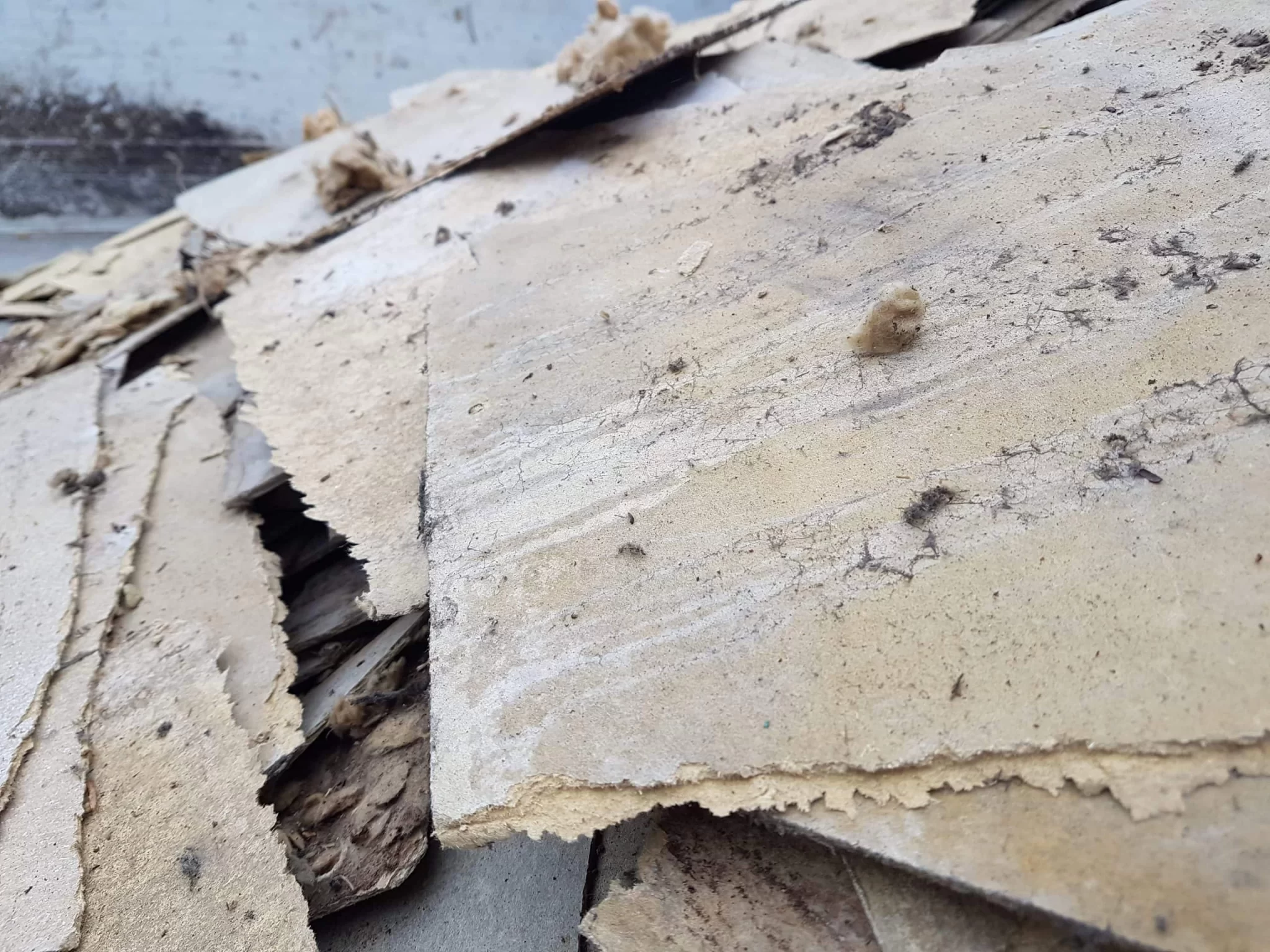
The homes on this peninsula were largely built between the 1920s and 1960s, and the materials used back then — floor tiles, pipe insulation, textured ceilings, roofing felt — routinely contained asbestos. Sitting adjacent to Little Neck Bay means your home also deals with year-round coastal humidity and salt air, which accelerates the deterioration of older building materials. Intact asbestos is one thing. Deteriorating, friable asbestos is another — and waterfront conditions push materials toward that line faster than most homeowners realize.
If you’re preparing to sell, you get something else entirely: documentation. Clean air clearance reports remove asbestos as a negotiating point for buyers. In a market where Great Neck Peninsula homes regularly trade above $1 million, that’s not a small thing. Buyers at this price point are thorough. Having the paperwork already in hand tells them the home has been taken care of — and it protects you after closing too.
We’ve been serving Nassau County for years, and Saddle Rock Estates is familiar ground. We’ve worked throughout the Great Neck Peninsula, in the 11021 ZIP code, and across the North Shore communities that share the same pre-war and mid-century housing profile as Saddle Rock Estates. That means we’re not learning your home type on your job.
Because Saddle Rock Estates is an unincorporated hamlet, permits run through the Town of North Hempstead Building Department — not a local village office. We know that process. We work within it regularly, and we can help coordinate the abatement phase of your project with your broader renovation or sale timeline so nothing stalls.
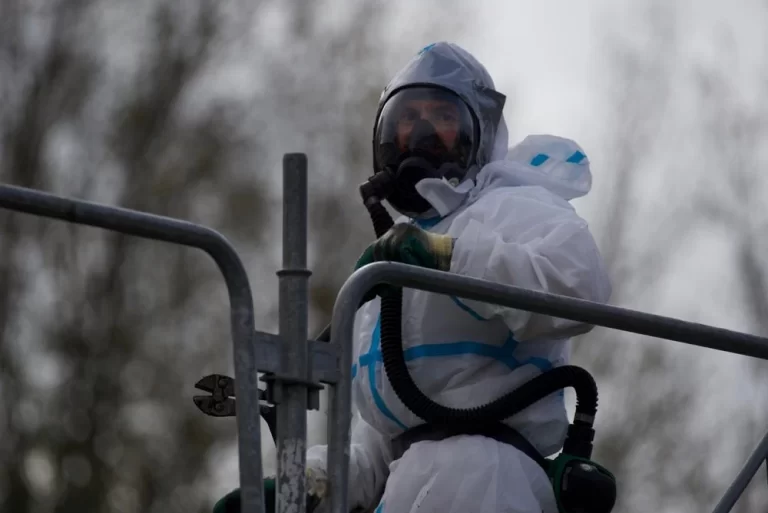
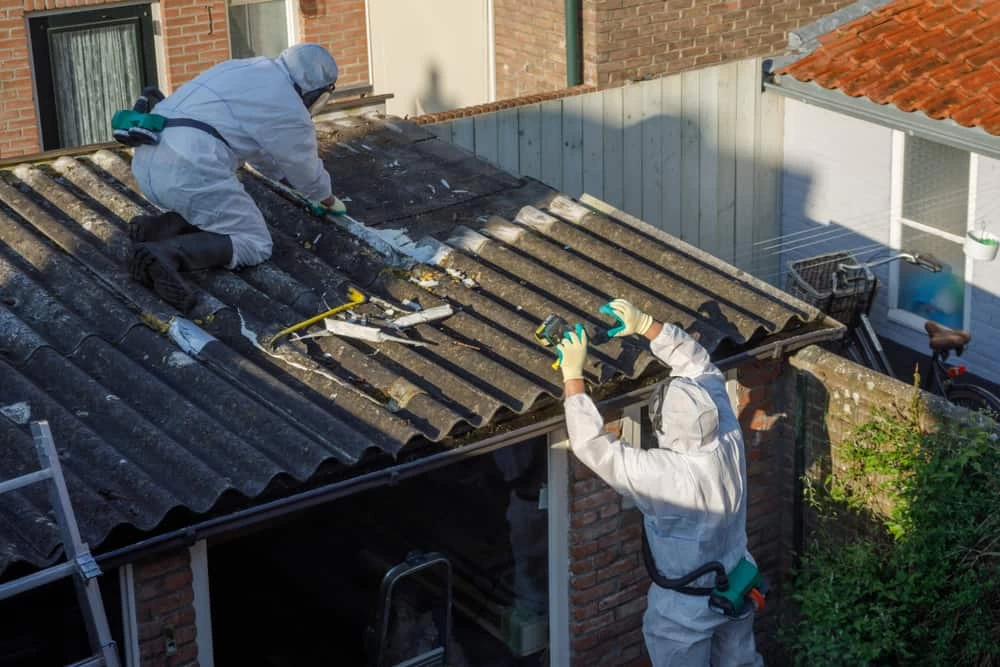
Every project we complete is done by NYSDOL-certified technicians, with proper containment, licensed waste disposal, and a full documentation package at the end. No shortcuts, no guesswork — just work that holds up to inspection.
No Surprises — Here's What the Process Actually Looks Like
It starts with an inspection. Before anything is removed, a certified inspector surveys your home and identifies any materials that are likely to contain asbestos. In older Saddle Rock Estates homes, that typically means checking floor tiles — especially the 9×9 vinyl tiles common in kitchens, bathrooms, and basements from the 1940s and 50s — along with pipe insulation, textured ceilings, roofing materials, and joint compound. You get a clear picture of what’s there and what condition it’s in before any decisions are made.
If abatement is needed, we handle the NYSDOL project notification for qualifying jobs and set up full containment before work begins. That means negative air pressure systems, sealed work zones, and wet application methods that suppress fiber release. Your home — and everything in it — stays protected throughout the process. For homes near Little Neck Bay, we account for the elevated ambient humidity when planning containment and drying protocols.
When the work is done, an independent air monitoring professional conducts clearance testing to confirm that fiber levels meet New York State standards before the space is re-occupied. You receive a complete documentation package — project records, waste manifest, and the air clearance report — ready for your contractor, your real estate attorney, or the Town of North Hempstead Building Department.
The asbestos abatement work we do in Saddle Rock Estates covers the full range of materials common to pre-1960s North Shore construction. Asbestos tile removal is one of the most frequent requests — the 9×9 vinyl floor tiles in older kitchens, bathrooms, and finished basements almost universally contain chrysotile asbestos. They’re stable when left alone, but the moment a renovation requires cutting or removing them, the risk is real. We use wet removal methods and HEPA vacuuming to keep the work area clean and contained.
Popcorn ceiling removal is another common job in this area. A lot of Saddle Rock Estates homeowners updating their mid-century homes want those textured ceilings gone — but scraping them without testing first is exactly how asbestos fibers end up in your living space. We test before we touch, contain the room fully, and clear the air before handing it back to you.
Beyond tiles and ceilings, we also handle pipe and duct insulation, roofing and siding materials, and joint compound — all materials found regularly in the homes on this peninsula. Every scope of work comes with a written proposal, transparent pricing, and the same NYSDOL-compliant process regardless of project size. You know what you’re getting before we start.
Does my Saddle Rock Estates home actually need asbestos testing before renovating?
If your home was built before 1980 — and most homes in Saddle Rock Estates were built well before that — then yes, testing before any renovation is the right call. New York State Industrial Code Rule 56 requires that asbestos-containing materials be identified and properly handled before demolition or renovation work begins. That applies whether you’re pulling up old floor tiles, opening walls, replacing a roof, or finishing a basement.
The practical reason matters just as much as the legal one. Many renovation contractors in Nassau County will not begin work until asbestos clearance is confirmed — and if they disturb asbestos-containing materials without proper protocols, the liability falls on the homeowner. A pre-renovation survey from a certified inspector gives you a clear picture of what’s in the home, what needs to be addressed, and what can be safely left alone. It’s a straightforward step that protects your project, your family, and your investment.
How do I know if my old floor tiles contain asbestos?
You can’t tell by looking at them. The 9×9 inch vinyl floor tiles installed in homes throughout the 1940s and 1950s — exactly the era when most Saddle Rock Estates homes were built — are among the most consistently asbestos-positive materials found in residential properties on Long Island. The same goes for the black mastic adhesive used to install them. Neither the tile nor the adhesive will show any visible sign of containing asbestos.
The only way to know for certain is laboratory testing. A certified inspector takes a small sample and sends it to an accredited lab for analysis. The process is straightforward and doesn’t require major disruption to your home. If the tiles come back positive, that doesn’t necessarily mean they need to be removed immediately — intact, non-friable tiles that aren’t being disturbed may be able to be encapsulated rather than removed, depending on the condition and your renovation plans. A certified contractor can walk you through the options after the results come in.
What does asbestos abatement actually cost in Nassau County?
It depends on the scope, but for most residential projects in Nassau County, asbestos abatement runs somewhere between $1,500 and $10,000. A single room of floor tile removal might fall on the lower end. A whole-house survey followed by abatement of multiple material types — tiles, pipe insulation, and a textured ceiling — will cost more. The variables are square footage, the number of material types involved, accessibility, and whether the materials are friable or intact.
For Saddle Rock Estates homeowners, it helps to think about this relative to what’s at stake. If you’re renovating a home worth over a million dollars, or preparing it for sale in a market where buyers commission thorough environmental inspections, the cost of abatement is a small fraction of the transaction value — and the cost of not doing it correctly can be significantly higher. Contaminating an HVAC system or a finished space by disturbing asbestos without containment creates a remediation problem that dwarfs the original abatement cost. Get a written, itemized proposal before committing to any contractor so you know exactly what’s included.
Do I need a permit for asbestos removal in Saddle Rock Estates?
There are two separate requirements to understand here. At the state level, New York State Industrial Code Rule 56 requires that any project disturbing more than 10 linear feet or 25 square feet of asbestos-containing material be filed with the NYSDOL before work begins. That notification is the contractor’s responsibility, and any NYSDOL-certified contractor should handle it as a standard part of the job — not something you need to chase down separately.
At the local level, because Saddle Rock Estates is an unincorporated hamlet, building permits for renovation work are issued through the Town of North Hempstead Building Department, not a village office. If your asbestos abatement is connected to a larger renovation project that requires a building permit, the town may require documentation of asbestos clearance before issuing demolition approval. We’re familiar with the North Hempstead permit process and can help you understand how the abatement phase fits into your overall project timeline so you’re not caught waiting on paperwork.
Can the coastal humidity near Little Neck Bay make asbestos more dangerous over time?
It can accelerate the problem, yes. Asbestos-containing materials that are intact and stable pose a much lower risk than materials that have become friable — meaning they crumble or release fibers when handled. The coastal microclimate around the Great Neck Peninsula, including the elevated humidity and salt air near Little Neck Bay, can speed up the deterioration of older building materials, including pipe insulation, roofing felt, and certain floor and ceiling materials.
Freeze-thaw cycling — which is pronounced on the North Shore — also stresses older materials over time. A material that was intact five years ago may be in a different condition today, particularly in unheated spaces like crawl spaces, attics, or older mechanical rooms. If your home sits close to the water and you haven’t had a professional inspection in several years, it’s worth having someone take a look — not because there’s necessarily an emergency, but because the condition of ACMs changes, and knowing where things stand gives you options before a problem forces your hand.
How long does the asbestos abatement process take from start to finish?
For a straightforward residential project — a single room of floor tile removal or a popcorn ceiling in one area — the physical abatement work typically takes one to two days. Larger projects involving multiple material types or multiple rooms will take longer, sometimes three to five days depending on scope. The timeline that surprises most homeowners is what happens after the physical work is done: the space can’t be re-occupied until post-abatement air clearance testing confirms that fiber levels meet New York State standards. That testing and the lab turnaround usually adds one to two business days.
If your project involves a NYSDOL notification requirement — which applies to jobs above the 10 linear foot or 25 square foot threshold — that notification needs to be filed before work begins, which is something to factor into your scheduling. For Saddle Rock Estates homeowners coordinating abatement with a renovation or a real estate closing, we recommend building in a realistic buffer around the clearance testing phase. Rushing that step is where projects run into problems, and it’s the documentation from that final clearance that you’ll actually need for your contractor, attorney, or building department.