Saint Josen Road properties are some of the oldest in Ulster County and older homes mean layers of materials that were never meant to be disturbed. We handle licensed asbestos abatement from start to finish, including permits, containment, and written air clearance when the job is done.
I needed a professional consultation explanation of procedure for safe removal of Asbestos in my apartment complex. Without having an account yet, I was very impressed with the caring, knowledgeable and generous advice offered by Jessica, and will look forward to doing business in the future. Thank you so much! I feel much more informed about a sometimes scary endeavor. Peace. Nancy Silva Mineola, NY.
Mia Munoz
Used this company to clean up some water flood in my house. They were fast and easy to work with.very professional, Would recommend to anyone!
Nini Valle
Great company, had a flood and they responded quickly and efficiently. Billed my insurance company directly. I highly recommend this company!
joe colapietro, jr
I had pipe freeze in my basement right before a snow storm and they made to within an hour to help start the clean up process. They we by our side throughout the entire process and even helped with the insurance company. They did such a great job with the cleanup, repair, remidiation, I contracted them to perform the repairs and finishes in the basement. They came with enough manpower and material to get the job done. Leo and Jessica were nothing but a pleasure to deal with!!
Cristian Arredondo c
I had some water damage in my home and Green Island was able to take care of my issue quickly and effectively. I am very pleased with the work they did. They responded quickly and were very professional.
Michael M
Outstanding service! From the office to the field crew everyone was friendly, helpful and responsive. I highly recommend Green Island Group.
Your renovation moves forward. Your home sale doesn’t stall at the inspection table. You’re not lying awake wondering whether the demo crew disturbed something they shouldn’t have. That’s what proper asbestos abatement actually delivers not just removal, but documented proof that it’s gone.
For homeowners on Saint Josen Road and throughout the Accord area, that documentation matters more than most people realize. Properties here are often 19th-century farmhouses that have been renovated in layers over decades. Each layer is a potential source floor tiles, pipe insulation wrapped around old cast-iron boiler systems, joint compound on plaster walls, popcorn ceilings added during a 1960s update. You may not know what’s in there until someone starts pulling things apart.
The Catskill-area winters add another layer of urgency. Freeze-thaw cycles stress older building materials, and pipe insulation that’s been contracting and expanding for 50 years doesn’t always stay intact. Storm damage to older roofing and exterior materials including cement-asbestos shingles that were widely used in mid-century renovations across rural Ulster County can create an emergency situation fast. When that happens, you need a licensed contractor who can respond, not someone who’ll call you back in three days.
We hold the NYS DOL Asbestos Handling License the specific credential required by law for any asbestos abatement work in New York State. Not a general contractor license. Not a verbal claim of experience. The actual license, verifiable through the NYS DOL contractor listing. In a rural market like the Town of Rochester where Saint Josen is located, unlicensed operators are a real problem, and that distinction matters.
Beyond licensing, we carry IICRC certification for water and fire damage, NYS DOL Mold remediation credentials, and USEPA Lead and RRP certifications. That means if your older Saint Josen property has asbestos in the basement and mold from years of Catskill-area moisture, you’re not coordinating two separate contractors across an 89-square-mile rural town. One call covers it.
We also bill insurance directly something multiple customers have specifically called out as a genuine relief when they were already dealing with a stressful situation.
No Guesswork Here's Exactly What the Job Looks Like
It starts with an inspection. Before anything is touched, the materials in question need to be identified and assessed. If asbestos-containing materials are confirmed, and the scope meets or exceeds the threshold under NYS Industrial Code Rule 56 which is 10 or more square feet or 25 or more linear feet licensed abatement is legally required. We handle the NYS Department of Labor notification and any local permit requirements through the Town of Rochester’s building department. You don’t have to figure out which forms go where.
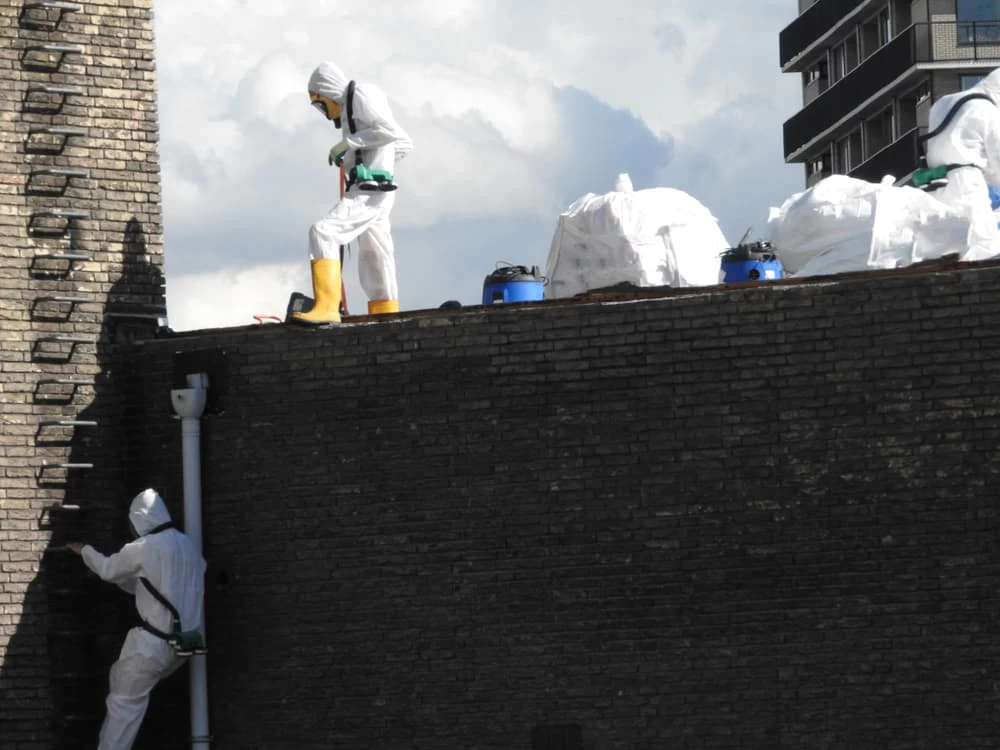
Once permits are in order, the work area is contained and sealed before removal begins. Licensed workers follow strict procedures for material removal, bagging, and transport nothing gets carried through your living space in an open bag. Air quality is monitored throughout the process, not just at the end.
When the removal is complete, post-abatement air monitoring is conducted and the results are documented in writing. That clearance report is what satisfies buyers during a real estate transaction, what your general contractor needs before they resume work, and what gives you actual confidence that the job was done correctly not just someone’s word for it. For a property on Saint Josen Road that may be worth $450,000 or more, that piece of paper is not optional.
Every Material Type, Every Scenario, One Licensed Team
The older the home, the more places asbestos tends to hide. On Saint Josen Road and throughout the Accord area, the most common sources in residential properties are pipe and boiler insulation from older heating systems, 9×9 vinyl floor tiles and the black mastic adhesive underneath them, popcorn ceiling texture applied during mid-century updates, drywall joint compound, and cement-asbestos shingles on roofs and exterior cladding. We’re equipped to handle all of it not just the easy jobs.
For homeowners managing a renovation, we coordinate the process around your contractor’s schedule so the project doesn’t lose weeks waiting on abatement. For pre-sale situations, we handle the turnaround with the timeline of your closing in mind. And for emergency scenarios storm damage, unexpected discovery during demo we offer 24/7 response.
We also serve commercial properties in the Rondout Valley area, including older municipal buildings and school facilities like those in the Rondout Valley Central School District. We hold MBE, WBE, MWBE, and SBE designations, which are relevant credentials for any project with government or institutional procurement requirements. Whatever the scope, the process ends the same way: written air clearance, documented records, and a job that holds up to scrutiny.
Does my Saint Josen home actually need licensed asbestos abatement before renovating?
If your home was built before 1980 which describes a significant portion of the housing stock on and around Saint Josen Road there’s a real chance it contains asbestos-containing materials. Under NYS Industrial Code Rule 56, any renovation that disturbs 10 or more square feet or 25 or more linear feet of those materials legally requires licensed abatement. That threshold is easier to hit than most people expect. One room of old floor tile, a section of pipe insulation in the basement, or a popcorn ceiling in a single bedroom can cross it.
The bigger issue is what happens if you don’t address it. A general contractor or handyman who disturbs asbestos without proper containment and disposal isn’t just breaking the law they’re creating a health hazard and leaving you with legal exposure that follows the property for years. NYS requires abatement records to be retained for 30 years. If you ever sell, refinance, or face an insurance claim, that paper trail either protects you or it doesn’t exist.
How much does asbestos abatement typically cost for an older Ulster County home?
Costs vary depending on the type of material, the scope of the affected area, and the complexity of the job. For a targeted residential project removing asbestos floor tiles in a single room, or addressing pipe insulation in a basement you’re typically looking at a range of $1,500 to $5,000. Larger or more complex projects, such as whole-home abatement prior to a major renovation or demolition, can run significantly higher.
In Ulster County, asbestos abatement pricing has increased 8 to 12 percent in recent years, partly because post-abatement air monitoring which is required adds to the overall cost. That monitoring isn’t something to cut corners on. It’s what produces the written clearance documentation that protects you legally and satisfies buyers, contractors, and building departments. For a property on Saint Josen Road where values are in the $450,000 to $500,000 range, the cost of proper abatement is a small fraction of what’s at stake if the job isn’t done right.
What materials in a 19th-century farmhouse are most likely to contain asbestos?
Homes built in the 1800s weren’t originally constructed with asbestos but they were almost always renovated during the decades when asbestos use was at its peak, roughly the 1940s through the late 1970s. Each renovation layer is where the risk lives. The most common sources in older rural Ulster County properties are pipe and boiler insulation wrapped around cast-iron heating systems, 9×9 floor tiles and the black adhesive beneath them, textured ceiling coatings applied during mid-century updates, drywall joint compound used in later additions or repairs, and cement-asbestos shingles on roofs, outbuildings, and exterior cladding.
What makes older farmhouses particularly complex is the layering. A kitchen that was updated in 1955, again in 1972, and again in 1990 may have multiple generations of materials stacked on top of each other. An experienced abatement contractor knows where to look and what to test not just the obvious spots, but the places that get missed when someone less familiar with this type of housing stock takes on the job.
Can asbestos abatement be completed before a home sale closes in the Accord area?
Yes, and we do it regularly in this market. The key is starting early enough. The abatement process involves inspection, NYS DOL notification, permit coordination with the Town of Rochester’s building department, the removal itself, and post-abatement air monitoring with written clearance. Each step has its own timeline, and trying to compress all of it into the final week before closing creates unnecessary risk.
Realistically, for a straightforward residential project, the full process from inspection to clearance documentation can be completed within a reasonable window but that window needs to be planned, not improvised. If you’re listing a property on Saint Josen Road and a buyer’s inspector has flagged suspect materials, the sooner you bring us in to assess and begin the process, the more control you have over the timeline. Written clearance documentation at the end is what satisfies buyers, their attorneys, and the lender it’s the deliverable that actually moves the transaction forward.
What happens if storm damage exposes asbestos materials on my rural property?
This is more common in the Catskills and Hudson Valley region than most homeowners expect. A heavy snow load, an ice event, or a wind storm that damages an older roof or tears off exterior cladding can expose cement-asbestos shingles or disturb insulation materials that were previously contained. Once those materials are physically compromised and potentially releasing fibers, it becomes an emergency situation not something to wait on.
Under NYS law, even storm-damaged asbestos-containing materials must be handled by a licensed contractor. You can’t simply bag it up and throw it in the trash, and a general contractor doing emergency repairs can’t legally remove it either. We offer 24/7 emergency response for exactly these situations. The process still follows proper containment and disposal protocols, but the response timeline is treated as urgent. If you’re dealing with storm damage to an older Saint Josen property and you’re not sure whether the affected materials contain asbestos, the right move is to stop work and call us before anything else is disturbed.
Does Green Island Group handle the permits and NYS DOL notifications for Saint Josen projects?
Yes, completely. This is one of the more practical reasons to work with a contractor who actually knows New York State’s abatement requirements rather than a general remediation company that handles asbestos as a side service. NYS Industrial Code Rule 56 requires formal notification to the NYS Department of Labor’s Asbestos Control Bureau before any licensed abatement project begins. That notification has to be filed correctly, on time, and with accurate project details and it runs parallel to any local permit requirements through the Town of Rochester’s building department.
For a homeowner in Saint Josen, navigating both the state and local permit process simultaneously from a rural address, while also managing a renovation or a real estate transaction is a real logistical burden. We manage the entire permit and notification process as part of the job. You don’t need to figure out which forms go to which agency or how far in advance the notification needs to be filed. That’s handled. What you get at the end is a fully documented project with the paperwork to prove it was done legally and correctly.