When Asbestos Surfaces in a Salisbury Mills Renovation, You Need Speed and Credentials
When asbestos turns up mid-renovation in Salisbury Mills, you need a licensed contractor who can move fast, document everything, and get your project back on track not someone learning on the job.
I needed a professional consultation explanation of procedure for safe removal of Asbestos in my apartment complex. Without having an account yet, I was very impressed with the caring, knowledgeable and generous advice offered by Jessica, and will look forward to doing business in the future. Thank you so much! I feel much more informed about a sometimes scary endeavor. Peace. Nancy Silva Mineola, NY.
Mia Munoz
Used this company to clean up some water flood in my house. They were fast and easy to work with.very professional, Would recommend to anyone!
Nini Valle
Great company, had a flood and they responded quickly and efficiently. Billed my insurance company directly. I highly recommend this company!
joe colapietro, jr
I had pipe freeze in my basement right before a snow storm and they made to within an hour to help start the clean up process. They we by our side throughout the entire process and even helped with the insurance company. They did such a great job with the cleanup, repair, remidiation, I contracted them to perform the repairs and finishes in the basement. They came with enough manpower and material to get the job done. Leo and Jessica were nothing but a pleasure to deal with!!
Cristian Arredondo c
I had some water damage in my home and Green Island was able to take care of my issue quickly and effectively. I am very pleased with the work they did. They responded quickly and were very professional.
Michael M
Outstanding service! From the office to the field crew everyone was friendly, helpful and responsive. I highly recommend Green Island Group.
Your Home Is Safe, Documented, and Ready to Move Forward
Most people don’t call about asbestos until something forces the issue a contractor stops work, a home inspector flags a concern, or a buyer’s attorney puts the closing on hold. When that happens in Salisbury Mills, the clock is already running. What you need isn’t a lecture on asbestos history. You need someone who can assess the situation, explain your options clearly, and handle the removal legally and completely.
The homes throughout Salisbury Mills tell a familiar story. Many were built before 1980, when asbestos was standard in floor tiles, pipe insulation, popcorn ceilings, and joint compound. The freeze-thaw cycles that hit the region every winter don’t help burst pipes disturb insulation, moisture works its way into older materials, and what was once contained stops being contained. By the time a renovation uncovers it, the material has often already been stressed.
What changes after proper abatement isn’t just the absence of asbestos. It’s the clearance certificate from an independent industrial hygienist confirming your air is clean. It’s the documentation your real estate attorney can actually use. It’s the ability to bring your family back into the house and finish what you started without the legal or health liability hanging over you.
We have been performing licensed asbestos abatement across New York State for over 12 years. That includes residential projects in Salisbury Mills and throughout Orange County homes in Cornwall, Washingtonville, and the surrounding communities as well as institutional work for NYS OGS, DASNY, and county-level agencies that require verified credentials, proper insurance, and airtight documentation before a contract is ever awarded.
Our licenses aren’t a marketing line. We hold the NYS Department of Labor Asbestos Contractor License required to legally perform this work in New York, along with EPA Lead and RRP Certification and dual M/WBE certification from both New York State and New York City. Those credentials are publicly verifiable not self-reported. When state agencies with procurement offices trust a contractor with public buildings, that means something for a homeowner deciding who to let into their Salisbury Mills house.
No Guesswork Here's Exactly What the Job Looks Like
It starts with an assessment. Before anything is touched, the suspected materials in your Salisbury Mills home are identified and, where needed, sampled and sent to an accredited laboratory for analysis. If asbestos-containing materials are confirmed, a scope of work is developed based on what’s actually there not a worst-case estimate designed to inflate the invoice.
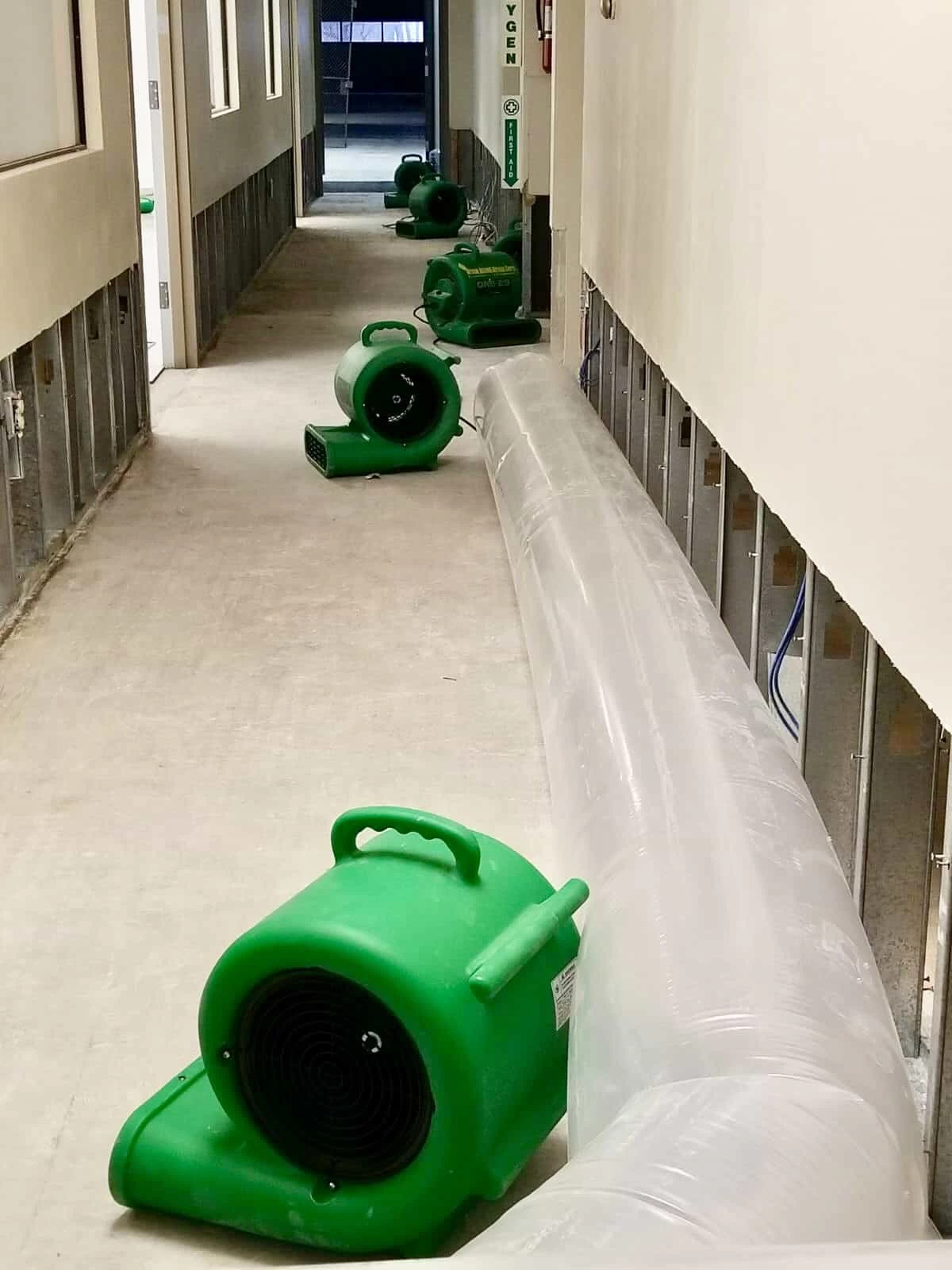
Once the project begins, the work area is fully contained using negative air pressure systems and poly sheeting. This keeps asbestos fibers from migrating into the rest of your home during removal. Workers are certified under New York State’s 12 NYCRR Part 56 requirements the state-level asbestos regulations that govern every project in Orange County. All removed material is wetted, double-bagged in labeled 6-mil poly, and transported to a licensed disposal facility. There are no shortcuts in that chain, because the consequences of cutting them fall on you, not just the contractor.
After removal, an independent industrial hygienist conducts post-abatement air monitoring and issues a written clearance certificate before the space is reoccupied. That certificate is what your general contractor needs to resume work, what your lender may require before closing, and what gives you documented proof the job was done right. In a real estate market where Salisbury Mills homes are selling above $500,000, that paper trail is not optional.
Every Material Type, One Licensed Team, Full Documentation
Asbestos doesn’t show up in just one place. In the older homes common to Salisbury Mills many built in the 1950s through 1970s it turns up in vinyl floor tiles, the adhesive beneath them, pipe and duct insulation, popcorn ceilings, roofing felt, siding panels, and the joint compound behind your drywall. We handle all of it. You’re not calling one contractor for the tiles and another for the pipe insulation.
Beyond asbestos, the same older housing stock throughout Salisbury Mills tends to carry overlapping issues. Mold from years of moisture intrusion. Lead paint in woodwork that predates 1978. Water damage from a winter pipe burst that disturbed insulation in the process. We also handle mold remediation, lead abatement, and water damage restoration which means if the job turns out to be more than just asbestos, you’re not starting over with a new contractor mid-project.
For qualifying projects, we offer 0% APR financing up to $200,000 through a third-party lender, and bill insurance companies directly when the work is connected to a covered event. If a storm damaged your roof and exposed asbestos-containing materials, or a pipe burst disturbed insulation, you shouldn’t have to front the cost and fight for reimbursement on your own. We are available 24 hours a day, seven days a week because asbestos discoveries don’t wait for Monday morning, and neither should your call.
Does my Salisbury Mills home likely have asbestos if it was built before 1980?
The honest answer is: probably yes, in at least some materials. Homes built before 1980 which covers a significant portion of the housing stock in Salisbury Mills were constructed during the peak era of asbestos use in residential building. The most common locations are 9×9 vinyl floor tiles and their adhesive, pipe and duct insulation in basements and utility areas, popcorn or textured ceiling finishes, roofing felt and shingles, and joint compound used on drywall seams.
The presence of asbestos-containing materials doesn’t automatically mean you’re in danger. Asbestos that is intact and undisturbed is generally considered low-risk. The risk increases when materials are damaged, deteriorating, or disturbed during renovation work. If you’re planning any renovation in your Salisbury Mills home even something as routine as pulling up old flooring or opening a wall having a professional assessment done before work starts is the right move. It’s significantly less expensive than stopping a project mid-demo and calling for emergency abatement.
What happens if a contractor finds suspected asbestos during my renovation?
Work should stop on that area immediately. Under New York State law, asbestos removal above de minimis thresholds must be performed by a contractor holding a valid NYS DOL Asbestos Contractor License your general contractor cannot legally continue removing or disturbing the material, regardless of how experienced they are. This is one of the most common scenarios we respond to in Orange County: a homeowner mid-renovation in Salisbury Mills, a general contractor who has stopped work, and a project frozen until a licensed abatement team can step in.
The process from there is straightforward. The suspected material is sampled and tested by an accredited lab. If asbestos is confirmed, a licensed abatement contractor scopes the project, contains the work area, removes the material under proper regulatory protocols, and arranges post-abatement air monitoring. Once a clearance certificate is issued, your general contractor can return to work. The delay is frustrating, but it’s manageable and our 24/7 availability means you’re not waiting until Monday to get the process started.
How much does asbestos removal typically cost in the Orange County, NY area?
Cost varies based on the type of material, the quantity, and the accessibility of the affected area. As a general reference point for the Orange County market: popcorn ceiling removal typically runs $3 to $8 per square foot, vinyl floor tile removal ranges from $5 to $15 per square foot, and pipe insulation removal is generally priced at $25 to $75 per linear foot. A small, contained residential project might come in around $1,500 to $3,000. A whole-house remediation involving multiple material types can reach $15,000 to $30,000 or more depending on scope.
What affects the final number most is the extent of the contamination and whether other issues mold, water damage, lead are present alongside the asbestos. Older homes in Salisbury Mills frequently have more than one issue, so the initial estimate can shift once the full scope is visible. We provide clear, documented scopes of work before any project begins so you understand what you’re paying for and why. For projects where the cost is unexpected, the 0% APR financing option up to $200,000 is available for qualifying customers.
Do I have to leave my home during asbestos abatement in New York State?
In most cases, yes at least for the portion of the home where work is actively taking place. The work area is sealed off with poly containment barriers and maintained under negative air pressure to prevent fiber migration into the rest of the house. Depending on the size and location of the project, it may be possible for you to remain in unaffected areas of your home, but for larger projects or whole-house abatements, temporary relocation during the active work phase is typically the safer and more practical choice.
Under New York State’s 12 NYCRR Part 56 regulations, the space where abatement occurred cannot be reoccupied until post-abatement air monitoring has been completed and a written clearance certificate has been issued by an independent industrial hygienist. That step is not optional, and no responsible contractor will allow reoccupancy before it’s done. For Salisbury Mills homeowners with families particularly those with young children or older residents in the home this clearance process is the documented confirmation that the air meets state standards before anyone walks back in.
Can asbestos abatement be done in winter in Salisbury Mills, NY?
Yes, and in some cases winter is actually when the need becomes urgent. The freeze-thaw cycles that hit the Salisbury Mills area every year are hard on older homes pipe bursts from freezing temperatures can damage asbestos-containing pipe insulation, and the resulting water intrusion can disturb floor tiles or ceiling materials in ways that create immediate exposure risk. We operate year-round, including emergency response for exactly these situations.
From a process standpoint, cold weather abatement requires some additional planning particularly around containment integrity and ensuring proper air movement within the work area. These are manageable factors for an experienced team. What matters most is that the work gets done correctly regardless of the season, and that the post-abatement clearance testing is conducted under conditions that accurately reflect the state of the space. Delaying abatement because of the time of year is rarely the right call, especially when the material has already been disturbed.
What documentation do I need for asbestos abatement when selling a home in Salisbury Mills?
Real estate transactions involving older homes in Salisbury Mills frequently hit a snag when asbestos is flagged during inspection. What buyers, lenders, and attorneys typically need is a written clearance certificate from an independent industrial hygienist confirming that post-abatement air monitoring was completed and the space meets New York State reoccupancy standards. They may also want the project scope of work, the contractor’s NYS DOL Asbestos Contractor License number, and the laboratory analysis confirming the material tested positive and was subsequently removed.
The Town of Blooming Grove which covers the Salisbury Mills area requires asbestos abatement documentation before issuing demolition permits on properties where ACMs are present. If your sale involves any structural work or the buyer plans to renovate, that documentation becomes part of the permit process as well. We provide a complete project package including all required documentation, which is specifically designed to satisfy the requirements that come up in Orange County real estate transactions. If you’re on a closing timeline, our 24/7 availability means the assessment and scheduling conversation can happen the same day you call.