Saugerties Homes Have History Some of It Hazardous
If your Saugerties home was built before 1980, there’s a real chance asbestos is somewhere inside it. We find it, remove it legally, and give you the documentation to move forward.
I needed a professional consultation explanation of procedure for safe removal of Asbestos in my apartment complex. Without having an account yet, I was very impressed with the caring, knowledgeable and generous advice offered by Jessica, and will look forward to doing business in the future. Thank you so much! I feel much more informed about a sometimes scary endeavor. Peace. Nancy Silva Mineola, NY.
Mia Munoz
Used this company to clean up some water flood in my house. They were fast and easy to work with.very professional, Would recommend to anyone!
Nini Valle
Great company, had a flood and they responded quickly and efficiently. Billed my insurance company directly. I highly recommend this company!
joe colapietro, jr
I had pipe freeze in my basement right before a snow storm and they made to within an hour to help start the clean up process. They we by our side throughout the entire process and even helped with the insurance company. They did such a great job with the cleanup, repair, remidiation, I contracted them to perform the repairs and finishes in the basement. They came with enough manpower and material to get the job done. Leo and Jessica were nothing but a pleasure to deal with!!
Cristian Arredondo c
I had some water damage in my home and Green Island was able to take care of my issue quickly and effectively. I am very pleased with the work they did. They responded quickly and were very professional.
Michael M
Outstanding service! From the office to the field crew everyone was friendly, helpful and responsive. I highly recommend Green Island Group.
When asbestos abatement is done right, you’re not just removing a material you’re removing the liability that comes with it. That means your renovation can move forward, your contractor can get back on site, and if you’re selling, your buyer’s attorney has the documentation they need to close. It’s a specific, measurable outcome. Not a vague promise.
Saugerties has one of the most historically layered building stocks in Ulster County. The village core is packed with Victorian-era brick homes and 19th-century commercial buildings that have been renovated multiple times over each layer a potential source of asbestos-containing materials. Mid-century floor tiles, popcorn ceilings, pipe insulation around old boilers, joint compound on drywall seams these aren’t rare finds in Saugerties. They’re common ones.
The town’s flood history adds another layer. The Esopus Creek has put water into homes and businesses in the village, in Glasco, in Malden, and throughout the lower-lying areas after storms like Irene and Sandy. When flood water reaches a pre-1980 structure in Saugerties, it often disturbs materials that trigger mandatory abatement before any restoration work can legally begin. If that’s where you are right now, you need a licensed team that can respond fast not one that calls you back in three days.
The Credentials Are Real. So Is the Accountability.
We hold a NYS DOL Asbestos Handling License the specific state credential required under NYS Industrial Code Rule 56 for any legal asbestos abatement work in New York. This isn’t a general contractor license with asbestos listed on the side. It’s the real thing, and you can look it up on the NYS DOL website before you call us.
Beyond asbestos, our team carries IICRC certification for water and fire damage, NYS DOL Mold certification, and USEPA Lead and RRP credentials. That matters in a town like Saugerties, where an older home rarely has just one issue. Flood damage behind the walls, mold under the subfloor, asbestos in the tile these things travel together in pre-war and mid-century construction, and you shouldn’t need three separate contractors to deal with them.
We actively serve Ulster County, including the Village of Saugerties and the surrounding hamlets. When you call, you’re reaching the company that will actually do the work.
From First Call to Clearance Certificate Here's the Sequence
It starts with an asbestos survey. Before any abatement work begins, NYS Industrial Code Rule 56 requires a certified NYS Asbestos Inspector to assess the property. If you haven’t had one yet, we can help coordinate that step. If you already have a survey showing confirmed asbestos, we move directly to the abatement phase.
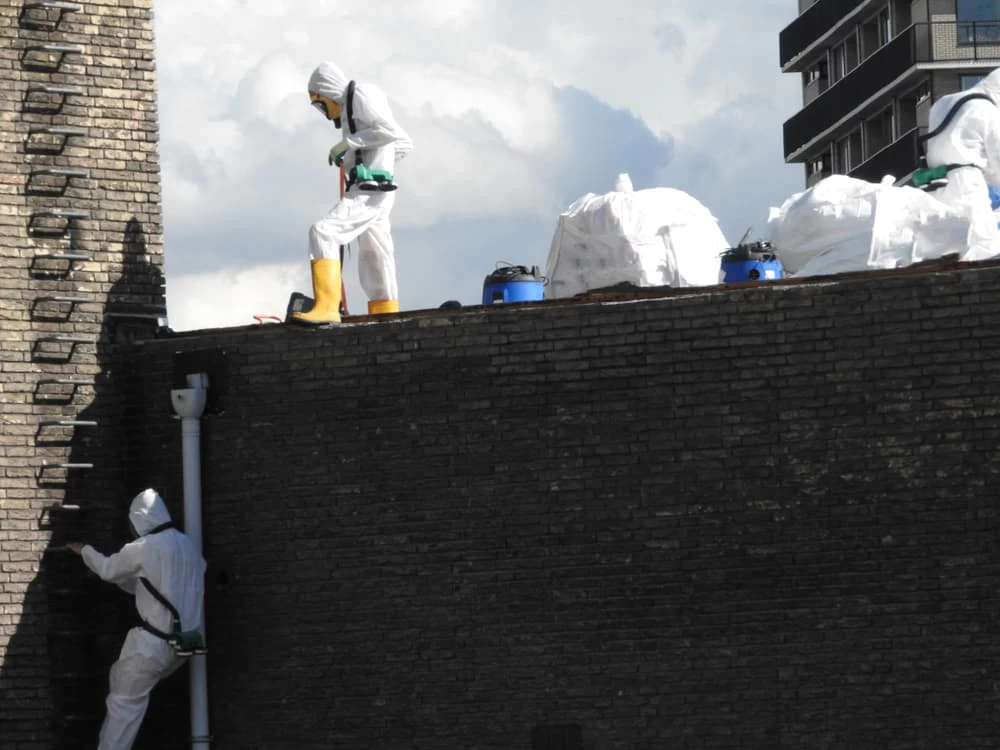
Once the scope is confirmed, our abatement team contains the work area, removes the asbestos-containing materials using approved procedures, and packages everything for legal disposal at a licensed facility. In Saugerties, where older homes often have multiple material types involved 9×9 floor tiles with black mastic, pipe insulation on cast-iron boilers, popcorn ceiling texture from the 1960s the scope can vary significantly from room to room. We assess what’s there before we price it, so you’re not getting a number pulled from thin air.
After removal, air monitoring is conducted by a third-party industrial hygienist. This is the clearance test that confirms the air quality meets NYS standards and it produces the documentation your contractor, your insurer, or your buyer’s attorney will want to see. Every project ends with that clearance certificate. It’s not optional, and it’s not an add-on. It’s how the job gets done correctly.
Asbestos Abatement Services Saugerties Ulster County
What's Actually Included When You Hire a Licensed Team
Asbestos abatement in New York isn’t a handshake job. Under NYS ICR 56, the work requires licensed contractors, certified workers, proper containment, regulated disposal, and post-abatement air clearance testing with project records maintained for 30 years. When you hire us, all of that is included. The permit coordination, the containment setup, the removal, the disposal manifests, and the air monitoring results that close the loop on the project.
For Saugerties homeowners, the most common materials we encounter are asbestos floor tile and the black mastic adhesive underneath it especially in homes that had mid-century kitchen or bathroom renovations layered over original hardwood. Popcorn ceiling removal is another frequent request, particularly in the ranch-style homes in the hamlets outside the village core. Pipe insulation on older heating systems is common in the Victorian-era homes throughout the Main-Partition Streets area and surrounding neighborhoods. Each of these requires a different removal approach, and the scope is always confirmed before work begins.
If your abatement is connected to a flood loss, fire damage, or another insured event, we can bill your insurance directly. That’s a documented capability not a claim. It removes a significant piece of the administrative burden at a time when you already have enough to manage.
Do I need an asbestos survey before renovating my Saugerties home?
Yes and this isn’t optional under New York State law. NYS Industrial Code Rule 56 requires an asbestos survey by a certified NYS Asbestos Inspector before any interior or exterior renovation, remodeling, repair, or demolition work that could disturb building materials. The threshold that triggers full licensed abatement procedures is 10 square feet or 25 linear feet of disturbed material. In Saugerties, where a large portion of the housing stock predates 1980, this requirement applies to the vast majority of renovation projects kitchen gut-outs, bathroom remodels, basement finishing, roof replacements, you name it.
The Town of Saugerties Building Department at 4 High Street doesn’t formally require you to submit an asbestos survey before issuing a permit, but the NYS DOL is explicit: if asbestos is disturbed during permitted work without proper abatement, the property owner and contractor face costly remediation expenses, potential stop-work orders, and legal liability. Getting the survey done before your contractor starts swinging hammers isn’t just the safe move it’s the one that keeps your project on schedule.
How much does asbestos removal cost in Saugerties, NY?
The honest answer is that cost depends heavily on what materials are present, how much of it there is, and where it’s located in the structure. A single room of asbestos floor tile removal in a Saugerties ranch home will land in a very different range than a full-building abatement in one of the older commercial properties along the Main-Partition Streets corridor. Residential projects commonly range from $1,500 on the low end for a contained, small-scope removal to $15,000 or more for multi-room or whole-floor abatements involving tile, mastic, pipe insulation, and ceiling material.
What drives cost up in older Saugerties homes specifically is the layering problem. Homes that have been renovated multiple times a 19th-century structure with 1950s updates and 1970s finishes on top often have asbestos-containing materials stacked on top of each other. That adds to the survey scope, the removal scope, and the disposal volume. The only way to get an accurate number is a proper assessment. We don’t price jobs off square footage estimates over the phone, because that’s how people end up with surprise costs mid-project.
What types of asbestos materials are most common in Saugerties homes?
The materials we encounter most frequently in Saugerties properties fall into a few consistent categories. Nine-by-nine inch vinyl floor tiles and the black adhesive mastic underneath them are extremely common in homes that had kitchen or bathroom renovations between the 1940s and 1970s. Popcorn ceiling texture, which was widely used in residential construction from the late 1950s through the early 1980s, shows up regularly in the ranch-style and split-level homes in the hamlets outside the village. Pipe insulation wrapped around older cast-iron boilers and steam radiator systems is another frequent find in the Victorian-era homes throughout the village core.
In the older commercial and industrial buildings in Saugerties some of which date back to the town’s paper mill and ironworks era spray-applied fireproofing, ceiling tile systems, and boiler room insulation are additional common sources. If your property was built before 1980 and has never had an asbestos survey, there’s a reasonable chance at least one of these materials is present somewhere in the structure. The survey tells you exactly what you’re dealing with before any work begins.
Can asbestos abatement be done while I'm living in the house?
It depends on the scope and location of the work. For small, contained abatement projects a single bathroom floor, a section of pipe insulation in a utility room it’s sometimes possible for occupants to remain in unaffected areas of the home during work, provided proper containment is in place and air monitoring confirms the work area is isolated. For larger projects involving multiple rooms, attic or basement-wide abatement, or materials that require more aggressive removal methods, temporary relocation is typically the safer and more practical choice.
Under NYS ICR 56, the abatement contractor is required to establish and maintain negative air pressure containment in the work area, which prevents fiber migration into the rest of the structure. That said, the practical reality in older Saugerties homes which often have open floor plans, older HVAC systems that share air across zones, and construction gaps that don’t seal cleanly is that full household occupancy during abatement introduces more variables than most families want to deal with. We walk through the scope with you before work starts so you know exactly what to expect and can make an informed decision about displacement.
Does the Esopus Creek flooding in Saugerties trigger asbestos removal requirements?
It can, and this is something Saugerties homeowners don’t always realize until they’re already mid-restoration. When flood water enters a pre-1980 structure and damages building materials floor tiles, ceiling systems, wall assemblies, pipe insulation it can disturb or dislodge asbestos-containing materials in the process. Once that happens, you’re in mandatory abatement territory under NYS ICR 56 before any demolition or repair work can legally proceed. Your restoration contractor cannot legally tear out water-damaged flooring or walls without a prior asbestos survey confirming what’s in those materials.
After Hurricane Irene and Superstorm Sandy, Saugerties received significant state recovery funding precisely because the flood damage was so widespread. Properties in the village, in Glasco, and along the lower Esopus Creek corridor were hit hard. Many of those same properties are now being renovated or sold, and some of them still haven’t had a proper asbestos assessment done post-flood. If your property sustained water damage in a past storm event and you’re now planning renovation or sale work, an asbestos survey before you start is the step that protects your timeline, your contractor, and your transaction.
How do I know if a contractor is actually licensed for asbestos work in New York?
The NYS DOL maintains a public database of licensed asbestos contractors that anyone can access. Before you hire anyone for asbestos abatement in Saugerties or anywhere in New York State ask for their NYS DOL Asbestos Handling License number and look it up. This is not the same as a general contractor license, a home improvement license, or a business registration. It is a specific, state-issued credential that requires documented training, examination, and ongoing compliance under NYS Industrial Code Rule 56. Contractors who perform asbestos work without this license are operating illegally, and if something goes wrong, the liability lands on the property owner.
This matters particularly in the Saugerties market because search results for local asbestos removal surface companies based in Rochester, Albany, and New York City that have built location pages to capture Hudson Valley traffic but have no verified local presence and, in some cases, no verifiable NYS DOL licensure. If a contractor can’t give you a license number you can look up in under two minutes, that’s your answer. We hold the NYS DOL Asbestos Handling License and serve Ulster County directly. The license number is available on request and we’d encourage you to verify it.