If your home was built before 1980 and in Setauket, a lot of them were there’s a real chance asbestos is somewhere inside it. We remove it the right way, with full NYS licensing and zero shortcuts.
I needed a professional consultation explanation of procedure for safe removal of Asbestos in my apartment complex. Without having an account yet, I was very impressed with the caring, knowledgeable and generous advice offered by Jessica, and will look forward to doing business in the future. Thank you so much! I feel much more informed about a sometimes scary endeavor. Peace. Nancy Silva Mineola, NY.
Mia Munoz
Used this company to clean up some water flood in my house. They were fast and easy to work with.very professional, Would recommend to anyone!
Nini Valle
Great company, had a flood and they responded quickly and efficiently. Billed my insurance company directly. I highly recommend this company!
joe colapietro, jr
I had pipe freeze in my basement right before a snow storm and they made to within an hour to help start the clean up process. They we by our side throughout the entire process and even helped with the insurance company. They did such a great job with the cleanup, repair, remidiation, I contracted them to perform the repairs and finishes in the basement. They came with enough manpower and material to get the job done. Leo and Jessica were nothing but a pleasure to deal with!!
Cristian Arredondo c
I had some water damage in my home and Green Island was able to take care of my issue quickly and effectively. I am very pleased with the work they did. They responded quickly and were very professional.
Michael M
Outstanding service! From the office to the field crew everyone was friendly, helpful and responsive. I highly recommend Green Island Group.
Most Setauket homeowners don’t go looking for asbestos. It finds them usually mid-renovation, when a contractor pulls up old flooring or cuts into a wall and stops cold. What happens next depends entirely on who you call.
When abatement is done right, you get more than a cleared space. You get documentation that satisfies the Town of Brookhaven’s building department, proof that your home meets New York State Industrial Code Rule 56, and clearance test results you can hand to a future buyer without hesitation. In a market where Setauket homes regularly trade above $700,000, that paper trail isn’t a formality it’s protection.
The housing stock in Setauket is older than almost anywhere else on Long Island. Setauket was settled in 1655, and the homes throughout Strong’s Neck, Conscience Bay, and the broader Three Village area span decades of construction colonial revivals, mid-century ranches, 1960s capes all built during the era when asbestos was standard. That history means the odds of encountering asbestos-containing materials during any meaningful renovation are genuinely high. Knowing that going in, and having a licensed team ready, keeps your project on track instead of on hold.
We Know Setauket and We Know What's Inside These Walls
We’re a Suffolk County–based asbestos abatement company. Not a franchise. Not a call center routing you to whoever’s available. A local team that works in Setauket and the Three Village area regularly and understands exactly what the permitting process looks like through the Town of Brookhaven.
That matters more than it sounds. The regulatory requirements for asbestos abatement in New York stack up NYS DOL notification, local building permits, Suffolk County health requirements and contractors who don’t work in Setauket often get tripped up by the layers. We’ve done this enough times in this area to move through it efficiently, which means your project doesn’t stall while paperwork catches up.
Every project we complete comes with full documentation: the pre-abatement inspection, the state notification confirmation, post-abatement air clearance results, and the waste manifest. Whether you’re renovating a 1960s ranch near Route 25A or updating a colonial closer to the Village Green, you’ll have everything you need when the job is done.
No Surprises Here's What the Process Actually Looks Like
It starts with an inspection. Before anything is removed, a licensed inspector identifies exactly what materials are present and whether they contain asbestos. This step isn’t optional under NYS ICR 56 and it protects you from paying to remove something that didn’t need to go, or worse, missing something that did.
Once the inspection is complete and the scope is confirmed, we file the required notification with the NYS Department of Labor and pull the necessary permits through the Town of Brookhaven. This is where projects with less experienced contractors tend to slow down. We handle it as a standard part of the job, not an afterthought.
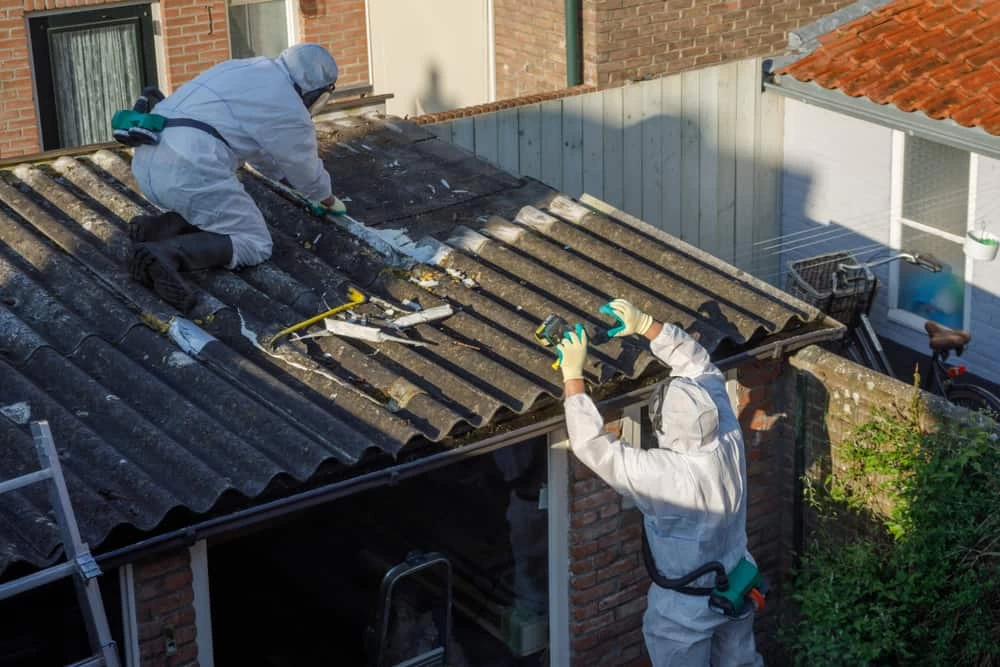
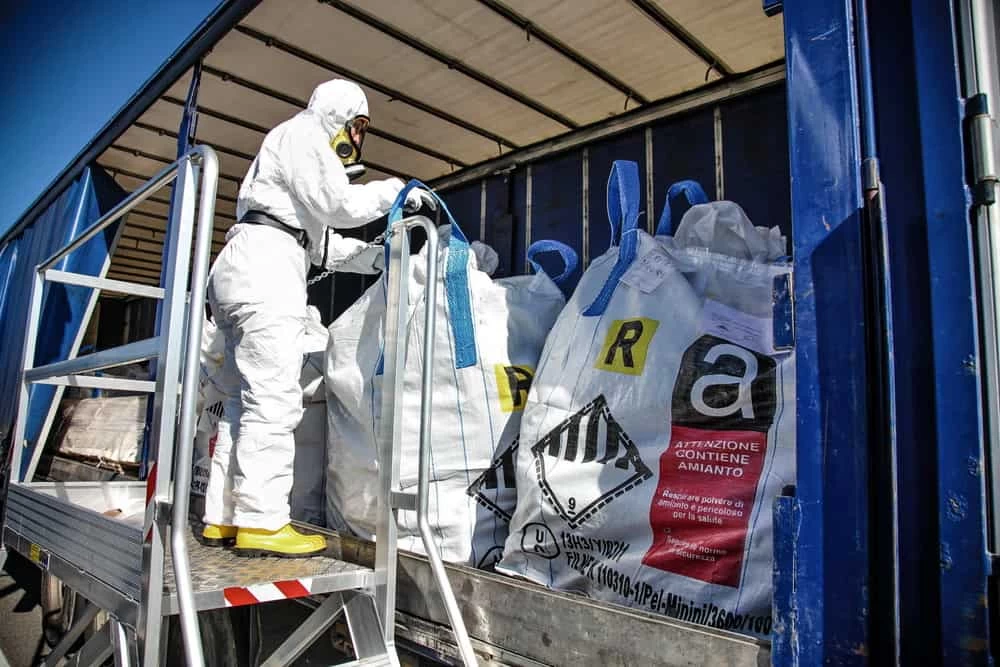
The removal itself follows strict containment protocol sealed work areas, negative air pressure, HEPA filtration throughout. When the material is out, we don’t just call it done. Post-abatement air clearance testing confirms the space is clean before containment comes down. All asbestos waste is transported and disposed of at a licensed facility, with a manifest documenting the chain of custody. Spring is the busiest season for abatement in Setauket renovation projects ramp up fast after winter so if you’re planning a project, getting on the schedule early makes a real difference.
The range of asbestos-containing materials found in Setauket homes is broader than most people expect. Vinyl asbestos tile the kind hiding under carpet or laminate in mid-century ranches throughout Strong’s Neck and East Setauket is one of the most common finds. Popcorn ceilings in homes built through the 1980s are another. So is pipe insulation wrapped around old steam and hot-water heating systems, boiler wrap, roofing shingles, siding, and pre-1980 joint compound.
Asbestos tile removal and asbestos popcorn ceiling removal are two of the most frequent jobs we handle in the Setauket area, and both require the same licensed, contained process regardless of how small the affected area looks. There’s no version of this that’s safe to rush or cut corners on and in a community where the Three Village Central School District draws buyers specifically to update older homes, the last thing you want is an abatement issue surfacing during a sale.
What you get from us is the full scope: inspection, state notification, permitted removal, clearance testing, and documented disposal handled by a NYS DOL licensed contractor who works in Suffolk County every day. If you’re a homeowner near Nicolls Road, off 25A, or anywhere in the 11733 ZIP code, we’re already familiar with what your home is likely to have and what it takes to clear it correctly.
Do I need a permit for asbestos removal in Setauket, NY?
Yes and in Setauket, that means more than one layer of paperwork. New York State requires abatement contractors to submit notification to the NYS Department of Labor under Industrial Code Rule 56 before work begins. On top of that, the Town of Brookhaven requires a local building permit, and depending on the project, Suffolk County health department notification may also apply.
This multi-step process is one of the most common reasons abatement projects get delayed when homeowners hire contractors who don’t regularly work in Setauket. The requirements aren’t difficult to meet they just need to be handled in the right order and on the right timeline. We manage all of it as part of the job, so you’re not chasing down paperwork while your renovation sits idle.
How do I know if my Setauket home actually has asbestos in it?
The only way to know for certain is to have the material tested by a licensed inspector. Visual identification isn’t reliable asbestos-containing materials often look identical to materials that don’t contain it. If your home was built before 1980, which covers a significant portion of the housing stock throughout Setauket and East Setauket, there’s a reasonable likelihood that at least one material in the home contains asbestos.
The most common places it shows up are vinyl floor tiles (especially under newer flooring layers), textured or popcorn ceilings, pipe insulation on older heating systems, and joint compound used in pre-1980 drywall work. Homes in the Setauket area span a wide range of construction eras some dating back to the 1600s which means the range of potential materials is wider here than in newer suburban communities. An inspection before any demolition or renovation work is the right first step, and it’s required by state law before abatement can begin.
What happens if asbestos is disturbed during a renovation without abatement first?
Disturbing asbestos-containing materials without proper containment releases fibers into the air that can’t be seen and don’t settle quickly. Exposure to those fibers is linked to mesothelioma, lung cancer, and asbestosis diseases with latency periods that can stretch decades. The health risk is real, and it doesn’t require prolonged exposure to be serious.
From a legal and financial standpoint, the consequences are also significant. Work performed without the required NYS DOL notification and permits can result in stop-work orders, fines, and a remediation requirement that ends up costing far more than doing it right the first time. If you’re in the middle of a renovation and a contractor has flagged a potential issue, the right move is to stop work in that area and have it tested before proceeding. It’s a delay measured in days not the weeks or months that an enforcement action can cost you.
How long does asbestos abatement take for a typical Setauket home?
It depends on what’s being removed and how much of it there is, but most residential abatement projects in Setauket fall somewhere between one and three days for the actual removal work. Smaller scopes a single room of vinyl tile, a section of pipe insulation can often be completed in a day. Larger projects involving multiple materials or multiple areas of the home take longer.
What adds time on the front and back end is the permitting and clearance process. The NYS DOL notification has required lead times depending on project scope, and post-abatement air clearance testing needs to be completed and confirmed before the space can be reopened. When you factor in the Town of Brookhaven permit process, the full timeline from first call to cleared space is typically one to two weeks for a standard residential project. Scheduling during the spring renovation season which is the busiest period in the Setauket area means getting on the calendar early matters.
Is asbestos popcorn ceiling removal in Setauket something I can do myself?
Not legally, and not safely. In New York State, asbestos abatement must be performed by a licensed contractor using certified workers under Industrial Code Rule 56. That applies to popcorn ceiling removal the same as any other asbestos-containing material. Attempting to remove it yourself even with a respirator and drop cloths doesn’t meet the containment, negative air pressure, or disposal requirements the law mandates.
Beyond the legal issue, the practical risk is significant. Popcorn ceilings are a friable material, meaning they crumble easily and release fibers when disturbed. The fiber release from a single ceiling in an average-sized room can contaminate an entire floor of a home if it’s not properly contained. For homeowners in Setauket updating 1960s and 1970s construction which is a large share of the renovation activity in the Three Village area this is one of the most common materials we’re called in to handle, and the process is straightforward when it’s done by a licensed team.
How much does asbestos removal typically cost in the Setauket area?
Costs vary based on the type of material, the square footage involved, and the complexity of the containment required. For a single room of vinyl asbestos tile or a standard popcorn ceiling removal in a Setauket home, you’re typically looking at a range of $1,500 to $4,000. Larger scopes pipe insulation throughout a basement, multiple rooms, or whole-house remediation can run from $5,000 to $10,000 or more depending on what’s present.
One thing worth understanding: in a market like Setauket, where homes carry significant value and real estate transactions are common, the cost of abatement is almost always offset by what it protects. A clearance certificate and complete documentation package can be the difference between a clean closing and a renegotiated sale price or no sale at all. Quotes that come in significantly below the ranges above are worth scrutinizing. Licensed, compliant abatement in Suffolk County has real costs built in inspection, state notification, permitted removal, clearance testing, and licensed disposal and a number that doesn’t account for all of that usually means something is being skipped.