If your home was built before 1980 and you’re about to renovate, you need to know what’s inside those walls because in Sholam, most of the housing stock is old enough to have it.
I needed a professional consultation explanation of procedure for safe removal of Asbestos in my apartment complex. Without having an account yet, I was very impressed with the caring, knowledgeable and generous advice offered by Jessica, and will look forward to doing business in the future. Thank you so much! I feel much more informed about a sometimes scary endeavor. Peace. Nancy Silva Mineola, NY.
Mia Munoz
Used this company to clean up some water flood in my house. They were fast and easy to work with.very professional, Would recommend to anyone!
Nini Valle
Great company, had a flood and they responded quickly and efficiently. Billed my insurance company directly. I highly recommend this company!
joe colapietro, jr
I had pipe freeze in my basement right before a snow storm and they made to within an hour to help start the clean up process. They we by our side throughout the entire process and even helped with the insurance company. They did such a great job with the cleanup, repair, remidiation, I contracted them to perform the repairs and finishes in the basement. They came with enough manpower and material to get the job done. Leo and Jessica were nothing but a pleasure to deal with!!
Cristian Arredondo c
I had some water damage in my home and Green Island was able to take care of my issue quickly and effectively. I am very pleased with the work they did. They responded quickly and were very professional.
Michael M
Outstanding service! From the office to the field crew everyone was friendly, helpful and responsive. I highly recommend Green Island Group.
You stop guessing. That’s the biggest thing. When you’re living in or renovating a pre-1980 home in Sholam, the question isn’t really “do I have asbestos?” it’s “where is it, and what do I do about it?” Once it’s professionally removed and air-cleared, you have documentation that answers both. You can move forward with your renovation, your sale, or just your daily life without that question hanging over everything.
The homes in Sholam and the surrounding Wawarsing area weren’t built with today’s materials. Pipe insulation in the basement, old floor tiles in the kitchen, popcorn ceilings in the back bedroom these were standard features of mid-century rural construction throughout Ulster County. They don’t look dangerous. Most of the time, they aren’t until something disturbs them. A renovation, a burst pipe during a hard Catskills freeze, or a boiler replacement can change that fast.
After proper abatement, you also have a paper trail. Air clearance results, disposal records, permit documentation all of it. For anyone selling a property in this area, that paperwork is what closes deals. For anyone staying, it’s just peace of mind that the work was done to the standard the law actually requires.
We Hold the License and the Responsibility That Comes With It
We hold the NYS DOL Asbestos Handling License the specific, state-issued credential that New York law requires for any asbestos abatement work. Not a general contractor license. Not a self-issued certification. The actual license. That distinction matters more than most people realize, especially in rural areas like Sholam where unlicensed operators are more common and harder to vet.
We serve all of Ulster County, including the Town of Wawarsing and the rural hamlets along the Route 55A corridor near Sholam. That means when you call about a property on Sholam Road or anywhere in the surrounding area, someone actually shows up not a “we’ll see if we can get someone out there” response. We also carry IICRC certification for water and fire damage, USEPA Lead and RRP certifications, and handle asbestos alongside mold remediation, water damage restoration, and demolition. For older homes in this area, where those problems tend to stack on top of each other, that matters.
No Guesswork Here's What the Job Actually Looks Like
It starts with a free estimate. Someone comes out to your property, looks at what’s there, and gives you a straight answer about what needs to happen and what it will cost. For most residential projects in the Sholam and Wawarsing area a room of floor tiles, pipe insulation in the basement, a popcorn ceiling you’re typically looking at a range of $1,500 to $5,000. Larger whole-house or commercial scopes run higher, but you’ll know the number before any work begins.
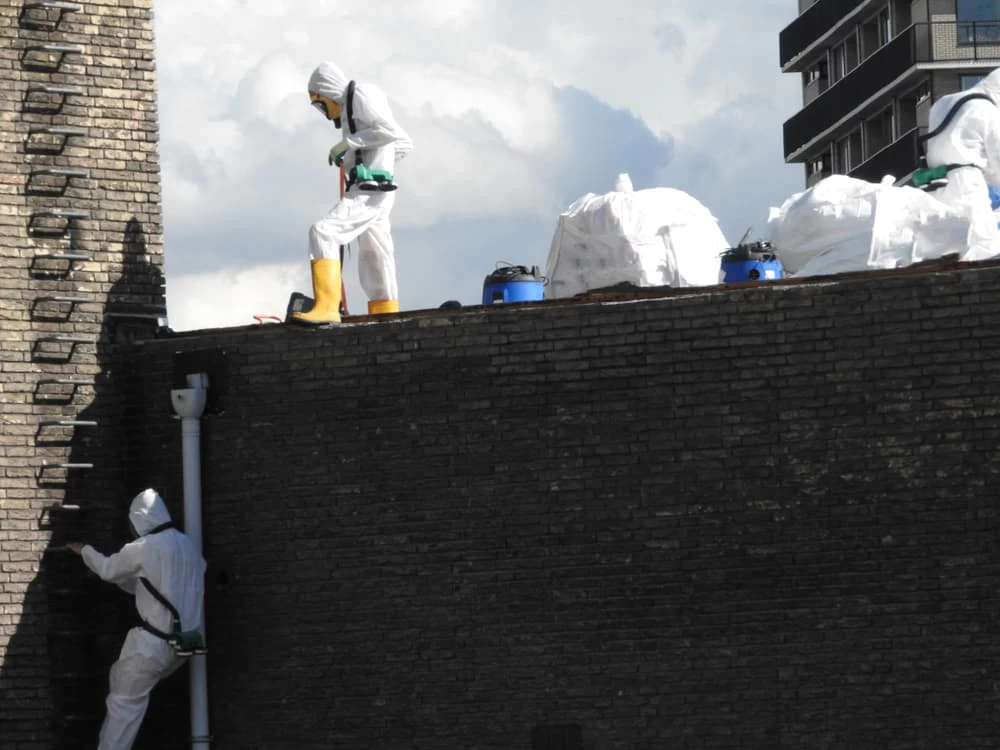
Once the scope is confirmed, we handle the regulatory side project notification to the NYS DOL Asbestos Control Bureau and any permit requirements through the Ulster County Building Department. Under NYS Industrial Code Rule 56, any asbestos disturbance of 10 square feet or more requires a licensed contractor, certified workers, and formal notification. That paperwork gets filed for you. The abatement itself is done under full containment protocols, with certified workers and proper disposal. Nothing gets bagged and tossed it goes through licensed disposal channels with a documented manifest.
When the work is done, post-abatement air monitoring confirms the space is clear. You get the results in writing. If your project is connected to a covered event a burst pipe, storm damage we can bill your insurance directly so you’re not fronting the cost and waiting. The whole process is designed to remove as much friction as possible, because dealing with asbestos is already stressful enough.
The asbestos-containing materials most commonly found in homes throughout Sholam and the Wawarsing area follow a predictable pattern. Nine-by-nine vinyl floor tiles and the black mastic adhesive underneath them are nearly universal in mid-century rural construction across Ulster County. Pipe insulation in unheated basements and crawl spaces is the next most common find, especially in homes that still have original plumbing or older heating systems. Popcorn acoustic ceilings, drywall joint compound, vermiculite attic insulation, boiler wrap, and cement board siding round out the list. We handle all of it.
Asbestos tile removal and asbestos popcorn ceiling removal are two of the most frequently requested services in this area, particularly from homeowners who are mid-renovation or preparing to sell. Both require the same level of care proper containment, licensed removal, and documented air clearance regardless of how small the affected area looks. There’s no such thing as a minor asbestos job that doesn’t need to be done correctly.
For properties near the NYC DEP watershed land adjacent to Sholam, proper containment and disposal aren’t just a legal requirement they reflect the environmental responsibility that comes with living in a watershed community. Our process meets the full requirements of NYS Industrial Code Rule 56 and EPA NESHAP standards, and every completed job comes with records that must be maintained for 30 years under state law. You get copies of all of it.
Does my older Sholam home actually need an asbestos inspection before renovating?
If your home was built before 1980 and you’re planning any renovation that disturbs walls, floors, ceilings, or mechanical systems, a pre-renovation asbestos survey isn’t just a good idea it’s legally required in New York State for any permitted work in a pre-1980 structure. The Ulster County Building Department will expect it before issuing permits on qualifying projects.
The practical reason is straightforward. Homes throughout Sholam and the broader Catskills were built during the decades when asbestos was used in virtually every category of building material. You may not see it, and the materials may look completely fine but disturbing them without knowing what’s there puts you, your contractor, and anyone in the home at risk. An inspection tells you exactly what you’re dealing with before the first wall comes down, not after.
How much does asbestos removal typically cost for a home in this area?
For most residential projects in Sholam and the surrounding Wawarsing area, you’re looking at $1,500 to $5,000 for smaller, contained scopes a single room of floor tiles, a section of pipe insulation, or a popcorn ceiling in one or two rooms. Larger projects that involve multiple material types, whole-house abatement, or commercial properties can run $10,000 to $30,000 or more depending on scope.
The honest answer is that cost varies based on what materials are present, how much of it there is, and where it’s located. Pipe insulation in a tight crawl space takes more time and care than floor tiles in an open basement. The best way to get a real number is a free on-site estimate that’s the only way to give you an accurate figure rather than a guess. What’s worth keeping in mind is that the cost of improper removal failed inspections, re-remediation, legal liability, or health consequences consistently exceeds the cost of doing it right the first time.
Do I have to leave my home during asbestos abatement work?
It depends on the scope and location of the work. For contained projects a basement pipe insulation removal, a single room of floor tiles, or an attic vermiculite job it’s often possible to isolate the work area and keep the rest of the home occupied, as long as proper containment barriers are in place and the HVAC system is shut down for the affected zone. Your specific situation will be assessed during the estimate.
For larger or more invasive scopes whole-house abatement, work in central living areas, or situations where containment can’t fully separate the work zone from occupied space temporary displacement is the safer call. In a rural area like Sholam, that’s a more significant inconvenience than it would be in a larger city, and we take that into account when planning project sequencing and timing. The goal is always to minimize disruption while making sure the work is done safely. You’ll know what to expect before the job starts, not the morning of.
What happens if asbestos is discovered mid-renovation on my Wawarsing property?
Stop work on the affected area immediately and don’t disturb the material further. This is the most important step. If a contractor has already cut into something and you’re not sure what’s in it, ventilate the space, limit access, and get a licensed abatement contractor on-site before resuming. Under NYS Industrial Code Rule 56, once a suspected asbestos-containing material is identified, continuing to work around it without licensed abatement is a violation regardless of how small the area is.
Mid-renovation discoveries are one of the most common situations we handle in the Catskills and Hudson Valley area. Buyers who purchased older properties in Sholam and surrounding towns and are now renovating for the first time frequently encounter asbestos in materials that weren’t visible during the original inspection inside wall cavities, under flooring layers, or wrapped around pipes that were behind finished walls. We can mobilize quickly, assess the scope, and get the abatement done so your renovation timeline doesn’t stall longer than necessary.
Can a burst pipe or winter storm damage trigger an asbestos problem in an older home?
Yes and this is one of the more underappreciated risks for homeowners in this part of Ulster County. The Catskills winters involve real freeze-thaw cycling, heavy snowfall, and temperature swings that put stress on older plumbing and building envelopes. When a pipe bursts in a pre-1960 home, it’s not just a water damage event. If that pipe is wrapped in original asbestos insulation which is common in homes throughout Sholam and the Wawarsing area the burst and the resulting water intrusion can disturb that insulation and release fibers into the air.
The same applies to storm damage that opens up walls, ceilings, or roofing in older structures, and to boiler or furnace failures that require emergency access to mechanical systems wrapped in original insulation. We’re available 24 hours a day, seven days a week, specifically because these situations don’t happen on a schedule. If you’re dealing with a winter emergency in Sholam and you’re not sure whether asbestos is involved, call before anyone starts tearing into the damaged area.
How do I know if the contractor I hire is actually licensed for asbestos work in New York?
Ask for their NYS DOL Asbestos Handling License number and verify it directly on the New York State Department of Labor’s contractor listing. This is a publicly searchable database, and any legitimate licensed contractor will give you their license number without hesitation. A general contractor license, a business license, or a self-described “environmental certification” is not a substitute New York State law requires a specific asbestos contractor license for any abatement work involving 10 square feet or more of material.
This matters especially in rural areas like Sholam and the broader Wawarsing area, where the pool of local contractors is smaller and it’s harder to comparison-shop the way you might in a larger city. Unlicensed operators tend to be more prevalent in lower-density markets, and they often undercut licensed contractors on price precisely because they’re skipping the regulatory requirements the certified workers, the containment protocols, the air monitoring, the disposal documentation. If something goes wrong with unlicensed removal, the liability falls on the property owner. Our NYS DOL license is current, verifiable, and the first thing you should ask any contractor to show you before signing anything.