Sleightsburg's Old Homes Hide Real Hazards Here's What to Do
If your home was built before 1980 and you’re planning any kind of renovation, there’s a real chance asbestos is already inside those walls. We provide licensed asbestos abatement in Sleightsburg, NY and we handle everything from the initial assessment to the final air clearance test.
I needed a professional consultation explanation of procedure for safe removal of Asbestos in my apartment complex. Without having an account yet, I was very impressed with the caring, knowledgeable and generous advice offered by Jessica, and will look forward to doing business in the future. Thank you so much! I feel much more informed about a sometimes scary endeavor. Peace. Nancy Silva Mineola, NY.
Mia Munoz
Used this company to clean up some water flood in my house. They were fast and easy to work with.very professional, Would recommend to anyone!
Nini Valle
Great company, had a flood and they responded quickly and efficiently. Billed my insurance company directly. I highly recommend this company!
joe colapietro, jr
I had pipe freeze in my basement right before a snow storm and they made to within an hour to help start the clean up process. They we by our side throughout the entire process and even helped with the insurance company. They did such a great job with the cleanup, repair, remidiation, I contracted them to perform the repairs and finishes in the basement. They came with enough manpower and material to get the job done. Leo and Jessica were nothing but a pleasure to deal with!!
Cristian Arredondo c
I had some water damage in my home and Green Island was able to take care of my issue quickly and effectively. I am very pleased with the work they did. They responded quickly and were very professional.
Michael M
Outstanding service! From the office to the field crew everyone was friendly, helpful and responsive. I highly recommend Green Island Group.
Sleightsburg is one of the oldest hamlets in Ulster County. Homes here date back to the 1890s some even earlier. That kind of age means original building materials are still intact in a lot of these houses: pipe insulation wrapped around old boilers, floor tile adhesive laid down decades before anyone knew the risks, textured ceiling coatings that were standard practice in mid-century construction. When you’re renovating one of these homes in Sleightsburg, you’re not just dealing with cosmetic updates you’re dealing with layers of history that need to be handled carefully and legally.
Once asbestos is properly removed and cleared, your renovation can actually move forward. You’re not stuck waiting on inspections, and you’re not putting your contractor or your family at risk. You get documentation real air monitoring results that shows the job was done right. That matters whether you’re staying in the home, preparing to sell, or just trying to get a building permit from the Town of Esopus without delays.
Sleightsburg’s position right on the Rondout Creek and the Hudson River adds another layer to this. Waterfront homes here face moisture exposure and periodic flooding that can disturb materials that have been safely contained for years. When water gets into an older basement or crawlspace, it doesn’t just cause mold it can turn an encapsulated asbestos condition into an active problem that needs immediate attention. That’s a real pattern in Hudson River communities like Sleightsburg, and it’s worth knowing before something forces your hand.
The License Is Real and So Is Our Local Experience in Sleightsburg
We hold the NYS DOL Asbestos Handling License the specific, state-regulated credential required by law to perform asbestos abatement in New York. This isn’t a general contractor license or a weekend certification. It’s the credential that legally separates companies that can do this work from those that can’t. In a market where unlicensed operators exist, that distinction matters.
Beyond the license, we carry IICRC certification for water and fire damage restoration, USEPA Lead and RRP certifications, and NADCA certification for HVAC cleaning. If you’re dealing with more than just asbestos which is common in Sleightsburg’s older waterfront homes there’s no need to coordinate multiple contractors. One call covers it.
We explicitly serve the Town of Esopus, including Sleightsburg. Our team understands the housing stock in this area the Victorian-era construction, the 19th-century industrial heritage, the layers of renovation that have accumulated in homes along the Rondout Creek corridor. That familiarity isn’t something you get from a contractor who’s never worked in this part of Ulster County.
No Surprises Just a Clear Process From Start to Finish
It starts with an assessment. Before any work begins, the materials in question need to be identified and tested by a certified NYS Asbestos Inspector. This step is not optional in New York under NYS Industrial Code Rule 56, any renovation of a pre-1980 building requires an asbestos survey before a building permit can be issued by the Town of Esopus. We coordinate this process, so you’re not navigating the regulatory side of things on your own.
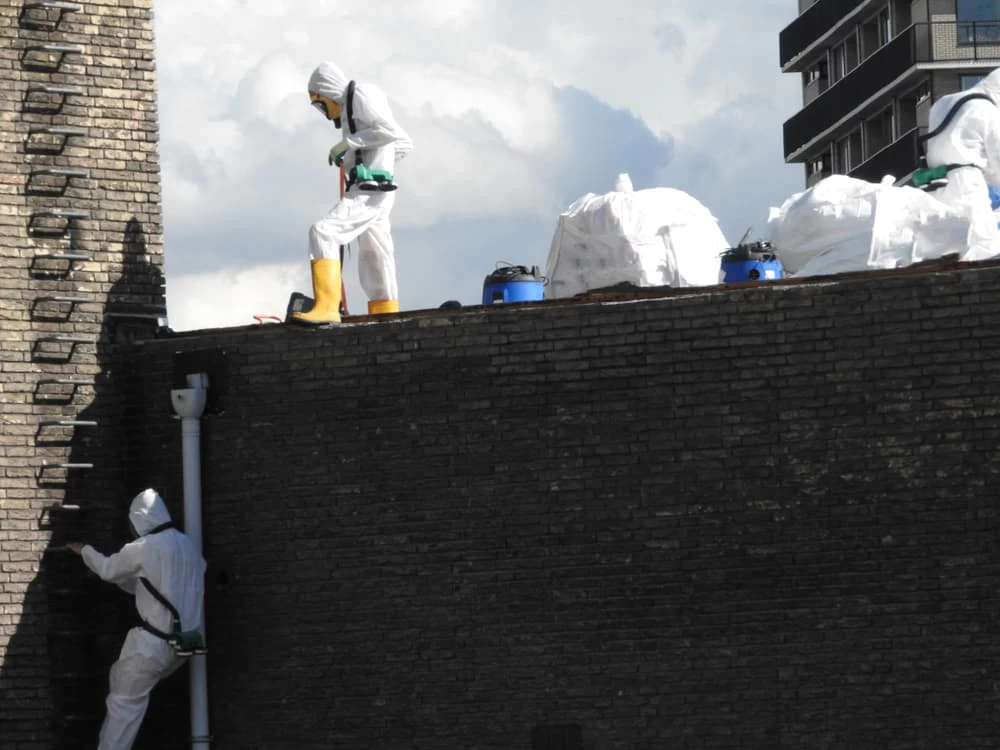
Once the scope is confirmed, the abatement itself follows strict containment protocols. The work area is sealed off, negative air pressure is maintained, and removal is performed by licensed technicians following NYS DOL requirements. Materials are bagged, labeled, and transported to a licensed disposal facility. You won’t be left guessing about what happened or where anything went the paperwork follows the job every step of the way, and project records are maintained for 30 years as required by state law.
The final step is air clearance testing. When the work is done, independent air monitoring confirms that fiber counts are at or below clearance thresholds. You receive those results in writing. For Sleightsburg homeowners dealing with a home sale, a renovation permit, or an insurance claim tied to water or storm damage, that documentation is often exactly what’s needed to move the process forward. It’s not just a formality it’s the proof that the job was actually finished correctly.
Asbestos shows up in more places than most homeowners expect especially in homes with the kind of age and layered construction history common in Sleightsburg. The 9×9-inch floor tiles and the black mastic adhesive used to install them are among the most frequently found asbestos-containing materials in pre-1960 homes across the Hudson Valley. Popcorn ceilings, pipe insulation, roofing materials, window glazing, drywall joint compound, and boiler gaskets are all common sources in this area. We handle all of it asbestos tile removal, pipe insulation abatement, popcorn ceiling removal, and full structural abatement for renovation or demolition projects.
Because Sleightsburg sits at the confluence of the Rondout Creek and the Hudson River, we understand how water damage intersects with asbestos risk in this specific area. When a flood event disturbs pipe insulation or floor tile adhesive in a basement, that’s not just a water damage job anymore it requires licensed asbestos abatement before restoration can proceed. We handle both, which means no gap between the abatement and the restoration work, and no delays waiting for separate teams to coordinate.
For commercial clients, property managers, and municipal agencies in Ulster County, we hold MBE, WBE, and MWBE certifications that satisfy diversity and compliance requirements increasingly standard in public contracting. We also hold both NYS and NYC contractor licenses, which matters for clients with properties or projects on both sides of that line.
Do I need an asbestos survey before renovating my Sleightsburg home?
Yes and this isn’t just a recommendation, it’s a legal requirement in New York State. Under NYS Industrial Code Rule 56, any renovation, demolition, or remodeling of a pre-1980 building requires a certified asbestos inspection before work begins. If asbestos is found in the scope of the project, licensed abatement must be completed before the renovation can proceed. The Town of Esopus Building Department will not issue a permit for covered work on a pre-1980 structure without this step being addressed.
For Sleightsburg specifically, this matters because the vast majority of the hamlet’s housing stock predates 1980 many homes significantly so. If you’re planning a kitchen renovation, bathroom remodel, basement finishing project, or HVAC replacement in an older home, the survey isn’t something you can skip or defer. Starting work without one puts you at legal risk and can result in stop-work orders that delay your project far longer than the survey itself would have. We coordinate the inspection process and handle abatement when it’s needed, so the whole thing moves as efficiently as possible.
What does asbestos abatement actually cost in the Hudson Valley area?
Costs vary depending on the type of material, the square footage involved, and the complexity of the containment setup required. In the New York market, residential asbestos abatement generally runs between $1,500 and $30,000 depending on scope, with most standard residential projects falling somewhere in the $3,000 to $8,000 range. Prices in New York have increased 8 to 12 percent in recent years, partly due to updated requirements around post-abatement air monitoring.
For a Sleightsburg home with original pipe insulation in the basement and asbestos floor tiles in the kitchen a combination that’s genuinely common in pre-1960 homes in this area you’d typically be looking at the middle of that range, assuming no major complications. The best way to get an accurate number is through a proper assessment of what’s actually present. What you want to avoid is making renovation decisions without knowing the cost of abatement upfront, because discovering asbestos mid-project after walls are already open is significantly more disruptive and expensive than addressing it before work starts.
How do I know if my older home near Rondout Creek has asbestos?
You can’t tell by looking. Asbestos-containing materials don’t have a distinct appearance that separates them from non-asbestos versions of the same product. The only way to know for certain is to have samples collected and tested by a certified NYS Asbestos Inspector. That said, there are strong indicators based on age and material type. If your home was built before 1980 and still has original floor tiles, pipe insulation, textured ceiling coatings, or roofing materials, the probability that at least one of those materials contains asbestos is high not theoretical.
In Sleightsburg and the broader Port Ewen area, homes from the late 1800s and early 1900s are common. These properties were built during a period when asbestos was used extensively in construction, particularly in the kinds of industrial and maritime communities that defined this part of the Hudson River. If your home has never had a full asbestos survey, and you’re planning any kind of work that disturbs original building materials, getting that survey done before anything else is the right first step. It removes the uncertainty and gives you a clear picture of what you’re working with.
What happens if flooding or storm damage disturbs asbestos in my Sleightsburg home?
This is a real and specific risk for homes in Sleightsburg. When water intrudes into an older home whether from a Rondout Creek flood event, a nor’easter, or a plumbing failure it can disturb pipe insulation, floor tile adhesive, and wall materials that have been safely contained for decades. Once those materials are disturbed and fibers are potentially airborne, you’re no longer dealing with a standard water damage situation. You’re dealing with an asbestos abatement situation that needs to be addressed before any restoration work can begin.
The practical implication is that you should not have a water damage contractor start pulling out wet insulation or flooring in a pre-1980 home without first confirming whether asbestos is present. We handle both asbestos abatement and water damage restoration, which means the transition from one phase to the next is coordinated rather than handed off between separate contractors who may not communicate well with each other. If your situation involves an active insurance claim, we can work directly with your insurer which removes a significant administrative burden when you’re already managing a stressful situation.
Can I stay in my home during asbestos abatement?
It depends on the scope of the project and where in the home the work is being done. For smaller, well-contained abatement jobs a single room, a section of basement pipe insulation, or a limited area of floor tile it’s sometimes possible to remain in the home in unaffected areas. For larger projects involving multiple rooms, HVAC systems, or materials that are more difficult to fully contain, temporary displacement is often the safer and more practical choice.
We’re upfront about displacement requirements during the assessment phase, not after the job starts. We walk through what to expect before any work is contracted, so you can plan accordingly. For Sleightsburg homeowners who are also managing a renovation project alongside the abatement, we coordinate the timeline between the two. The goal is to minimize disruption without cutting corners on containment and those two things are not mutually exclusive when the job is planned properly from the start.
How long does asbestos abatement take for a typical home in Sleightsburg?
For a standard residential project floor tile removal in one or two rooms, or pipe insulation in a basement the abatement work itself typically takes one to three days. Larger projects involving multiple material types, full-floor removal across several rooms, or abatement in preparation for a full renovation or demolition can take longer, sometimes up to a week or more depending on the scope.
What adds time to the overall timeline is the regulatory process surrounding the work, not the physical labor itself. In New York, the asbestos survey, any required permit notifications, the abatement work, and the post-abatement air clearance testing are all sequential steps one has to be completed before the next can begin. For homeowners in Sleightsburg who are trying to coordinate asbestos abatement with a renovation timeline and a Town of Esopus building permit, understanding that full sequence upfront is important. We manage each step and keep you informed throughout, so you’re not left wondering where things stand or what’s coming next.