Older Hamptonburgh Homes Deserve More Than a Guess
If your renovation just hit a wall literally we provide licensed asbestos abatement in Snufftown, NY with the documentation your contractor, lender, or real estate attorney actually needs.
I needed a professional consultation explanation of procedure for safe removal of Asbestos in my apartment complex. Without having an account yet, I was very impressed with the caring, knowledgeable and generous advice offered by Jessica, and will look forward to doing business in the future. Thank you so much! I feel much more informed about a sometimes scary endeavor. Peace. Nancy Silva Mineola, NY.
Mia Munoz
Used this company to clean up some water flood in my house. They were fast and easy to work with.very professional, Would recommend to anyone!
Nini Valle
Great company, had a flood and they responded quickly and efficiently. Billed my insurance company directly. I highly recommend this company!
joe colapietro, jr
I had pipe freeze in my basement right before a snow storm and they made to within an hour to help start the clean up process. They we by our side throughout the entire process and even helped with the insurance company. They did such a great job with the cleanup, repair, remidiation, I contracted them to perform the repairs and finishes in the basement. They came with enough manpower and material to get the job done. Leo and Jessica were nothing but a pleasure to deal with!!
Cristian Arredondo c
I had some water damage in my home and Green Island was able to take care of my issue quickly and effectively. I am very pleased with the work they did. They responded quickly and were very professional.
Michael M
Outstanding service! From the office to the field crew everyone was friendly, helpful and responsive. I highly recommend Green Island Group.
Your Project Moves Forward. Your Family Stays Safe.
When asbestos shows up mid-renovation, everything stops. The contractor goes idle, the timeline blows up, and suddenly you’re searching for answers at 10pm on a Tuesday. That’s the situation most Snufftown homeowners are in when they call us and it’s exactly the situation we’re built to resolve quickly and cleanly.
A lot of the homes in this area were built during the 1940s through the 1970s, when asbestos was standard in floor tiles, pipe insulation, roofing, and ceiling texture. That’s not alarming on its own undisturbed asbestos in good condition usually isn’t an emergency. But the moment you’re cutting into walls, pulling up old flooring, or dealing with water damage from a Quaker Creek flood event or a frozen pipe, the calculus changes. Disturbed asbestos becomes a real health concern, and continuing work without addressing it puts everyone on the property at risk.
What you get when the job is done right isn’t just a clean space it’s a written clearance certificate from an independent industrial hygienist confirming that airborne fiber levels are below the regulatory threshold. That document matters. It’s what closes your real estate deal, satisfies your lender, and lets your family move back into Snufftown without any question marks hanging over the house.
We’ve been doing this work for over 12 years as an independently owned environmental remediation contractor based in New York. We hold the NYS Department of Labor Asbestos Contractor License required under 12 NYCRR Part 56 and you can verify that license yourself on the NYS DOL website before you sign anything. We’ll give you the license number and the direct link. That kind of transparency isn’t common in this industry, and that’s exactly why we lead with it.
Our client list includes the NYS Office of General Services, the Dormitory Authority of the State of New York, Nassau County, and Suffolk County. Those contracts don’t come from a good website they come from passing formal government procurement review. For a homeowner in Snufftown weighing contractors they found online, that track record is the closest thing to a third-party guarantee you’re going to find.
We also hold dual NYS and NYC M/WBE certification, which requires annual government auditing to maintain. It’s not a badge it’s an ongoing accountability standard. And because we already serve the Campbell Hall and Hamptonburgh area where Snufftown is located, we’re not learning your neighborhood from scratch. We know the building stock out here, and we know what to expect.
No Guesswork. Just a Clear Process From Start to Certificate.
The first step is an inspection and material assessment. We walk the property, identify any suspected asbestos-containing materials, and collect samples for laboratory analysis. You get a plain-language report not a technical document designed to confuse you that tells you exactly what you have, where it is, whether it’s a current risk, and what your options are. If it’s undisturbed and in good condition, we’ll tell you that too. We’re not going to manufacture urgency where none exists.
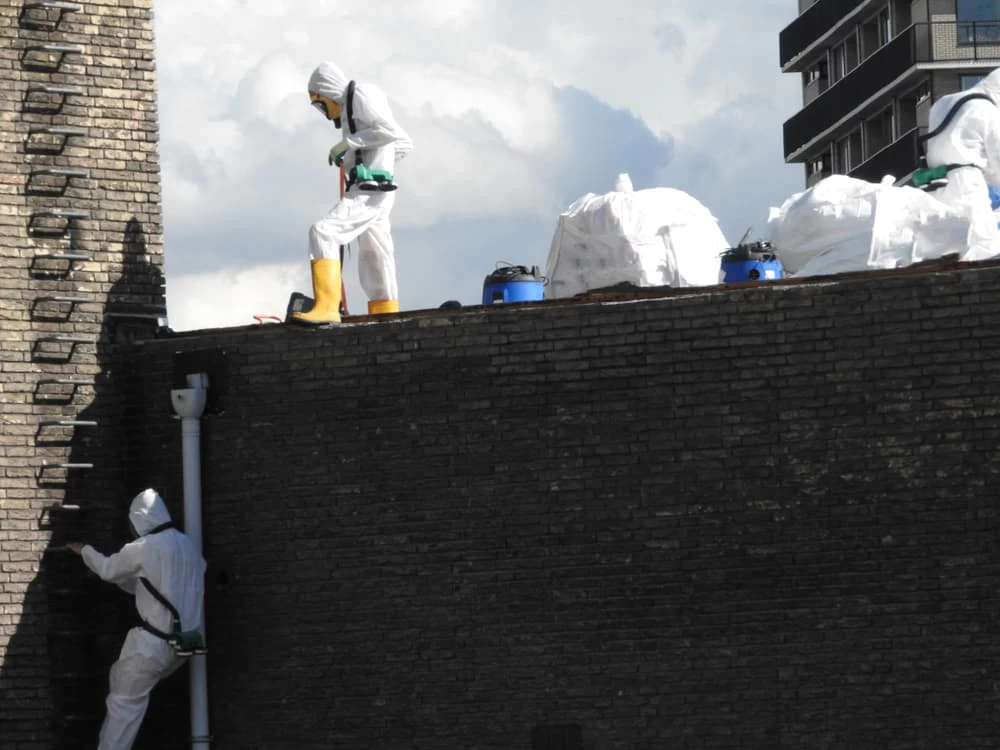
If abatement is needed, we handle the NYS DOL notification requirements, set up a fully contained work zone with negative air pressure, and remove the materials using licensed abatement workers following 12 NYCRR Part 56 protocols. Because Snufftown sits within the Town of Hamptonburgh not an incorporated city with its own building department the regulatory pathway runs through the town and Orange County under state rules, without the additional NYC DEP layer that applies to five-borough projects. That means a somewhat more straightforward process, but the NYS DOL requirements are fully in force and require everything to be done by the book.
Once removal is complete, an independent industrial hygienist not someone we employ conducts post-abatement air monitoring and issues your written clearance certificate. That document is the finish line. It’s your proof, your protection, and your green light to move forward.
What's Actually Included When You Hire Green Island Group
Asbestos abatement in an older Hamptonburgh home or farm structure isn’t a single task it’s a sequence of steps that each matter. The inspection comes first, with laboratory-confirmed sample analysis so there’s no guessing about what you’re dealing with. From there, full containment setup isolates the work area from the rest of the structure. Removal follows strict NYS DOL protocol materials are wetted, double-bagged in 6-mil poly, labeled per OSHA requirements, and transported to a licensed Class II disposal facility. Nothing gets cut short because it’s inconvenient.
The types of materials we commonly handle in the Snufftown area include 9×9 and 12×12 vinyl asbestos floor tiles, pipe and boiler insulation, popcorn ceiling texture applied before 1980, asbestos-cement siding on older farm structures, roofing felt, and joint compound. If you’ve got a mid-century farmhouse or an agricultural outbuilding you’re converting, there’s a real chance more than one of those materials is present. We assess all of it, not just the obvious one.
If your abatement need is connected to a covered insurance event storm damage, flooding along Quaker Creek, or a pipe failure that disturbed insulation we bill your insurance directly and work through the claims process with you. We also offer 0% APR financing up to $200,000 for qualifying projects, because an unplanned abatement expense in the middle of a renovation shouldn’t be the thing that derails the whole job.
Does asbestos abatement in Snufftown require a special permit or notification?
Yes, and the specifics matter here. Because Snufftown is an unincorporated hamlet within the Town of Hamptonburgh not a city or village with its own building department the regulatory pathway for asbestos abatement runs through the town, Orange County, and most importantly, the NYS Department of Labor under 12 NYCRR Part 56. There’s no additional NYC DEP layer (no ACP-5 or ACP-7 filings) the way there would be for a project in the five boroughs. That simplifies things somewhat, but the state requirements are fully in force regardless.
For larger renovation or demolition projects, NESHAP notification requirements also apply, and those have specific lead times before work can begin. We manage all of this on your behalf but you should know it exists so you understand why the process takes the time it does. We handle the notification and documentation from start to finish, so you’re not navigating state regulatory filings on top of everything else already on your plate.
How do I know if my older Orange County home actually contains asbestos?
The honest answer is: you can’t know without testing. Visual inspection alone doesn’t confirm it. That said, if your home was built between roughly 1940 and 1978, there are specific materials with a high probability of containing asbestos that are worth knowing about. The most common in the Snufftown and Hamptonburgh area’s mid-century housing stock are 9×9 vinyl floor tiles particularly the ones with a slightly chalky, matte finish along with the black mastic adhesive underneath them. Pipe insulation on older boiler systems is another major one. Popcorn ceilings applied before 1980, asbestos-cement siding on older structures, and roofing felt round out the most frequent discoveries.
The only way to confirm is laboratory analysis of a physical sample. We collect samples during the initial inspection, send them to an accredited lab, and give you confirmed results not a guess based on appearance. That confirmation is also what’s required before any permitted demolition or renovation work can proceed under New York State rules.
What happens if Quaker Creek flooding damaged part of my home and I suspect asbestos?
This is one of the more urgent scenarios we deal with in the Snufftown area, and the sequence of steps matters a lot. When water enters an older structure and disturbs pipe insulation, ceiling materials, or floor assemblies that contain asbestos, you’re no longer dealing with a contained hazard you’re dealing with a potentially airborne one. The water damage cannot be properly remediated until the asbestos situation is assessed and addressed. Trying to dry out the structure or remove damaged materials without first confirming whether asbestos is present creates a serious health risk and can also create legal liability.
We handle both asbestos abatement and water damage restoration, which means you’re not coordinating two separate contractors while your home is wet and potentially contaminated. We assess the asbestos situation first, contain and remove any disturbed materials under proper protocol, and then address the water damage. If the flooding event is covered by your homeowner’s insurance, we bill your insurer directly and manage the claims documentation. The goal is to get your home safe and dry as efficiently as possible without cutting any corners on the hazardous materials side.
How long does asbestos removal typically take for a residential project?
It depends on the scope, but for a typical residential project in the Hamptonburgh area say, floor tile removal in a kitchen or bathroom, or pipe insulation on a boiler system the actual abatement work usually takes one to three days once the project is underway. The inspection and lab analysis phase happens before that, and post-abatement air monitoring happens after. From initial call to clearance certificate, most straightforward residential projects move through the full cycle in one to two weeks, assuming no complications with scheduling or scope.
Where timelines extend is when multiple material types are involved which is common in older farmhouses and mid-century homes in this area. If you’ve got floor tiles, pipe insulation, and a popcorn ceiling all flagged in the same property, those may be addressed in a single mobilization or in phases depending on your renovation schedule. If you’re working against a real estate closing deadline, tell us that upfront. We’ll give you an honest read on whether the timeline is achievable and what it would take to make it work.
Can my renovation contractor just remove the asbestos tiles themselves to save money?
No and this is one of the most important things to understand before anyone touches those tiles. In New York State, asbestos abatement must be performed by a contractor holding a valid NYS Department of Labor Asbestos Contractor License under 12 NYCRR Part 56. A general contractor, handyman, or unlicensed environmental company cannot legally perform this work, regardless of how careful they intend to be. Fines for unlicensed asbestos work in New York can reach $10,000 per day per violation and those fines can fall on the property owner, not just the contractor who did the work.
Beyond the legal exposure, there’s a practical problem: work performed by an unlicensed contractor produces no clearance certificate. Without that certificate, you have no documentation that the hazard was properly addressed. That creates a problem for your real estate transaction, your lender, and frankly your own peace of mind. The clearance certificate from an independent industrial hygienist is the only document that confirms the job was done to regulatory standard. There’s no shortcut that produces the same result, and the cost of doing it wrong legally and financially far exceeds whatever you might save upfront.
Does Green Island Group offer financing for asbestos abatement projects in Snufftown?
Yes. We offer 0% APR financing up to $200,000 for qualifying projects. This came directly from recognizing that asbestos discoveries are almost never planned they happen mid-renovation, mid-transaction, or mid-repair, and they land on top of costs you’ve already committed to. For homeowners in the Hamptonburgh area, where the median home value has climbed significantly and renovation projects tend to be substantial, an unexpected abatement expense can genuinely disrupt a project budget that was already stretched.
The financing option means you can handle the abatement correctly licensed contractor, full containment, independent clearance certification without having to choose between doing it right and staying financially solvent. No competitor currently serving the Orange County market is offering this kind of financing. If cost has been the thing making you hesitant to pick up the phone, that hesitation is worth revisiting. Call us, describe your situation, and we’ll walk you through what the project would realistically cost and what financing terms you’d qualify for.