Sound Beach's Older Homes Deserve More Than a Guess
If your home was built before 1980 and most in Sound Beach were there’s a real chance asbestos is somewhere inside it. We find it, remove it safely, and document everything correctly so you can move forward without the uncertainty.
I needed a professional consultation explanation of procedure for safe removal of Asbestos in my apartment complex. Without having an account yet, I was very impressed with the caring, knowledgeable and generous advice offered by Jessica, and will look forward to doing business in the future. Thank you so much! I feel much more informed about a sometimes scary endeavor. Peace. Nancy Silva Mineola, NY.
Mia Munoz
Used this company to clean up some water flood in my house. They were fast and easy to work with.very professional, Would recommend to anyone!
Nini Valle
Great company, had a flood and they responded quickly and efficiently. Billed my insurance company directly. I highly recommend this company!
joe colapietro, jr
I had pipe freeze in my basement right before a snow storm and they made to within an hour to help start the clean up process. They we by our side throughout the entire process and even helped with the insurance company. They did such a great job with the cleanup, repair, remidiation, I contracted them to perform the repairs and finishes in the basement. They came with enough manpower and material to get the job done. Leo and Jessica were nothing but a pleasure to deal with!!
Cristian Arredondo c
I had some water damage in my home and Green Island was able to take care of my issue quickly and effectively. I am very pleased with the work they did. They responded quickly and were very professional.
Michael M
Outstanding service! From the office to the field crew everyone was friendly, helpful and responsive. I highly recommend Green Island Group.
Sound Beach wasn’t built like a planned suburb. It started as a summer colony in 1929 small bungalows on 20-by-100-foot lots sold by a New York City newspaper for $89.50 apiece. Those cottages were built through the 1930s, 1940s, and 1950s, then converted to year-round homes over the following decades. Every round of construction, every addition, every interior upgrade happened during the era when asbestos was a standard building material. Floor tiles, pipe wrap, ceiling texture, roofing shingles, joint compound it was everywhere, and it ended up in homes like yours.
What changes after proper asbestos abatement isn’t just the material itself. It’s the ability to renovate without stopping mid-project. It’s the ability to sell your home without a failed inspection derailing the deal. With Sound Beach median home values now sitting above $464,000, a clean clearance report protects real money not just peace of mind.
The coastal environment here adds another layer. Proximity to Long Island Sound means higher humidity, salt air, and seasonal moisture that accelerates how quickly building materials break down. Asbestos that’s stable in a dry inland home can become friable meaning it crumbles and releases fibers faster in a waterfront hamlet like Sound Beach. Getting ahead of that isn’t overcautious. It’s just smart.
We’re a Long Island-based asbestos abatement company not a metro-area contractor parachuting in from the city. That 631 area code means Sound Beach is in our backyard, and we know the difference between a 1940s North Shore bungalow and a 1960s ranch house, and what each one is likely to contain.
We hold the licensing required by New York State’s Department of Labor under Industrial Code Rule 56. That’s not a selling point we invented it’s the legal standard for asbestos abatement in this state, and not every contractor you’ll find online actually meets it. We do, and we can prove it.
When you’re dealing with a home in the Town of Brookhaven whether it’s near The Square on Sound Beach Boulevard or backing up to the treeline off Lower Rocky Point Road you want someone who knows this area, knows the permitting process, and isn’t going to leave you guessing about what was done or whether it was done right.
No Surprises Here's What the Process Actually Looks Like
It starts with an inspection. Before any removal happens, the suspected materials get tested. In Sound Beach’s older housing stock especially the bungalow-era homes that were built in stages over multiple decades that means looking carefully at floor tiles, ceiling textures, pipe insulation, roofing materials, and any wall or joint compound that may have been applied before 1980. You’ll know exactly what you’re dealing with before any decision gets made.
Once asbestos-containing materials are confirmed, we file the required project notification with the New York State Department of Labor’s Asbestos Control Bureau before work begins. That’s not optional under Industrial Code Rule 56 it’s required, and it protects you legally. We handle that paperwork so you don’t have to navigate it alone. If your project also requires a building permit through the Town of Brookhaven, we can walk you through how that fits into the timeline.
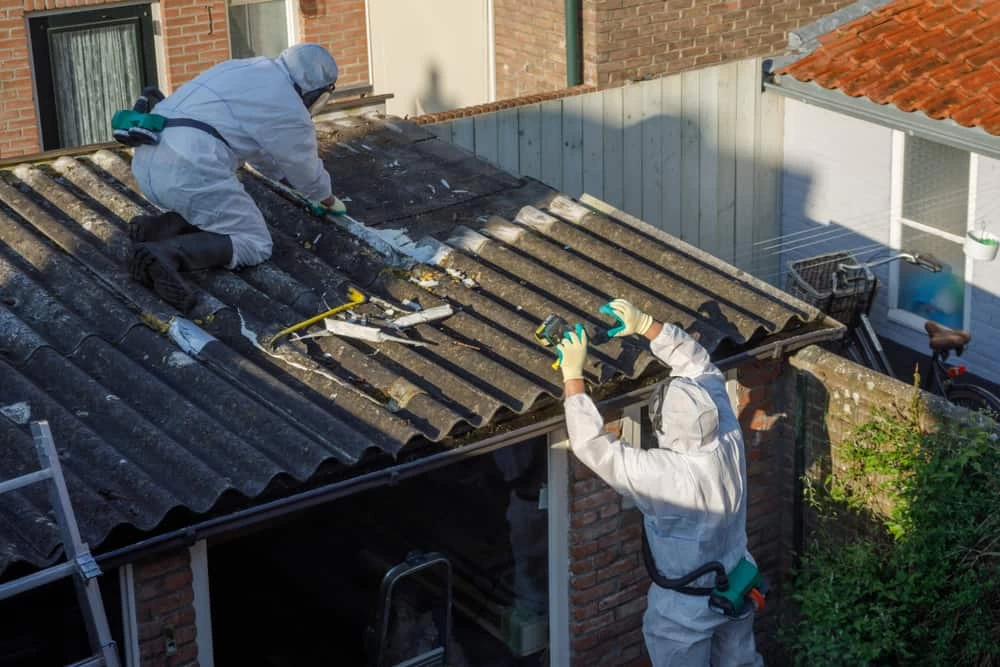
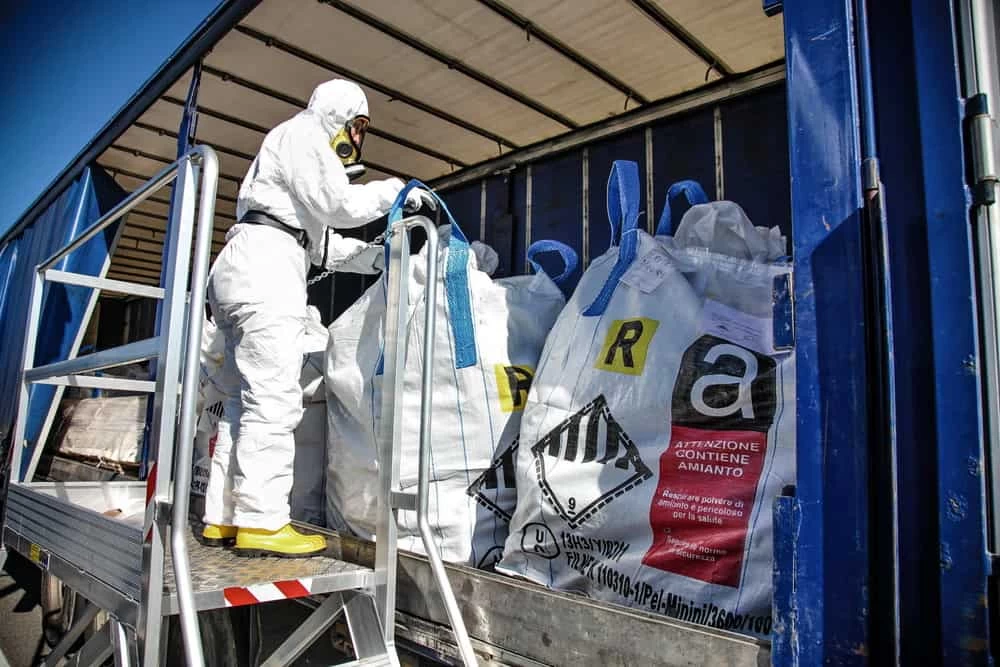
The removal itself is done under full containment negative air pressure, HEPA filtration, proper protective equipment, and strict protocols for how the material is bagged, transported, and disposed of at a permitted facility. When the work is done, air clearance testing confirms the space is safe before containment comes down. You get documentation of everything: the notification, the clearance, the disposal records. That paper trail matters whether you’re renovating, selling, or simply want proof the job was handled correctly.
What's Included and Why It Matters in a Home Like Yours
Asbestos abatement in Sound Beach isn’t a one-size situation because the homes here aren’t one-size either. A 1935 bungalow that was converted to year-round use in the 1950s and had a bathroom addition in the 1970s might have three different generations of asbestos-containing materials layered into it. Our asbestos removal services are built around actually understanding what’s in front of us not assuming every job looks the same.
For homes with original mid-century flooring, asbestos tile removal is one of the most common scopes we handle on the North Shore. Those 9×9-inch vinyl asbestos tiles were installed by the millions across Long Island from the 1940s through the 1970s, and they’re still under plenty of Sound Beach floors. Asbestos popcorn ceiling removal is another frequent need textured ceilings applied through the early 1980s regularly contain chrysotile asbestos, and scraping them without testing first is exactly the kind of mistake that creates a much bigger problem.
Every scope of work we complete comes with full documentation: the pre-abatement notification to the NYS DOL, post-abatement air clearance results, and disposal records. If you’re selling your home and a buyer’s lender is requiring proof of abatement, that paperwork is what closes the gap. If you’re renovating and your contractor stopped work because of a suspicious material, we’re the call that gets the project moving again legally, safely, and with everything on record.
Does my Sound Beach home actually have asbestos, or is that just a possibility?
If your home was built before 1980, the honest answer is: probably somewhere, yes. Sound Beach’s housing stock is some of the oldest on the North Shore the hamlet was built out starting in 1929, and most of the original cottages were constructed through the 1940s and 1950s. Asbestos was a standard component of residential building materials throughout that entire period. Floor tiles, pipe insulation, roofing shingles, ceiling texture, joint compound, and exterior siding all commonly contained asbestos during those decades.
The only way to know for certain is to have suspected materials tested by a licensed inspector. Visual identification alone isn’t reliable asbestos fibers are microscopic, and many materials that contain them look identical to materials that don’t. If you’re planning a renovation, preparing to sell, or you’ve recently disturbed a material and aren’t sure what it is, testing is the right first step. It’s not expensive, and it tells you exactly what you’re working with before you make any decisions.
What happens if a contractor already disturbed a material that might contain asbestos?
This comes up more often than you’d think, especially during renovations of older homes in Sound Beach. A contractor starts demo, hits something that looks wrong, and stops leaving the project in limbo and the homeowner unsure what to do next. If that’s where you are, the first thing to do is limit access to the area and avoid disturbing the material further. Don’t sweep it up, don’t run HVAC through the space, and don’t let anyone work in that area until it’s been tested.
Once you call us, we can assess what was disturbed, determine whether testing is needed, and if asbestos is confirmed, contain and remediate the area properly before your renovation continues. In Sound Beach’s bungalow-era homes, this scenario is particularly common because older materials are often found beneath newer finishes a floor tile under vinyl, pipe wrap behind drywall and contractors working on updates don’t always know what they’ll find until they’re already into the work. The faster you get a licensed abatement contractor involved, the faster your project gets back on track.
How long does asbestos abatement take for a typical Sound Beach home?
It depends on the scope, but for a focused removal a single room of floor tiles, a popcorn ceiling in one area, or a section of pipe insulation most residential projects in this area are completed within one to three days. Larger scopes, or homes where multiple materials across multiple areas need to be addressed, can take longer. The honest answer is that we won’t give you a firm timeline until we’ve seen what we’re working with.
What adds time isn’t usually the removal itself it’s the steps that have to happen around it. The NYS Department of Labor requires that a project notification be filed before work begins, and post-abatement air clearance testing has to confirm the space is clean before containment comes down. Those steps are non-negotiable under Industrial Code Rule 56, and any contractor who skips them is cutting corners that could create legal and health problems for you down the line. We factor all of that into the schedule upfront so there are no surprises.
Is asbestos abatement required before I can sell my home in Sound Beach, NY?
Not always required by law, but increasingly expected and the distinction matters. New York State doesn’t mandate asbestos abatement before every home sale, but buyers, their attorneys, and their lenders often do. If a pre-sale inspection identifies asbestos-containing materials, a buyer’s lender may require abatement before approving the mortgage. Even if the lender doesn’t require it, a buyer’s attorney may make it a condition of the contract, or the buyer may simply walk.
With Sound Beach median home values above $464,000, the financial stakes of a stalled or failed transaction are significant. Getting ahead of the issue testing before you list, abating if needed, and having the clearance documentation ready puts you in a much stronger position at the negotiating table. It also removes the timeline pressure that comes when abatement gets pushed to the week before closing. We’ve helped plenty of North Shore homeowners get their paperwork in order before a sale, and the process is straightforward when it’s not being rushed.
Can I remove asbestos myself, or does it have to be a licensed contractor in New York?
In New York State, asbestos abatement must be performed by a licensed contractor. This isn’t a gray area. Under Industrial Code Rule 56, the NYS Department of Labor requires that any asbestos abatement work removal, encapsulation, or disturbance of asbestos-containing materials be carried out by a contractor holding a valid state asbestos abatement license. The DOL’s Asbestos Control Bureau actively enforces this, including conducting inspections during renovation and demolition projects and responding to complaints about improper handling.
Attempting to remove asbestos-containing materials yourself or hiring an unlicensed handyman or general contractor to do it creates real risk on multiple fronts. There’s the obvious health risk from improper containment and exposure. But there’s also legal exposure: improper disposal of asbestos waste is a violation of both state and federal law, and the penalties are serious. If you’re ever in a situation where someone tells you they can “just take care of it” without the proper licensing or paperwork, that’s a significant red flag. Licensed abatement contractors aren’t just a formality they’re the legal and safe way to get this done.
Why does asbestos abatement cost more than I expected what am I actually paying for?
The cost reflects everything that has to happen for the job to be done legally and safely not just the labor of removing material. You’re paying for a licensed contractor who carries the proper state credentials, proper containment setup including negative air pressure and HEPA filtration, pre-abatement project notification to the NYS Department of Labor, post-abatement air clearance testing, and compliant disposal at a permitted asbestos waste facility. None of those steps can be skipped, and all of them cost money to do correctly.
For a focused residential scope in Sound Beach a single room of asbestos tile removal or a popcorn ceiling in one area you’re typically looking at somewhere in the range of $1,500 to $3,500 depending on square footage and conditions. Larger or more complex scopes, like pipe insulation throughout a basement or multiple materials across an older bungalow, will run higher. What you’re protecting with that investment is your family’s health, your home’s legal compliance, and your ability to sell or renovate without the job coming back to haunt you. In a hamlet where homes have been in families for generations and property values have more than tripled since 2000, that’s not an overcautious spend it’s the right one.