New York's Smallest Village Has Some of Its Oldest Asbestos Problems
South Floral Park’s homes were built in an era when asbestos was standard. We handle the removal, the paperwork, and the clearance — so you can renovate or sell without the guesswork.
I needed a professional consultation explanation of procedure for safe removal of Asbestos in my apartment complex. Without having an account yet, I was very impressed with the caring, knowledgeable and generous advice offered by Jessica, and will look forward to doing business in the future. Thank you so much! I feel much more informed about a sometimes scary endeavor. Peace. Nancy Silva Mineola, NY.
Mia Munoz
Used this company to clean up some water flood in my house. They were fast and easy to work with.very professional, Would recommend to anyone!
Nini Valle
Great company, had a flood and they responded quickly and efficiently. Billed my insurance company directly. I highly recommend this company!
joe colapietro, jr
I had pipe freeze in my basement right before a snow storm and they made to within an hour to help start the clean up process. They we by our side throughout the entire process and even helped with the insurance company. They did such a great job with the cleanup, repair, remidiation, I contracted them to perform the repairs and finishes in the basement. They came with enough manpower and material to get the job done. Leo and Jessica were nothing but a pleasure to deal with!!
Cristian Arredondo c
I had some water damage in my home and Green Island was able to take care of my issue quickly and effectively. I am very pleased with the work they did. They responded quickly and were very professional.
Michael M
Outstanding service! From the office to the field crew everyone was friendly, helpful and responsive. I highly recommend Green Island Group.
When asbestos is handled correctly, you stop carrying the risk. You can move forward with a renovation, close a real estate deal, or simply stop wondering what’s underneath your floors or above your head. That’s the practical outcome — and it matters more than most people realize until they’re in the middle of it.
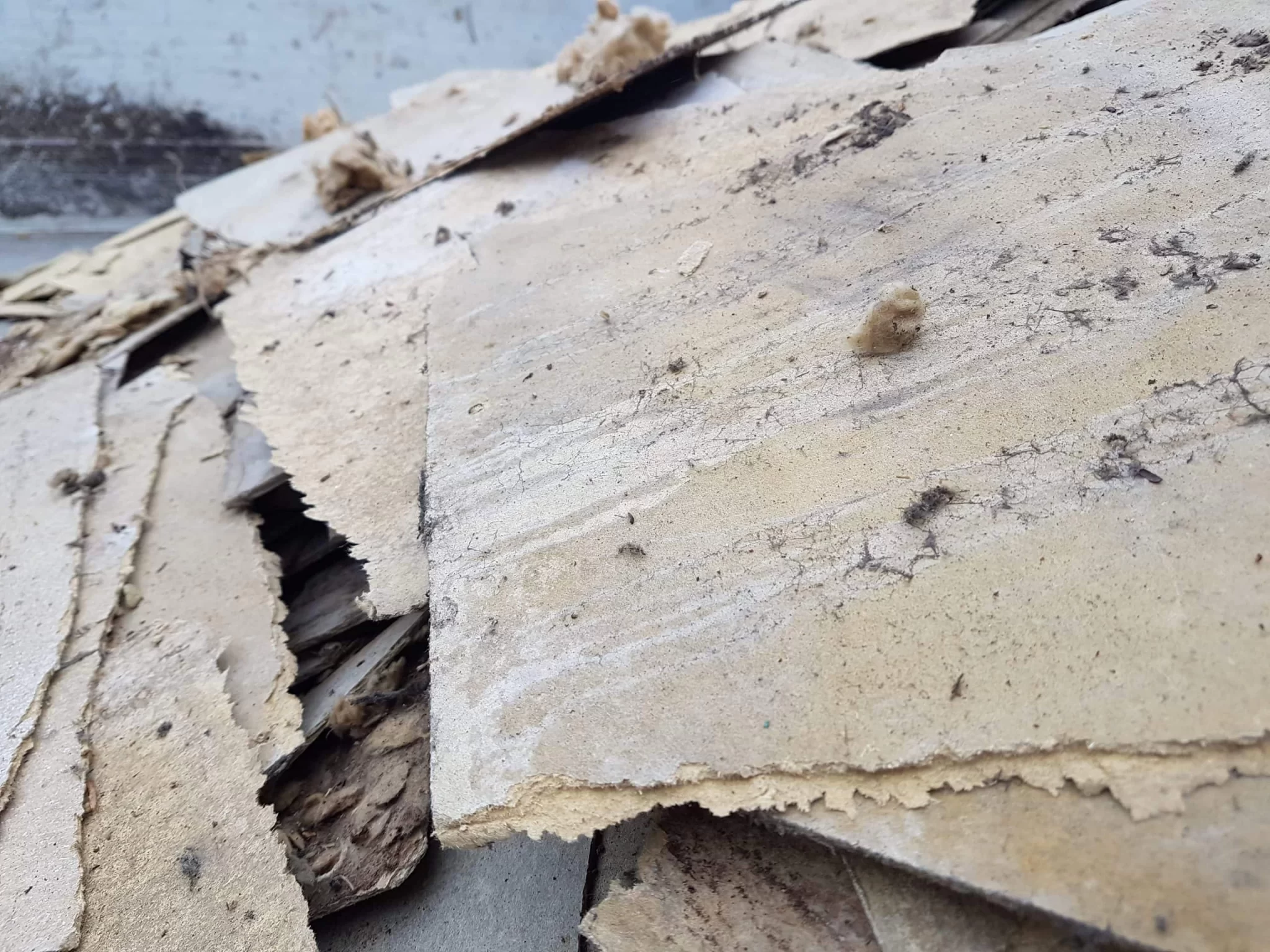
South Floral Park’s housing stock is almost entirely pre-1960s construction. This is just the reality of a village incorporated in 1925, where development peaked in the 1930s through 1950s. Vinyl asbestos floor tiles, pipe and boiler insulation, textured ceilings, roofing felt — these materials were standard in every home being built here during that era. If your home hasn’t been assessed, there’s a reasonable chance something is present.
What makes this especially relevant for South Floral Park is the density. This is the smallest incorporated village in New York State by area — less than a tenth of a square mile, with nearly 1,750 residents packed into it. Homes sit close together. When asbestos-containing materials are disturbed without proper containment, the risk doesn’t stay inside your walls. Professional abatement with negative-pressure enclosures and HEPA filtration isn’t just a regulatory requirement here — it’s genuinely necessary given how tight this community is built.
Nassau County Credentials, Not Just a Nassau County Address
We are a Nassau County-based asbestos abatement company that works specifically in this county’s regulatory environment. That distinction matters more than it might seem. Nassau County requires EHRP and EHRT environmental health credentials that many out-of-area contractors simply don’t carry. When an inspector shows up or a lender requests documentation, those credentials are either there or they aren’t.
We serve South Floral Park and the surrounding communities — Elmont, Floral Park, Franklin Square — and understand the specific building types and material profiles common in homes throughout this part of the Town of Hempstead. These aren’t unfamiliar houses. They’re the same Cape Cods, Colonials, and post-war ranches that make up virtually every street in ZIP code 11001.
Every project we perform is completed under full compliance with NYS Industrial Code Rule 56, with proper notification to the NYS Department of Labor Asbestos Control Bureau before work begins. The documentation you receive at the end isn’t just paperwork — it’s what your real estate attorney, your lender, and Nassau County inspectors will ask for.
Asbestos Remediation Process for South Floral Park Homes
No Surprises — Here's Exactly What the Process Looks Like
It starts with an inspection. A certified asbestos inspector collects bulk samples from the areas of concern — floor tiles, ceiling texture, pipe insulation, whatever applies to your home — and sends them to an accredited laboratory for analysis. You get a clear answer on what’s present, where it is, and what category it falls into before any removal decisions are made.
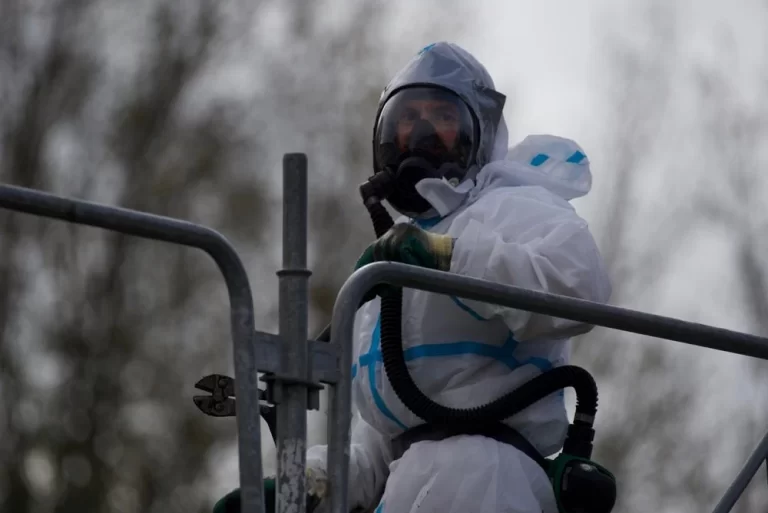
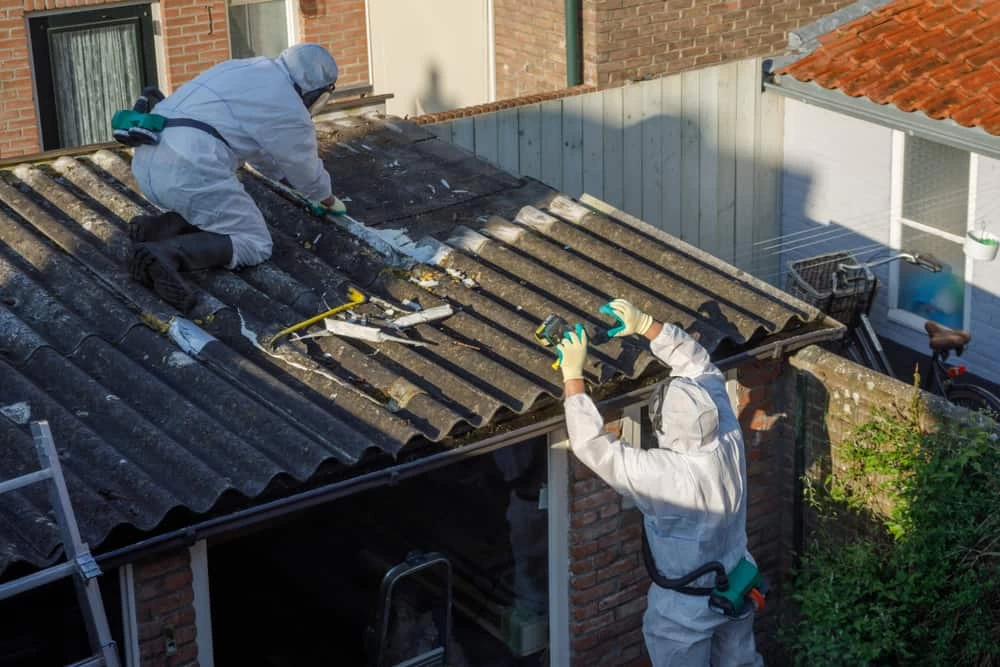
If abatement is needed, the work area is sealed and placed under negative air pressure using HEPA-filtered equipment. This is the containment step that keeps fibers from migrating into other parts of your home or — given South Floral Park’s extremely dense residential layout — toward neighboring properties. Certified technicians remove the materials using wet methods and proper protective protocols required under NYS Industrial Code Rule 56. Before work begins on any project in Nassau County, the required notification is filed with the NYS Department of Labor Asbestos Control Bureau.
Once removal is complete, post-abatement air clearance testing is conducted by a certified professional. This step confirms that fiber levels meet the required clearance criteria — and it produces the documentation your lender, real estate attorney, or Nassau County inspector will need to sign off. You receive a full project package: notification records, abatement logs, disposal manifests, and clearance results. We handle the entire chain from inspection to clearance so nothing falls through the gap between separate vendors.
Asbestos Tile and Popcorn Ceiling Removal in South Floral Park
The Materials Most Common in These Homes, Handled the Right Way
The two most frequently encountered asbestos-containing materials in South Floral Park’s housing stock are vinyl asbestos floor tiles and textured popcorn ceilings. The floor tiles — typically 9″×9″ or 12″×12″ — were standard in kitchens, basements, and hallways from the 1920s through the 1970s. They’re often found intact beneath newer flooring layers, which is exactly the situation where a flooring contractor can unknowingly disturb them during a remodel. Asbestos tile removal requires wet methods, full containment, and licensed disposal — not a box cutter and a dumpster rental.
Popcorn ceiling removal is the other major trigger. Acoustic or textured ceilings were commonly applied in homes throughout the 1950s and 1970s, and many contain asbestos. Scraping them without testing first isn’t just a health risk — in New York State, it can put you in violation of EPA NESHAP regulations, which require an asbestos survey before any renovation or demolition work begins. That requirement applies to every permitted project in Nassau County, and it’s enforced.
Beyond tile and ceiling work, we also handle pipe and boiler insulation abatement — a common need in South Floral Park’s older homes with original heating systems — as well as full pre-renovation and pre-demolition asbestos surveys required before any permitted work begins. Whatever the material, the process ends with air clearance testing and a complete documentation package built to satisfy Nassau County requirements.
Do I need an asbestos inspection before renovating my South Floral Park home?
If your home was built before 1980 — which describes the overwhelming majority of South Floral Park’s housing stock — an asbestos inspection before renovation isn’t just a smart idea, it’s a legal requirement in many situations. Under EPA NESHAP regulations, any building undergoing renovation or demolition must have a certified asbestos inspection completed before work begins. In Nassau County, this requirement is enforced as part of the building permit process, meaning your contractor or the county itself may require documentation before a permit is issued.
The practical reason matters just as much as the legal one. South Floral Park’s homes were built during the peak era of asbestos use — the 1930s through 1960s. Floor tiles, pipe insulation, joint compound, ceiling texture, roofing materials — all of it was standard in this era. A renovation that disturbs those materials without testing first can create a health hazard that’s far more expensive to deal with after the fact than a pre-project inspection would have been.
How much does asbestos removal typically cost in Nassau County?
Cost depends on what’s present, how much of it there is, and what type of material it is. A single-room asbestos tile removal in a South Floral Park home might run in the range of $1,500 to $3,500. A more involved project — pipe insulation removal, multiple rooms of floor tile, or a full pre-demolition abatement — can reach $5,000 to $15,000 or more depending on scope. These are real ranges, not minimums designed to get you on the phone.
What affects the number most is the material type (friable vs. non-friable), the square footage involved, the accessibility of the work area, and the disposal requirements. Nassau County’s regulatory requirements — including proper ACB notification, licensed disposal, and post-abatement air clearance testing — are non-negotiable parts of any legitimate job here, and they’re factored into the cost of doing this correctly. Getting a quote from a contractor who skips those steps might look cheaper upfront, but it creates real liability for you as the homeowner.
What happens if asbestos is found during a home inspection in South Floral Park?
This is one of the most common situations we handle in Nassau County’s active real estate market. When a buyer’s home inspector flags suspected asbestos-containing materials, it typically triggers one of two outcomes: the seller agrees to remediate before closing, or the parties negotiate a price adjustment to account for the cost. In South Floral Park’s current market — where homes have been selling at median prices around $645,000 and climbing — neither side wants to walk away over something that’s solvable.
The key is moving quickly and getting the right documentation. Lenders and real estate attorneys don’t just want the asbestos removed — they want a paper trail showing it was removed by a licensed contractor under NYS Code Rule 56, with post-abatement air clearance testing results confirming the space is safe. We provide that complete documentation package, which is specifically what’s needed to satisfy Nassau County lenders and close the transaction on schedule. If a deal is on the line, timeline matters as much as the work itself.
Can I remove asbestos myself in my South Floral Park home?
New York State technically allows owner-occupants to perform asbestos removal in their own single-family residence, but there’s a significant catch that most people don’t know about until it’s too late: you have no legal way to dispose of the waste. Long Island municipal facilities and transfer stations do not accept asbestos from residents. Only licensed contractors have access to approved asbestos disposal pathways under New York State law. So even if you do the removal yourself, you’re still left with hazardous material and nowhere to legally take it.
Beyond disposal, there’s the containment issue. South Floral Park’s homes sit extremely close together — this is one of the densest residential communities in Nassau County. Without proper negative-pressure enclosures and HEPA filtration, disturbed asbestos fibers can migrate beyond your walls. That’s not a hypothetical risk in a village where your neighbor’s window might be ten feet from yours. The cost of professional abatement is almost always less than the cost of dealing with improper removal — whether that’s a failed air clearance test, a lender rejection, or a health issue down the road.
How long does asbestos abatement take for a typical home in South Floral Park, NY?
For a straightforward single-material project — one room of asbestos floor tile, or a section of pipe insulation — the actual abatement work typically takes one to two days. A larger scope project involving multiple materials or multiple rooms can run three to five days. The timeline that catches people off guard isn’t the removal itself — it’s the steps around it.
Before work begins, the required notification must be filed with the NYS Department of Labor Asbestos Control Bureau. After removal is complete, post-abatement air clearance testing is conducted and results have to come back from the lab before the space can be reoccupied and the project is officially closed out. For a real estate transaction in South Floral Park, this means you want to start the process as early as possible once asbestos is identified — not the week before closing. A realistic full-project timeline from initial inspection to final clearance documentation is typically one to two weeks, depending on lab turnaround and project scope.
Does Green Island Group handle asbestos removal near Elmont and Floral Park too?
Yes — we serve the full area surrounding South Floral Park, including Elmont, Floral Park, Franklin Square, and communities throughout Nassau County. The homes in this part of the Town of Hempstead share a lot in common: similar construction eras, similar material profiles, and the same Nassau County regulatory requirements that govern how abatement work must be performed and documented.
Elmont in particular has seen significant activity in recent years with the UBS Arena opening and the ongoing Belmont Park redevelopment nearby. Construction activity in the area has increased awareness of environmental hazards in older buildings, and homeowners throughout the surrounding communities — including South Floral Park — have been more proactive about getting assessments done before starting renovation work. If you’re in the 11001 ZIP code or anywhere in the immediate area, the licensing, the process, and the documentation requirements are the same. Call 631-613-8945 to get a straight answer on what your home needs.