South Hempstead's Aging Homes Deserve More Than a Guess
If your home was built before 1980, asbestos is likely somewhere inside it — and in South Hempstead, most homes were. We provide certified abatement that follows Nassau County’s rules, start to finish.
I needed a professional consultation explanation of procedure for safe removal of Asbestos in my apartment complex. Without having an account yet, I was very impressed with the caring, knowledgeable and generous advice offered by Jessica, and will look forward to doing business in the future. Thank you so much! I feel much more informed about a sometimes scary endeavor. Peace. Nancy Silva Mineola, NY.
Mia Munoz
Used this company to clean up some water flood in my house. They were fast and easy to work with.very professional, Would recommend to anyone!
Nini Valle
Great company, had a flood and they responded quickly and efficiently. Billed my insurance company directly. I highly recommend this company!
joe colapietro, jr
I had pipe freeze in my basement right before a snow storm and they made to within an hour to help start the clean up process. They we by our side throughout the entire process and even helped with the insurance company. They did such a great job with the cleanup, repair, remidiation, I contracted them to perform the repairs and finishes in the basement. They came with enough manpower and material to get the job done. Leo and Jessica were nothing but a pleasure to deal with!!
Cristian Arredondo c
I had some water damage in my home and Green Island was able to take care of my issue quickly and effectively. I am very pleased with the work they did. They responded quickly and were very professional.
Michael M
Outstanding service! From the office to the field crew everyone was friendly, helpful and responsive. I highly recommend Green Island Group.
When a contractor stops mid-job and tells you there’s a problem, everything halts. The renovation stalls, the timeline shifts, and suddenly you’re searching for answers on something you never expected to deal with. Getting the right company in quickly means your project moves forward — without cutting corners that come back to bite you later.
South Hempstead’s housing stock tells the story. Most homes here were built between 1940 and 1969, and that era of construction came with asbestos baked into nearly everything — floor tiles, pipe insulation, ceiling texture, joint compound. These materials were fine when left alone. The moment a renovation disturbs them, the risk becomes real. Proper abatement removes that risk completely, and just as importantly, it gives you the documentation to prove it.
That documentation matters more than most people realize. Whether you’re mid-renovation or getting ready to list a home worth around $601,000, having certified clearance paperwork protects your transaction, satisfies your real estate attorney, and gives buyers’ inspectors nothing to flag. The abatement itself is one part of the job. The paper trail that follows it is the other.
Licensed for Nassau County — Not Just New York State
A lot of contractors hold state-level asbestos licensing and stop there. Nassau County requires more. The EHRP contractor license and EHRT technician certifications are county-specific credentials — and we carry both. That distinction matters when you’re in an unincorporated hamlet like South Hempstead, where permits run through the Town of Hempstead’s Building Department and every step of the process has to be done by the book.
We’ve worked in the mid-century homes that line South Hempstead’s streets — the Cape Cods, the colonials, the split-levels built in the decades when asbestos was standard. That hands-on familiarity with Nassau County’s housing stock, its regulatory process, and its inspection requirements means fewer surprises on your job and a faster path from discovery to clearance.
It starts with a certified inspection. Before anything is touched, a qualified inspector identifies what materials are present, where they are, and whether they’re in a condition that requires removal. In South Hempstead’s older homes, that often means checking basement flooring for vinyl asbestos tile, examining pipe insulation around aging boilers, and looking at textured ceilings that haven’t been touched since the 1970s. You get a clear picture before any work begins.
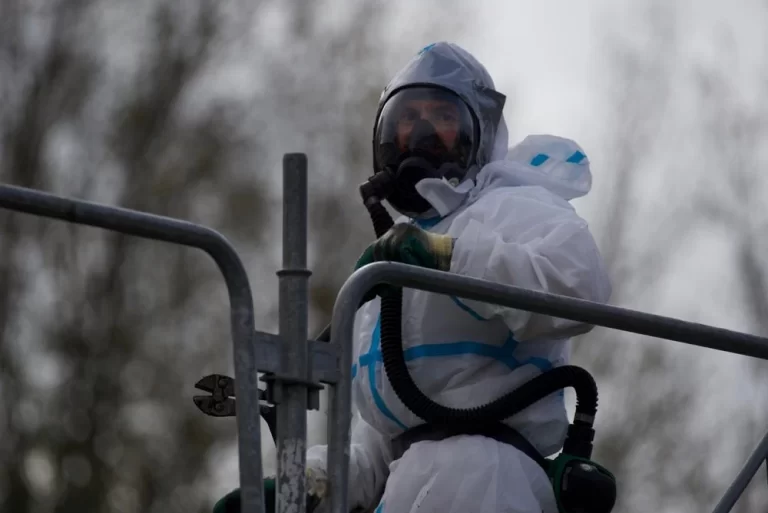
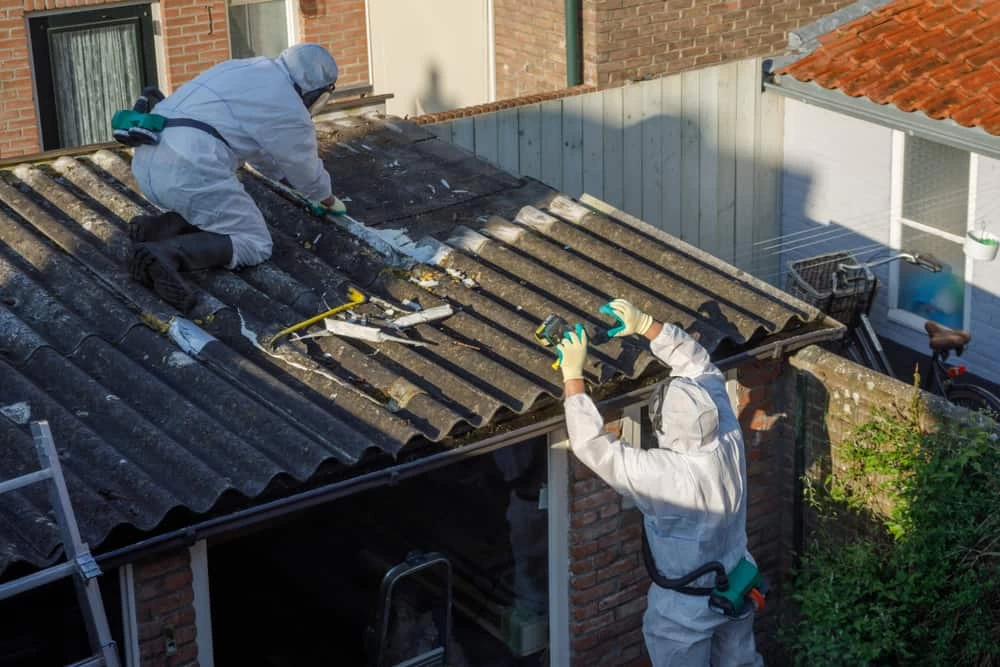
Once asbestos-containing materials are confirmed, the project gets filed with the New York State Department of Labor under Industrial Code Rule 56 — a mandatory notification step that many homeowners don’t know about until something goes wrong. We handle that filing. The abatement itself is performed under full containment, with negative air pressure and HEPA filtration to keep fibers from spreading into the rest of your home. Every worker on-site holds EHRT certification.
After removal, all asbestos waste is sealed, labeled, and transported by a licensed hauler to an approved disposal facility — not just bagged and left at the curb. The job closes with post-clearance air testing, which confirms that fiber counts are below the threshold before anyone declares the space safe. You get the full documentation package at the end: inspection records, project notification, abatement completion, and air test results.
Every Material, Every Room — Handled Under One Roof
The most common asbestos scenarios we encounter in South Hempstead all trace back to the same source: homes built in the postwar decades when asbestos was the default. Vinyl asbestos floor tiles — the classic 9-inch squares found in basements, kitchens, and bathrooms — are one of the most frequent calls. The black mastic adhesive underneath them often contains asbestos too, which means the tile isn’t the only thing that needs to go.
Pipe and boiler insulation is another one. When HVAC contractors start replacing aging heating systems in these homes, they regularly encounter deteriorated wrap that can’t be touched without a certified abatement team on-site first. Popcorn and textured ceilings are a third. If your home has original ceilings from before 1980 and you’re planning to scrape or replace them, testing isn’t optional — it’s required before renovation work begins under New York State law.
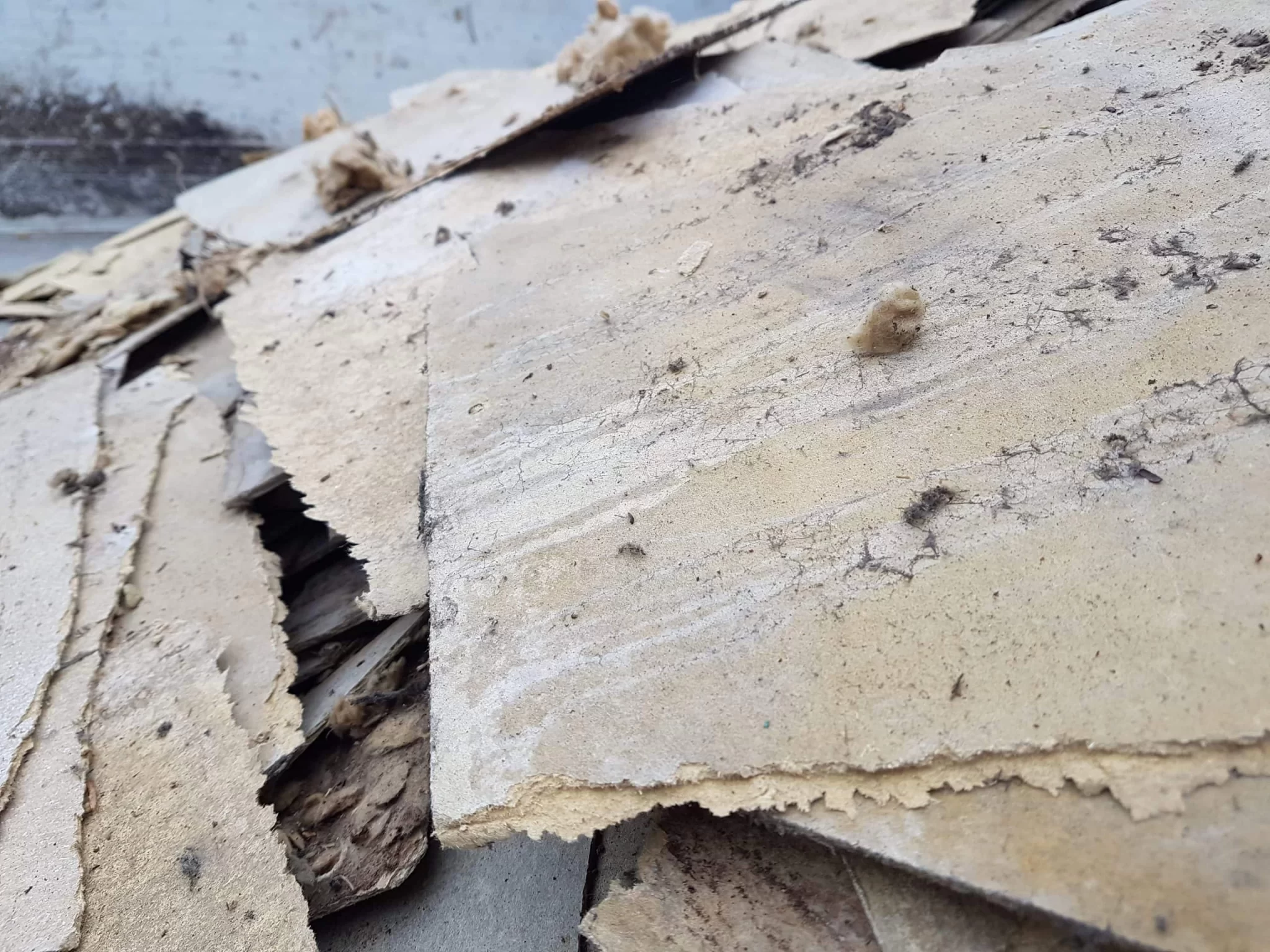
We also handle asbestos-containing joint compound, exterior cement board siding, and roofing materials. Every project includes the full scope: inspection, regulatory filing, contained removal by EHRP-licensed crews, licensed waste transport, and post-clearance air testing. South Hempstead homeowners don’t need to coordinate between multiple vendors or figure out the paperwork themselves — that’s the whole point of working with a contractor who does this end to end.
Does asbestos abatement in South Hempstead require a Town of Hempstead permit?
Yes, and this is one of the details that catches homeowners off guard. Because South Hempstead is an unincorporated hamlet — not an incorporated village like Rockville Centre or Valley Stream — your building permits come from the Town of Hempstead’s Building Department, not a village government. Any renovation or demolition project that could disturb asbestos-containing materials requires a certified asbestos survey before a permit is issued.
Beyond the local permit, there’s also the New York State Department of Labor notification requirement under Industrial Code Rule 56. For projects that exceed certain thresholds — more than 10 linear feet of pipe insulation, 10 square feet of other ACM, or 1 cubic foot of loose material — that notification has to be filed before work begins. We handle both the Town of Hempstead permitting coordination and the state-level filing, so you’re not navigating two separate regulatory systems on your own.
How do I know if my South Hempstead home actually has asbestos?
The honest answer is that you can’t know for certain without testing. Visual inspection alone doesn’t tell you whether a material contains asbestos — it requires a certified inspector to collect samples and send them to an accredited laboratory. If your South Hempstead home was built before 1980, the probability is high. The housing stock here is dominated by homes from the 1940s through the late 1960s, and virtually all of them were built with asbestos-containing materials somewhere.
The most common locations in these homes are basement floor tiles and the mastic underneath them, pipe insulation on boilers and hot water systems, textured or popcorn ceilings, and the joint compound used in original drywall. If you’re planning a renovation that touches any of these areas, testing before you start is both the legally required step and the one that protects everyone on the job. Our certified inspectors can assess your home and give you a clear answer.
What happens if a contractor already disturbed the asbestos before anyone knew it was there?
This happens more than people realize, especially in South Hempstead’s older homes where a renovation uncovers something unexpected. If a contractor disturbed a material that turns out to contain asbestos — cracked floor tiles, scraped ceiling texture, cut pipe insulation — the priority is to stop work immediately and have the area assessed by a certified inspector.
Depending on the extent of the disturbance, the response could range from air monitoring and limited remediation to a full containment and abatement project. The key is not to continue disturbing the material or attempt to clean it up without proper equipment and certification. We can mobilize quickly in these situations, assess what was disturbed, and determine the appropriate response. Getting the right people in fast limits the exposure risk and gets your project back on track with the documentation you’ll need to prove the issue was properly resolved.
How long does asbestos abatement typically take for a residential job?
It depends on the scope, but most single-room or single-system residential jobs in South Hempstead are completed within one to three days. A basement floor tile removal, a boiler pipe insulation project, or a single-room ceiling abatement can often be wrapped up quickly once the project is properly filed and containment is set up. Larger projects — whole-house tile removal, multiple systems, or combined interior and exterior materials — take longer, sometimes a week or more.
The variable that affects timeline most in Nassau County is the state notification requirement. Under Industrial Code Rule 56, certain project thresholds require advance notice to the New York State Department of Labor before work can begin. That filing window needs to be factored into your schedule. If you’re working against a renovation deadline or a real estate closing date, let us know upfront — the timeline can often be structured around your constraints when there’s enough lead time to plan accordingly.
Do I need to leave my home during asbestos abatement?
For most residential abatement projects, yes — occupants should vacate the work area and, depending on the scope, the home itself during active removal. The abatement area is sealed under full containment with negative air pressure and HEPA filtration to prevent fibers from migrating into other parts of the house. While that containment is highly effective, the safest approach is to keep occupants — especially children — out of the home while work is active.
In South Hempstead, where nearly 25% of the population is under 18, this is a question we take seriously. The post-clearance air test at the end of the project is specifically designed to confirm that fiber levels have returned to safe, background levels before anyone re-enters the space. You won’t be asked to return based on a visual inspection or a contractor’s word alone — the air test result is the objective confirmation that the space is safe, and that documentation becomes part of your project file.
Does asbestos abatement affect a home sale in South Hempstead?
It can — but handled correctly, it actually protects the sale rather than threatening it. When a home inspector or buyer’s attorney flags potential asbestos in a pre-1980 home, the deal doesn’t have to fall apart. What buyers and their representatives need is documentation: a certified inspection report, proof of proper abatement by a licensed contractor, and a post-clearance air test result showing the space is clean.
In South Hempstead’s real estate market, where median property values sit around $601,000, the stakes on both sides of a transaction are real. Sellers who get ahead of asbestos concerns before listing — rather than reacting to a buyer’s inspection — tend to have smoother closings and stronger negotiating positions. We provide the complete documentation package that real estate attorneys, lenders, and buyers’ inspectors require. If a closing date is on the line, that’s information worth sharing upfront so the project timeline can be built around it.