If your home was built before 1980, asbestos abatement in Southeast, NY isn’t a maybe it’s a real possibility you need handled correctly, by a licensed contractor who knows the difference between a compliant job and a costly mistake.
I needed a professional consultation explanation of procedure for safe removal of Asbestos in my apartment complex. Without having an account yet, I was very impressed with the caring, knowledgeable and generous advice offered by Jessica, and will look forward to doing business in the future. Thank you so much! I feel much more informed about a sometimes scary endeavor. Peace. Nancy Silva Mineola, NY.
Mia Munoz
Used this company to clean up some water flood in my house. They were fast and easy to work with.very professional, Would recommend to anyone!
Nini Valle
Great company, had a flood and they responded quickly and efficiently. Billed my insurance company directly. I highly recommend this company!
joe colapietro, jr
I had pipe freeze in my basement right before a snow storm and they made to within an hour to help start the clean up process. They we by our side throughout the entire process and even helped with the insurance company. They did such a great job with the cleanup, repair, remidiation, I contracted them to perform the repairs and finishes in the basement. They came with enough manpower and material to get the job done. Leo and Jessica were nothing but a pleasure to deal with!!
Cristian Arredondo c
I had some water damage in my home and Green Island was able to take care of my issue quickly and effectively. I am very pleased with the work they did. They responded quickly and were very professional.
Michael M
Outstanding service! From the office to the field crew everyone was friendly, helpful and responsive. I highly recommend Green Island Group.
A lot of homes in Southeast around Brewster Hill, Lake Tonetta, and throughout the older neighborhoods near the Village of Brewster were built in the 1950s and 1960s. That era of construction came with asbestos in floor tiles, popcorn ceilings, pipe insulation, roofing materials, and more. Most homeowners don’t find out until they’re mid-renovation and by then, the wrong move can shut down an entire project.
When asbestos removal is handled correctly, your renovation stays on track. Your permit gets approved. Your air clearance report is in hand before anyone re-enters the space. If you’re selling, your buyer’s attorney has the documentation they need. If you’re renovating, your contractor isn’t waiting on you to figure out a compliance problem.
Southeast’s real estate market is active, and homes here carry real value Putnam County’s median home price sits above $536,000. Proper asbestos abatement isn’t just a health decision. It protects what you’ve built in this home, keeps your sale from falling apart, and makes sure nothing comes back to bite you after closing.
12 Years Serving Southeast and Putnam County The License Actually Means Something Here
We’ve been doing this for over 12 years, serving Southeast and the broader Putnam County area with consistent, compliant asbestos abatement work. We hold the New York State Department of Labor Asbestos Contractor License the one required under Industrial Code Rule 56 and we’ve been established in this region long enough to have built real relationships here, not just a service area checkbox.
We’ve worked with NYS Office of General Services, NYS Office of Mental Health, DASNY, and county government clients across New York. That kind of institutional track record doesn’t happen without consistent compliance, real documentation, and a process that holds up under scrutiny. The same standards we apply to government contracts apply to a 1962 Cape Cod off Brewster Hill Road or a commercial building along the Route 22 corridor in Southeast.
We’re also NYS and NYC M/WBE certified, hold USEPA Lead and RRP credentials, and carry NYS DOL Mold Remediator licensing so if your older Southeast home has more than one issue, you’re not managing multiple contractors.
It starts with an inspection and material sampling. If asbestos-containing materials are identified, we walk you through what needs to happen, what the timeline looks like, and what documentation you’ll receive at the end. Nothing gets assumed. Nothing gets skipped.
From there, we handle the permit process including coordination with the Town of Southeast Building Department at 1 Main Street in Brewster. For pre-1980 homes, renovation permits often require asbestos survey documentation before work can proceed. That’s not something you want to figure out on your own mid-project. We handle it as part of the job.
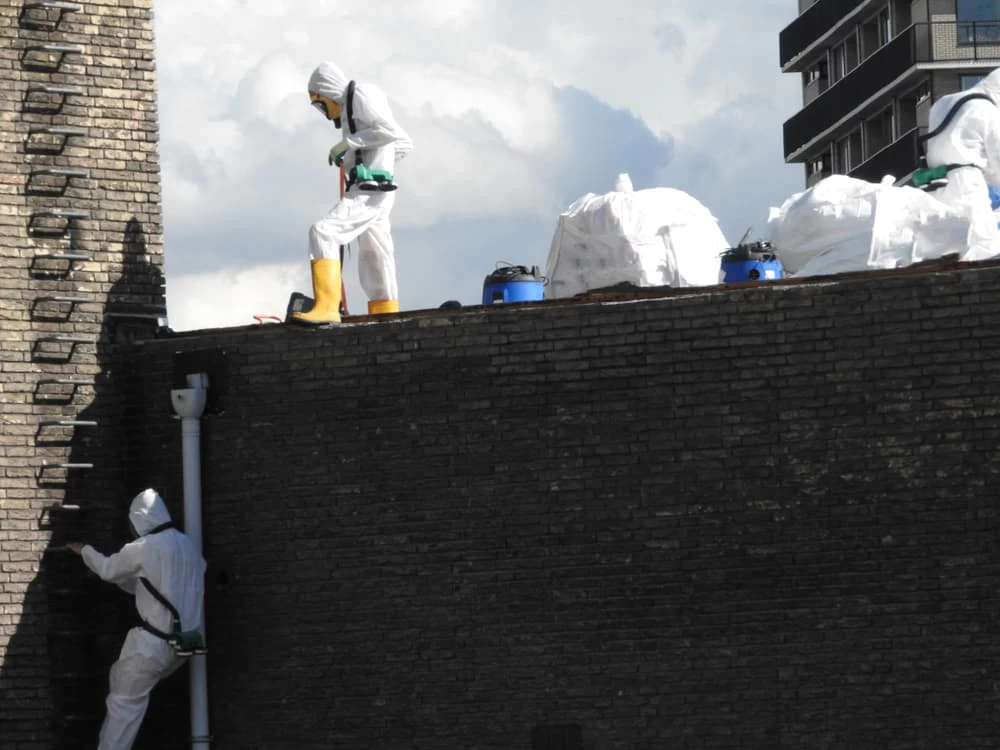
Removal is performed under NYS Rule 56 requirements: wet methods, negative air pressure containment, decontamination units on-site, and certified personnel at every level. When the material is out, an independent licensed air monitoring contractor performs post-abatement clearance testing. You don’t get a verbal confirmation you get a signed clearance report that documents the space is safe to re-enter. That report is what your contractor, your building department, and your buyer’s attorney will ask for. We deliver it every time.
Every Material, Every Scenario Covered Under One License
The asbestos risk in Southeast isn’t limited to one material or one type of home. Vinyl composite floor tiles from the 1950s and 1960s the standard flooring product of that era are extremely common in the Brewster Hill and Lake Tonetta neighborhoods. Popcorn ceiling texture applied through the late 1970s frequently contains chrysotile asbestos. Pipe and boiler insulation in homes with original oil or steam heating systems, asbestos-cement roofing shingles, and exterior siding are all part of the picture in pre-1980 construction throughout Southeast.
We handle asbestos tile removal, popcorn ceiling removal, pipe and duct insulation, roofing materials, and full-structure pre-demolition surveys. If you’re gutting a kitchen, finishing a basement, replacing an HVAC system, or preparing a home for sale, we assess the full scope not just the obvious spots.
For Southeast’s older historic areas like Milltown or the Dingle Ridge Road corridor, where some structures date back well before the 20th century, we bring the same careful approach used on institutional and government properties. The work is precise, the containment is proper, and the documentation at the end is complete because in Putnam County’s market, incomplete paperwork is its own kind of problem.
Does my Southeast, NY home actually need asbestos testing before I renovate?
If your home was built before 1980, the honest answer is yes you should have it tested before any renovation work that disturbs existing materials. Asbestos was used in floor tiles, ceiling texture, insulation, roofing, and wallboard throughout the 1950s, 1960s, and 1970s. You can’t identify it by looking at it. Only lab-analyzed sampling confirms whether a material contains asbestos.
In Southeast, this matters practically, not just medically. The Town of Southeast Building Department requires permits for renovation, demolition, and changes in occupancy. For pre-1980 structures, asbestos survey documentation is often part of that permit process. If your contractor starts work without it and asbestos is disturbed, the project stops and the cleanup cost is significantly higher than a pre-renovation inspection would have been. Getting tested before you break ground is the move that keeps your project on schedule.
How much does asbestos removal typically cost for a Southeast-area home?
The range is wide because the scope varies. A straightforward asbestos tile removal in a single room is a very different job than a full pre-demolition survey and multi-material abatement in a 1960s colonial. Nationally, asbestos removal costs average around $2,239, with a range of roughly $462 to $6,000 depending on the material type, square footage, and complexity of containment required.
For Southeast homeowners, the more useful way to think about cost is relative to what you’re protecting. With Putnam County median home values above $536,000, the financial risk of skipping proper abatement failed permits, a deal falling apart at closing, or liability after a sale far exceeds what a licensed abatement job costs. The documentation you receive at the end of a properly completed job is worth something real in this market. We can walk you through what your specific project involves before anything is committed.
What materials in older Southeast homes most commonly contain asbestos?
The most common finds in Southeast’s pre-1980 housing stock are vinyl composite floor tiles and their adhesive backing, spray-applied popcorn ceiling texture, pipe and boiler insulation in homes with original oil or steam heat, asbestos-cement roofing shingles, and exterior siding panels. Homes built in the Brewster Hill area and around Lake Tonetta where most construction dates to the 1950s and 1960s are particularly likely to have multiple asbestos-containing materials present.
What catches homeowners off guard is that these materials are often layered. A bathroom renovation might uncover asbestos floor tile under newer flooring. A basement finishing project might expose pipe insulation that was never touched since original construction. That’s why a full pre-renovation inspection not just a visual check is the right starting point. You want to know the full picture before your contractor starts demo, not after.
Do I need to leave my home during asbestos abatement in Southeast, NY?
In most cases, yes at least for the duration of active abatement work. Under NYS Industrial Code Rule 56, the work area must be sealed with negative air pressure containment, and a decontamination unit is required on-site. These aren’t optional measures they’re legal requirements designed to prevent fiber migration to other parts of the building. For the safety of everyone in the home, occupants should not be present in or immediately adjacent to the work area while removal is in progress.
The timeline depends on scope. A single-room tile removal might be completed in a day. A larger multi-material abatement in a full basement or attic could take several days. After removal is complete, the space cannot be reoccupied until an independent licensed air monitoring contractor performs clearance testing and confirms that airborne fiber levels meet OSHA and NIOSH standards. We coordinate that clearance process so you’re not waiting longer than necessary to get back into your home.
Can asbestos in my Southeast home affect my ability to sell it?
It can, depending on how it’s handled. Asbestos-containing materials that are intact and undisturbed don’t automatically kill a deal but they do require disclosure, and many buyers will include an asbestos inspection contingency in their offer. If testing reveals asbestos and it hasn’t been professionally abated, you’re likely looking at either a price negotiation, a delayed closing, or a buyer walking away.
The cleaner path is to address it before listing. A properly completed abatement with full documentation inspection records, laboratory results, clearance testing report gives buyers and their attorneys exactly what they need to move forward with confidence. In Southeast’s active real estate market, where homes are moving and buyers are often coming from New York City with high expectations around compliance, that paperwork is a real asset. We provide the complete documentation chain from initial inspection through final air clearance, which is what a real estate transaction actually requires.
Is asbestos popcorn ceiling removal in Southeast, NY something I can do myself?
No and this is one of the most important things to understand before you start any ceiling work in a pre-1980 home. Popcorn ceiling texture applied before 1978 frequently contains chrysotile asbestos. Scraping or disturbing it without proper containment releases fibers into the air, and once airborne, asbestos fibers are invisible, odorless, and dangerous with repeated exposure. There is no safe DIY method for this.
Under New York State Industrial Code Rule 56, asbestos abatement including popcorn ceiling removal must be performed by a contractor holding a valid NYS DOL Asbestos Contractor License. Unlicensed removal is illegal, and any homeowner who hires an unlicensed operator takes on real legal and financial liability, especially if the work surfaces during a future sale or insurance claim. In Southeast, where many homes near the Village of Brewster and throughout the Brewster Hill area were built in exactly the era when asbestos ceiling texture was standard, this comes up regularly. We handle popcorn ceiling removal with full containment, proper disposal, and the clearance documentation you’ll need to prove the space is safe.