IBM-Era Homes in Spackenkill Carry Risks Most Contractors Miss
If your Spackenkill home was built between the 1950s and 1970s, asbestos abatement isn’t a remote possibility it’s likely. We handle it completely, from testing to final clearance.
I needed a professional consultation explanation of procedure for safe removal of Asbestos in my apartment complex. Without having an account yet, I was very impressed with the caring, knowledgeable and generous advice offered by Jessica, and will look forward to doing business in the future. Thank you so much! I feel much more informed about a sometimes scary endeavor. Peace. Nancy Silva Mineola, NY.
Mia Munoz
Used this company to clean up some water flood in my house. They were fast and easy to work with.very professional, Would recommend to anyone!
Nini Valle
Great company, had a flood and they responded quickly and efficiently. Billed my insurance company directly. I highly recommend this company!
joe colapietro, jr
I had pipe freeze in my basement right before a snow storm and they made to within an hour to help start the clean up process. They we by our side throughout the entire process and even helped with the insurance company. They did such a great job with the cleanup, repair, remidiation, I contracted them to perform the repairs and finishes in the basement. They came with enough manpower and material to get the job done. Leo and Jessica were nothing but a pleasure to deal with!!
Cristian Arredondo c
I had some water damage in my home and Green Island was able to take care of my issue quickly and effectively. I am very pleased with the work they did. They responded quickly and were very professional.
Michael M
Outstanding service! From the office to the field crew everyone was friendly, helpful and responsive. I highly recommend Green Island Group.
The moment asbestos is confirmed in your home, everything slows down. Your renovation stalls. Your real estate transaction gets complicated. And if you’ve got family in the house especially kids in the Spackenkill school district or older parents who’ve lived there for decades the anxiety is real. Getting it handled correctly doesn’t just solve a health problem. It gets your life moving again.
Most of the homes in Spackenkill’s neighborhoods Hagantown, Nassau, King George, Beechwood were built during the IBM expansion era of the 1950s and 1960s. That’s precisely when asbestos was used in virtually everything: floor tiles, pipe insulation, boiler wrap, popcorn ceilings, the mastic adhesive under your basement flooring. These materials don’t announce themselves. You find them mid-renovation, or your home inspector flags them before a sale, or a contractor stops work and tells you to call someone licensed.
When the abatement is done right, you get more than a clean space. You get documented air clearance results you can hand to a buyer, a lender, or an attorney. You get a home that’s safe to renovate, sell, or simply live in without wondering. With median home values in Spackenkill above $600,000, that documentation isn’t just peace of mind it protects a serious financial asset.
We’ve been doing this work across New York State for over 12 years more than 5,000 completed asbestos abatement and remediation projects. That’s not a number pulled from a brochure. It means our team walking into your Spackenkill home has seen every type of mid-century construction, every material configuration, and every regulatory scenario that Dutchess County and the NYS Department of Labor can throw at a project.
We hold a current NYS DOL asbestos contractor license the kind the Albany District Office enforces on projects right here in Dutchess County. We’re also MWBE-certified and approved as a contractor for New York State agencies, a credential that requires independent vetting and isn’t self-reported. That’s the same level of accountability a state government requires before letting a contractor on their property.
Our customers in Spackenkill consistently point to two things: how fast we respond often within two hours and how clearly we explain what’s happening before any work begins. When asbestos shows up in your home near Casperkill or off Spackenkill Road, that combination matters more than any sales pitch.
From First Call to Final Clearance Here's the Whole Picture
It starts with a call and an assessment. A licensed inspector comes to your home, identifies the materials in question, and collects samples for testing. In Spackenkill’s mid-century housing stock, that typically means checking the basement floor tiles and mastic, the mechanical room pipe insulation, the boiler wrap, and any textured ceilings in living areas. You’ll know exactly what you’re dealing with before anything else happens.
Once asbestos is confirmed, the project is scoped and all required notifications are filed with the NYS Department of Labor. In Dutchess County, that means the Albany District Office the enforcement body that actively inspects abatement projects in this area. The Town of Poughkeepsie Building Department also requires proper abatement documentation before issuing certificates of occupancy on renovated properties, so this step isn’t optional and it isn’t a formality. We handle all of it.
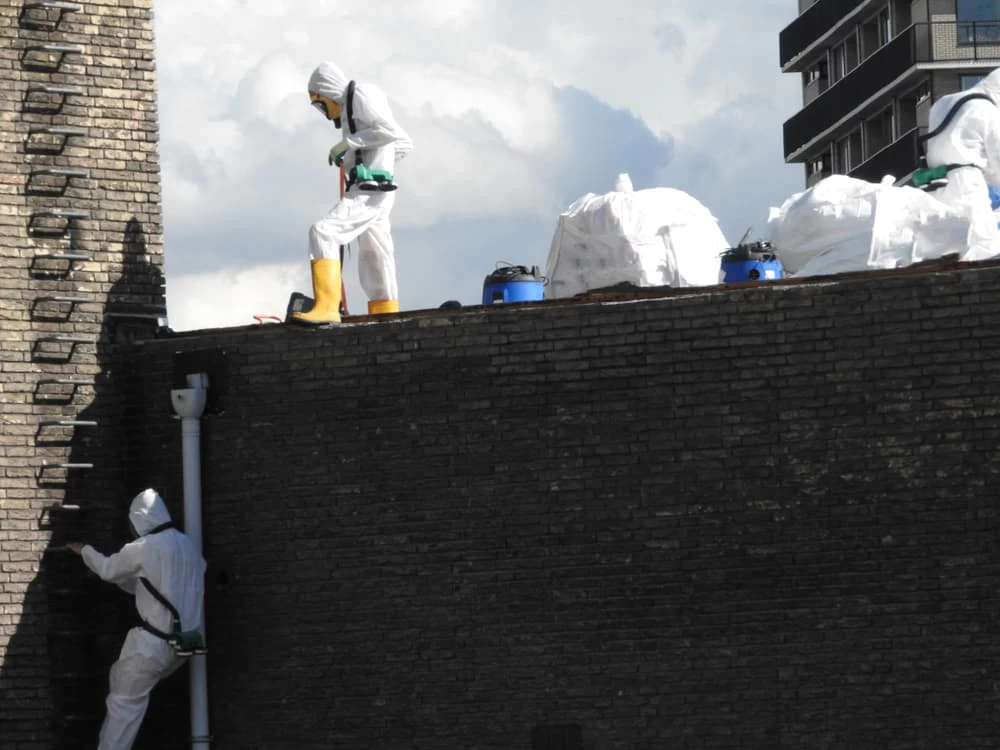
The actual removal happens under full containment the rest of your home stays protected while the work area is sealed and treated as a regulated zone. Waste is transported by a licensed hauler approved for Dutchess County asbestos disposal. When removal is complete, post-abatement air clearance testing is conducted by an independent party. You get the results in writing. That’s the document that says the space is safe, and it’s the document that follows your home’s record for as long as you own it.
Spackenkill homes from the 1950s through the 1970s contain asbestos in predictable places and a few that tend to surprise people. The 9×9 vinyl floor tiles in the basement are the most common find, along with the black mastic adhesive underneath them. Pipe insulation in mechanical rooms, boiler wrap, and asbestos-backed vinyl sheet flooring are close behind. Popcorn ceilings applied widely through the late 1970s are another frequent discovery, especially in dens and family rooms of the raised ranches and split-levels that define Hagantown and the Nassau neighborhoods.
We handle asbestos tile removal, asbestos popcorn ceiling removal, pipe and boiler insulation abatement, and full structural remediation for larger renovation or pre-demolition projects. Every service includes the required NYS notifications, full containment setup, licensed removal, Dutchess County-compliant disposal, and post-abatement air clearance testing with written documentation. Nothing is left for you to coordinate or track down separately.
If your project also involves mold, water damage, or fire damage which is common in older Spackenkill homes dealing with basement moisture or storm-related intrusion that work is handled by our team. You don’t need to find a separate mold contractor or a separate restoration company. One call covers the full scope, and if your situation involves an insurance claim, we bill your insurance company directly.
Does my Spackenkill home actually need asbestos testing before I renovate?
If your home was built before 1980, testing isn’t just a good idea it’s required under New York State law before any renovation or demolition that could disturb building materials. New York’s Industrial Code Rule 56 is one of the strictest asbestos regulatory frameworks in the country, and it applies directly to homes in the Town of Poughkeepsie, which governs Spackenkill.
Given that the median construction year in Spackenkill is 1965, the odds are high that your home contains at least one asbestos-containing material. The most common finds in IBM-era homes here are basement floor tiles and the black mastic adhesive beneath them, pipe insulation in the boiler room, and textured or popcorn ceilings. Testing before you renovate protects your health, keeps your contractor legally in the clear, and ensures the Town of Poughkeepsie Building Department can issue your certificate of occupancy when the project is done.
How much does asbestos removal cost in Dutchess County, NY?
For most residential projects in Dutchess County, asbestos removal runs between $1,300 and $3,100 depending on the scope what materials are involved, how much square footage needs to be addressed, and how accessible the affected areas are. New York State’s regulatory requirements make abatement here more expensive than national averages, and that’s not a flaw in the pricing it reflects real compliance costs that protect you legally and medically.
What drives cost up in this area: licensed NYS DOL contractors are required by law, waste must be transported by a Dutchess County-approved licensed hauler, and post-abatement air clearance testing is a mandatory step that adds cost but also produces the documentation your home’s record needs. A lower quote from an unlicensed operator skips those steps and that creates liability for you, not just them. For a Spackenkill home worth over $600,000, cutting corners on abatement documentation is a risk that rarely makes financial sense.
What are the most common places asbestos hides in a 1960s Spackenkill home?
The most frequent finds in Spackenkill’s mid-century housing stock follow a pretty consistent pattern. In the basement, it’s almost always the 9×9 vinyl floor tiles the small, square tiles that were standard in postwar construction along with the black adhesive mastic used to install them. Both the tile and the mastic can contain asbestos, and both become a problem when they’re disturbed during a renovation or when they start to crack and crumble with age.
In the mechanical room or utility space, pipe insulation and boiler wrap are the next most common finds. These materials degrade over time, especially in homes that have experienced moisture or HVAC failures both of which are common in older Spackenkill homes after Hudson Valley winters. Popcorn or textured ceilings in living rooms and dens are another frequent discovery, particularly in homes built through the mid-1970s. Less obvious but still present in some homes: asbestos-backed vinyl sheet flooring in kitchens, and plaster walls in pre-1960 construction. A proper inspection checks all of these areas before any work begins.
Can I sell my Spackenkill home if asbestos has been found but not yet removed?
Technically, yes but it complicates the transaction significantly. In New York, sellers are required to disclose known material defects, and asbestos qualifies. Once it’s disclosed, buyers and their attorneys will scrutinize the situation carefully, and most lenders will require either remediation or a price adjustment to account for the cost of future abatement. In a market like Spackenkill, where homes are closely examined and buyers are highly educated, an undocumented asbestos issue is one of the fastest ways to lose a deal or renegotiate a price downward.
The cleaner path and the one that typically produces better sale outcomes is completing the abatement before listing. When you can hand a buyer a post-abatement air clearance test result and a disposal manifest from a licensed contractor, you’ve removed the uncertainty that drives price negotiations. With Spackenkill’s near-zero vacancy rate and high demand, a home with clean documentation sells faster and with fewer complications than one with an open question about asbestos.
What happens if asbestos is discovered mid-renovation in my Spackenkill home?
This is one of the most stressful scenarios a homeowner can face. Your contractor stops work. The project is on hold. And depending on what was disturbed and how, you may be dealing with an immediate containment situation. The first thing to do is stop all work in the affected area and make sure no one re-enters until a licensed asbestos professional has assessed the situation.
We handle these mid-renovation emergency calls and are available around the clock including evenings and weekends. Response times documented by our Spackenkill customers run as fast as two hours from the initial call. Once on-site, our team assesses what was disturbed, determines whether emergency containment is needed, and scopes the full abatement project so your renovation can resume as quickly as possible. The NYS DOL notifications required for abatement in Dutchess County are handled as part of the project you don’t need to figure out the regulatory side while your kitchen is torn apart.
Is asbestos abatement covered by homeowner's insurance in New York?
It depends on how the asbestos situation came to light. If the need for abatement is connected to a covered event a basement flood, storm damage, a fire that exposed building materials your homeowner’s insurance policy may cover part or all of the remediation cost. Standalone asbestos removal that isn’t tied to a covered loss is typically not covered under standard homeowner’s policies, though it’s worth reviewing your specific policy language or asking your agent directly.
Where insurance does apply, we bill the insurance company directly and handle the documentation the claim requires. This matters in Spackenkill because older homes here are no strangers to basement moisture issues and storm-related damage Hudson Valley winters and the freeze-thaw cycles that come with them can accelerate the deterioration of asbestos-containing materials in basements and mechanical spaces, sometimes turning a slow-developing issue into an urgent one after a single weather event. Having a contractor who can manage the abatement and the insurance process simultaneously removes one significant burden from an already stressful situation.