St. James Homes Were Built for Asbestos Yours Probably Has It
Most homes in St. James were built right in the middle of peak asbestos use. We remove it safely, legally, and completely. If your home was constructed around 1973 which is the median construction year for St. James it almost certainly contains asbestos-containing materials. Floor tiles, pipe insulation, popcorn ceilings, joint compound. These materials were standard. They’re not a sign that something went wrong with your home. They’re just a sign of when it was built. The problem starts when those materials get disturbed.
I needed a professional consultation explanation of procedure for safe removal of Asbestos in my apartment complex. Without having an account yet, I was very impressed with the caring, knowledgeable and generous advice offered by Jessica, and will look forward to doing business in the future. Thank you so much! I feel much more informed about a sometimes scary endeavor. Peace. Nancy Silva Mineola, NY.
Mia Munoz
Used this company to clean up some water flood in my house. They were fast and easy to work with.very professional, Would recommend to anyone!
Nini Valle
Great company, had a flood and they responded quickly and efficiently. Billed my insurance company directly. I highly recommend this company!
joe colapietro, jr
I had pipe freeze in my basement right before a snow storm and they made to within an hour to help start the clean up process. They we by our side throughout the entire process and even helped with the insurance company. They did such a great job with the cleanup, repair, remidiation, I contracted them to perform the repairs and finishes in the basement. They came with enough manpower and material to get the job done. Leo and Jessica were nothing but a pleasure to deal with!!
Cristian Arredondo c
I had some water damage in my home and Green Island was able to take care of my issue quickly and effectively. I am very pleased with the work they did. They responded quickly and were very professional.
Michael M
Outstanding service! From the office to the field crew everyone was friendly, helpful and responsive. I highly recommend Green Island Group.
When your St. James home was built around 1973 which is the median construction year for the area it was almost certainly built with asbestos-containing materials. Floor tiles, pipe insulation, popcorn ceilings, joint compound. These materials were standard. They’re not a sign that something went wrong with your home. They’re just a sign of when it was built. The problem starts when those materials get disturbed.
The moment you start a kitchen gut, a bathroom demo, or even a ceiling scrape, you’re potentially releasing fibers that were locked in place for decades. It’s just how asbestos works. In a community like St. James, where the vast majority of homes are owner-occupied single-family houses and home values are pushing toward $700,000, the stakes of doing this wrong are real. A botched removal or an undocumented abatement can complicate a sale, create liability, and put your family at risk.
What changes after a proper abatement? You stop guessing. You have written documentation that the work was done correctly, by a licensed contractor, with certified disposal. Your renovation can move forward. Your home sale doesn’t stall. And if you’re in the Fairfield at St. James community where hundreds of homes built between 1972 and 1989 are actively turning over that documentation becomes part of the home’s record and follows the property forward.
We Already Know the St. James Housing Stock And It Shows
We are a Long Island-based asbestos abatement company, and the Town of Smithtown which governs St. James is part of our established service area. We’re not routing your call through a national franchise. We’re a locally operated company that knows the housing stock along Route 25A in St. James, understands what the Smithtown Building Department requires, and has worked in communities just like yours.
Every contractor we put on a job holds current NYS DOL licensing under Industrial Code Rule 56 and individual NYS DOH worker certifications. That’s not optional in New York it’s the law. But beyond the credentials, what actually matters is that we show up when we say we will, explain what we’re doing and why, and leave you with paperwork that holds up when someone asks questions later.
St. James homeowners tend to ask the right questions. They want to know who’s doing the work, what license they’re operating under, and where the material is going when it leaves the property. We have clear answers to all of it and we’ll put it in writing before we start.
It starts with an inspection. Before anything gets removed, a certified asbestos inspector surveys the area in question and collects samples for laboratory analysis. This step isn’t skippable New York State requires it for commercial projects, and any reputable contractor will insist on it for residential work too. In a St. James home built in the 1960s or 1970s, there are often multiple material types that need to be tested: floor tiles and mastic, ceiling texture, pipe wrap, and sometimes wall compound. The inspection tells you exactly what you’re dealing with before anyone picks up a tool.
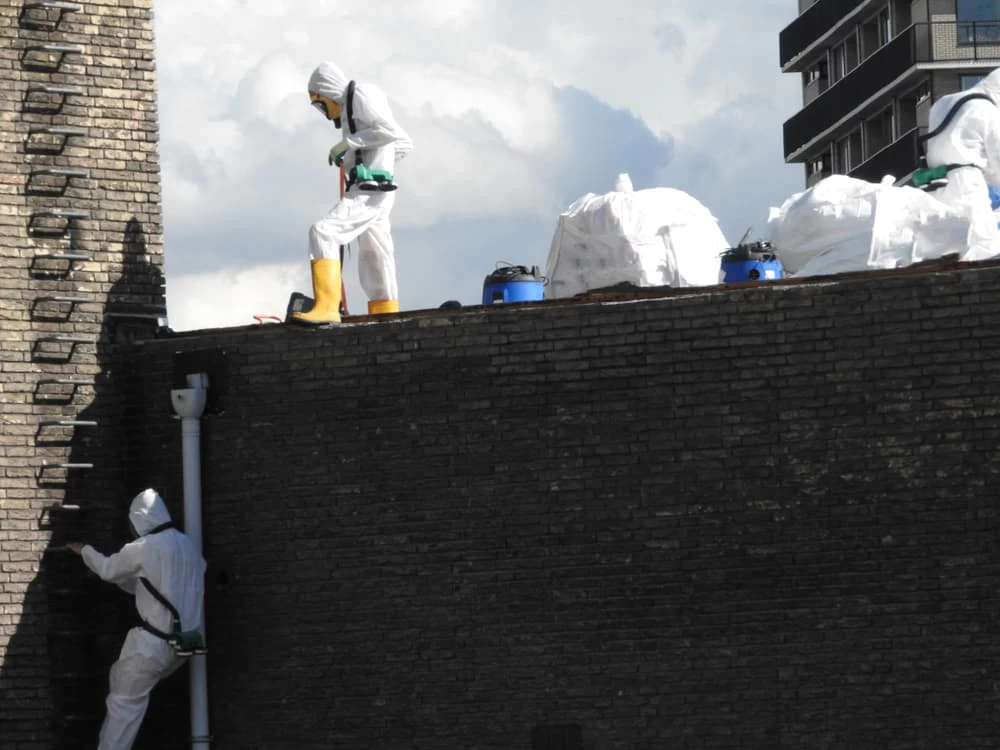
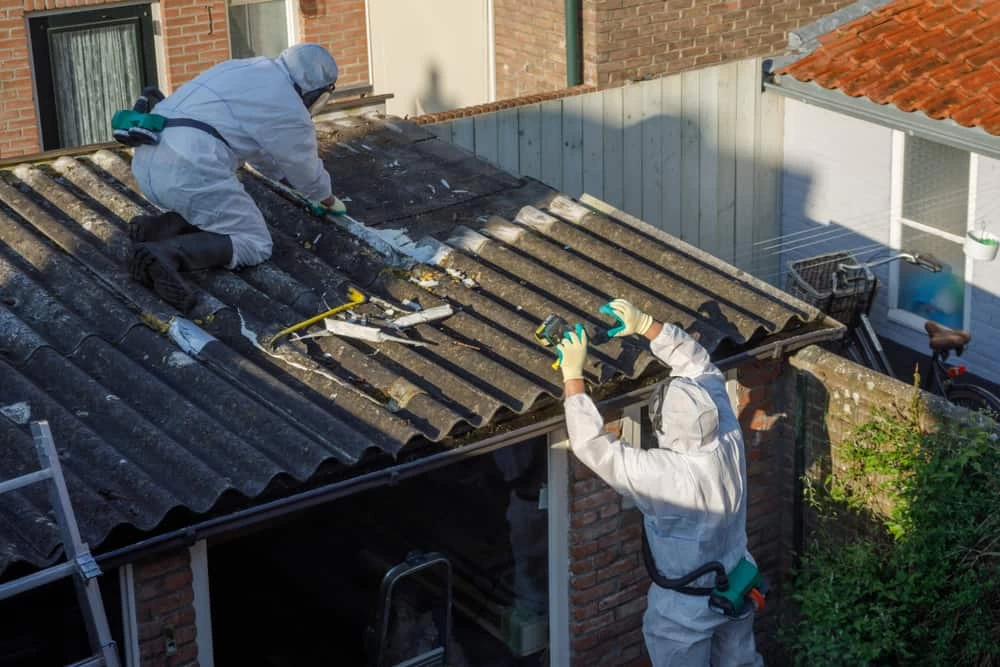
Once the lab results come back and the scope is confirmed, we set up containment. That means sealing off the work area with poly sheeting, establishing negative air pressure using HEPA-filtered equipment, and making sure fibers cannot migrate into the rest of the home while work is in progress. This is the part that separates a compliant abatement from a cleanup job done by someone who doesn’t know what they’re doing.
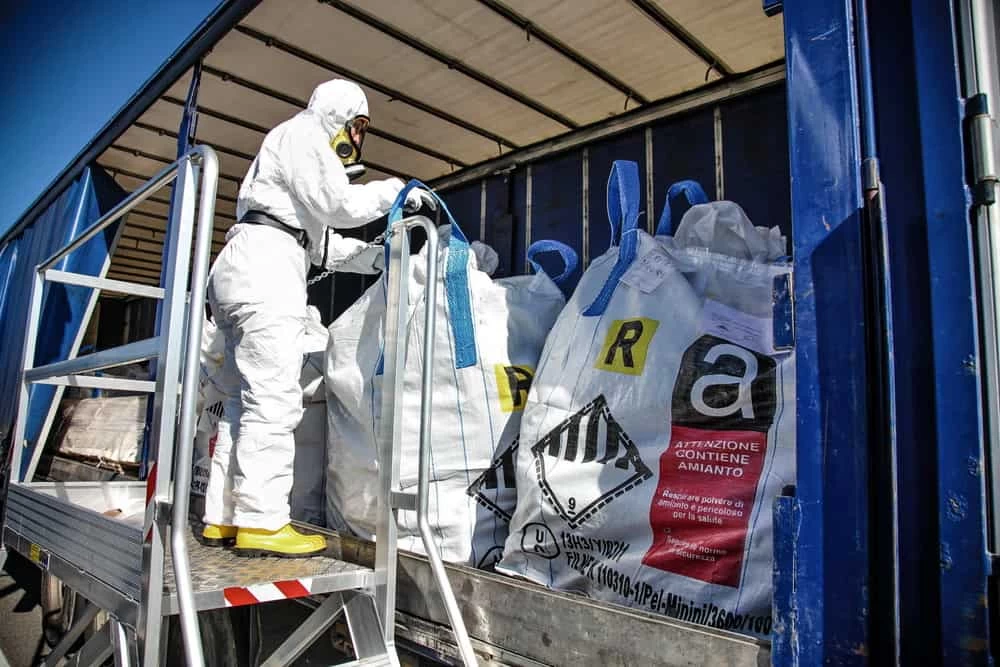
The removal itself follows strict NYS ICR 56 protocol wet methods to suppress fiber release, proper bagging and labeling, and transport by a licensed carrier to a NYS DEC-permitted disposal facility. When the work is done, we conduct post-abatement air clearance testing before containment comes down. You get written documentation of every step. If you’re in the middle of a sale or a renovation timeline, we work around your schedule because we understand that a St. James homeowner with a closing date doesn’t have the luxury of waiting.
Every Material Type Found in North Shore Homes, Handled Correctly
The asbestos-containing materials most commonly found in St. James homes fall into a predictable pattern based on when they were built. Vinyl asbestos floor tiles particularly the 9″x9″ format common in 1950s through 1970s kitchens, bathrooms, and basements are one of the most frequent triggers for abatement calls in this area. The tiles themselves often contain asbestos, and so does the black mastic adhesive underneath. We remove both the tile and the mastic safely, leaving your subfloor intact and ready for new flooring.
Popcorn and textured ceilings are another common issue in St. James, especially in homes built before 1978. Spray-applied ceiling coatings from that era frequently contained chrysotile asbestos, and scraping them without testing first is one of the most common DIY mistakes we see. Pipe insulation and boiler wrap in older heating systems, roofing and siding on mid-century structures, and pre-1980 joint compound in walls are all material categories we test for and handle regularly throughout the 11780 ZIP code.
For homeowners in the Fairfield at St. James 55+ community, we’re experienced working in occupied or semi-occupied properties where containment and minimal disruption matter just as much as the abatement itself. We coordinate around your schedule, communicate clearly throughout the process, and don’t consider the job done until clearance testing confirms the air is clean. Every project whether it’s a single bathroom tile floor or a full pre-demolition survey comes with complete documentation that satisfies the Town of Smithtown Building Department, your real estate attorney, and any lender or buyer who asks for proof.
Does my St. James home actually need an asbestos inspection before renovation?
If your home was built before 1980 which describes the majority of the housing stock in St. James then yes, a pre-renovation asbestos inspection is something you should take seriously, and in many cases it’s legally required. New York State’s Industrial Code Rule 56 mandates an asbestos survey before any renovation or demolition work that could disturb potential asbestos-containing materials in commercial properties. For residential projects in St. James, it’s not always legally mandated, but any licensed contractor worth hiring will require it before they start swinging hammers.
The practical reason is straightforward: you cannot tell by looking at a material whether it contains asbestos. Floor tiles, ceiling texture, pipe wrap, and joint compound from that era all look perfectly normal. The only way to know is to test. Skipping the inspection doesn’t save money it creates liability. If asbestos is disturbed without proper containment, you’ve got a contamination issue that costs significantly more to remediate than the original abatement would have. In a St. James home where you’re protecting a property worth close to $700,000, the inspection is not where you cut corners.
How long does asbestos abatement typically take for a St. James residential project?
It depends on what’s being removed and how much of it there is, but most residential asbestos abatement projects in St. James run anywhere from one to three days for a standard scope a floor tile removal, a popcorn ceiling in one or two rooms, or pipe insulation on a section of basement heating system. Larger projects, like a full pre-demolition survey and abatement before a gut renovation, can take longer depending on the number of material types involved and the square footage.
What adds time is the post-abatement clearance testing. We don’t pull down containment and hand you the keys until air samples confirm the space is clean. That testing process takes a few hours, and if results come back clear which they do when the work is done correctly you’re good to move forward. If you’re working against a real estate closing date or a contractor’s start date, let us know upfront. We schedule with your timeline in mind and will be direct with you about what’s realistic given the scope of the job.
What asbestos-containing materials are most common in homes built in the 1970s?
Homes built in the 1970s which is right around the median construction year for St. James tend to have asbestos in a fairly predictable set of locations. Vinyl floor tiles are the most common find, particularly the 9″x9″ format used in kitchens, bathrooms, laundry rooms, and basements. The black adhesive mastic underneath those tiles is often just as likely to contain asbestos as the tiles themselves, so both need to be tested and addressed together.
Spray-applied ceiling texture commonly called popcorn ceilings is another frequent source, especially in homes built before 1978 when the EPA began restricting asbestos in these products. Pipe insulation on steam and hot water heating systems, wrap around boilers and ducts, and pre-1980 joint compound used during drywall installation are also common. Exterior asbestos-cement siding and roofing shingles show up on some mid-century structures as well. The point is that there’s rarely just one place to look a thorough inspection covers all of these categories, not just the one that’s obviously being disturbed by your renovation.
Is asbestos removal in St. James, NY regulated differently than other states?
New York has some of the most detailed asbestos regulations in the country, and they apply fully to St. James as part of Suffolk County. The governing framework is Industrial Code Rule 56, administered by the New York State Department of Labor. Under ICR 56, all asbestos abatement contractors must hold a current NYS DOL contractor license, all workers must carry individual NYS DOH certifications, and larger projects require advance notification to the state before work begins.
Beyond the state requirements, the Town of Smithtown Building Department may require permits for the underlying renovation or demolition work that triggers the abatement so there’s a layer of local coordination involved as well. Asbestos waste must be transported by a licensed carrier and disposed of at a NYS DEC-permitted facility, and you should receive documentation of that disposal chain when the job is complete. What this means practically is that hiring an unlicensed contractor or someone who says they can handle it informally creates real legal and financial exposure for the property owner. The credentials aren’t bureaucratic formality. They’re what stands between you and a liability problem.
Can I stay in my home during asbestos abatement work?
In many cases, yes but it depends on the location and scope of the work. If abatement is confined to a single area like a basement, a bathroom, or one section of ceiling, and proper containment is established, it’s often possible for occupants to remain in other parts of the home during the project. That said, we always have a direct conversation about this before work begins, because the right answer depends on the specific layout of your home and what’s being removed.
For residents of the Fairfield at St. James 55+ community, this question comes up often. Many homeowners in that community are in residence full-time, and we’re experienced working in occupied properties where disruption needs to be minimal and communication needs to be consistent throughout the process. If the scope of work is significant a full floor removal across multiple rooms, or abatement that requires access to shared HVAC systems we’ll tell you honestly that temporary relocation is the safer and more practical choice. We’d rather give you a straight answer upfront than create a situation that becomes complicated mid-project.
How much does asbestos abatement cost for a typical home in St. James?
Costs vary based on the type of material being removed, the square footage involved, and the complexity of the containment setup required. For a single-room floor tile removal in a St. James home, you’re generally looking at somewhere in the range of $1,500 to $3,000. A popcorn ceiling removal across multiple rooms typically runs $2,000 to $5,000 depending on size. Pipe insulation and boiler wrap projects vary more widely based on linear footage and accessibility. Full pre-demolition abatement on a larger gut renovation can run significantly higher often $5,000 to $15,000 or more but that scope is a different animal entirely.
What affects cost most in this area is the age and condition of the material. Friable asbestos material that’s already crumbling or deteriorating requires more intensive containment and handling than intact, non-friable material. Older homes in St. James, particularly those with original steam heating systems and decades-old pipe insulation, sometimes fall into that category. The inspection phase is what tells you where your project lands. We provide written estimates before any work begins, and we don’t add scope or cost without talking to you first.