Stanford's Old Farmhouses Hide More Than Character
When you pull up a floor or cut into a wall in a Dutchess County home built before 1980, what you find isn’t always what you expected. We provide licensed asbestos abatement in Stanford, NY with same-day response and zero guesswork.
I needed a professional consultation explanation of procedure for safe removal of Asbestos in my apartment complex. Without having an account yet, I was very impressed with the caring, knowledgeable and generous advice offered by Jessica, and will look forward to doing business in the future. Thank you so much! I feel much more informed about a sometimes scary endeavor. Peace. Nancy Silva Mineola, NY.
Mia Munoz
Used this company to clean up some water flood in my house. They were fast and easy to work with.very professional, Would recommend to anyone!
Nini Valle
Great company, had a flood and they responded quickly and efficiently. Billed my insurance company directly. I highly recommend this company!
joe colapietro, jr
I had pipe freeze in my basement right before a snow storm and they made to within an hour to help start the clean up process. They we by our side throughout the entire process and even helped with the insurance company. They did such a great job with the cleanup, repair, remidiation, I contracted them to perform the repairs and finishes in the basement. They came with enough manpower and material to get the job done. Leo and Jessica were nothing but a pleasure to deal with!!
Cristian Arredondo c
I had some water damage in my home and Green Island was able to take care of my issue quickly and effectively. I am very pleased with the work they did. They responded quickly and were very professional.
Michael M
Outstanding service! From the office to the field crew everyone was friendly, helpful and responsive. I highly recommend Green Island Group.
Your renovation doesn’t have to sit on hold indefinitely. Once asbestos is properly removed and air clearance testing confirms the space is clean, your contractor can get back in, your timeline gets back on track, and you’re not carrying the weight of an unresolved hazard in a home your family lives in. That’s the actual outcome not just “peace of mind,” but a project that moves forward.
Stanford’s housing stock is some of the oldest in Dutchess County. Homes in Bangall, Stanfordville, and the rural crossroads throughout the town were built in an era when asbestos was standard in pipe insulation, floor tiles, plaster, roofing, and boiler wrap. If you’ve recently purchased one of these properties, or you’re finally getting around to replacing a boiler or renovating a kitchen that hasn’t been touched in decades, there’s a real chance asbestos is somewhere in that work zone.
The freeze-thaw cycles that hit inland Stanford harder than the river towns also matter here. Repeated freezing and thawing accelerates the breakdown of older building materials which means asbestos that was once stable and contained can become friable and airborne over time. Getting it out properly, with licensed removal and documented air clearance, isn’t overcautious. It’s just the right call for a home this age in a climate like this one.
We’ve been handling asbestos abatement across New York State for over 12 years, with more than 5,000 completed projects. That’s not a number pulled from a brochure it’s the kind of track record that only comes from showing up consistently, doing the work correctly, and earning enough referrals to keep doing it.
We hold NYS Department of Labor asbestos licensing, carry MWBE certification, and are approved as a contractor for New York State agencies. That last credential matters: if the State of New York has vetted us for its own facilities, you’re not taking a gamble on an unknown contractor for your Stanfordville farmhouse or your Bangall property.
We cover all of Stanford not just the Route 82 corridor, but the rural town roads that make up the majority of the town’s 100-plus miles of highway. Whether your property is a few minutes from the Taconic or deep on a county road in the northeastern corner of town, our response is the same: fast, licensed, and documented.
It starts with a free assessment. Before any work is quoted or scheduled, someone comes out to look at what you’re actually dealing with where the material is, what condition it’s in, whether it’s friable and actively hazardous or currently stable, and what removal will realistically involve. That first conversation answers the questions that are keeping you up at night before a single dollar changes hands.
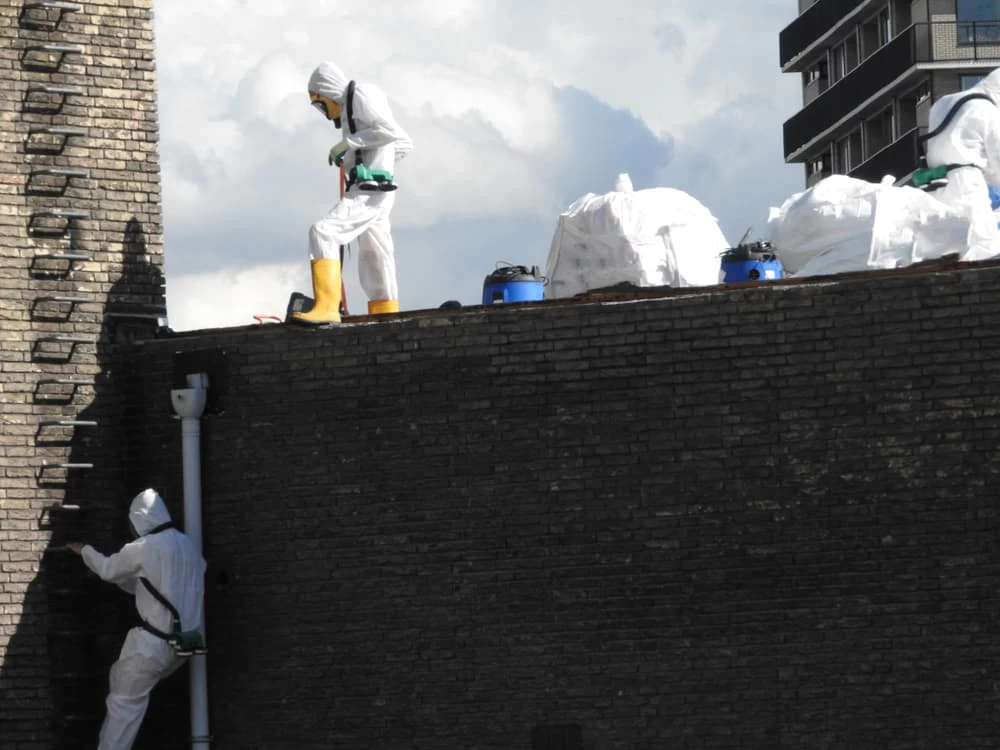
If removal is needed, the work is done under New York Industrial Code Rule 56, which governs all asbestos abatement in the state. That means proper containment of the work area, licensed handlers and supervisors on-site, wet suppression methods to keep fibers from becoming airborne, and regulated disposal double-bagged, transported by a licensed hauler, and taken to an approved facility. This isn’t optional procedure; it’s what the law requires, and it’s what separates legitimate abatement from someone just pulling material out and hoping for the best.
When the removal is complete, post-abatement air clearance testing is conducted before the space is cleared for reoccupancy or continued renovation. You get written documentation of the results. That paperwork matters for your contractor, for your real estate agent if you’re selling, and for your own records on a property this old. In Stanford’s real estate market, where buyers are increasingly sophisticated about what they’re purchasing, documented abatement is a genuine asset, not just a formality.
Every Stanford Property Gets What the Job Actually Requires
Asbestos doesn’t show up the same way in every home, and Stanford’s building stock reflects that. A 19th-century farmhouse in Bangall might have asbestos pipe insulation wrapped around a steam system that’s been running for a hundred years. A mid-century ranch near Stanfordville might have 9×9 vinyl asbestos floor tiles in the kitchen and basement. A property with a renovated addition from the 1970s might have a popcorn ceiling in a bedroom that nobody’s touched since it was sprayed. Each of these is a different material, a different removal process, and a different level of urgency.
We handle the full range: asbestos tile removal, asbestos popcorn ceiling removal, pipe and boiler insulation, plaster and joint compound, roofing and siding on agricultural outbuildings, and attic insulation. For Stanford’s horse farms and rural compounds where barns, stables, and equipment sheds often have asbestos cement roofing or siding that’s been there since the 1940s we handle those structures the same way we handle a primary residence: properly, with documentation.
Beyond asbestos, we also handle mold remediation, water damage restoration, lead abatement, and fire damage restoration. Older Stanford properties rarely have just one issue, and being able to address everything with one contractor rather than coordinating three separate companies is a practical advantage when you’re already managing a disrupted renovation or a property transaction with a deadline.
Does my Stanford, NY home actually have asbestos if it was built before 1980?
The short answer is: probably somewhere, yes. Asbestos was used in an enormous range of building materials from the early 1900s through the late 1970s, and Stanford’s housing stock skews old some properties in Bangall and the rural hamlets date back to the 1800s. The most common locations are pipe and boiler insulation (especially in homes with steam or hot water heat, which is standard in older Dutchess County farmhouses), 9×9 vinyl floor tiles, popcorn ceilings, plaster walls, and roofing or siding on outbuildings.
That said, the presence of asbestos doesn’t automatically mean you have an emergency. Material that’s intact and undisturbed is generally not an immediate health risk. The risk increases when it’s damaged, deteriorating, or about to be disturbed by renovation work. The right first step is an assessment not an assumption in either direction. A licensed contractor can tell you what you’re actually dealing with before you decide how to proceed.
How much does asbestos removal typically cost for a Dutchess County home?
Most homeowners in the New York area pay somewhere between $1,300 and $3,100 for asbestos removal, with the average landing around $2,200. That range moves significantly based on what type of material is being removed, how much of it there is, and where it’s located in the home. Pipe insulation in a tight basement crawl space takes more time and containment work than floor tiles in an open kitchen.
It’s also worth knowing that New York State’s updated NYS DOL licensing requirements and mandatory post-abatement air clearance testing have pushed costs up 8 to 12 percent in the metro and Hudson Valley area over the past couple of years. That’s just the regulatory reality. Any quote that seems dramatically lower than that range is worth scrutinizing. Licensed disposal, licensed haulers, and proper air clearance testing aren’t optional in New York, and they have real costs attached to them.
Can I stay in my home during asbestos abatement in Stanford, NY?
It depends on the scope of the project and where in the home the work is happening. For a contained removal say, asbestos floor tiles in a basement utility room or pipe insulation in a mechanical space it’s often possible to remain in the home while the work is underway, as long as the containment barriers are properly set up and the affected area is sealed off. For larger projects involving multiple rooms, or work in high-traffic areas like kitchens or main living spaces, temporary relocation is usually the safer and more practical choice.
In Stanford, where many properties are larger rural homes or historic farmhouses with multiple structures on the lot, there’s sometimes the option of staying in a secondary structure or guest space during the work. Either way, the decision gets made based on the specific layout and scope not a blanket rule. Post-abatement air clearance testing gives you a documented, science-based answer about when the space is safe to reoccupy, rather than relying on a visual inspection or a contractor’s word alone.
What's the difference between asbestos abatement and asbestos remediation?
In practice, most people use these terms interchangeably, and for most residential projects in Stanford, the distinction doesn’t change what actually happens. Abatement typically refers to the physical removal of asbestos-containing materials taking it out, containing it, and disposing of it properly. Remediation is a broader term that can include encapsulation (sealing the material so it can’t release fibers) in addition to removal, and it sometimes encompasses the full restoration of the space after the hazardous material is addressed.
For most homeowners dealing with asbestos in an older Dutchess County property, full removal is the right call especially if the material is deteriorating, if you’re planning renovation work in that area, or if you’re preparing the property for sale. Encapsulation can be appropriate in specific situations where the material is stable and removal would be more disruptive than it’s worth, but that’s a case-by-case determination made during the initial assessment, not a default recommendation.
Will my homeowners insurance cover asbestos removal after water or storm damage?
It can, and it’s worth checking before you assume you’re paying out of pocket. When asbestos-containing materials are disturbed or exposed as a result of a covered peril a burst pipe, storm damage, flooding many standard homeowners insurance policies will cover the cost of abatement as part of the broader claim. The key is that the asbestos exposure has to be tied to a covered event, not simply discovered during a routine renovation.
Stanford’s older properties are particularly susceptible to this scenario. Spring thaw moisture intrusion, ice dam damage to roofing, and pipe failures in aging plumbing systems are all common in this part of Dutchess County and any of them can disturb asbestos-containing materials that were previously stable. We work directly with insurance companies on these claims, which means you’re not stuck managing the paperwork on top of everything else. If there’s a covered event involved, it’s worth making that call before you assume the cost is entirely yours.
How do I find a licensed asbestos contractor in Stanford, NY and how do I verify them?
New York State requires any contractor performing asbestos abatement to hold a current NYS Department of Labor Asbestos Contractor License, and anyone physically handling the material to hold an Asbestos Handler License requiring 32 hours of approved training. Supervisors need additional certification on top of that. These aren’t optional credentials working without them is a violation of New York Industrial Code Rule 56, and it exposes you as the property owner to real legal and financial liability if something goes wrong.
The NYS DOL maintains a publicly searchable Asbestos Contractors Listing that you can check by zip code before you hire anyone. It takes about two minutes and tells you whether a contractor’s license is current and in good standing. Beyond licensing, look for contractors who provide written documentation of post-abatement air clearance testing that’s the only way to know the job was actually done correctly, not just completed. In Stanford, where property values depend on clean documentation and buyers expect transparency about what’s been addressed in older homes, hiring a licensed contractor with a verifiable track record protects your investment long-term.