Your 1940s Ramapo Mountain Home Deserves a Clean Bill of Health
Most homes in Sterling Forest were built in the 1940s and that means asbestos is likely somewhere inside. We remove it safely, legally, and with full documentation so you can move forward with confidence.
I needed a professional consultation explanation of procedure for safe removal of Asbestos in my apartment complex. Without having an account yet, I was very impressed with the caring, knowledgeable and generous advice offered by Jessica, and will look forward to doing business in the future. Thank you so much! I feel much more informed about a sometimes scary endeavor. Peace. Nancy Silva Mineola, NY.
Mia Munoz
Used this company to clean up some water flood in my house. They were fast and easy to work with.very professional, Would recommend to anyone!
Nini Valle
Great company, had a flood and they responded quickly and efficiently. Billed my insurance company directly. I highly recommend this company!
joe colapietro, jr
I had pipe freeze in my basement right before a snow storm and they made to within an hour to help start the clean up process. They we by our side throughout the entire process and even helped with the insurance company. They did such a great job with the cleanup, repair, remidiation, I contracted them to perform the repairs and finishes in the basement. They came with enough manpower and material to get the job done. Leo and Jessica were nothing but a pleasure to deal with!!
Cristian Arredondo c
I had some water damage in my home and Green Island was able to take care of my issue quickly and effectively. I am very pleased with the work they did. They responded quickly and were very professional.
Michael M
Outstanding service! From the office to the field crew everyone was friendly, helpful and responsive. I highly recommend Green Island Group.
When you’re living in or renovating a mid-century home near Greenwood Lake, the question isn’t really whether asbestos is present it’s whether you know where it is and what to do about it. Homes built in the 1940s in Sterling Forest routinely contain asbestos in floor tiles, pipe insulation, joint compound, and ceiling materials. You may not see it, but the moment those materials get disturbed during a renovation, a water leak, or a storm, the risk becomes immediate.
Once abatement is done correctly, you’re not just clearing a hazard you’re clearing the path forward. Renovations can resume. Real estate transactions can close. Your family can occupy the space without uncertainty about what might be in the walls or under the floor.
Sterling Forest’s dense forest canopy and Ramapo Mountain setting means storm damage and moisture intrusion are recurring events. When a falling tree damages a roof or a pipe bursts in a basement, older materials that were previously stable can fracture and release fibers. Having a licensed contractor who can respond quickly and document everything properly makes the difference between a manageable situation and a serious one.
12 Years of Work That Holds Up to Government Scrutiny
We are an independently owned environmental remediation company based in New York, with over 12 years of operating history in one of the most regulated environmental services markets in the country. We hold the NYS Department of Labor Asbestos Contractor License required to legally perform this work anywhere in New York State including Orange County and the Town of Warwick where Sterling Forest is located. That license is publicly verifiable. You don’t have to take our word for it.
We’ve performed asbestos abatement for NYS Office of General Services, the Dormitory Authority of the State of New York, and NYS Office of Mental Health. Government agencies run thorough procurement processes before awarding contracts and we’ve cleared those reviews repeatedly. That same standard applies to every residential project we take on in Sterling Forest, whether it’s a waterfront property on Greenwood Lake or a 1940s primary residence off Route 17A.
We also hold dual M/WBE certification from both New York State and New York City two separate government agencies that each require documentation, financial review, and ongoing compliance. We’re not a franchise. Every job carries our name.
No Guesswork Here's Exactly How This Gets Done in Your Sterling Forest Home
It starts with a thorough assessment of your property. In a 1940s home in Sterling Forest, that means looking at the materials most likely to contain asbestos floor tiles, pipe insulation on older heating systems, ceiling texture, joint compound, and roofing materials. If you’ve already had a contractor stop work mid-renovation after finding suspicious material, that’s actually the right call. We pick up from there.
Once we confirm what’s present and where, we file the required notification with the NYS Department of Labor Asbestos Control Bureau before any removal begins. This is a legal requirement under New York State Industrial Code Rule 56, and it’s not optional. Any contractor skipping this step is exposing you to serious liability. We handle the paperwork and keep you informed of the timeline.
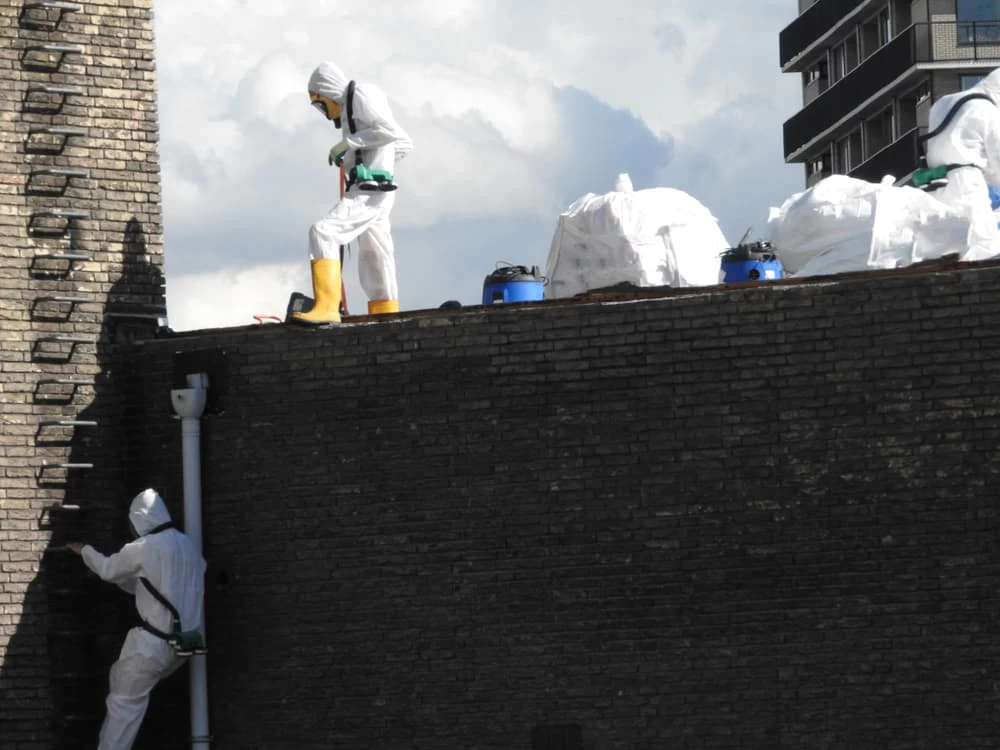
During removal, the affected area is fully contained with negative air pressure and HEPA filtration. Your living spaces stay protected. When the work is complete, an independent industrial hygienist not us conducts post-abatement air monitoring and issues a written clearance certificate. That certificate is what your real estate attorney, your buyer, or your lender needs to see. It’s also what tells you, objectively, that the job was done right. Asbestos waste is then transported to a licensed Class II disposal facility in compliance with federal and state regulations.
Every Material, Every Layer Handled Under One Roof
Asbestos abatement in Sterling Forest isn’t a single-scenario service. The homes here were built across several decades and have often been renovated piecemeal, which means different materials from different eras can coexist in the same structure. Vinyl asbestos floor tiles from the 1940s and 1950s particularly the 9″x9″ format that was standard in that era are among the most common materials we encounter. We also regularly find asbestos pipe insulation on older boiler and steam heating systems, which are typical in homes along the Greenwood Lake corridor.
Beyond residential work, the Sterling Forest area also carries a commercial building legacy from the 1955–1970 period, when Union Carbide, Reichhold Chemicals, and International Paper built research and office facilities here. Structures from that era routinely contain asbestos-containing fireproofing, ceiling tiles, and mechanical insulation. If you’re renovating, repurposing, or demolishing any building from that period, a professional assessment isn’t optional it’s legally required before permitted work can proceed in Orange County.
We handle asbestos popcorn ceiling removal, asbestos tile removal, pipe insulation abatement, and full multi-hazard remediation when asbestos, mold, and lead paint are found together which happens regularly in older homes in Sterling Forest. If your insurance company is involved because of storm or water damage, we bill them directly and manage the documentation on your behalf. We also offer 0% APR financing up to $200,000 for qualifying projects. No other contractor serving Sterling Forest offers that.
Does my Sterling Forest home actually need asbestos testing before I renovate?
If your home was built before 1980 and most homes in Sterling Forest were built in the 1940s then yes, testing before any renovation is strongly advisable, and in many cases it’s legally required. Under New York State Industrial Code Rule 56, any renovation or demolition activity that may disturb asbestos-containing materials requires that those materials be identified and properly managed before work begins. That applies to Orange County and the Town of Warwick the same as anywhere else in the state.
The practical reality is that 1940s homes in Sterling Forest were built with materials that routinely contained asbestos floor tiles, pipe insulation, joint compound, ceiling texture. You may not know it’s there until someone opens a wall or pulls up a floor. At that point, your general contractor is legally obligated to stop work. Getting a proper assessment done before demolition begins keeps your project on schedule and keeps you out of a situation where you’re scrambling mid-renovation to find a licensed abatement contractor on short notice.
How long does asbestos removal typically take for an older home?
It depends on what’s present and how much of it there is, but for a typical residential project in an older Sterling Forest home say, asbestos floor tile removal in a kitchen or bathroom, or pipe insulation on a basement heating system the abatement work itself usually takes one to three days. Larger projects involving multiple materials across multiple rooms can run longer.
What adds time to the overall timeline in New York is the required notification period. Before work can legally begin, we must file notification with the NYS Department of Labor Asbestos Control Bureau. For most residential projects, that notification period is ten business days. We factor that into the project schedule from the start so there are no surprises. If you’re working toward a real estate closing deadline or trying to get a renovation back on track, knowing that timeline upfront is important and we’ll walk you through it clearly before any contracts are signed.
What does asbestos abatement actually cost in Orange County, NY?
Costs vary based on the type and quantity of material being removed, the accessibility of the affected areas, and the complexity of containment required. For a single-room asbestos tile removal in a 1940s home, you might be looking at $1,500 to $3,500. Pipe insulation removal on a full basement heating system can run $3,000 to $7,000 or more depending on linear footage. Larger or multi-material projects scale accordingly.
What we’d caution against is choosing a contractor based on the lowest quote without verifying their credentials. In New York, performing asbestos removal without a valid NYS DOL Asbestos Contractor License is a criminal violation and fines can reach $10,000 per day per violation. If an unlicensed contractor does the work and you’re later selling your home on Greenwood Lake, you won’t have the clearance documentation a buyer’s attorney will require. The cost of doing it wrong almost always exceeds the cost of doing it right the first time. We also offer 0% APR financing up to $200,000 for qualifying projects, so cost doesn’t have to be a barrier to getting it handled properly.
Can I stay in my house during asbestos abatement in Sterling Forest?
It depends on where the work is being done and how extensive it is. For a contained project like asbestos tile removal in a single room it’s sometimes possible to remain in unaffected parts of the home, provided proper containment barriers are in place and negative air pressure is maintained in the work area. For larger projects involving multiple rooms, heating system insulation, or materials throughout the structure, temporary relocation during the active abatement phase is the safer and more practical choice.
We walk through this with every client before work begins. In older homes along the Greenwood Lake corridor, where heating systems and floor materials often span multiple areas of the house, the scope of containment needed can be significant. The goal is always to minimize disruption to your household while making sure the work is done safely and in compliance with New York State regulations. We’ll give you a straight answer about what’s realistic for your specific property not a blanket policy that applies to every job.
What happens if a storm or water damage disturbs asbestos in my older Sterling Forest home?
This is one of the more urgent scenarios we deal with, and it comes up more often in Sterling Forest than in more open, suburban communities. When a falling tree damages a roof, or a burst pipe floods a basement in a 1940s home, materials that were previously stable pipe insulation, floor tiles, ceiling texture can fracture and release fibers. At that point, you’re dealing with an active exposure hazard, not just a future renovation concern.
The right move is to stop any cleanup or repair activity in the affected area immediately and call a licensed abatement contractor before anyone else goes back in. We are available 24 hours a day, seven days a week, every day of the year for exactly this kind of situation. We also bill insurance companies directly and manage the claims documentation on your behalf. Storm damage and asbestos exposure often arrive together in homes like the ones in Sterling Forest, and having one contractor who handles both the environmental hazard and the insurance process makes a difficult situation significantly more manageable.
Does Green Island Group serve Sterling Forest, or is this area too remote?
We serve Sterling Forest and the surrounding communities Warwick, Tuxedo, Greenwood Lake, Southfields throughout Orange County. We know that one of the most common frustrations for homeowners in this area is finding that qualified contractors won’t make the trip. We do. We bring our own containment equipment, air monitoring systems, and properly licensed disposal transport to every job site, regardless of how far off the main corridor it is.
Sterling Forest’s position along Route 17A and County Route 72 puts it within our regular service area for Orange County. We’ve worked in communities throughout the Hudson Valley and understand the specific character of older homes in this region the 1940s construction, the Ramapo Mountain setting, the waterfront properties on Greenwood Lake that have been renovated in layers over decades. If you’re in ZIP code 10979 or the surrounding area and you’re trying to find a licensed, credentialed contractor who will actually show up and do the job with full documentation, that’s exactly what we do.