Most homes in Stone Ridge were built around 1965. That means asbestos is likely sitting in your floors, ceilings, or pipes right now and the only way to know for sure is to have a licensed contractor take a look before you touch anything.
I needed a professional consultation explanation of procedure for safe removal of Asbestos in my apartment complex. Without having an account yet, I was very impressed with the caring, knowledgeable and generous advice offered by Jessica, and will look forward to doing business in the future. Thank you so much! I feel much more informed about a sometimes scary endeavor. Peace. Nancy Silva Mineola, NY.
Mia Munoz
Used this company to clean up some water flood in my house. They were fast and easy to work with.very professional, Would recommend to anyone!
Nini Valle
Great company, had a flood and they responded quickly and efficiently. Billed my insurance company directly. I highly recommend this company!
joe colapietro, jr
I had pipe freeze in my basement right before a snow storm and they made to within an hour to help start the clean up process. They we by our side throughout the entire process and even helped with the insurance company. They did such a great job with the cleanup, repair, remidiation, I contracted them to perform the repairs and finishes in the basement. They came with enough manpower and material to get the job done. Leo and Jessica were nothing but a pleasure to deal with!!
Cristian Arredondo c
I had some water damage in my home and Green Island was able to take care of my issue quickly and effectively. I am very pleased with the work they did. They responded quickly and were very professional.
Michael M
Outstanding service! From the office to the field crew everyone was friendly, helpful and responsive. I highly recommend Green Island Group.
You can move forward. That’s really what this comes down to. Whether you’re renovating a kitchen, finishing a basement, or getting ready to list your Stone Ridge home on a market where buyers are paying north of $500,000 you can’t do any of it cleanly until the asbestos question is answered and documented.
For homes built in the 1960s and 1970s along the Route 209 corridor and the side roads off it, asbestos wasn’t the exception it was standard practice. Floor tiles, pipe insulation, popcorn ceilings, boiler wrap it showed up everywhere. And in a climate like this one, where hard winters and freeze-thaw cycles put real stress on aging building materials, those materials don’t stay intact forever. When they start to break down, the risk goes up.
What you get on the other side of a proper abatement is a documented clearance air monitoring results that show the space is clean, project records that satisfy NYS requirements, and something you can hand to a buyer, an attorney, or a building inspector without hesitation. That piece of paper matters as much as the work itself.
We hold a NYS Department of Labor Asbestos Handling License the specific credential required under Industrial Code Rule 56 to legally perform asbestos abatement in New York State. Not a general contractor license. Not an OSHA card. The actual license that the NYS DOL Asbestos Control Bureau requires before anyone disturbs a single square foot of asbestos-containing material in Ulster County.
Stone Ridge is named service territory for us not a ZIP code on a radius map. We know that Marbletown governs permitting here, that the Historic Preservation Commission reviews renovation work in the Main Street district, and that SUNY Ulster’s campus on Cottekill Road has been actively managing hazardous materials abatement in its aging buildings. That kind of local context changes how the work gets planned and executed.
Beyond asbestos, we’re licensed for mold remediation and certified for water and fire damage restoration so if your project involves more than one problem, you’re not juggling multiple contractors.
It starts with an inspection. A certified inspector identifies the materials in question, collects samples, and determines whether what you have is friable meaning it can release fibers or intact and manageable. In Stone Ridge homes from the 1960s, it’s common to find asbestos in more than one location at once, so a thorough walkthrough matters before anything else happens.
Once the scope is confirmed, we handle the permit application. In Marbletown, any abatement project requires notification to the NYS DOL before work begins that’s not optional, and it’s not something you want to navigate alone. If your property is in or near the Main Street Historic District, there may be additional coordination with the Marbletown Historic Preservation Commission depending on the nature of the renovation. We manage that process as part of the job.
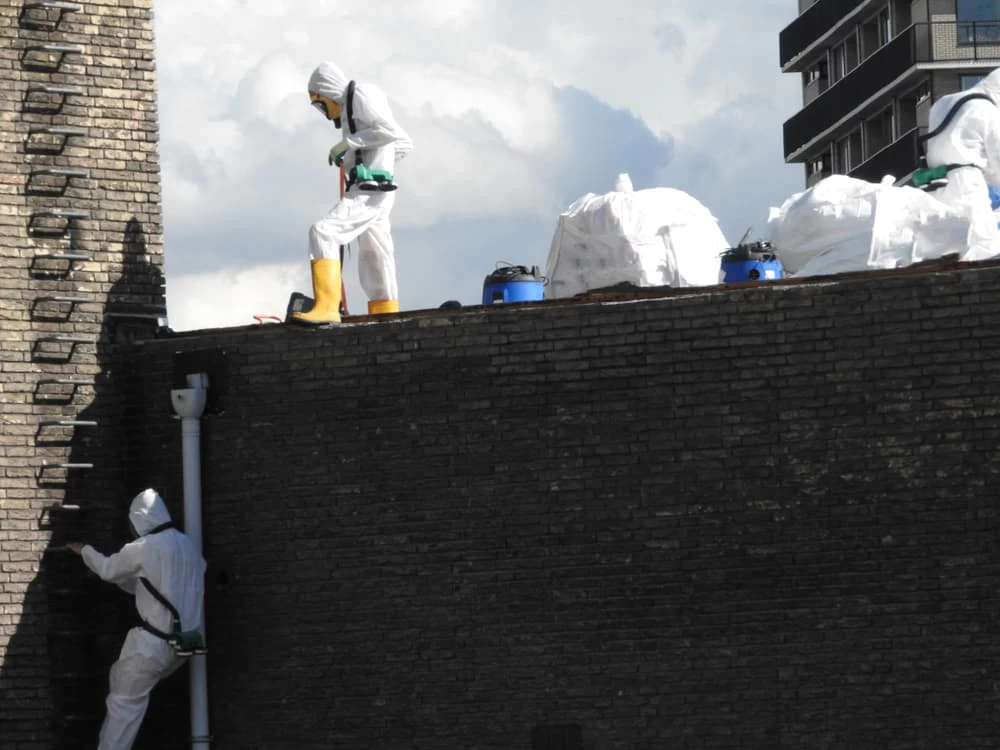
The removal itself is done under containment, following the worker protection and disposal protocols required by NYS Industrial Code Rule 56. When the work is complete, post-abatement air monitoring is conducted by an independent party. You receive a written clearance report the documentation that proves the space is safe and satisfies the 30-year record retention requirement under state law. That’s the finish line.
The asbestos-containing materials most commonly found in Stone Ridge’s mid-century housing stock include 9×9 inch vinyl floor tiles and the black mastic adhesive underneath them, pipe and boiler insulation in basements, popcorn and textured acoustic ceilings, joint compound on drywall seams, and roofing and siding materials. We handle all of these residential and commercial, partial scope and full gut, planned renovation and emergency disturbance.
For homeowners near the SUNY Ulster campus on Cottekill Road, or along the historic Main Street corridor where some of the oldest structures in Marbletown still stand, the work requires care that goes beyond basic containment. Older buildings sometimes present layered materials multiple generations of flooring or ceiling finishes stacked on top of each other and identifying what’s actually there before demolition starts is what separates a clean project from a compliance problem.
We also handle asbestos tile removal, asbestos popcorn ceiling removal, and pipe insulation abatement for pre-sale situations where speed and documentation are both critical. Post-abatement air clearance is included as a standard part of every project not an add-on. And if your insurance carrier is involved, we bill directly, so you’re not caught in the middle managing reimbursement paperwork during an already stressful situation.
Do Stone Ridge homes really need asbestos testing before a renovation starts?
If your home was built before 1980 and in Stone Ridge, the median build year is 1965, so most of them were then yes, an asbestos survey is required before any renovation work that could disturb building materials. This isn’t a suggestion. Under NYS Industrial Code Rule 56, any disturbance of asbestos-containing material exceeding 10 square feet or 25 linear feet requires a licensed abatement contractor, a project notification to the NYS DOL, and post-abatement air clearance before the space can be reoccupied.
In Marbletown, building permits for renovation work require that asbestos requirements have been addressed before construction permits are issued. So if you’re planning to pull a permit for a kitchen remodel, bathroom update, or HVAC replacement in your Stone Ridge home, the asbestos question will come up in the permitting process whether you’ve planned for it or not. Getting ahead of it saves time, money, and the kind of project delays that nobody wants mid-renovation.
How much does asbestos abatement typically cost for a home in Stone Ridge, NY?
The range is wide because the scope varies significantly from one project to the next. A single room of asbestos floor tile removal might run $1,500 to $3,500. A more involved project pipe insulation in a full basement, popcorn ceiling removal throughout a larger home, or multiple material types in a pre-sale situation can reach $10,000 to $30,000 or more depending on square footage, access, and disposal requirements.
For Stone Ridge homeowners, context matters here. With median home values above $500,000, the cost of proper abatement is proportionally manageable and the cost of skipping it isn’t. An asbestos finding during a buyer’s inspection can trigger price reductions, contingency demands, or a deal falling apart entirely. Documented abatement with a clean air clearance report protects your asking price and gives buyers and their attorneys something concrete to work with. The abatement cost is real, but so is the protection it buys you.
What materials in a 1960s Stone Ridge house are most likely to contain asbestos?
The materials to pay attention to first are the ones most likely to be disturbed during a typical renovation. Nine-by-nine inch vinyl floor tiles common in kitchens, bathrooms, and basements of homes built in the 1950s through early 1970s almost always contain asbestos, and the black adhesive mastic underneath them often does too. Pipe and boiler insulation in basements is another high-probability location, especially in homes with older heating systems that haven’t been updated. Popcorn or textured acoustic ceilings applied before 1978 are a third common source.
Beyond those, joint compound used on drywall seams, roofing shingles, exterior siding, and certain types of attic insulation (particularly vermiculite) are also worth evaluating. In a Stone Ridge home built around 1965, it’s not unusual for an inspection to turn up asbestos in two or three locations simultaneously which is exactly why a thorough walkthrough before any demolition or renovation work begins is the right starting point, not an optional step.
Does the Marbletown Historic Preservation Commission affect asbestos abatement projects in Stone Ridge?
It can, depending on the scope and location of your project. The Marbletown Historic Preservation Commission reviews renovation and alteration work on contributing properties within Stone Ridge’s Main Street Historic District a 70-acre area listed on the National Register of Historic Places that covers 97 resources across 38 lots. If your property is within that district and the renovation involves exterior or structural work, you may need to coordinate with the commission in addition to meeting the standard NYS asbestos abatement requirements.
The practical implication is that abatement work in historic district properties needs to be planned carefully to avoid damaging architectural elements that the commission is tasked with protecting. We manage permit applications and documentation as part of the abatement process, which helps keep your project moving through both regulatory tracks the NYS DOL asbestos requirements and the historic preservation review without you having to manage two separate processes simultaneously.
Can I sell my Stone Ridge home if it has asbestos, or does it have to be removed first?
You’re not automatically required to remove asbestos before selling, but the practical reality of the Stone Ridge real estate market makes abatement the smarter move in most situations. If asbestos is found during a buyer’s inspection which is standard in any pre-1980 home sale the buyer can use it as leverage for a price reduction, a remediation credit, or a contingency that delays or kills the deal entirely. With median home values in Stone Ridge above $500,000, the financial exposure from an unresolved asbestos finding is significant.
Having documented abatement completed before you list with a post-abatement air clearance report and project records in hand removes that leverage entirely. You can present buyers, their attorneys, and title companies with a clean bill of health backed by state-required documentation. It also tends to speed up the transaction, which matters in a market where serious buyers expect to move quickly. We design our process to work around pre-sale timelines, including scheduling flexibility for homeowners who may not be on-site full time.
Does Green Island Group handle asbestos abatement for commercial properties near Stone Ridge?
Yes. Commercial and institutional abatement is a core part of what we do and in Stone Ridge, there’s real demand for it. SUNY Ulster’s campus at 491 Cottekill Road has been actively bidding out hazardous materials abatement work through the NYS Dormitory Authority in recent years, including window replacement projects and library renovations that require asbestos management before construction can proceed. Businesses along the Route 209 corridor, historic properties being converted to hospitality or commercial use, and any commercial building constructed before 1980 fall into the same regulatory framework as residential properties under NYS Industrial Code Rule 56.
We hold NYS MBE, WBE, and SBE certifications, which are directly relevant for institutional and government-funded projects where those designations affect procurement eligibility. The process for commercial abatement follows the same core steps as residential work inspection, permitting, containment, removal, and post-abatement air clearance but the scale, coordination requirements, and documentation demands are typically more involved. We handle that complexity as part of the job.