When Stony Ford's Older Homes Along the Wallkill Hide What They Shouldn't
If you found something during a renovation or a home inspector flagged it before closing we handle licensed asbestos abatement in Stony Ford fast, completely, and with the documentation New York State requires.
I needed a professional consultation explanation of procedure for safe removal of Asbestos in my apartment complex. Without having an account yet, I was very impressed with the caring, knowledgeable and generous advice offered by Jessica, and will look forward to doing business in the future. Thank you so much! I feel much more informed about a sometimes scary endeavor. Peace. Nancy Silva Mineola, NY.
Mia Munoz
Used this company to clean up some water flood in my house. They were fast and easy to work with.very professional, Would recommend to anyone!
Nini Valle
Great company, had a flood and they responded quickly and efficiently. Billed my insurance company directly. I highly recommend this company!
joe colapietro, jr
I had pipe freeze in my basement right before a snow storm and they made to within an hour to help start the clean up process. They we by our side throughout the entire process and even helped with the insurance company. They did such a great job with the cleanup, repair, remidiation, I contracted them to perform the repairs and finishes in the basement. They came with enough manpower and material to get the job done. Leo and Jessica were nothing but a pleasure to deal with!!
Cristian Arredondo c
I had some water damage in my home and Green Island was able to take care of my issue quickly and effectively. I am very pleased with the work they did. They responded quickly and were very professional.
Michael M
Outstanding service! From the office to the field crew everyone was friendly, helpful and responsive. I highly recommend Green Island Group.
Your Stony Ford Home Is Safe, Documented, and Move-Forward Ready
Most people in Stony Ford don’t go looking for asbestos. It finds them usually mid-renovation when a contractor pulls up old flooring, or during a home sale when an inspector flags something in the basement. That moment stops everything. The renovation goes on hold. The closing gets complicated. And suddenly you’re searching for answers under real time pressure.
The homes along Stony Ford Road and the surrounding Wallkill River corridor were largely built in the 1960s and 1970s right when asbestos was at its peak use in residential construction. Ranch homes, bi-levels, and colonials in this area commonly contain vinyl floor tiles, popcorn ceiling texture, pipe insulation, and roofing materials that tested positive for asbestos for decades. If your Stony Ford property was built during this era, it’s worth knowing what to expect before you start tearing anything out.
There’s also the river. Properties along the Wallkill River corridor deal with moisture and flooding in ways that inland homes don’t. When water gets into a basement with older pipe insulation or floor tiles, it doesn’t just create a mold problem it can disturb asbestos-containing materials and turn a slow-burn concern into an urgent one. After abatement is complete, you get a written clearance certificate from an independent industrial hygienist confirming the air in your home is clean. That document matters for your family, your lender, and your peace of mind.
Government Agencies Vetted Us So You Don't Have To Start From Scratch
We’ve been performing asbestos abatement across Orange County and the broader Hudson Valley for over 12 years, including homes throughout Stony Ford and the surrounding Wallkill area. We hold the NYS Department of Labor Asbestos Contractor License required under 12 NYCRR Part 56 the regulation that governs every asbestos project in the Town of Wallkill. We’ve also earned contracts with the NYS Office of General Services, the Dormitory Authority of the State of New York, and the NYS Office of Mental Health. Those agencies verify insurance, review licensing, and require competitive bidding before anyone touches their buildings. We cleared that bar repeatedly.
We’re also a dual-certified Minority/Women-Owned Business Enterprise through both New York State and New York City. That’s a government-audited designation, not a self-reported badge. For homeowners in Stony Ford and the Goshen school district area who are choosing between contractors they’ve never worked with before, that kind of third-party accountability is worth something. We encourage you to verify our license number directly on the NYS DOL website before you sign anything with anyone.
No Guesswork Here's Exactly What Your Stony Ford Abatement Looks Like
It starts with an assessment. Before anything is touched, the affected materials are identified and, where needed, tested by a licensed industrial hygienist. In older homes along Stony Ford Road many built during the height of asbestos use that assessment often turns up more than one material type. Vinyl floor tiles, pipe insulation, ceiling texture, and roofing felt can all be in the same house. Knowing what you’re dealing with upfront is what keeps the project from stalling later.
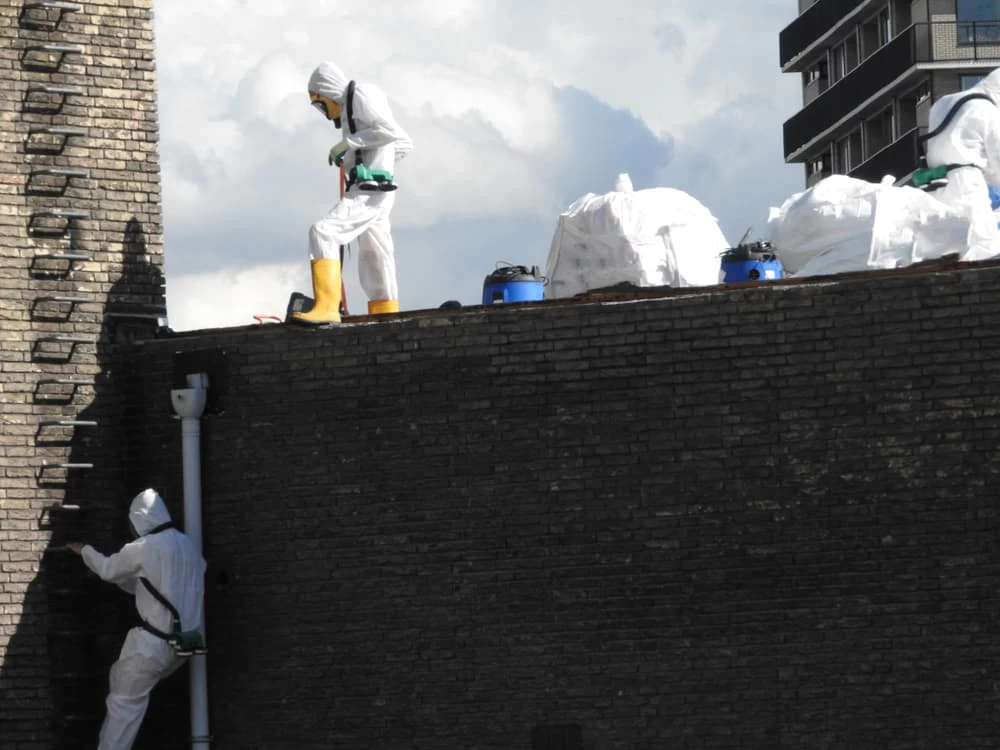
Once the scope is confirmed, we set up proper containment. That means sealing off the work area, establishing negative air pressure, and using HEPA filtration so fibers don’t travel to the rest of your home. Our crews are licensed under New York State’s 12 NYCRR Part 56, which governs every step from how materials are handled to how asbestos waste is packaged and transported to a licensed disposal facility. The Town of Wallkill Building Department requires full compliance with that framework before a certificate of occupancy can be issued on any project involving asbestos work, and we make sure your documentation is complete.
After removal, an independent industrial hygienist conducts post-abatement air monitoring. If the air clears and it does you receive a written clearance certificate. That’s the document your lender, your buyer, or your building department needs to see. We coordinate all of it so you’re not chasing down separate contractors or trying to figure out the regulatory process on your own.
Asbestos Tile and Popcorn Ceiling Removal, Wallkill NY
Every Material Type Found in Stony Ford Homes, Handled Right
Asbestos shows up differently depending on when your home was built and what it went through. In Stony Ford, the most common materials we encounter are 9×9 and 12×12 vinyl floor tiles almost always from the 1960s and 1970s along with popcorn ceiling texture that was applied before the mid-1980s, asbestos pipe insulation in basements and mechanical rooms, and asbestos-containing roofing felt beneath older shingles. Each of these requires a different removal approach, and some can be encapsulated rather than removed depending on their condition and your renovation plans.
For homes along the Wallkill River corridor that have experienced water intrusion, the situation often involves more than one problem at once. Wet or disturbed asbestos-containing materials release fibers more readily than intact ones, which means a flooded basement in an older Stony Ford home can quickly become a multi-hazard situation. We handle asbestos abatement, water damage restoration, and mold remediation so you’re not coordinating three separate contractors while your home sits damaged and your family is displaced.
If the cost is a concern and it usually is, because asbestos discoveries are almost never budgeted for we offer 0% APR financing up to $200,000 for qualifying projects. We also bill insurance directly when the work is tied to a covered damage event. The goal is to remove every barrier between you and getting your home back to normal.
Do I need a permit for asbestos removal in the Town of Wallkill?
You don’t pull a separate “asbestos permit” the way you would a building permit for an addition, but that doesn’t mean the work is unregulated. In the Town of Wallkill, asbestos abatement falls under New York State’s 12 NYCRR Part 56, which requires that all asbestos work be performed by a licensed contractor, that proper containment and air monitoring protocols are followed, and that waste is disposed of at a licensed facility. The Town of Wallkill Building Department won’t issue a certificate of occupancy for any project where asbestos work was performed by an unlicensed contractor so if you’re renovating in Stony Ford and planning to sell or refinance, this matters.
If your project involves the demolition or renovation of a commercial structure, there’s an additional layer: EPA NESHAP regulations require advance notification to the NYS Department of Environmental Conservation. For most residential projects in Stony Ford, the primary framework is the NYS DOL licensing requirement. The short answer is: you don’t need a standalone asbestos permit, but you absolutely need a licensed contractor, and the documentation we produce is what keeps your project legally compliant from start to finish.
How do I know if my Stony Ford home actually contains asbestos?
You can’t tell by looking. Asbestos fibers are invisible, and the materials that contain them vinyl floor tiles, popcorn ceiling texture, pipe wrap, roofing felt look completely normal. The only way to know for certain is to have a sample tested by a licensed industrial hygienist in a certified laboratory. That said, if your home in Stony Ford was built between roughly 1950 and 1985, the odds are meaningful that at least one material in the house contains asbestos. That era represents the peak of asbestos use in residential construction, and the housing stock along the Wallkill area is heavily concentrated in that window.
The most common materials we find in Stony Ford are 9×9 and 12×12 vinyl floor tiles in kitchens, bathrooms, and basements; popcorn or textured ceilings applied before the mid-1980s; pipe insulation in mechanical rooms; and asbestos-containing roofing felt beneath older shingles. If you’re planning a renovation that will disturb any of these materials pulling up flooring, opening walls, removing a ceiling testing first is the right move. It’s far less disruptive and expensive to test before you start than to stop a renovation mid-project because a contractor discovers something unexpected.
What happens if asbestos is found during a home inspection before closing in Orange County?
This is one of the more stressful scenarios we deal with regularly. A home inspector flags a potential asbestos-containing material, the buyer’s lender gets involved, and suddenly there’s a remediation requirement sitting between you and your closing date. The good news is that this is a solvable problem it just needs to be handled correctly and quickly.
In most cases, the lender will require either full abatement of the flagged material or a written clearance certificate from a licensed industrial hygienist confirming the material is intact and poses no immediate risk. If abatement is required, we can schedule and complete the work, coordinate the post-abatement air monitoring, and deliver the clearance certificate your buyer’s lender needs. Properties in the Stony Ford area are actively traded, and we understand the real estate timeline. If you’re under pressure to close, the worst thing you can do is wait. Call us, explain the situation, and we’ll tell you honestly what the timeline looks like and what it will take to get there.
Can the Wallkill River flooding near Stony Ford create an asbestos problem in my basement?
It can, and it’s more common than most people realize. The Wallkill River runs directly along the Stony Ford Road corridor, and properties in this area are more vulnerable to seasonal flooding and basement water intrusion than homes on higher ground. When water gets into a basement that has older pipe insulation, vinyl floor tiles, or other asbestos-containing materials, the concern isn’t just mold it’s that the water can disturb or degrade materials that were previously intact and stable.
Intact asbestos-containing materials that are in good condition and left undisturbed don’t pose an immediate health risk. But wet, damaged, or deteriorating materials are a different situation. Friable asbestos material that can be crumbled or reduced to powder by hand pressure releases fibers more readily and requires a more urgent response. If your basement has flooded and you have an older Stony Ford home, don’t start pulling out wet insulation or flooring yourself. Have the area assessed by a licensed professional first. We handle both the asbestos abatement and the water damage restoration, so you’re not trying to coordinate two separate companies while your basement sits wet.
How long does asbestos abatement take for a typical home in Stony Ford, NY?
It depends on what’s being removed and how much of it there is. A straightforward job removing vinyl floor tiles from a single room or abating pipe insulation in a basement typically takes one to two days of active removal work. Larger projects involving multiple material types, multiple rooms, or significant square footage can take three to five days or more. What extends the timeline most isn’t the removal itself it’s the post-abatement air monitoring, which has to happen after the work is complete and the area has been cleaned. The independent industrial hygienist needs time to collect samples and process them through a certified lab before a clearance certificate can be issued.
For homeowners in Stony Ford who are mid-renovation or under real estate closing pressure, we build the schedule around your situation as much as possible. We’re available seven days a week, and we don’t disappear between the removal phase and the clearance phase we coordinate the industrial hygienist and keep you informed throughout. The total time from start to clearance certificate is typically three to seven business days for most residential projects, though we’ll give you a specific estimate once we’ve assessed the scope.
Is asbestos abatement in Orange County covered by homeowners insurance?
Sometimes and the answer depends almost entirely on what caused the asbestos-containing material to be disturbed. Standard homeowners insurance policies generally don’t cover asbestos abatement as a standalone service or as a result of routine renovation. However, if the asbestos issue is tied to a covered event a pipe burst, storm damage, or flooding that damaged materials in your home the abatement may be covered as part of the broader damage claim, because the insurer is responsible for restoring the property to its pre-loss condition.
For homeowners along the Stony Ford Road corridor who deal with seasonal water intrusion from the Wallkill River, this distinction matters. If a flooding event damages your basement and disturbs asbestos-containing pipe insulation or floor tiles, that may fall under your flood or water damage coverage rather than a standard exclusion. We bill insurance directly, which means we handle the documentation and communication with your carrier so you’re not navigating that process alone while also managing a damaged home. We’ll tell you upfront what we’re seeing and what we think is claimable no surprises.