I needed a professional consultation explanation of procedure for safe removal of Asbestos in my apartment complex. Without having an account yet, I was very impressed with the caring, knowledgeable and generous advice offered by Jessica, and will look forward to doing business in the future. Thank you so much! I feel much more informed about a sometimes scary endeavor. Peace. Nancy Silva Mineola, NY.
Mia Munoz
Used this company to clean up some water flood in my house. They were fast and easy to work with.very professional, Would recommend to anyone!
Nini Valle
Great company, had a flood and they responded quickly and efficiently. Billed my insurance company directly. I highly recommend this company!
joe colapietro, jr
I had pipe freeze in my basement right before a snow storm and they made to within an hour to help start the clean up process. They we by our side throughout the entire process and even helped with the insurance company. They did such a great job with the cleanup, repair, remidiation, I contracted them to perform the repairs and finishes in the basement. They came with enough manpower and material to get the job done. Leo and Jessica were nothing but a pleasure to deal with!!
Cristian Arredondo c
I had some water damage in my home and Green Island was able to take care of my issue quickly and effectively. I am very pleased with the work they did. They responded quickly and were very professional.
Michael M
Outstanding service! From the office to the field crew everyone was friendly, helpful and responsive. I highly recommend Green Island Group.
Work stops the moment a contractor finds something suspicious. You know the feeling the renovation is mid-swing, the floor tiles are up, and now everything is on hold until someone figures out what’s actually in those materials. That pause is stressful. It costs money. And the longer it drags, the worse it gets.
When asbestos is properly removed and cleared by a licensed crew, that hold lifts. Your renovation moves forward, your home is documented as safe, and you’re not carrying that uncertainty into every future project or real estate conversation. For Sylvan Lake homeowners, that documentation matters more than most people realize. Waterfront and water-access properties in this area command real premiums in the Dutchess County market and any unresolved asbestos disclosure in a sale can stall or kill a deal entirely.
The homes along Sylvan Lake span generations of construction. Some were built during the iron ore mining era of the late 1800s. Others went up mid-century, right in the window when asbestos was used most heavily in residential building materials. Boiler insulation, pipe wrap, 9×9 floor tiles, popcorn ceilings these are not abstract risks in a Sylvan Lake home. They are common findings. Getting ahead of them, with a licensed contractor who knows exactly what New York State requires, is how you protect both your family and your investment.
We’ve been doing licensed asbestos abatement and environmental remediation work across New York State for over 12 years. More than 5,000 completed projects. Every one of them done under the full weight of New York’s regulatory requirements NYS DOL licensing, certified handlers and supervisors, compliant disposal, post-abatement clearance testing. No corners cut because the state doesn’t allow it, and neither do we.
We already serve the Town of Beekman, and Sylvan Lake is squarely in our coverage area. The housing stock here is exactly what our crews work on throughout Dutchess County. We also hold MWBE certification, which makes us an approved contractor for New York State agencies. That credential isn’t handed out it comes after a rigorous state vetting process. For homeowners along the Sylvan Lake shoreline who want to know their contractor has been reviewed at the highest level, that’s the answer.
We’re available 24 hours a day, 7 days a week. When a mid-renovation discovery happens at 6pm on a Thursday, we pick up.
It starts with a free assessment. You tell us what you’re dealing with a contractor flagged something, an inspector circled a material on a report, or you just have an older home and want to know what’s there before you start a renovation. We come out, take a look, and give you real information before any commitment is made.
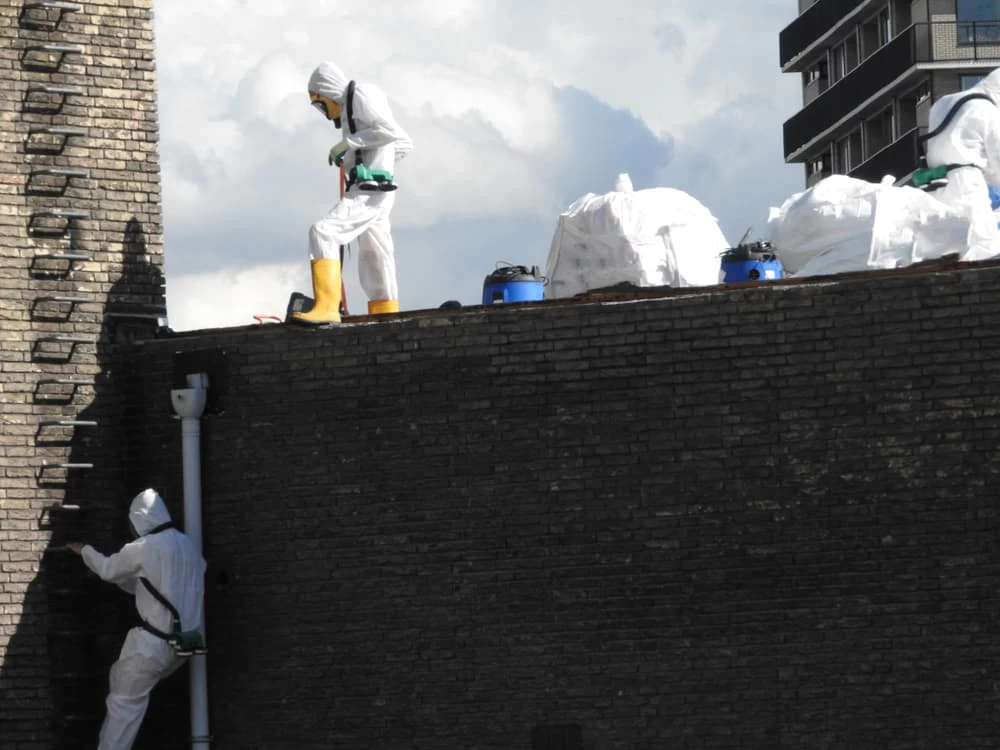
If testing confirms asbestos-containing materials, we handle the NYS DOL notification requirements before any work begins. That’s a regulatory step that’s easy to miss if you’re working with an unlicensed contractor and skipping it creates legal exposure for you as the property owner. Once notifications are filed, we set up proper containment, remove the materials using certified handlers under licensed supervisor oversight, and transport everything to an NYS DEC-approved disposal facility. Nothing gets bagged and left in a dumpster.
After removal, air clearance testing confirms the space is clean. That test result is your documentation the paper that satisfies a buyer’s attorney, a lender, or a building department if the abatement was part of a permitted renovation. For homes in the Sylvan Lake area, where the Town’s building department coordinates with state permit conditions on larger projects, having that clearance on file is not optional. It’s the final step that closes the loop and lets you move forward.
Asbestos doesn’t show up in just one place in an older home. In a pre-1980 house in Sylvan Lake and there are many it can be in the floor tile adhesive, the pipe insulation wrapping the boiler, the attic insulation, the popcorn ceiling in the living room, the roofing shingles, or the plaster walls. We handle all of it. Asbestos inspection, testing, removal, remediation, clean-up, and disposal are all done in-house. You’re not coordinating between a testing company, a removal crew, and a separate disposal hauler. One call covers the full scope.
That matters especially when the situation is more complicated than a single material. Homes near the lake’s drainage area can experience basement flooding during the spring thaw and when water intrusion disturbs pipe wrap or boiler insulation in a pre-1980 home, you may be dealing with asbestos and water damage at the same time. We also handle mold remediation and water damage restoration, which means we can address what the water left behind without bringing in a second contractor.
For seasonal structures, camp buildings, or older outbuildings along the Sylvan Lake shoreline, the same inspection and removal services apply. Institutional and recreational buildings from the mid-20th century often used industrial-grade asbestos materials for fire resistance and pre-renovation inspections at those facilities are a regulatory requirement under NYS DOL and EPA NESHAP rules. We know the requirements. We handle the paperwork. You stay focused on the project.
Does my Sylvan Lake home actually have asbestos if it was built before 1980?
Statistically, the odds are high. Asbestos was used extensively in residential construction from the 1940s through the late 1970s, and the housing stock in and around Sylvan Lake spans exactly that window along with older structures from the mining era that predate modern building codes entirely. The most common locations are 9×9 vinyl floor tiles and their mastic adhesive, pipe and boiler insulation, attic insulation (including vermiculite), popcorn ceilings, roofing shingles, and plaster.
The important thing to understand is that the presence of asbestos doesn’t automatically mean you have an emergency. Asbestos-containing materials that are in good condition and left undisturbed generally don’t pose an immediate health risk. The risk increases when those materials are damaged, deteriorating, or disturbed which is exactly what happens during a renovation. If you’re planning any work on an older home in the Sylvan Lake area, a professional inspection before demolition or renovation begins is the right first step, and in many cases it’s a regulatory requirement.
How much does asbestos removal typically cost in Dutchess County, NY?
For a residential project in New York, the average cost runs around $2,170, with most homeowners landing somewhere between $1,296 and $3,050 depending on the scope of the work. That range shifts based on how many materials are involved, how accessible they are, and how large the affected area is. A single room of floor tile removal is a different project than a full boiler room pipe wrap removal.
It’s worth knowing that costs in the Hudson Valley and NY metro area have risen in recent years roughly 8 to 12 percent driven by updated NYS DOL licensing requirements, higher disposal fees at approved facilities, and the now-standard expectation of post-abatement air clearance testing. Those aren’t optional add-ons. They’re part of doing the job legally in New York State. A quote that doesn’t include clearance testing or proper disposal should raise a flag. We offer a free, no-obligation assessment so you can get a real number before committing to anything.
What happens if my contractor finds asbestos mid-renovation in my Sylvan Lake home?
Work needs to stop in that area immediately. Don’t ask the contractor to keep going once asbestos-containing materials are disturbed without proper containment, fibers can spread through the rest of the house. The right move is to seal off the area as best you can and call a licensed abatement contractor before anything else is touched.
From there, the process is straightforward. We come out, assess what was disturbed, and determine whether testing is needed to confirm the material type. If asbestos is confirmed, we file the required NYS DOL notification before any removal begins that’s a legal requirement that protects you as the property owner, not just a procedural formality. Once the abatement is complete and air clearance testing confirms the space is clean, your contractor can return to work. We’ve handled plenty of mid-renovation situations in Dutchess County homes, and the goal every time is to get your project moving again as quickly and safely as possible.
Do I need a licensed contractor to remove asbestos in New York State, or can I do it myself?
In New York State, asbestos abatement is regulated under Industrial Code Rule 56, and the short answer is yes you need a licensed contractor for regulated asbestos projects. That means a company holding a current NYS DOL Asbestos Contractor License, with individual workers certified as NYS DOL Asbestos Handlers (which requires a 32-hour approved training course) and supervisors holding a separate supervisor certification. This isn’t a gray area.
For homeowners in Sylvan Lake and across Dutchess County, the risk of hiring an unlicensed contractor or attempting removal yourself goes beyond health. If the work isn’t done by a licensed contractor with proper documentation, you carry legal and financial exposure as the property owner. That can affect your ability to sell the home, satisfy a lender, or pass a building department inspection on a permitted renovation project. The NYS DOL maintains a public Asbestos Contractors Listing where you can verify any contractor’s credentials before you hire. Our licensing is on that list.
Can I stay in my home during asbestos abatement, or do we need to leave?
It depends on the scope of the project and where in the home the work is being done. For smaller, localized jobs a single room of floor tile removal, for example it’s sometimes possible to remain in the home if the affected area is properly contained and sealed off from the rest of the living space. For larger projects, or work being done in central areas like a basement, boiler room, or main living area, temporary relocation is usually the safer and more practical choice.
What determines this is the containment setup. Licensed abatement work under NYS DOL requirements involves negative air pressure containment, sealed barriers, and HEPA filtration all designed to prevent fibers from migrating to unaffected areas. When that containment is in place and the work zone is truly isolated, the rest of the home can remain occupied in many cases. We’ll give you a straight answer on this during the assessment, based on what we actually find not a blanket policy that ignores the specifics of your home.
Is asbestos a concern in the older camp and seasonal structures along Sylvan Lake?
It’s a real and often overlooked concern. Mid-20th century camp buildings and recreational structures around Sylvan Lake were frequently built with industrial-grade materials pipe insulation, ceiling tiles, roofing, and fireproofing products that commonly contained asbestos. Unlike residential homes, these buildings often received periodic patch repairs over the decades rather than systematic renovation, which means asbestos-containing materials may have been disturbed multiple times without professional oversight.
Under EPA NESHAP rules and NYS DOL requirements, pre-renovation inspections at institutional and recreational facilities are not optional they’re a regulatory requirement before any demolition or significant renovation work begins. If you’re managing a camp property, a seasonal structure, or a commercial building along the Sylvan Lake shoreline and you’re planning any kind of renovation or teardown, an inspection needs to happen before the first wall comes down. We handle these inspections and the abatement work that follows, and we’re familiar with the compliance requirements that apply to both residential and non-residential properties in Dutchess County.