Syosset's Post-War Homes Deserve More Than a Guess
If your Syosset home was built before 1980, asbestos abatement isn’t a maybe — it’s a real conversation worth having before your next renovation or home sale.
I needed a professional consultation explanation of procedure for safe removal of Asbestos in my apartment complex. Without having an account yet, I was very impressed with the caring, knowledgeable and generous advice offered by Jessica, and will look forward to doing business in the future. Thank you so much! I feel much more informed about a sometimes scary endeavor. Peace. Nancy Silva Mineola, NY.
Mia Munoz
Used this company to clean up some water flood in my house. They were fast and easy to work with.very professional, Would recommend to anyone!
Nini Valle
Great company, had a flood and they responded quickly and efficiently. Billed my insurance company directly. I highly recommend this company!
joe colapietro, jr
I had pipe freeze in my basement right before a snow storm and they made to within an hour to help start the clean up process. They we by our side throughout the entire process and even helped with the insurance company. They did such a great job with the cleanup, repair, remidiation, I contracted them to perform the repairs and finishes in the basement. They came with enough manpower and material to get the job done. Leo and Jessica were nothing but a pleasure to deal with!!
Cristian Arredondo c
I had some water damage in my home and Green Island was able to take care of my issue quickly and effectively. I am very pleased with the work they did. They responded quickly and were very professional.
Michael M
Outstanding service! From the office to the field crew everyone was friendly, helpful and responsive. I highly recommend Green Island Group.
The renovation you’ve been planning doesn’t have to stall. Whether your contractor flagged something under the old kitchen floor or a home inspector noted pipe insulation in the utility room, getting it handled correctly means your project moves forward — legally, safely, and without the kind of liability that follows a home sale in a market where buyers look at everything.
Syosset’s housing stock tells a specific story. The majority of homes here were built between the late 1940s and the mid-1970s, right in the window when asbestos was standard in floor tiles, ceiling texture, pipe wrap, and roofing underlayment. With median home values sitting near $875,000, a missed or mishandled asbestos issue doesn’t just create a health risk — it creates a financial one. Buyers in this market do their due diligence. Their attorneys do too.
Once we complete abatement and air clearance testing confirms the space is clean, you get something most homeowners don’t expect: actual documentation. Not just a verbal okay, but a full paper trail that satisfies inspectors, buyers, and title companies. For a community where 92% of residents own their homes and most are deeply invested in what those homes are worth, that documentation isn’t a formality — it’s protection.
Nassau County Regulations Are Not One-Size-Fits-All
We work specifically in Nassau County, and that distinction matters more than most homeowners realize. Syosset falls under the Town of Oyster Bay for permits and local code enforcement — and on top of that, any asbestos abatement here has to satisfy both New York State’s Industrial Code Rule 56 and Nassau County’s EHRP/EHRT framework. That’s two layers of regulatory compliance that out-of-area contractors frequently get wrong.
We know this area — the post-war ranches and colonials off Jericho Turnpike, the split-levels near Woodbury Road, the older homes with Syosset mailing addresses that sit in Muttontown or Laurel Hollow. We’ve worked in these homes. We understand what the Town of Oyster Bay permit office expects, and we handle the documentation and notifications so you don’t have to figure it out on your own.
Every project is handled by our licensed, certified professionals — not subcontractors, not a rotating crew. You get a team that knows what it’s doing and stands behind the work.
It starts with an inspection. We deploy a certified asbestos inspector to survey the areas of concern — whether that’s a basement floor, a popcorn ceiling, pipe insulation on an old boiler, or exterior siding — and collect samples for lab analysis. In Syosset, where pre-1987 homes are the norm, this step is legally required before any permitted renovation work can begin. Skipping it isn’t just risky — it can result in a stop-work order and permit rejection down the line.
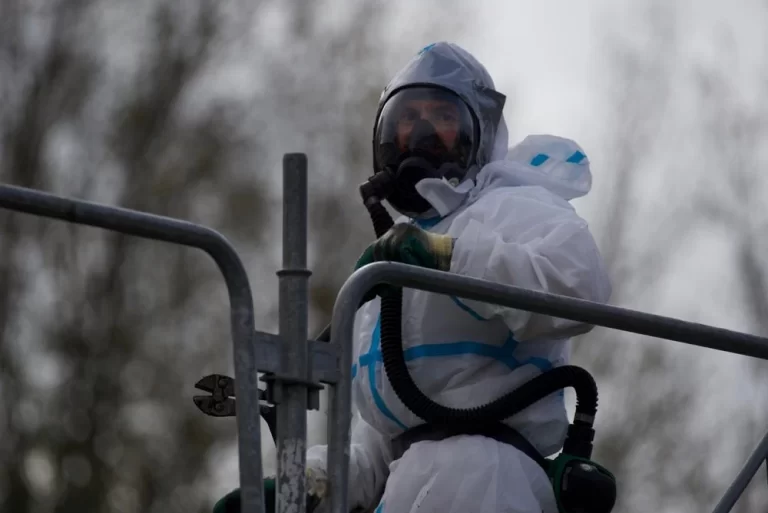
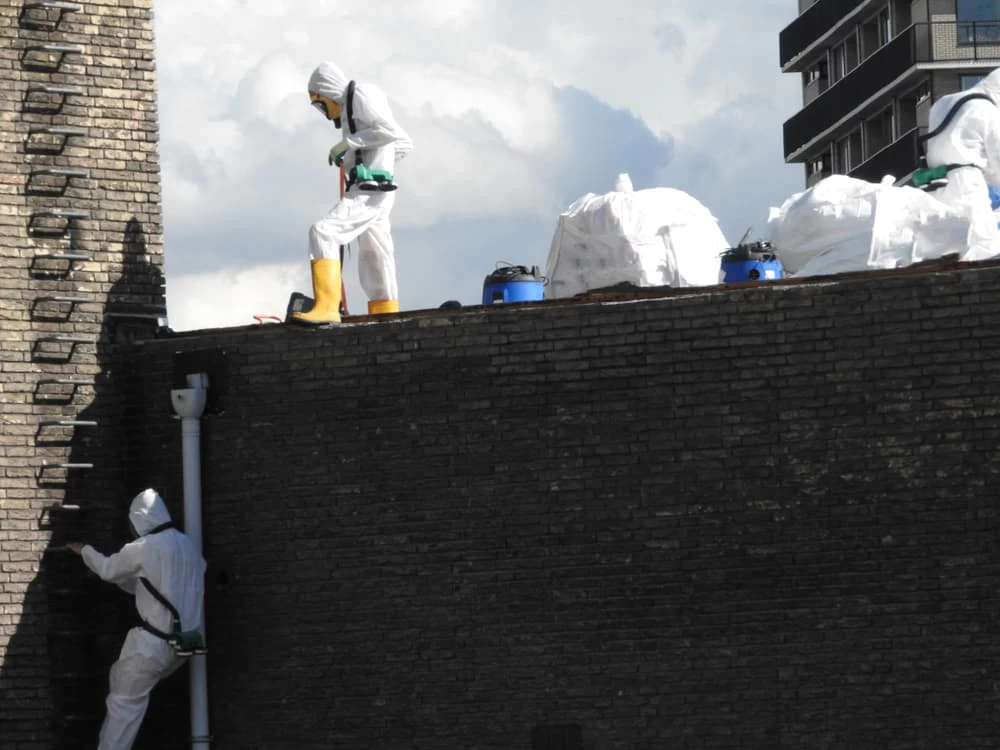
Once the results come back and the scope is confirmed, we handle the project notification required under ICR 56 and set up full containment around the work area. Negative air pressure machines and HEPA filtration keep fibers from migrating to the rest of your home. The materials are removed, sealed, and transported to a licensed disposal facility — nothing gets bagged and left on the curb.
After removal, we conduct post-abatement air clearance testing to confirm that fiber levels meet all state and county standards. You receive a complete documentation package: testing results, contractor certifications, project notifications, and clearance reports. For Syosset homeowners navigating a renovation or a real estate transaction, that package is what closes the loop.
Two of the most common asbestos abatement projects in Syosset involve floor tiles and popcorn ceilings — and both come with details worth knowing before you start tearing anything out. The 9×9 inch vinyl floor tiles installed in Nassau County homes throughout the 1950s and 1960s frequently contain asbestos, and so does the black adhesive mastic underneath them. Asbestos tile removal isn’t just about pulling up the tiles — the mastic has to be addressed too, and it has to be done under full containment with licensed workers.
Asbestos popcorn ceiling removal is the other project we handle regularly in Syosset. Textured ceilings applied before the mid-1980s commonly contain chrysotile asbestos, and in Syosset’s post-war colonials and ranch-style homes, these ceilings show up in living rooms, hallways, and bedrooms. Scraping them without testing first is both illegal in New York and genuinely dangerous — the fiber release from a disturbed ceiling can spread through an entire HVAC system.
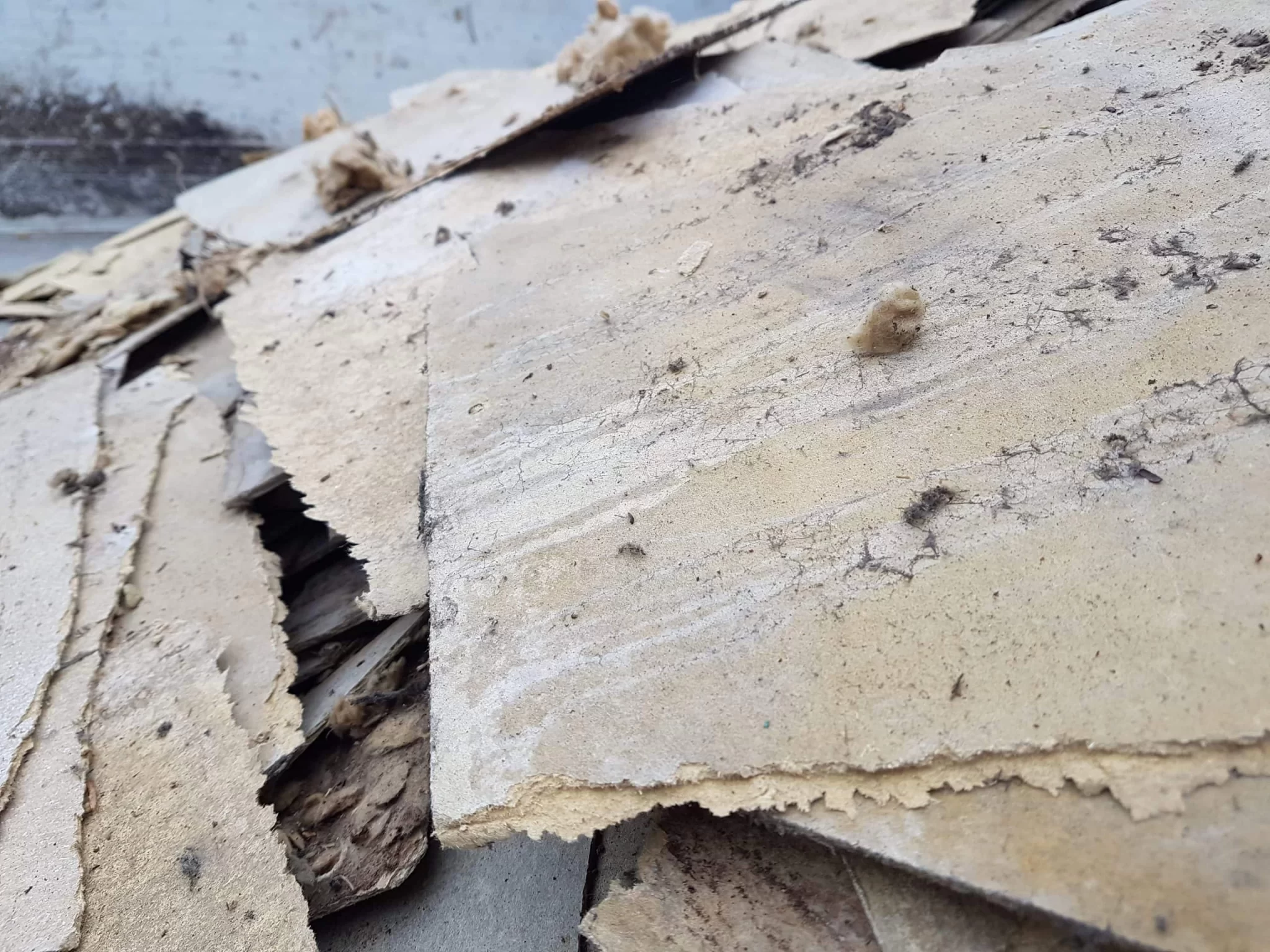
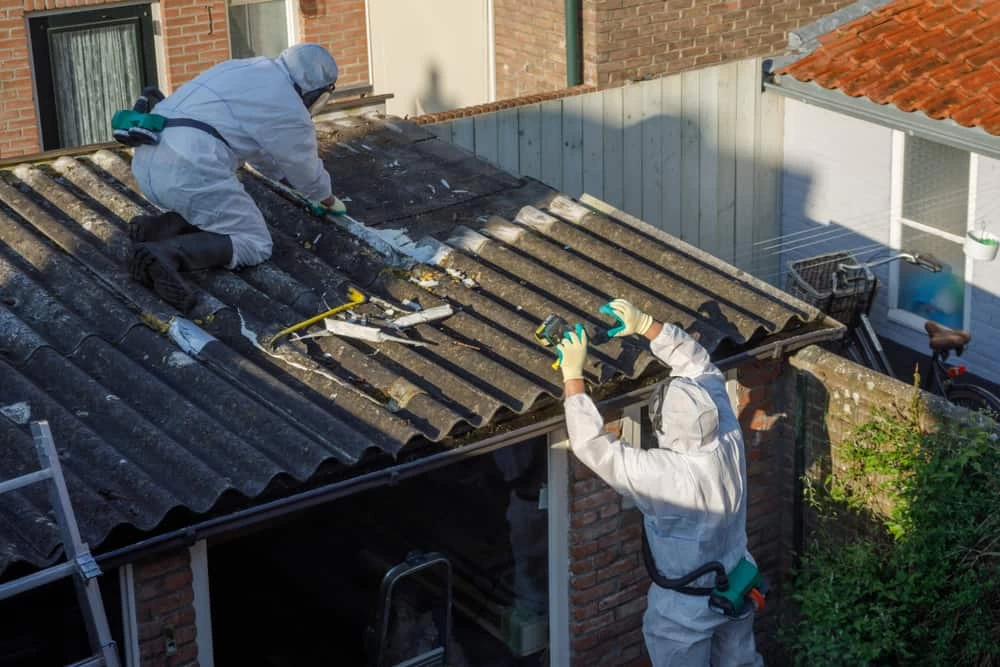
Beyond tiles and ceilings, we handle pipe and boiler insulation, roofing materials, drywall joint compound, vermiculite attic insulation, and asbestos cement siding — all of which appear regularly in Syosset’s housing stock. Whatever the material, the process is the same: certified inspection, proper containment, licensed removal, compliant disposal, and documented air clearance.
Does my Syosset home actually need an asbestos inspection before renovating?
If your home was built before April 1, 1987, New York State law requires a certified asbestos inspection before any renovation or demolition that could disturb potential asbestos-containing materials. That’s not a recommendation — it’s a legal requirement enforced through the NYS Department of Labor’s Asbestos Control Bureau. In Syosset, where the overwhelming majority of the housing stock was built between the late 1940s and the 1970s, this applies to nearly every home in town.
Practically speaking, this means your contractor cannot legally begin permitted work — a kitchen gut, a basement finish, a bathroom remodel — without a certified inspection on record. If you skip it and a building inspector or code enforcement officer discovers it mid-project, the result is a stop-work order. That costs you time, money, and leverage, especially if you’re on a closing timeline. Getting the inspection done upfront is the straightforward move.
How much does asbestos removal typically cost for a Nassau County home?
Cost depends on what materials are involved, how much square footage is affected, and how many distinct areas need to be contained and cleared. For a single-room asbestos tile removal or a popcorn ceiling in one area of a Syosset home, you’re generally looking at a range of $1,500 to $5,000. Larger projects — whole-house floor tile removal, multiple rooms of ceiling texture, pipe insulation throughout a basement — can run $10,000 to $30,000 or more depending on scope.
What drives cost in Nassau County specifically is the regulatory layer. ICR 56 compliance, Nassau County EHRP/EHRT notifications, certified air clearance testing, and licensed waste disposal all add to the project cost — but they’re non-negotiable. Any quote that seems significantly lower than the ranges above is worth scrutinizing. If a contractor isn’t accounting for proper containment, licensed disposal, and post-abatement testing, you’re either not getting compliant work or you’ll see those costs appear later as add-ons.
What happens if asbestos is discovered during a home inspection in Syosset?
This comes up regularly in Syosset’s real estate market, and it doesn’t have to derail a transaction. When a home inspector flags suspected asbestos-containing materials — whether it’s floor tiles, pipe insulation, or ceiling texture — the next step is getting a certified asbestos inspector to take samples and confirm what you’re dealing with. A visual flag from a home inspector is not the same as a confirmed positive test result.
If testing confirms the presence of asbestos, the parties typically negotiate how it gets handled — whether the seller completes abatement before closing or the buyer takes a credit and manages it afterward. Either way, the abatement has to be done by a licensed contractor under ICR 56, and the documentation has to be in order before the space is used again. In a market where Syosset homes are transacting near or above $875,000, having that clearance documentation in hand is a meaningful asset — it removes uncertainty for the buyer and protects the seller from post-sale disputes.
Is it safe to stay in my home during asbestos abatement work?
It depends on the scope of the project and where in your home the work is being done. For smaller, contained projects — a single room of floor tiles or a section of ceiling — occupancy in other areas of your home may be possible with proper containment in place. For larger projects involving multiple rooms, HVAC-adjacent areas, or materials that pose a higher fiber-release risk, temporary relocation during the active removal phase is the safer call.
The containment setup we use during professional abatement — negative air pressure machines, HEPA filtration, sealed work area barriers — is designed specifically to prevent fiber migration beyond the work zone. But that system only works when it’s properly installed and maintained throughout the project. We walk through the specific scope with every Syosset homeowner before work begins and give you a clear, honest answer about what’s appropriate for your situation. The average Syosset household has a 40-plus minute commute each way — we plan project timing with your schedule in mind so disruption is as minimal as possible.
What's the difference between asbestos encapsulation and full removal?
Encapsulation means sealing the asbestos-containing material in place with a binding agent so fibers can’t be released — the material stays, but it’s coated and stabilized. Full removal means the material is physically taken out of the structure, contained, and disposed of at a licensed facility. Both are recognized approaches under New York State’s ICR 56 framework, but they’re not interchangeable — the right choice depends on the condition of the material, what’s being done with the space, and what future use looks like.
In Syosset, where many homeowners are renovating specifically to update or sell their homes, encapsulation is often not the practical answer. If you’re finishing a basement, replacing flooring, or preparing for a sale, you need the material gone — not sealed over. Encapsulated asbestos still has to be disclosed, still has to be managed, and still creates complications down the road when the next renovation or sale comes around. For most of the projects we handle in this area, full abatement is the cleaner, more permanent resolution.
How do I know if the asbestos contractor I'm hiring in Syosset is actually licensed?
New York State requires asbestos abatement contractors to hold a license issued by the NYS Department of Labor, and individual workers on the job must hold their own certifications as well. You can verify a contractor’s license directly through the NYS DOL’s online licensing database — it’s public, it’s searchable, and it takes about two minutes. If a contractor can’t provide their license number or gets evasive when you ask, that’s your answer.
In Syosset and across Nassau County, the risk of hiring an unlicensed contractor goes beyond the health concern. If unlicensed work is discovered during a permit inspection or a real estate transaction, the homeowner bears the liability — not the contractor. That means potential fines, required re-abatement by a licensed firm, and serious complications with a buyer or title company. The Syosset real estate market is competitive and buyers are thorough. Cutting corners on licensing is the kind of shortcut that surfaces at exactly the wrong moment. Our licensing is current, verifiable, and covers the full scope of residential asbestos abatement work in Nassau County.