Most homes in Tarrytown were built before asbestos was banned and if you’re renovating, selling, or dealing with water damage, that matters right now. We provide licensed asbestos abatement in Tarrytown, NY with the credentials, process, and documentation to back it up.
I needed a professional consultation explanation of procedure for safe removal of Asbestos in my apartment complex. Without having an account yet, I was very impressed with the caring, knowledgeable and generous advice offered by Jessica, and will look forward to doing business in the future. Thank you so much! I feel much more informed about a sometimes scary endeavor. Peace. Nancy Silva Mineola, NY.
Mia Munoz
Used this company to clean up some water flood in my house. They were fast and easy to work with.very professional, Would recommend to anyone!
Nini Valle
Great company, had a flood and they responded quickly and efficiently. Billed my insurance company directly. I highly recommend this company!
joe colapietro, jr
I had pipe freeze in my basement right before a snow storm and they made to within an hour to help start the clean up process. They we by our side throughout the entire process and even helped with the insurance company. They did such a great job with the cleanup, repair, remidiation, I contracted them to perform the repairs and finishes in the basement. They came with enough manpower and material to get the job done. Leo and Jessica were nothing but a pleasure to deal with!!
Cristian Arredondo c
I had some water damage in my home and Green Island was able to take care of my issue quickly and effectively. I am very pleased with the work they did. They responded quickly and were very professional.
Michael M
Outstanding service! From the office to the field crew everyone was friendly, helpful and responsive. I highly recommend Green Island Group.
You stop guessing. That’s the most honest way to put it. Whether you pulled up a floor tile during a kitchen renovation and found something that looked wrong, or your contractor flagged pipe insulation around an old boiler, the uncertainty is the worst part. Once the material is tested, removed by a licensed crew, and cleared by post-abatement air testing, you have something solid documentation that says your home is safe, and proof that the work was done correctly.
For Tarrytown homeowners specifically, that documentation carries real weight. This is one of the most competitive real estate markets in Westchester County, with median home values above $800,000. Buyers, agents, and lenders are paying attention to environmental disclosures. A properly abated home with clearance paperwork in hand is a cleaner transaction and in a low-inventory market, that can make a measurable difference in what your property is worth.
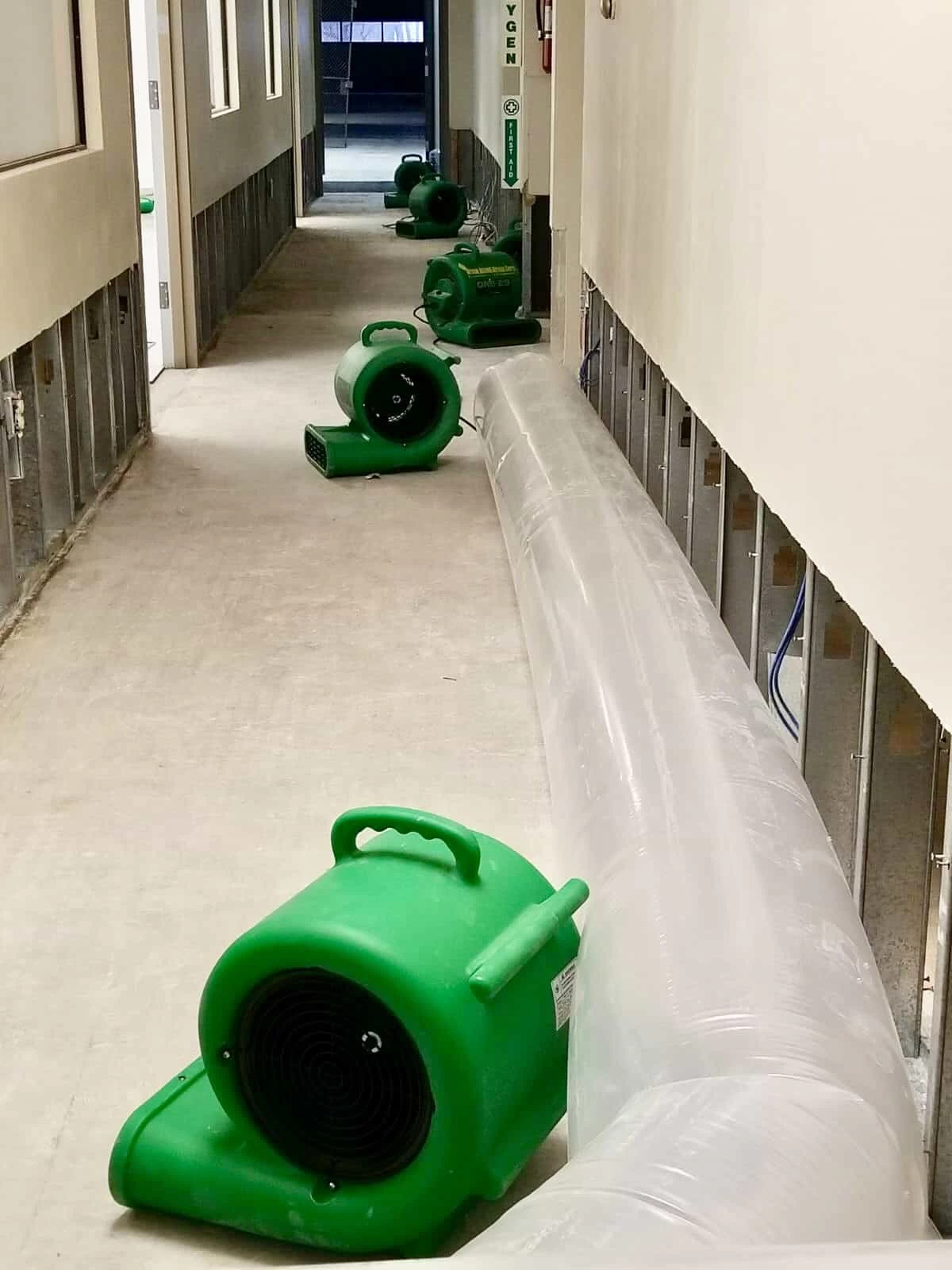
There’s also the flood factor. Tarrytown sits on the Hudson River, and Westchester County has documented significant flooding events in this area including one that submerged vehicles along the Thruway between Tarrytown and Ardsley. When floodwater reaches older floor tiles, pipe insulation, or ceiling materials that contain asbestos, those materials get disturbed. That turns a water damage event into a mandatory abatement situation. We handle both water damage and abatement work, and we coordinate directly with your insurance carrier so you’re not managing two separate processes during an already stressful situation.
5,000 Projects. Every License That Actually Applies Here.
We are a full-service environmental remediation contractor serving Tarrytown and the broader Westchester County area. We hold the NYS Department of Labor Asbestos Handling License the license that is legally required for any abatement work performed in Tarrytown under New York State Industrial Code Rule 56. This is not a NYC DEP license, which applies only within the five boroughs. If a contractor is working in Tarrytown without a valid NYS DOL license, that work is not legal, and the property owner can share in that liability. Our license number is verifiable on the NYS DOL public database and we invite every client to check it before signing anything.
Beyond licensing, we have completed more than 5,000 abatement and remediation projects across the New York metro area, hold EPA certification and NYS DEC disposal compliance, and are certified as a Minority/Women-owned Business Enterprise by the NYS Office of General Services a government-issued credential, not a marketing claim. From the historic Victorian homes near Sunnyside to the older multi-unit buildings along Broadway in Tarrytown, we have worked in the exact type of properties that define the village’s housing stock.
No Surprises Here's Exactly What the Process Looks Like
It starts with a free on-site inspection. One of our representatives comes to your property, assesses the materials in question, and explains what testing is warranted. You don’t pay anything for that visit, and there’s no obligation attached to it. For many Tarrytown homeowners, this is the step that turns a stressful unknown into a manageable situation because you finally have a professional telling you what you’re actually dealing with.
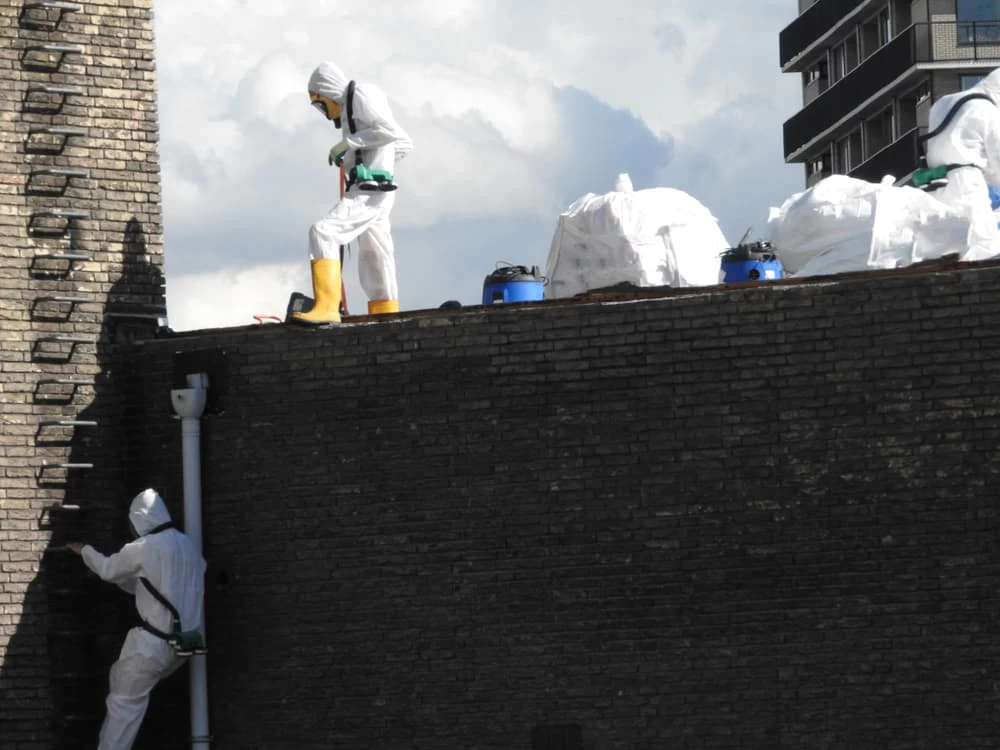
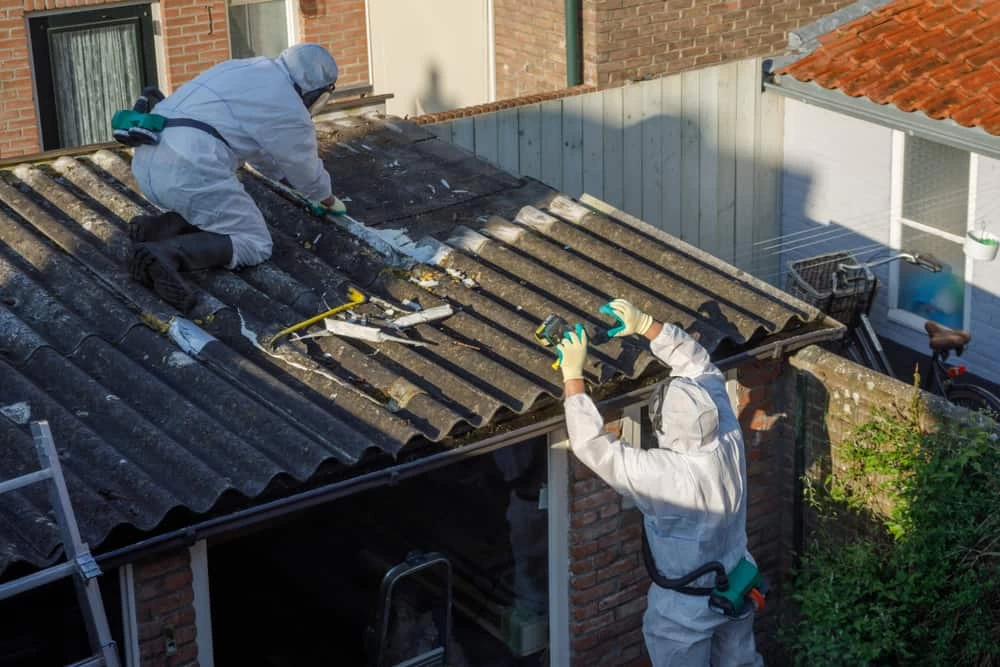
If testing confirms asbestos-containing materials, we handle the full abatement process. The work area is sealed with polyethylene sheeting and placed under negative air pressure using HEPA-filtered air scrubbers. This means air flows into the containment zone, not out of it so fibers can’t migrate to other parts of your home during removal. Workers enter and exit through a decontamination chamber. Every person on the job holds individual NYS DOL certification, which is a separate requirement from the company license under Industrial Code Rule 56 and a detail worth asking any contractor about before they set foot in your home.
Once removal is complete, a third-party air clearance test confirms the space is safe. We provide full post-abatement documentation as a standard deliverable not something you have to request. For Tarrytown homeowners navigating a pre-sale timeline, an insurance claim, or a renovation project that’s been paused mid-stream, that paperwork is what lets you move forward with confidence.
Every Material Type, One Licensed Crew, Full Documentation
Tarrytown’s housing stock is old genuinely old. Real estate listings routinely describe the village’s residential streets as lined with homes over a century old, and roughly 29% of housing units were built before 1939. The rest of the pre-1980 inventory spans the postwar decades when asbestos was used most heavily across nearly every material category. We handle asbestos removal across all of them: vinyl floor tile and 9×9 tile removal, popcorn ceiling removal, pipe and boiler insulation, joint compound, ceiling tile, and roofing materials. You don’t need to figure out which contractor handles which material we manage the full scope in a single project.
For Westchester County properties, the governing framework is NYS Industrial Code Rule 56, enforced by the NYS DOL Asbestos Control Bureau. Our work complies with Rule 56 at every stage from containment and removal to disposal chain-of-custody and post-abatement air clearance. All waste is disposed of in full compliance with NYS DEC requirements. If your project involves an insurance claim which is common in flood- and storm-related abatement events given Tarrytown’s Hudson River exposure we handle direct insurance billing on your behalf.
Whether you’re dealing with an unexpected mid-renovation discovery in a Weymouth Heights Colonial, a pre-sale abatement in a Wilson Park property, or an emergency situation following water damage near the waterfront, the process and the documentation standard are the same. Every project ends with a clearance certificate you can use for your own peace of mind, for a real estate transaction, or for a lender who needs proof.
Does my older Tarrytown home definitely contain asbestos-containing materials?
Not every older home has asbestos, but the odds are significant if your home was built before 1980 and in Tarrytown, that describes the vast majority of the housing stock. Approximately 29% of the village’s housing units were built before 1939, and a substantial additional share was built during the 1940s through 1970s, which is the peak era for asbestos use in residential construction. Materials commonly found in homes from this period include vinyl floor tiles (especially the 9×9 inch variety), popcorn and textured ceilings, pipe and boiler insulation, joint compound, ceiling tiles, and roofing materials.
The only way to know for certain is to have the materials tested by a licensed professional. Visual inspection alone cannot confirm or rule out asbestos it requires laboratory analysis of a collected sample. We offer free on-site inspections where a licensed representative assesses the materials in question and explains what testing makes sense for your specific situation. There’s no cost and no obligation for that initial visit.
What happens if I already disturbed a material that might contain asbestos in Tarrytown?
Stop work and don’t disturb the area further. That’s the most important first step. If you’ve broken, cut, sanded, or otherwise damaged a material you suspect contains asbestos a floor tile during a kitchen renovation, pipe insulation while doing boiler work, a ceiling texture during a remodel the priority is to limit any additional fiber release. Close off the area as best you can, keep people out, and don’t run HVAC systems that could circulate air from that space through the rest of the house.
Then call a licensed abatement contractor. Under New York State Industrial Code Rule 56, any disturbance of asbestos-containing materials above a certain threshold requires professional remediation by a NYS DOL-licensed contractor. We can assess the situation, determine the scope of any disturbance, and advise on next steps including whether immediate containment is needed before full abatement begins. The sooner you get a professional on-site, the better your options. Waiting doesn’t make the situation safer.
How does asbestos abatement work when it's connected to flood or water damage in my Tarrytown home?
This is a scenario that comes up regularly in Tarrytown given the village’s location on the Hudson River. When a flood, pipe burst, or storm event causes water damage in an older Tarrytown home, the water frequently contacts floor tiles, pipe insulation, or other materials that contain asbestos. That physical disturbance soaking, swelling, crumbling is exactly what triggers mandatory abatement under state regulations. You can’t simply dry out the space and move on; the compromised ACMs need to be properly removed before restoration work continues.
The practical challenge is that this creates two overlapping processes: water damage restoration and asbestos abatement. We handle both, which matters because the alternative coordinating a separate abatement contractor and a separate restoration contractor while your home is wet and potentially uninhabitable is significantly more stressful and time-consuming. We also work directly with homeowners’ insurance carriers and handle billing on your behalf, which is important because flood- and storm-related abatement is often a covered event under standard homeowners’ policies.
Do I need a permit for asbestos abatement in Tarrytown, and who handles that?
Yes, regulatory notification and documentation are required for asbestos abatement work in Tarrytown. The governing framework is New York State Industrial Code Rule 56, enforced by the NYS Department of Labor Asbestos Control Bureau. Depending on the scope of the project specifically the quantity of asbestos-containing material being disturbed federal EPA NESHAP notification requirements under 40 CFR Part 61 may also apply for demolition or renovation projects. These are not optional steps, and they are the contractor’s responsibility to manage correctly.
We handle all required regulatory notifications and documentation as part of the project scope. You don’t need to navigate the NYS DOL filing process on your own. It’s also worth noting that the Village of Tarrytown Building Department requires documentation of asbestos status for pre-1980 structures as part of renovation and demolition permits so if you’re pulling a building permit for a renovation project, asbestos documentation may be a prerequisite before that permit is issued. Our post-abatement clearance documentation satisfies those requirements.
How long does asbestos abatement typically take for a Tarrytown home?
It depends on the scope, but most residential abatement projects in Tarrytown take anywhere from one to three days for a focused removal a section of floor tile, a single room of popcorn ceiling, or pipe insulation around a boiler. Larger projects involving multiple material types across several areas of a home can take longer. The timeline also includes the post-abatement air clearance test, which needs to be completed before containment is removed and the space is released for reoccupancy or continued renovation work.
For Tarrytown homeowners on a pre-sale timeline, it’s worth building in a realistic buffer. If you’re planning to list your home and need clearance documentation before the listing goes live, start the process earlier than you think you need to. Spring and fall are peak periods for abatement requests in this area spring because renovation season kicks off, fall because sellers are preparing to list before year-end. Scheduling in advance during those windows is the best way to avoid delays that push back your listing date.
How much does asbestos abatement cost for a home in Tarrytown, NY?
Residential asbestos abatement in the Tarrytown area typically ranges from around $2,000 for a small, focused removal to $15,000 or more for a larger project involving multiple material types or significant square footage. The variables that drive cost are the type of material being removed, the quantity, the accessibility of the work area, and whether the project involves any complicating factors like occupied spaces, historic finishes that need to be protected, or insurance coordination.
Given Tarrytown’s median home value of over $800,000, the cost of professional abatement is modest relative to what’s at stake both in terms of your family’s health and the financial impact an asbestos disclosure can have on a real estate transaction. Cutting corners on abatement in a market where buyers and their agents are increasingly sophisticated about environmental disclosures creates long-term problems. We provide free on-site inspections and written estimates, so you know exactly what you’re looking at before any commitment is made.