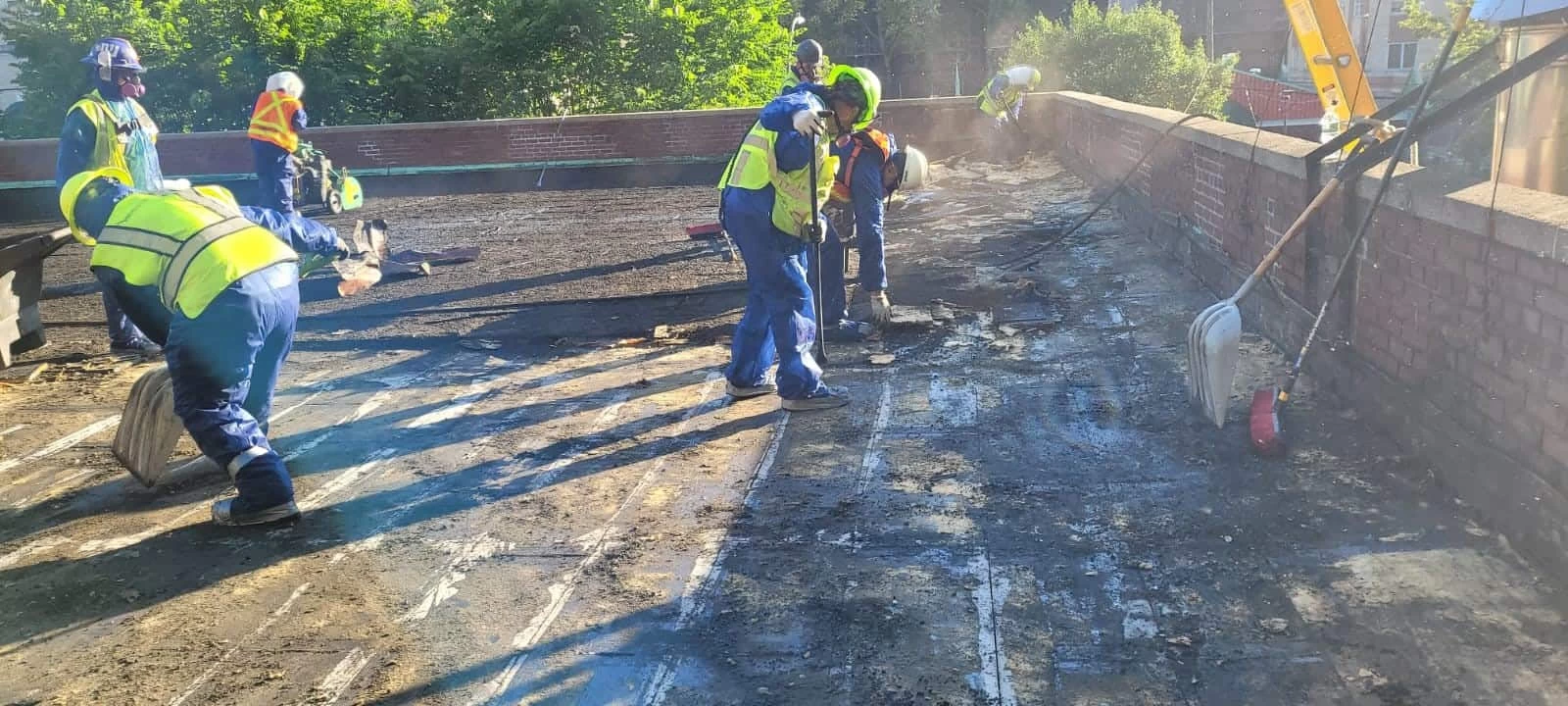
Trinity’s converted towers and pre-war buildings carry more history than most and in buildings this old, asbestos abatement isn’t a maybe. We handle it right, from ACP-7 filing to final air clearance.
I needed a professional consultation explanation of procedure for safe removal of Asbestos in my apartment complex. Without having an account yet, I was very impressed with the caring, knowledgeable and generous advice offered by Jessica, and will look forward to doing business in the future. Thank you so much! I feel much more informed about a sometimes scary endeavor. Peace. Nancy Silva Mineola, NY.
Mia Munoz
Used this company to clean up some water flood in my house. They were fast and easy to work with.very professional, Would recommend to anyone!
Nini Valle
Great company, had a flood and they responded quickly and efficiently. Billed my insurance company directly. I highly recommend this company!
joe colapietro, jr
I had pipe freeze in my basement right before a snow storm and they made to within an hour to help start the clean up process. They we by our side throughout the entire process and even helped with the insurance company. They did such a great job with the cleanup, repair, remidiation, I contracted them to perform the repairs and finishes in the basement. They came with enough manpower and material to get the job done. Leo and Jessica were nothing but a pleasure to deal with!!
Cristian Arredondo c
I had some water damage in my home and Green Island was able to take care of my issue quickly and effectively. I am very pleased with the work they did. They responded quickly and were very professional.
Michael M
Outstanding service! From the office to the field crew everyone was friendly, helpful and responsive. I highly recommend Green Island Group.
If you’re renovating a unit in one of the converted commercial towers along Broadway or Trinity Place, you already know the drill permits, timelines, co-op board approvals. What you don’t want is asbestos holding everything up. When ACMs turn up in your floor tiles, pipe insulation, or ceiling materials, the work has to stop until it’s handled by a licensed contractor. That pause doesn’t have to stretch into weeks.
The buildings in Trinity many of them built between the early 1900s and the 1970s were constructed during an era when asbestos was standard in fireproofing, insulation, and soundproofing. That’s not speculation; it’s building history. What it means practically is that any gut renovation, HVAC replacement, or plumbing work in a pre-1987 structure here is a likely candidate for a pre-renovation asbestos survey before the city will issue your permit.
Getting ahead of that process is the difference between a renovation that stays on schedule and one that doesn’t. And when a pipe bursts at 2 a.m. in a building with original insulation, you need someone who can respond the same night not someone who calls you back Tuesday morning.
NYC Compliance Isn't Something We Figure Out On-Site
We’re a full-service environmental remediation company serving all five boroughs, including Trinity and the Financial District. The regulatory framework for asbestos work in New York City is layered NYC DEP notifications, NYS Department of Labor licensing, EPA NESHAP requirements, OSHA standards and it’s not something you want to learn on the job. We already know it.
Every project we take on in Trinity and Manhattan is handled by certified technicians who understand the specific compliance steps required here, not just the general ones. That means ACP-7 notifications filed before work begins, post-abatement air clearance documentation in hand before reoccupancy, and a paper trail that satisfies your co-op board, your attorney, and your insurer.
We’re available 24 hours a day, 365 days a year because in a dense, multi-unit building two blocks from the World Trade Center site, emergencies don’t wait for a callback window.
What the Process Actually Looks Like From Your End
It starts with an inspection. A certified asbestos inspector assesses the scope of your project and identifies any asbestos-containing materials that will be disturbed. In a pre-1987 building which covers virtually every structure in the Trinity area this step is required by the NYC Department of Buildings before a permit can be issued. Skipping it isn’t an option; it’s what delays projects and creates liability.
Once ACMs are confirmed, we file the ACP-7 notification with the NYC DEP’s Asbestos Technical Review Unit through the ARTS e-file system. Standard projects require a 10-business-day lead time before work can begin. If you’re dealing with an emergency a burst pipe that’s exposed insulation, a ceiling collapse there’s a provision for 48-hour post-start notification, and we know how to move through that process without cutting corners.
Abatement work is conducted under full containment: sealed work zones, negative air pressure, HEPA filtration. In a building where your neighbors share walls, floors, and HVAC systems, that containment isn’t optional it’s what keeps the rest of the building safe and the co-op board off your back. When the work is done, post-abatement air clearance testing confirms the space meets reoccupancy standards, and you get the ACP-21 completion documentation to close out your permit.
Every Material Type, Every Scenario This Area Throws at You
The asbestos materials most commonly found in Trinity’s building stock aren’t random they follow the construction patterns of early-20th-century commercial towers. Floor tiles, pipe insulation, ceiling materials, spray-applied fireproofing, and HVAC ductwork insulation are the usual suspects in buildings like the ones along Broadway and Trinity Place. We handle asbestos tile removal, popcorn ceiling removal, and pipe insulation abatement regularly in this neighborhood.
Office-to-residential conversions a major driver of renovation activity in the Financial District right now almost always surface ACMs during the gut phase. If your building in Trinity is going through a conversion or you’re renovating a unit in a building that already went through one, it’s worth knowing that materials from the original commercial construction often weren’t disturbed during the initial conversion. They show up later, during kitchen and bathroom renovations, HVAC upgrades, or structural work.
Beyond abatement, we handle water damage restoration, mold remediation, and demolition which matters in a neighborhood where a single emergency event rarely stays a single problem. We also work directly with insurance carriers, which is relevant when a covered event like a burst pipe or storm damage triggers the need for abatement in a pre-1987 building. One call, one company, one invoice.
Do I need an asbestos inspection before renovating my Trinity, NY condo?
Yes and it’s not optional. New York City’s Department of Buildings requires an asbestos assessment by a Certified Asbestos Inspector before issuing a construction permit for any work in a pre-1987 building. In Trinity, that covers virtually every building you’d be renovating. The inspector evaluates what materials will be disturbed by your planned work and determines whether an asbestos project exists under NYC DEP definitions.
If ACMs are present and will be disturbed, an ACP-7 notification must be filed with the DEP before the DOB will issue your permit. This isn’t a formality you can work around it’s a hard stop in the permit process. Getting the inspection done early, before your contractor is scheduled and your timeline is committed, is the move that keeps everything on track. If asbestos turns up mid-project without prior assessment, you’re looking at a work stoppage and potential fines.
How long does asbestos abatement typically take in a Trinity apartment?
The timeline depends on the scope specifically, how many materials are affected and how much square footage is involved. A single-room floor tile removal in a Trinity condo might take one to two days of active abatement work. A larger scope involving pipe insulation, ceiling materials, and fireproofing across multiple rooms can run a week or more.
What adds time isn’t usually the abatement itself it’s the regulatory steps around it. The standard ACP-7 notification requires a 10-business-day window before work can begin, which means planning ahead matters. Post-abatement air clearance testing also needs to happen before the space can be reoccupied, and that result needs to come back clean before your permit can be closed out. If you’re working against a renovation deadline or a move-in date, building that regulatory timeline into your schedule from the start is the only way to avoid surprises.
What happens if asbestos is found during a gut renovation in a pre-1987 Trinity building?
Work stops. That’s the short answer. Under NYC DEP rules, if asbestos-containing materials are discovered during a renovation and they’re being or will be disturbed, the project cannot continue until a licensed abatement contractor addresses the ACMs and the proper notifications are filed. This applies across the board residential, commercial, institutional.
The practical implication for a Trinity renovation is that your general contractor, your plumber, or your tile installer cannot keep working in the affected area while asbestos is present and uncontained. The sooner you bring in a certified abatement contractor, the sooner the clock starts on the regulatory process and the sooner your renovation can resume. If the discovery happens during active construction, we can often move quickly on the ACP-7 filing and containment setup to minimize the delay. The worst thing you can do is try to work around it the liability exposure for the property owner is real, and the fines are not small.
Does building insurance cover asbestos removal costs in Lower Manhattan?
It depends on what triggered the need for abatement. If asbestos-containing materials were disturbed by a covered event a burst pipe, a flood, storm damage there’s a reasonable basis for a claim under most commercial and residential property policies. In that scenario, the abatement is part of the remediation work required to restore the property, and insurers will often cover it when it’s properly documented and tied to the covered loss.
If the asbestos is discovered during a planned renovation with no triggering event, coverage is much less likely most policies treat that as a pre-existing condition. The key in either case is documentation: a licensed contractor, a properly filed ACP-7, air clearance test results, and a clear record of what was found and where. We work directly with insurance carriers and can help navigate the claims process when a covered event is involved. That’s not something every abatement contractor does, and it matters when you’re already managing a building emergency.
Is asbestos common in the converted office buildings along Broadway and Trinity Place?
Very common. The commercial towers that line Broadway and Trinity Place in the Financial District were built primarily in the early-to-mid 20th century, during the period when asbestos was the material of choice for fireproofing, pipe insulation, floor tiles, and soundproofing. The New York Times reported in 1988 that the majority of NYC buildings constructed between 1920 and 1970 were built with asbestos-containing materials and that era covers most of the building stock in this neighborhood.
When those buildings went through their first wave of office-to-residential conversions in the 1990s and 2000s, not every ACM was disturbed or removed. Many were encapsulated or left in place in areas that weren’t being renovated. Now, as those converted buildings age into their first major renovation cycles kitchen upgrades, bathroom gut jobs, HVAC replacements those materials are turning up again. If you’re in a converted building in Trinity and planning any significant renovation work, a pre-renovation asbestos survey before you pull permits is the right first step.
Can I stay in my apartment while asbestos abatement is happening in my building?
It depends on where the work is happening and how the containment is set up. If abatement is being performed inside your specific unit, you’ll need to vacate for the duration of the work and until post-abatement air clearance testing confirms the space is safe for reoccupancy. That’s a NYC DEP requirement, not a contractor preference.
If the work is happening in a common area, a neighboring unit, or a mechanical room elsewhere in the building, whether you need to vacate depends on the containment setup and the scope of the project. In a dense high-rise in Trinity where units share walls, HVAC systems, and ventilation pathways the containment protocols matter a lot. Sealed work zones, negative air pressure, and HEPA filtration are standard on every project we run, specifically because fiber migration in a multi-unit building is a real risk that affects more than just the unit being worked on. Your building manager or co-op board should be notified before work begins, and in most cases they’ll want documentation of the containment plan before they approve access.