Tuxedo Park’s estates are extraordinary and most of them were built long before anyone knew asbestos was a problem. If you’re renovating, selling, or just finally getting around to that inspection, we handle asbestos abatement in Tuxedo Park with full NYS DOL licensing, proper documentation, and zero shortcuts.
I needed a professional consultation explanation of procedure for safe removal of Asbestos in my apartment complex. Without having an account yet, I was very impressed with the caring, knowledgeable and generous advice offered by Jessica, and will look forward to doing business in the future. Thank you so much! I feel much more informed about a sometimes scary endeavor. Peace. Nancy Silva Mineola, NY.
Mia Munoz
Used this company to clean up some water flood in my house. They were fast and easy to work with.very professional, Would recommend to anyone!
Nini Valle
Great company, had a flood and they responded quickly and efficiently. Billed my insurance company directly. I highly recommend this company!
joe colapietro, jr
I had pipe freeze in my basement right before a snow storm and they made to within an hour to help start the clean up process. They we by our side throughout the entire process and even helped with the insurance company. They did such a great job with the cleanup, repair, remidiation, I contracted them to perform the repairs and finishes in the basement. They came with enough manpower and material to get the job done. Leo and Jessica were nothing but a pleasure to deal with!!
Cristian Arredondo c
I had some water damage in my home and Green Island was able to take care of my issue quickly and effectively. I am very pleased with the work they did. They responded quickly and were very professional.
Michael M
Outstanding service! From the office to the field crew everyone was friendly, helpful and responsive. I highly recommend Green Island Group.
Your renovation doesn’t have to sit on hold. One of the most frustrating parts of discovering asbestos mid-project is watching your timeline stall while contractors wait on clearance. When abatement is handled correctly with proper containment, licensed removal, and a signed clearance certificate from an independent industrial hygienist your project moves forward. That’s the whole point.
For Tuxedo Park specifically, this matters more than it does almost anywhere else in Orange County. The village’s housing stock is overwhelmingly pre-1940, and many of these estates haven’t had a full asbestos assessment in decades if ever. Steam heating systems, original plaster walls, carriage house pipe insulation, historic roofing materials these aren’t the standard 9×9 floor tiles you’d find in a postwar ranch home. The scope is often larger, and the stakes are higher when you’re working on a property worth well over a million dollars.
There’s also the documentation side. If you’re selling a Tuxedo Park property, your buyer’s attorney is going to ask for it. If you’re renovating, the village Building Department and possibly the Board of Architectural Review will want to see it. A clearance certificate isn’t just a regulatory box to check in Tuxedo Park, it’s often a prerequisite for moving anything else forward.
We are an independently owned environmental remediation contractor serving Orange County, Rockland County, and the broader Hudson Valley region. We hold a NYS Department of Labor Asbestos Contractor License, USEPA certifications, and have completed documented work for NYS Office of General Services, the Dormitory Authority of the State of New York, and multiple county governments clients whose procurement processes verify licensing, insurance, and safety records before a single contract is signed.
That institutional track record matters in a place like Tuxedo Park, where the properties are historically significant, the oversight bodies are active, and the margin for error is low. We also hold dual NYS and NYC M/WBE certification an ongoing, audited government designation, not a self-reported badge. When you need a contractor who can walk through the gate, pull the right permits, and produce documentation that satisfies everyone from your building inspector to your real estate attorney, that’s exactly what our team is built to do.
It starts with a thorough inspection and material sampling. Before anything is removed, a licensed inspector identifies all suspected asbestos-containing materials in the affected areas whether that’s pipe insulation in a mechanical room, plaster in a historic interior, roofing materials on an outbuilding, or floor tiles in a carriage house. In Tuxedo Park’s older estates, this step often turns up more than the initial concern, so it’s worth doing comprehensively from the start.
Once materials are confirmed and the scope is defined, we file the required NYS DOL notification a mandatory step before any regulated asbestos work begins in New York State. For projects that are part of a larger renovation, this is also the point where coordination with the village Building Department happens, and where any Board of Architectural Review considerations get factored into the work plan. Orange County falls under the NYS DOL Albany district office for asbestos enforcement, and every project is handled in full compliance with 12 NYCRR Part 56.
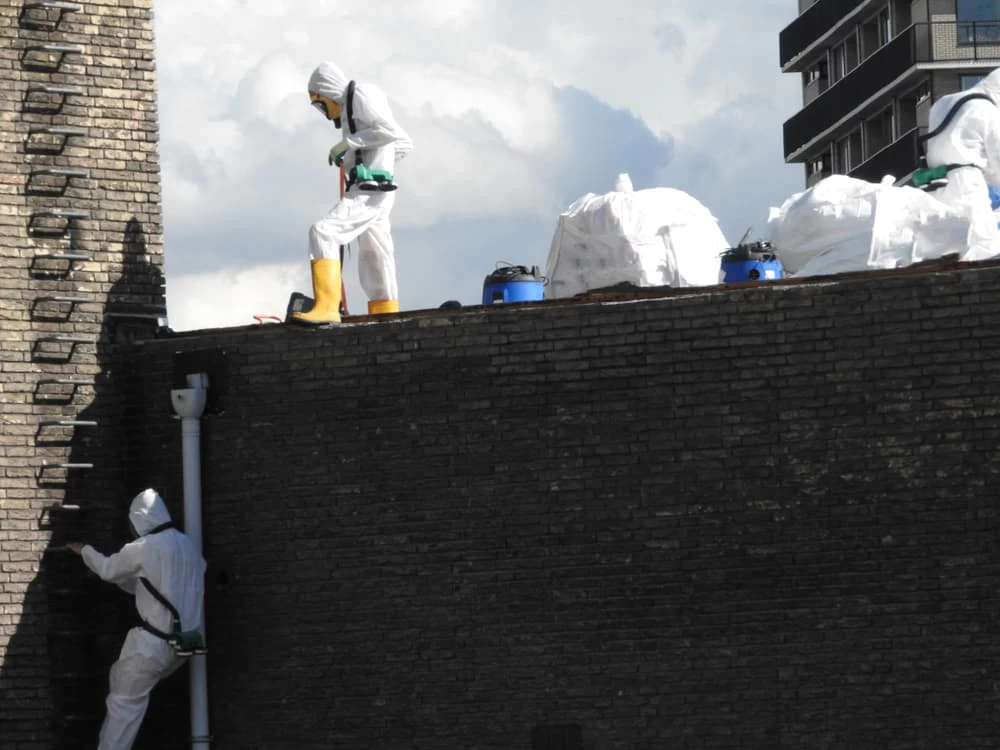
The removal itself is performed under full containment negative air pressure, HEPA filtration, proper PPE, and strict disposal protocols. When the work is done, an independent industrial hygienist performs post-abatement air monitoring. If the space clears, you receive a written clearance certificate. That document is what your contractor, your attorney, and your lender need to see before anything else moves forward.
We handle the full range of asbestos-containing materials found in Tuxedo Park’s historic properties pipe and boiler insulation, floor tile removal, popcorn ceiling removal, plaster with asbestos binders, roofing underlayment, transite siding, and joint compound. If it’s in the structure, it’s in scope. That matters here because these aren’t simple jobs. A home built in 1905 with a steam heating system, original plaster walls, and a detached carriage house has a very different asbestos profile than a 1970s split-level, and the abatement approach has to match that reality.
Because we also handle mold, lead paint, water damage, and fire damage, you don’t have to coordinate multiple contractors when a gut renovation of a pre-war estate turns up more than one problem which it usually does. Everything can be managed under one project, with one point of contact, and one consistent documentation trail.
For projects where the abatement cost wasn’t in the original budget a common situation when asbestos is discovered mid-renovation we offer 0% APR financing up to $200,000 for qualifying projects. No other local or regional competitor in this market offers anything close to that. We also bill insurance companies directly for covered losses, and operate 24 hours a day, 7 days a week, for situations where storm damage or an emergency exposure can’t wait until Monday morning.
Do I need asbestos testing before renovating a historic home in Tuxedo Park?
Yes and in New York State, it’s not optional. Under 12 NYCRR Part 56, any renovation or demolition work on a building that may contain asbestos-containing materials requires an asbestos survey before work begins. For Tuxedo Park specifically, where the median construction year for homes is 1938 and many properties date back to the village’s founding in 1886, the probability of encountering asbestos is extremely high. This isn’t a precautionary suggestion it’s a legal requirement with real enforcement behind it.
Beyond the regulatory side, skipping the survey creates practical problems. If your contractor opens a wall and disturbs asbestos without proper containment and a licensed abatement team in place, the project stops immediately. You’re now dealing with a remediation emergency instead of a planned abatement, and the cost and timeline consequences are significantly worse. Getting the survey done before demolition begins is almost always the faster and less expensive path.
What types of asbestos materials are most common in Tuxedo Park homes?
The answer depends heavily on when the home was built, and in Tuxedo Park, that range spans from the 1880s to the mid-20th century. The most common materials found in the village’s estate properties include pipe and boiler insulation particularly in homes with steam or hot water heating systems, which were standard in large homes of that era as well as plaster with asbestos binders, asbestos-cement (transite) siding, roofing underlayment and shingles, floor tiles, and joint compound. Carriage houses, stables, and other outbuildings on larger properties often contain their own set of ACMs that are separate from the main residence.
What makes Tuxedo Park different from most Orange County communities is the scale and age of the properties involved. You’re not dealing with a single-layer problem in a postwar ranch home. You may be dealing with multiple material types across a main house, a detached carriage house, and outbuildings all of which require individual assessment and potentially separate abatement scopes. A thorough initial inspection is the only way to understand the full picture.
Does asbestos abatement require approval from Tuxedo Park's Board of Architectural Review?
The abatement itself the containment, removal, and disposal of asbestos-containing materials is regulated by the NYS Department of Labor and does not require Board of Architectural Review (BAR) approval on its own. However, if the abatement is part of a larger renovation project that involves exterior alterations, demolition, or any work that affects the appearance or structure of a historic property, that broader project does require BAR review and approval. In Tuxedo Park, where the entire village is listed on the National Register of Historic Places, the BAR is an active participant in any significant construction or renovation activity.
In practical terms, this means that if you’re planning a gut renovation that triggers asbestos abatement, you’ll be navigating both the NYS DOL compliance process and the village’s own permitting and review requirements simultaneously. A contractor who understands both frameworks and can produce the documentation each one requires is essential. Our experience with government and institutional clients, including agencies that manage historic properties, translates directly to this kind of layered compliance environment.
How long does asbestos abatement take in a large estate home?
Timeline varies depending on the scope of materials involved, the size of the affected areas, and how many separate spaces main house, outbuildings, mechanical rooms are included in the project. For a typical residential abatement involving a contained area like a boiler room or a single floor, the removal itself may take one to three days. For a larger scope involving multiple material types across a historic estate with significant square footage, the timeline extends accordingly sometimes a week or more for the removal phase alone.
What most homeowners don’t account for is the post-abatement air monitoring period. After removal is complete, an independent industrial hygienist performs clearance testing, and the space cannot be reoccupied or returned to the renovation schedule until the clearance certificate is issued. That process typically adds one to two days after the physical work is done. Planning your renovation timeline around a realistic abatement schedule not an optimistic one is the difference between a smooth project and a stalled one.
Can asbestos be discovered after a renovation has already started in Tuxedo Park?
Yes, and it happens more often than most homeowners expect especially in a village where the housing stock is as old and complex as Tuxedo Park’s. A contractor opening walls in a pre-war estate may find asbestos pipe insulation that wasn’t visible in the original survey, or plaster with asbestos binders behind a later layer of drywall. When that happens, work stops. The space has to be secured, and a licensed abatement contractor has to assess and address the material before any other trades can return.
This is exactly why a comprehensive pre-renovation survey not just a spot check is worth doing upfront. It’s also why having a contractor who can respond quickly when something unexpected turns up matters. We operate 24/7 and serve Tuxedo Park and the surrounding Town of Tuxedo, so if your general contractor calls on a Thursday afternoon because they’ve found something behind a wall, there’s a path forward that doesn’t mean your project sits idle for a week waiting on availability.
Does asbestos abatement need to be done before selling a home in Tuxedo Park, NY?
New York State does not legally require sellers to remove asbestos before listing or closing a property but in practice, it’s rarely that simple. Buyers of high-value historic properties in Tuxedo Park almost always conduct thorough due diligence, and a home inspector or environmental consultant who identifies asbestos-containing materials will flag it in their report. From that point, the buyer typically requests either remediation before closing or a price reduction to account for it. In a market where individual properties are listed in the millions, that negotiation can move quickly and significantly.
There’s also the lender side to consider. Certain loan types particularly those tied to renovation financing or properties in specific condition categories may require asbestos remediation as a condition of funding. If you’re selling an estate in Tuxedo Park and you know asbestos is present, getting a clearance certificate in hand before you list puts you in a much stronger position. It removes the uncertainty from the buyer’s side and keeps the transaction from stalling at the worst possible moment.