These Lake-Community Homes Were Built in the Asbestos Era
Most homes in Twin Lakes Village were built between 1940 and the 1970s and if yours hasn’t been tested, there’s a real chance asbestos is still in it. We offer free on-site inspections and fully licensed asbestos abatement for homeowners in Twin Lakes Village and across Westchester County.
I needed a professional consultation explanation of procedure for safe removal of Asbestos in my apartment complex. Without having an account yet, I was very impressed with the caring, knowledgeable and generous advice offered by Jessica, and will look forward to doing business in the future. Thank you so much! I feel much more informed about a sometimes scary endeavor. Peace. Nancy Silva Mineola, NY.
Mia Munoz
Used this company to clean up some water flood in my house. They were fast and easy to work with.very professional, Would recommend to anyone!
Nini Valle
Great company, had a flood and they responded quickly and efficiently. Billed my insurance company directly. I highly recommend this company!
joe colapietro, jr
I had pipe freeze in my basement right before a snow storm and they made to within an hour to help start the clean up process. They we by our side throughout the entire process and even helped with the insurance company. They did such a great job with the cleanup, repair, remidiation, I contracted them to perform the repairs and finishes in the basement. They came with enough manpower and material to get the job done. Leo and Jessica were nothing but a pleasure to deal with!!
Cristian Arredondo c
I had some water damage in my home and Green Island was able to take care of my issue quickly and effectively. I am very pleased with the work they did. They responded quickly and were very professional.
Michael M
Outstanding service! From the office to the field crew everyone was friendly, helpful and responsive. I highly recommend Green Island Group.
You can move forward. That’s the short answer. Whether you’re opening walls to upgrade insulation, replacing old flooring, or getting ready to list a home that’s worth close to a million dollars in today’s Lewisboro market you can’t do any of it responsibly if there’s asbestos in the way. Once it’s properly removed and cleared, the renovation proceeds, the sale closes, and the documentation is in your hands.
For Twin Lakes Village specifically, this matters in a way that goes beyond the typical suburban renovation. These homes started as summer cottages on the peninsula between Lake Oscaleta and Lake Rippowam. They were winterized over decades new insulation here, updated flooring there, a heating system upgrade in the 1960s and every one of those projects happened during the era when asbestos-containing materials were standard. That layered history means the asbestos inventory in your home might not be obvious. It might be under the floor you’re standing on, wrapped around the pipes in your basement, or sitting behind a wall that’s never been opened.
The other thing that changes is peace of mind around the lakes themselves. The Three Lakes Council has been monitoring water quality in Oscaleta and Rippowam since 1970. Proper abatement with sealed containment, certified disposal, and a complete chain-of-custody manifest means nothing from your renovation ends up where it shouldn’t. That’s not just regulatory compliance. For a community that’s spent decades protecting its water, it’s the right way to do the job.
We Know Twin Lakes Village and the Homes Built Here
We’ve worked throughout the Town of Lewisboro, which means we know the building stock in Twin Lakes Village, we know the Lewisboro Building Department’s permit requirements, and we know what’s typically hiding inside a mid-century lake-community home that’s been renovated a few times over the decades.
We hold the full license stack required to work legally in New York State NYS Department of Labor Asbestos Handling License, EPA certification, NYS DEC compliance for waste disposal, and Westchester County contractor credentials. We’re also certified as an M/WBE by the NYS Office of General Services, a state-issued designation that no local competitor in this market holds. With 5,000+ completed projects across the metro area, we’ve handled the exact scenarios Twin Lakes Village homeowners face pre-renovation discoveries, pre-sale clearances, and emergency responses after a pipe burst disturbs old insulation.
The free inspection is how we start. No charge, no obligation just an honest assessment of what’s there and what needs to happen next.
Asbestos Remediation Process in Twin Lakes Village
From the First Call to Your Clearance Documentation
It starts with the free inspection. A licensed professional from our team comes to your Twin Lakes Village property, walks the space, and identifies any suspected asbestos-containing materials floor tiles, pipe insulation, ceiling texture, joint compound, roofing, whatever the home has. For a cottage in Twin Lakes Village that’s been winterized and renovated in layers, this inspection is systematic and material-specific. We’re not just looking at the obvious surfaces. We’re accounting for the full history of the home.
If testing confirms the presence of asbestos, we build a scope of work and submit the required notifications under NYS Industrial Code Rule 56 before any abatement begins. That’s a state requirement, not a formality we skip. The Lewisboro Building Department also requires proper contractor licensing documentation before renovation permits move forward our credentials satisfy that requirement before the first crew member shows up.
During the abatement itself, the work area is sealed under negative air pressure with HEPA-filtered air scrubbers running continuously. For smaller, contained projects a section of pipe insulation, a single room’s floor tile, a portion of ceiling texture many Twin Lakes Village families can remain in the home with only the work zone off-limits. Larger scopes require temporary displacement, and we’ll tell you honestly which category your project falls into. When the work is complete, post-abatement air clearance testing is conducted, and you receive formal clearance documentation confirming the area is clean. That paperwork is the thing that lets your renovation proceed, your sale close, or your insurance claim finalize.
Asbestos Tile and Popcorn Ceiling Removal, Lewisboro
Every Material Type Found in Twin Lakes Village Homes, Handled Correctly
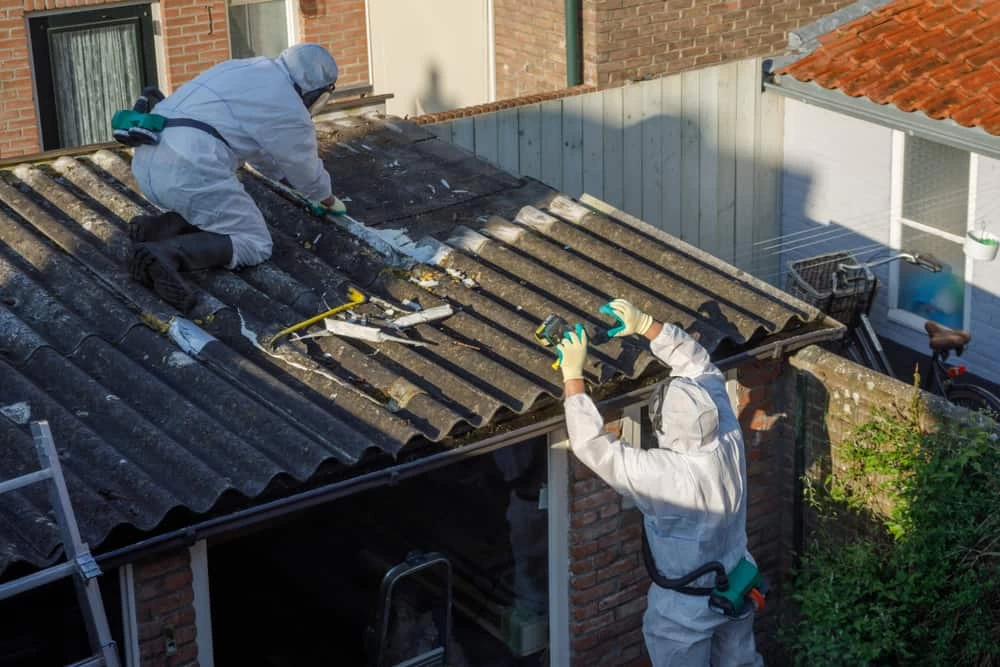
The asbestos abatement services we provide in Twin Lakes Village cover the full range of materials common in mid-century Westchester construction. Vinyl asbestos floor tiles the 9×9 and 12×12 inch formats installed widely in postwar residential projects are among the most frequently encountered materials in homes on Twin Lakes Road, Orchard Drive, and Oscaleta Road. Asbestos popcorn ceiling removal is another common scope, particularly in homes where the original acoustic texture was applied during renovations in the 1960s and 1970s. Pipe and boiler insulation, drywall joint compound, roofing materials, and exterior transite panels round out the typical inventory in homes of this age and construction type.
Because most Lewisboro homes run on oil heating systems with older pipe networks, heating system repairs and replacements are a frequent trigger for asbestos discovery. When a pipe freezes and bursts in a Westchester winter and water damage remediation begins, disturbed pipe lagging or floor tiles create a mandatory abatement requirement. We work directly with insurance carriers and handle billing on the client’s behalf in these situations, which removes one significant burden from a homeowner who is already managing a stressful event.
Every project includes proper containment, certified NYS DEC-compliant waste disposal with a complete chain-of-custody manifest, and post-abatement air clearance testing. The clearance documentation you receive at the end is the formal record that the work was done correctly and in a real estate market where Lewisboro homes are selling near $900,000, that record has real financial value.
Do most homes in Twin Lakes Village actually contain asbestos-containing materials?
If your home was built between 1940 and the late 1970s which covers virtually every original structure in Twin Lakes Village the honest answer is that asbestos-containing materials are more likely present than not. The community was developed starting in 1940 as summer cottages that were progressively winterized and upgraded over the following decades. Each of those renovation cycles happened during the era when asbestos was a standard component of insulation, flooring, ceiling texture, pipe wrap, and joint compound.
What makes Twin Lakes Village homes particularly complex is the layered history. A home that was originally built in 1945, winterized in 1955, had its kitchen updated in 1968, and its heating system replaced in 1974 may contain asbestos from multiple renovation generations sometimes literally on top of each other. The only way to know for certain what’s in your home is to have a licensed professional inspect it. That’s exactly what our free inspection is designed to do.
What happens if asbestos is found during a renovation in my Lewisboro home?
Work stops until the material is properly assessed and, if necessary, abated. Under NYS Industrial Code Rule 56, renovation or demolition work that disturbs asbestos-containing materials cannot legally proceed without a licensed abatement contractor handling the removal first. This applies whether your contractor discovers suspected ACMs when opening a wall, lifting a floor, or accessing a ceiling the project goes on hold, and the asbestos has to be addressed before anything else moves forward.
In practical terms, this means calling a licensed abatement contractor, having the material tested to confirm it contains asbestos, filing the required state notifications, completing the abatement under proper containment conditions, and obtaining post-abatement air clearance before your renovation contractor returns. The Lewisboro Building Department also requires documentation of proper contractor licensing before renovation permits are issued, so having a contractor who already holds the right credentials and knows the local permit process saves time. We’ve been through this sequence with homeowners in the Town of Lewisboro many times. The process is manageable when you work with someone who knows exactly what it requires.
Do I need to leave my home during asbestos abatement in Twin Lakes Village?
Not always. For smaller, contained scopes removing asbestos floor tile from a single room, addressing a section of pipe insulation in the basement, or taking down a portion of acoustic ceiling texture our negative air pressure containment systems and HEPA-filtered air scrubbers create a sealed work zone that prevents fiber migration to the rest of the home. In these cases, your family can stay in the house with only the active work area off-limits.
For larger projects whole-floor tile removal, extensive pipe insulation abatement, or multi-room ceiling work temporary displacement is typically required, and we’ll tell you that clearly upfront rather than letting you find out mid-project. The scope of your specific home determines the answer, and that’s something we assess during the free inspection. There’s no blanket rule, and anyone who tells you otherwise before seeing your property isn’t giving you an honest answer.
How does asbestos abatement affect a home sale in the Lewisboro real estate market?
It can make or break the transaction. Lewisboro homes are selling at median prices near $900,000, and buyers at that price point are doing thorough due diligence. If a buyer’s inspector flags suspected asbestos-containing materials which is common in mid-century homes throughout Twin Lakes Village and the Town of Lewisboro it creates a negotiation point, a potential deal-killer, or a mandatory remediation requirement before closing, depending on how the parties handle it.
Sellers who address asbestos proactively before listing are in a significantly stronger position. You control the process, you choose the contractor, and you have the clearance documentation in hand before the first showing. That documentation confirming that the abatement was completed by a licensed contractor and that post-abatement air testing passed satisfies buyers, lenders, and title companies. In a market where Lewisboro homes are moving in an average of 23 days, that kind of clean environmental record removes a potential obstacle from a transaction that’s already moving fast.
What types of asbestos materials are most common in older Westchester County homes?
In homes of the age and construction type found throughout Twin Lakes Village and the broader Lewisboro area, the most frequently encountered asbestos-containing materials fall into a few consistent categories. Vinyl asbestos floor tiles particularly the 9×9 inch format common in postwar construction are among the most common findings. Pipe and boiler insulation is another frequent discovery, especially in homes with older oil heating systems, which describes the majority of residences in this part of Westchester County. Acoustic ceiling texture, commonly called popcorn ceiling, was widely applied in residential renovations from the late 1950s through the 1970s and often contains asbestos. Drywall joint compound used in interior finishing work during the same era is another common source.
Less visible but equally important are roofing materials, exterior transite siding panels, and duct wrap insulation all of which were standard in mid-century residential construction. The challenge in a home with a layered renovation history, like many in Twin Lakes Village, is that these materials may be present in multiple locations and at multiple depths. A thorough inspection by a licensed professional is the only way to build an accurate picture of what’s actually in the home.
Can asbestos abatement near Lake Oscaleta or Lake Rippowam cause any environmental risk to the water?
It’s a legitimate question, and it’s one that residents in Twin Lakes Village should ask. Lakes Oscaleta and Rippowam are part of the Croton watershed, and the Three Lakes Council has been actively monitoring water quality in these lakes since 1970. The community has a real, organized commitment to protecting that water and proper asbestos abatement is fully consistent with that commitment when it’s done correctly.
The risk comes from improper abatement unlicensed removal, inadequate containment, or waste that isn’t properly bagged and disposed of through certified channels. Our abatement process addresses all of that directly. Every project uses sealed containment to prevent fiber migration to the outdoor environment. All asbestos waste is double-wrapped, properly labeled, and transported to an approved disposal facility under a signed NYS DEC chain-of-custody manifest. Nothing is left on-site, and nothing enters the surrounding environment. For a property that sits on or near the Twin Lakes, that level of care isn’t just regulatory compliance it’s what responsible abatement looks like in a watershed community.