Old Dutchess County Homes Hide More Than Character
If your Union Vale property was built before 1980, there’s a real chance asbestos is somewhere inside it and the only way to know for certain is to have it properly assessed before anyone starts cutting, drilling, or demoing anything.
I needed a professional consultation explanation of procedure for safe removal of Asbestos in my apartment complex. Without having an account yet, I was very impressed with the caring, knowledgeable and generous advice offered by Jessica, and will look forward to doing business in the future. Thank you so much! I feel much more informed about a sometimes scary endeavor. Peace. Nancy Silva Mineola, NY.
Mia Munoz
Used this company to clean up some water flood in my house. They were fast and easy to work with.very professional, Would recommend to anyone!
Nini Valle
Great company, had a flood and they responded quickly and efficiently. Billed my insurance company directly. I highly recommend this company!
joe colapietro, jr
I had pipe freeze in my basement right before a snow storm and they made to within an hour to help start the clean up process. They we by our side throughout the entire process and even helped with the insurance company. They did such a great job with the cleanup, repair, remidiation, I contracted them to perform the repairs and finishes in the basement. They came with enough manpower and material to get the job done. Leo and Jessica were nothing but a pleasure to deal with!!
Cristian Arredondo c
I had some water damage in my home and Green Island was able to take care of my issue quickly and effectively. I am very pleased with the work they did. They responded quickly and were very professional.
Michael M
Outstanding service! From the office to the field crew everyone was friendly, helpful and responsive. I highly recommend Green Island Group.
You stop guessing. That’s the biggest thing. When asbestos-containing materials are properly identified, removed by a licensed crew, and cleared by post-abatement air testing, you’re not sitting with a question mark in your walls anymore. You have documentation. You have a safe space. And if you’re buying or selling a Union Vale property on Route 82 or anywhere else in eastern Dutchess County, you have paperwork that protects the transaction.
Union Vale’s housing stock is older than most people realize when they first move here. A lot of the farmhouses, colonials, and rural homes in this area were built or renovated between the 1940s and 1970s right in the window when asbestos was standard in floor tiles, pipe insulation, boiler wrap, and ceiling texture. Every Dutchess County winter adds freeze-thaw stress to those materials. Cracks form. Things flake. What was contained becomes friable. Getting ahead of that is not an overreaction it’s basic property management for this region.
And if your Union Vale property includes a barn, a detached garage, or any kind of outbuilding, that’s worth a separate conversation. Corrugated asbestos-cement roofing and transite siding were common in agricultural construction through the late 1970s. A lot of Union Vale properties have both a house and outbuildings that need to be assessed not just one or the other.
We’ve been doing this work in New York for over 12 years. That’s more than 5,000 completed projects across the state including older, more complex properties throughout the Hudson Valley and right here in Union Vale that look a lot like what you’d find along Clove Valley Road or tucked back on a county route in eastern Dutchess County.
Every handler on our team holds a current NYS Department of Labor Asbestos Handler license. Our supervisors carry DOL Supervisor credentials. These aren’t self-issued certifications they’re issued by New York State and verifiable through the DOL’s public database. If a contractor can’t show you that, they shouldn’t be touching asbestos in your home.
We’re also MWBE-certified by New York State and work directly with insurance companies on billing so if your abatement is tied to storm damage, water infiltration, or another covered event, you’re not buried in paperwork on top of everything else.
It starts with an assessment. Before any removal happens, the material in question needs to be identified either visually by a qualified inspector or through lab sampling. If you’re renovating an older farmhouse in Union Vale and you’ve hit something that looks like it could be a problem, that’s the moment to stop and make the call. Disturbing asbestos without knowing what you’re dealing with is how exposure happens.
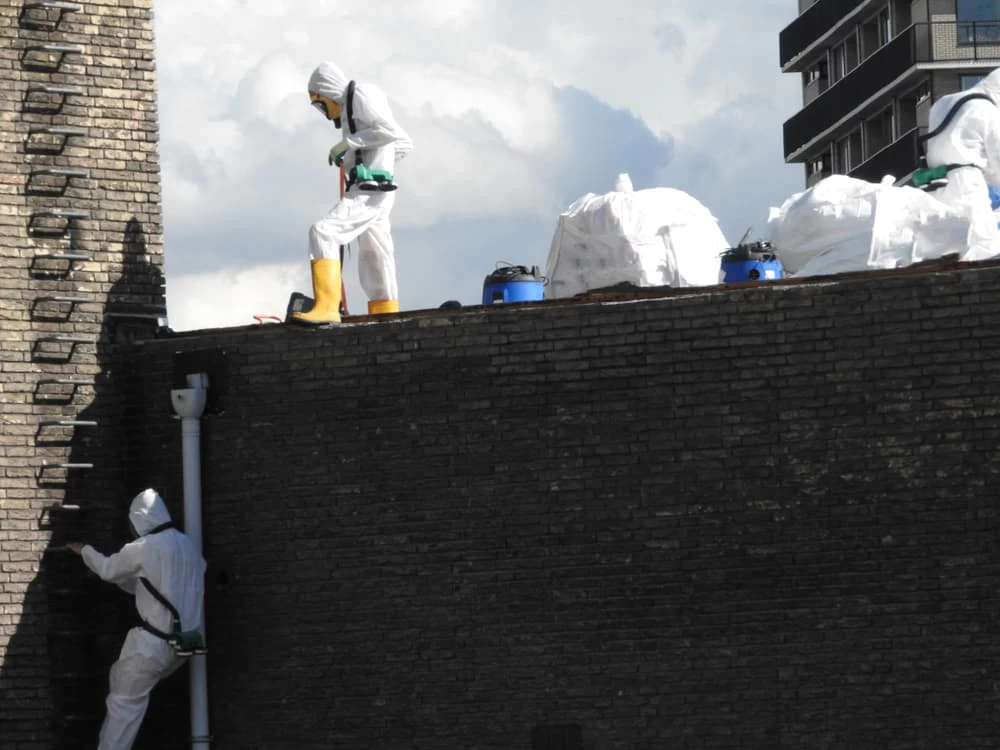
Once the scope is confirmed, the abatement area gets sealed off and placed under negative air pressure. This keeps fibers contained to the work zone and out of the rest of your home. The removal itself follows strict NYS DOL protocol materials are wetted to suppress fibers, removed carefully, and double-bagged in labeled, leak-tight containers for transport to a permitted disposal facility. There are no permitted asbestos disposal sites within Union Vale itself, so licensed transport and disposal logistics are part of what we handle for you.
After the physical work is done, post-abatement air clearance testing confirms that airborne fiber levels have returned to safe levels before anyone re-enters the space. That test result is your documentation for your own peace of mind, for a real estate transaction, or for the Town of Union Vale building department if a permit is involved. The job isn’t finished until that clearance is in hand.
Every Material Type, Every Property Type in Union Vale
Asbestos doesn’t show up in just one place, and in Union Vale’s older housing stock, it rarely does. We handle the full range of asbestos-containing materials found in residential and rural properties across eastern Dutchess County floor tile removal, including the 9×9 vinyl asbestos tiles common in mid-century construction; popcorn ceiling removal, which was a standard finish through the 1970s and is one of the most common discoveries during renovation; pipe insulation and boiler wrap removal, which comes up constantly in older homes when heating systems are replaced or upgraded; and roofing and siding materials, including the asbestos-cement shingles and transite board found on both homes and outbuildings throughout this area.
If you’ve recently purchased a property in Union Vale especially if you came from the city or Westchester and bought a farmhouse or rural estate and you’re planning any kind of renovation, the smart move is an assessment before the work starts, not after something gets disturbed. Pre-renovation asbestos surveys are required under federal EPA NESHAP regulations for projects above certain thresholds, and they’re just good practice for any pre-1980 structure regardless of project size.
We also handle mold remediation, water damage restoration, and fire damage restoration. If your older Union Vale property is dealing with more than one issue at once which happens more than you’d think after a hard Dutchess County winter one call covers it all.
Does my Union Vale farmhouse actually need an asbestos inspection before renovation?
If your home was built before 1980, yes and most of the farmhouses and rural properties in Union Vale fall into that category. Federal EPA NESHAP regulations require a pre-demolition asbestos survey for renovation and demolition projects above certain size thresholds, and New York State enforces those requirements. Even for smaller projects that fall below the federal trigger, disturbing asbestos-containing materials without knowing what you’re dealing with creates real exposure risk for you, your family, and anyone working on the job.
The practical reality in Union Vale is that older homes here often have multiple asbestos-containing materials layered across different renovation eras original floor tiles under a later vinyl layer, original pipe insulation that was never touched, popcorn ceilings in rooms that were updated around them. An assessment before you start tells you exactly what you’re working with so you can plan accordingly, rather than stopping a job mid-stream when something unexpected turns up.
How much does asbestos removal cost in Dutchess County, NY?
Most residential asbestos abatement projects in New York run somewhere between $1,300 and $3,100, with the average landing around $2,200. Where your Union Vale project falls in that range depends on the type and quantity of material, how accessible the work area is, and the complexity of the containment setup required. Projects in rural Dutchess County sometimes come in at the higher end of that range because of factors like older building construction, multi-material scopes, and the cost of licensed transport and disposal there are no permitted asbestos disposal facilities within Union Vale itself, so waste handling is always part of the project logistics.
What drives cost up more than anything is scope. A single room of floor tile is a different project than a full basement boiler removal with pipe insulation runs throughout. The most accurate way to get a number is a site visit and a written estimate and that estimate should be free. Be cautious of any quote that comes in dramatically lower than the range above without a clear explanation, because cutting corners on disposal or containment creates liability that lands on you as the property owner.
Is asbestos in my home dangerous if I'm not planning to renovate?
It depends on the condition of the material. Asbestos that is intact, undisturbed, and in good condition what’s called non-friable asbestos generally does not release fibers into the air and poses a much lower immediate risk. The danger comes when the material is damaged, deteriorating, or disturbed. In Union Vale, where older homes go through significant freeze-thaw cycling every winter, materials that were stable a few years ago can crack, flake, or degrade over time. That changes the risk profile.
If you’ve noticed cracking floor tiles, flaking insulation around old pipes, or deteriorating ceiling texture in a pre-1980 home, those are worth having looked at before you assume they’re fine. You don’t necessarily have to remove everything that contains asbestos sometimes encapsulation is an appropriate option but the decision should be made by someone qualified to assess the actual condition, not based on a guess. A proper inspection gives you a clear picture of what you have and what, if anything, needs to happen next.
What happens if I hire an unlicensed contractor for asbestos work in New York?
New York State law requires a valid NYS Department of Labor Asbestos Contractor Certificate to perform abatement work. Performing that work without proper licensure is a criminal violation in New York and the exposure doesn’t stop with the contractor. As a property owner, hiring an unlicensed contractor for asbestos work can create legal liability for improper disposal, leave you without the documentation you need for a real estate transaction or building permit, and potentially expose your family to fibers that weren’t properly contained during the work.
In a rural community like Union Vale, informal tradespeople sometimes take on work they’re not licensed for. It’s worth asking directly: can you show me your NYS DOL Asbestos Contractor Certificate? That credential is issued by New York State and is publicly verifiable through the DOL’s licensing database. If a contractor hesitates or can’t produce it, that’s your answer. The risk of going the cheap route on this particular type of work is not theoretical it’s documented, and it falls on the homeowner.
How long does asbestos abatement take, and do I have to leave my home?
For most residential projects, the abatement work itself takes one to three days depending on scope. Whether you need to vacate depends on where the work is happening and how extensive the containment setup is. For a contained area like a single basement or utility room, it’s often possible to remain in other parts of the house. For larger projects involving multiple rooms or central systems, temporary displacement is usually the safer call.
For Union Vale homeowners, one practical consideration is that rural Dutchess County doesn’t have a lot of nearby lodging options if you do need to be out of the house for a night or two. That’s worth factoring into your planning before the project starts, not the day of. We’ll walk you through what to expect for your specific project scope before work begins including a realistic timeline and a clear answer on whether and for how long you’d need to be out. No surprises on that front.
Can asbestos abatement documentation help with a home sale in Union Vale?
Yes, and it comes up more often than you might expect in this market. The Hudson Valley real estate market has been active, and Union Vale properties particularly older farmhouses and rural estates regularly surface asbestos findings during home inspections. When that happens mid-transaction, it can create a contingency that stalls or kills the deal. Having abatement completed before listing, with full documentation including air clearance test results, removes that contingency entirely.
For buyers, proper abatement documentation from a licensed contractor is also meaningful. It’s not just a checkbox it’s proof that the work was done correctly, that disposal was handled legally, and that the space has been independently verified as safe. Real estate attorneys and agents in Dutchess County are increasingly familiar with what complete abatement documentation looks like, and a project file from a licensed, NYS DOL-certified contractor carries weight in a transaction in a way that a handshake job simply doesn’t.