Old Homes on the Post Road Deserve More Than a Guess
Upper Red Hook’s housing stock is older than most and asbestos abatement in homes like yours requires someone who actually knows what they’re looking at. We’ve spent over a decade working on properties throughout Dutchess County, and we know exactly what pre-1980 homes in this area tend to hide.
I needed a professional consultation explanation of procedure for safe removal of Asbestos in my apartment complex. Without having an account yet, I was very impressed with the caring, knowledgeable and generous advice offered by Jessica, and will look forward to doing business in the future. Thank you so much! I feel much more informed about a sometimes scary endeavor. Peace. Nancy Silva Mineola, NY.
Mia Munoz
Used this company to clean up some water flood in my house. They were fast and easy to work with.very professional, Would recommend to anyone!
Nini Valle
Great company, had a flood and they responded quickly and efficiently. Billed my insurance company directly. I highly recommend this company!
joe colapietro, jr
I had pipe freeze in my basement right before a snow storm and they made to within an hour to help start the clean up process. They we by our side throughout the entire process and even helped with the insurance company. They did such a great job with the cleanup, repair, remidiation, I contracted them to perform the repairs and finishes in the basement. They came with enough manpower and material to get the job done. Leo and Jessica were nothing but a pleasure to deal with!!
Cristian Arredondo c
I had some water damage in my home and Green Island was able to take care of my issue quickly and effectively. I am very pleased with the work they did. They responded quickly and were very professional.
Michael M
Outstanding service! From the office to the field crew everyone was friendly, helpful and responsive. I highly recommend Green Island Group.
You stop wondering. That’s the real outcome. When asbestos-containing materials are properly identified, removed, and documented by a licensed contractor, you’re not just clearing a health hazard you’re removing the uncertainty that’s been sitting over every renovation decision, every home sale conversation, and every morning your family wakes up in that house.
For Upper Red Hook homeowners, that uncertainty tends to run deeper than in newer communities. A significant portion of the housing stock here was built before 1980, and homes along the Old Post Road corridor include structures that predate the 20th century entirely. That means asbestos can show up in places that aren’t obvious pipe insulation wrapped around a boiler that’s been running for decades, floor tiles under a layer of newer flooring, plaster in walls that haven’t been touched since the 1950s. Knowing it’s been handled correctly, with post-abatement air clearance testing and documentation you can actually show a real estate attorney or building inspector, changes your position entirely.
The freeze-thaw cycles that hit Dutchess County every winter are also worth understanding. That repeated stress on older materials cracked pipe insulation, shifting floor tiles, degraded roofing is exactly what disturbs asbestos that was otherwise stable. Spring renovation season in Upper Red Hook almost always surfaces discoveries that winter quietly set in motion.
We’ve been doing this work in New York for over 12 years, with more than 5,000 completed asbestos abatement, remediation, and restoration projects across the state. That’s not a number we throw out to sound impressive it means we’ve worked in homes exactly like the ones in Upper Red Hook. Older farmhouses, historic colonials, properties that have had multiple renovation layers added over generations. We know what those buildings hide, and we know how to handle it legally and safely under New York State Industrial Code Rule 56.
We’re also a certified MWBE contractor and approved for New York State agency work credentials that require independent vetting by the state, not just a license renewal. We serve Upper Red Hook and the surrounding Dutchess County area actively, and we’re available 24 hours a day, seven days a week. If a contractor stops work mid-project on your property near Greig Farm or you find something unexpected during a renovation on the Old Post Road, you don’t have to wait until Monday morning to get answers.
No Surprises Here's What the Process Actually Looks Like
It starts with an assessment. Before anything is touched, we evaluate the materials in question where they are, what condition they’re in, and whether they’re friable (meaning they can release fibers when disturbed) or currently stable. In older Upper Red Hook homes, this step matters more than most people expect. Asbestos doesn’t always announce itself. It can be in the texture of a ceiling, the backing of vinyl floor tiles, or the insulation around pipes in a basement that hasn’t been opened in thirty years. We look at the whole picture before we give you a scope of work.
Once the assessment is complete and a plan is in place, we handle the permitting and notification requirements under NYS Industrial Code Rule 56. In the town of Red Hook, renovation and demolition projects often require documentation showing asbestos has been addressed before a building permit moves forward and our paperwork is built to satisfy that process without sending you back and forth between offices.
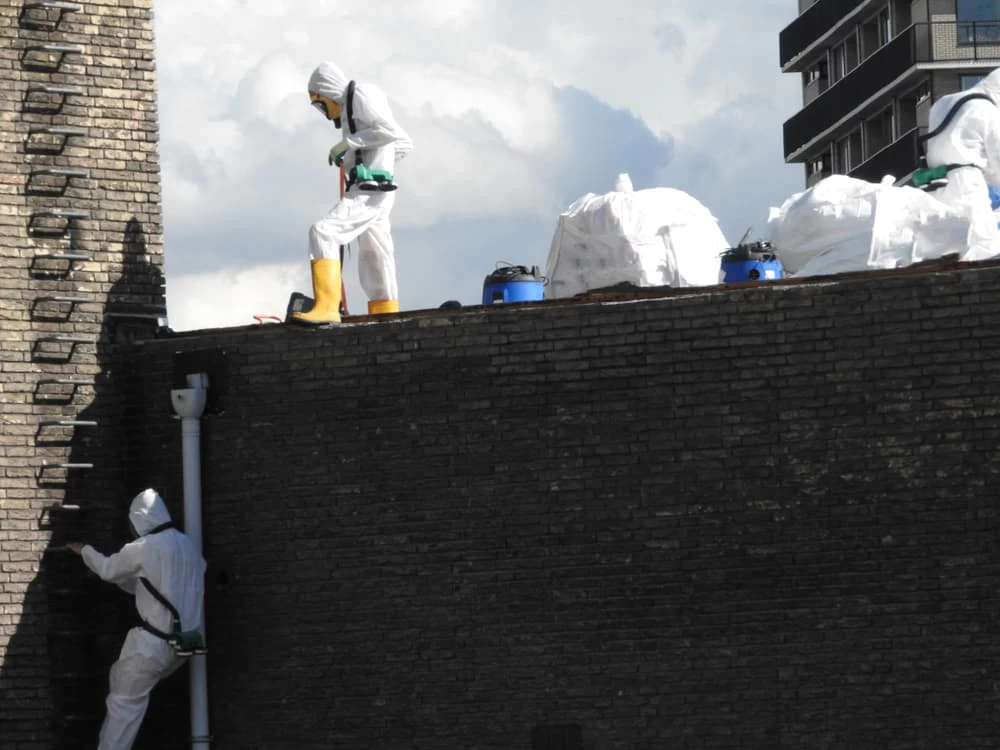
The removal itself is done by licensed handlers under licensed supervision, with proper containment, negative air pressure where required, and regulated disposal through NYS DEC-compliant channels. When the work is done, we conduct post-abatement air clearance testing not as an optional add-on, but as a standard part of the job. You get documentation that shows the space is clean, in writing, with lab results behind it. That’s what protects you when you go to sell the property or pull the next permit.
Asbestos abatement isn’t one thing it depends entirely on where the material is and what condition it’s in. In Upper Red Hook and the broader Red Hook area, the most common scenarios we encounter are pipe and boiler insulation in older heating systems, 9×9 vinyl floor tiles from mid-century renovations, textured and popcorn ceiling applications from the 1960s and 70s, and roofing materials on older farm structures and outbuildings. Each of these requires a different approach, and treating them all the same is how jobs go wrong.
For residential properties which make up the overwhelming majority of Upper Red Hook’s housing stock our work covers full asbestos removal, asbestos tile removal, popcorn ceiling asbestos removal, and insulation abatement. We also handle the testing and inspection phase if you’re not yet sure what you’re dealing with. If you’re renovating a pre-1980 home and want to know what’s there before a contractor starts swinging a hammer, that’s exactly the right time to call.
For properties that have more than one environmental issue which is common in homes this age we also handle mold remediation, lead abatement, and water damage restoration. You don’t have to coordinate three different contractors. We document everything, carry full licensing and insurance, and work directly with your insurance company when coverage applies. For Upper Red Hook homeowners managing older properties on the Albany Post Road corridor or agricultural land near Pitcher Lane, that full-service capability isn’t a luxury it’s just practical.
Does my older Upper Red Hook home actually have asbestos in it?
If your home was built before 1980, there’s a real possibility that asbestos-containing materials are present somewhere in the structure. In Upper Red Hook specifically, a meaningful portion of the housing stock predates World War II and homes along the Old Post Road corridor include structures that go back to the 18th and 19th centuries with subsequent renovation layers added over generations. Asbestos was used heavily in building materials from the 1940s through the late 1970s, so even a home that looks updated on the surface may have original materials underneath newer flooring, behind drywall, or wrapped around pipes in the basement.
The only way to know for certain is to have suspected materials tested by a licensed inspector. Visual identification alone isn’t reliable plenty of materials that contain asbestos look completely ordinary. If you’re planning any renovation work, or if a home inspection flagged a concern, getting a professional assessment before work begins is the right call. It’s a straightforward process, and knowing what you’re dealing with upfront is far better than discovering it mid-project.
How much does asbestos removal typically cost in Dutchess County, NY?
Asbestos removal costs in the New York area generally run between $1,296 and $3,050 for most residential projects, with an average around $2,170. That said, the final number depends heavily on the scope how much material needs to be removed, where it’s located, how accessible it is, and whether the project requires air monitoring or additional containment measures. Costs have also increased 8 to 12 percent recently due to updated regulatory requirements in New York State.
For Upper Red Hook homeowners dealing with older properties, it’s worth understanding that scope can expand once work begins. A basement boiler room with asbestos pipe insulation might also have mold behind a wall, or a crawl space that needs attention. Getting a thorough assessment upfront rather than a low-ball estimate that doesn’t account for what’s actually there tends to save money and frustration in the long run. We give you a clear picture of what the job involves before any work starts, so you’re not dealing with surprises after the fact.
What are the asbestos abatement rules and permit requirements in New York?
In New York, all asbestos abatement work is governed by Industrial Code Rule 56, administered by the NYS Department of Labor’s Asbestos Control Bureau. This regulation requires that any contractor performing abatement work holds a current NYS license, that every handler on the job has completed a minimum 32-hour DOL-approved training course, and that a licensed supervisor oversees the project. Disposal is regulated separately by the NYS Department of Conservation, requiring licensed haulers and approved disposal facilities.
For Upper Red Hook residents, this matters because the hamlet falls under the jurisdiction of the Town of Red Hook’s building department for renovation and demolition permits and that department may require documentation showing asbestos has been properly addressed before issuing a permit for major work. There’s no local municipal enforcement net here the way there might be in a larger city, which means the burden falls on you to hire a contractor whose licensing and documentation will hold up to scrutiny. Verifying your contractor’s NYS license through the DOL before signing anything is always worth the five minutes it takes.
Can I just leave the asbestos alone if it isn't damaged or disturbed?
In some cases, yes asbestos-containing materials that are in good condition and unlikely to be disturbed can sometimes be left in place through a process called encapsulation or simply left undisturbed. This is called operations and maintenance, and it’s a legitimate approach when the material is stable, inaccessible, and not in the path of any renovation work. A licensed inspector can help you determine whether that’s a reasonable option for your specific situation.
The challenge for many Upper Red Hook homeowners is that “undisturbed” is harder to guarantee in older homes that are actively being renovated or that experience the kind of stress older structures face over time. Dutchess County’s freeze-thaw cycles put real pressure on aging materials pipe insulation cracks, floor tiles shift, and roofing on older farm outbuildings degrades. What was stable last year may not be stable after a hard winter. If you’re planning any renovation work at all, or if the material is in a high-traffic area, removal is almost always the more practical long-term choice.
What types of asbestos materials are most common in Red Hook area homes?
The most common asbestos-containing materials we find in pre-1980 homes in the Red Hook area fall into a few categories. Floor tiles particularly the 9×9 inch vinyl tiles that were standard in mid-century construction are one of the most frequent discoveries, often found under newer flooring that was laid directly on top. Pipe and boiler insulation is another major one, especially in older homes with steam or hot water heating systems that haven’t been updated. Textured ceiling applications, including the popcorn ceilings that were popular from the late 1960s through the 1970s, frequently contain asbestos as well.
For properties in Upper Red Hook with older farm structures, barns, or outbuildings and there are more of these here than in most communities roofing materials and corrugated panels are an additional category worth knowing about. Agricultural buildings from the mid-20th century commonly used asbestos-cement roofing products. If you’re repurposing, renovating, or demolishing any older outbuilding on your property, having those materials tested before work begins is not optional under New York law and it’s genuinely the right thing to do for the people doing the work.
How does asbestos abatement affect a home sale in Upper Red Hook, NY?
It affects it significantly, and almost always in your favor when it’s been handled properly. Buyers purchasing older homes in Upper Red Hook and there are a lot of them, given the wave of Hudson Valley in-migration over the last several years are more informed about environmental concerns than buyers were a generation ago. Their home inspectors flag suspected asbestos-containing materials routinely, and their attorneys ask for documentation. An unresolved asbestos concern can delay a closing, reduce a sale price, or kill a deal entirely.
When you have a properly documented abatement on record completed by a licensed NYS contractor, with post-abatement air clearance testing and lab results you remove that uncertainty from the transaction entirely. You can hand a buyer’s attorney a complete file and move on. For Upper Red Hook homeowners who have invested in older properties on the Albany Post Road corridor or surrounding areas, that documentation is a real asset. It signals that the property has been maintained responsibly, and it removes one of the most common friction points in the sale of older Hudson Valley homes.