The homes along Route 32 and Temple Hill Road in Vails Gate were built in an era when asbestos was everywhere and a lot of it is still there. We remove it the right way, with state licensing and independent clearance certification to back it up.
I needed a professional consultation explanation of procedure for safe removal of Asbestos in my apartment complex. Without having an account yet, I was very impressed with the caring, knowledgeable and generous advice offered by Jessica, and will look forward to doing business in the future. Thank you so much! I feel much more informed about a sometimes scary endeavor. Peace. Nancy Silva Mineola, NY.
Mia Munoz
Used this company to clean up some water flood in my house. They were fast and easy to work with.very professional, Would recommend to anyone!
Nini Valle
Great company, had a flood and they responded quickly and efficiently. Billed my insurance company directly. I highly recommend this company!
joe colapietro, jr
I had pipe freeze in my basement right before a snow storm and they made to within an hour to help start the clean up process. They we by our side throughout the entire process and even helped with the insurance company. They did such a great job with the cleanup, repair, remidiation, I contracted them to perform the repairs and finishes in the basement. They came with enough manpower and material to get the job done. Leo and Jessica were nothing but a pleasure to deal with!!
Cristian Arredondo c
I had some water damage in my home and Green Island was able to take care of my issue quickly and effectively. I am very pleased with the work they did. They responded quickly and were very professional.
Michael M
Outstanding service! From the office to the field crew everyone was friendly, helpful and responsive. I highly recommend Green Island Group.
Your Home Gets Cleared. Your Project Moves Forward.
Finding asbestos mid-renovation is one of the most disruptive things that can happen to a homeowner. One day you’re pulling up old flooring or opening a wall in a 1960s home off Route 300, and the next day everything stops. What you need at that point is a licensed contractor who can assess the situation, contain it properly, remove it legally, and hand you the documentation that proves it’s done.
That documentation matters more than most people realize. Whether you’re in the middle of a renovation, preparing to sell, or dealing with damage to an older structure, the clearance certificate issued after abatement is what allows everything else to move forward. Lenders require it. Buyers ask for it. And if you have children in the home which nearly 20% of Vails Gate households do it’s the only thing that gives you real confidence the space is safe again.
The housing stock throughout Vails Gate and the surrounding area is heavily concentrated in the post-World War II through 1970s build era. That’s the exact window when asbestos was used in floor tiles, pipe insulation, popcorn ceilings, roofing materials, and joint compound. If your home was built before 1980 and you’re planning any kind of renovation or repair work, the odds are high that asbestos is somewhere in the picture. The earlier you know, the better positioned you are.
The Credentials Here Are Government-Verified, Not Self-Declared
We’ve been operating for over 12 years as an independently owned environmental remediation contractor based in New York. We hold the New York State Department of Labor Asbestos Contractor License the credential required to legally perform asbestos abatement anywhere in New York State, including Orange County and Vails Gate. That license is publicly verifiable on the NYS DOL website. Any homeowner or landlord in Vails Gate can look it up before making a single call.
Beyond state licensing, we carry dual NYS and NYC Minority/Women-Owned Business Enterprise certification a designation that requires independent government review, financial documentation, and annual renewal. We’ve also performed asbestos abatement for the NYS Office of General Services, the Dormitory Authority of the State of New York, and the NYS Office of Mental Health. These agencies don’t award contracts without a thorough vetting process. That institutional track record is the kind of third-party validation that no amount of marketing can replicate.
If you’re near Temple Hill Road, along the Route 94 corridor, or anywhere in the Vails Gate area, we’re already working in your backyard.
No Guesswork Here's What the Process Actually Looks Like
It starts with testing. Before any removal work begins, the suspect materials in your home get sampled and sent to an accredited laboratory. That test result tells you exactly what you’re dealing with which materials contain asbestos, in what concentration, and what level of abatement is required. You don’t move forward based on assumptions.
Once the scope is confirmed, we file the required notification with the New York State Department of Labor. For standard projects, that notification needs to go in at least 10 business days before work begins and because Vails Gate falls under Town of New Windsor jurisdiction rather than a separate municipal layer, there’s no additional local permit process to navigate beyond what the state requires. The regulatory path here is straightforward: NYS DOL governs the abatement, and the Town of New Windsor handles any related building permits for the renovation work that follows.
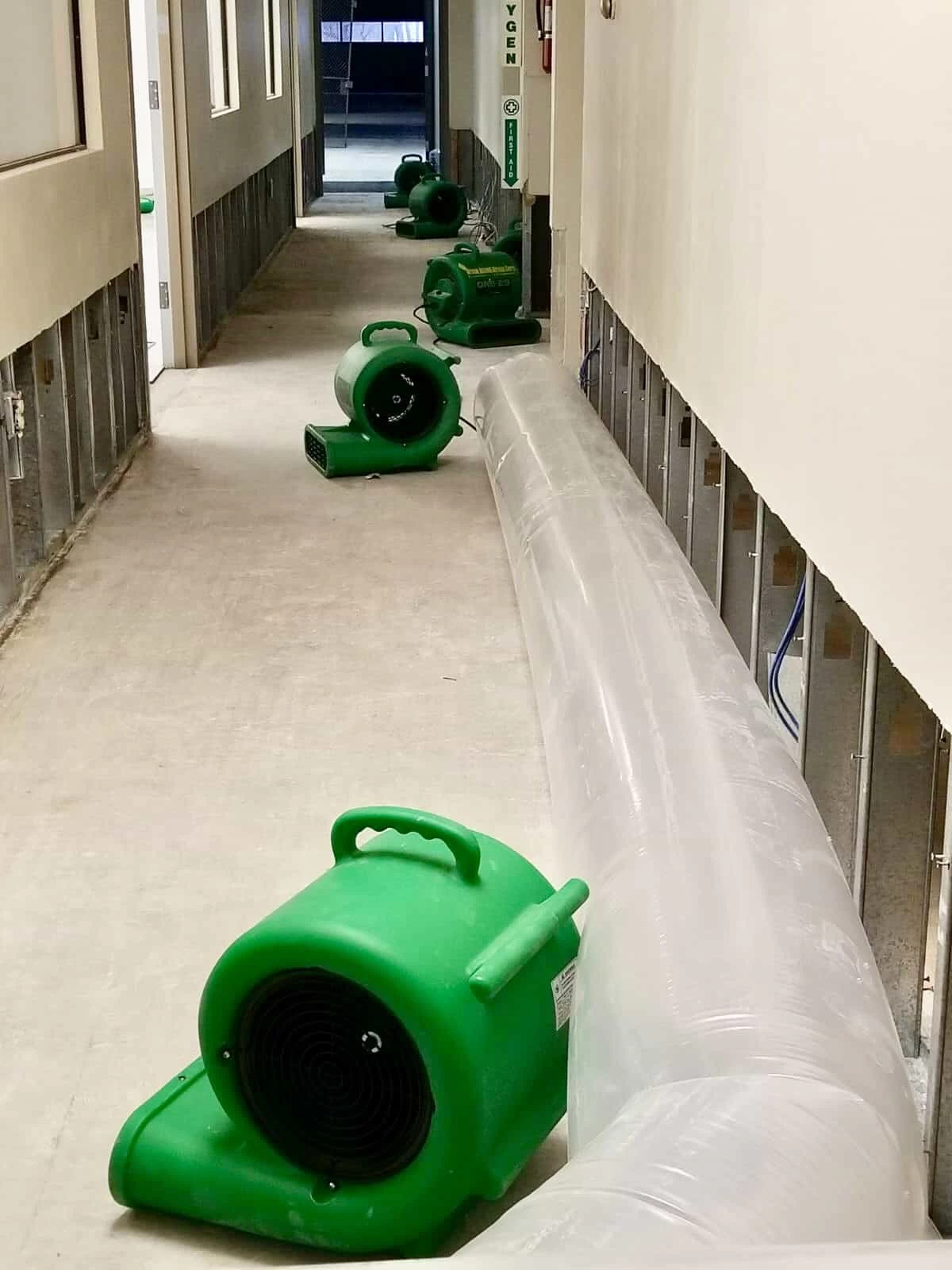
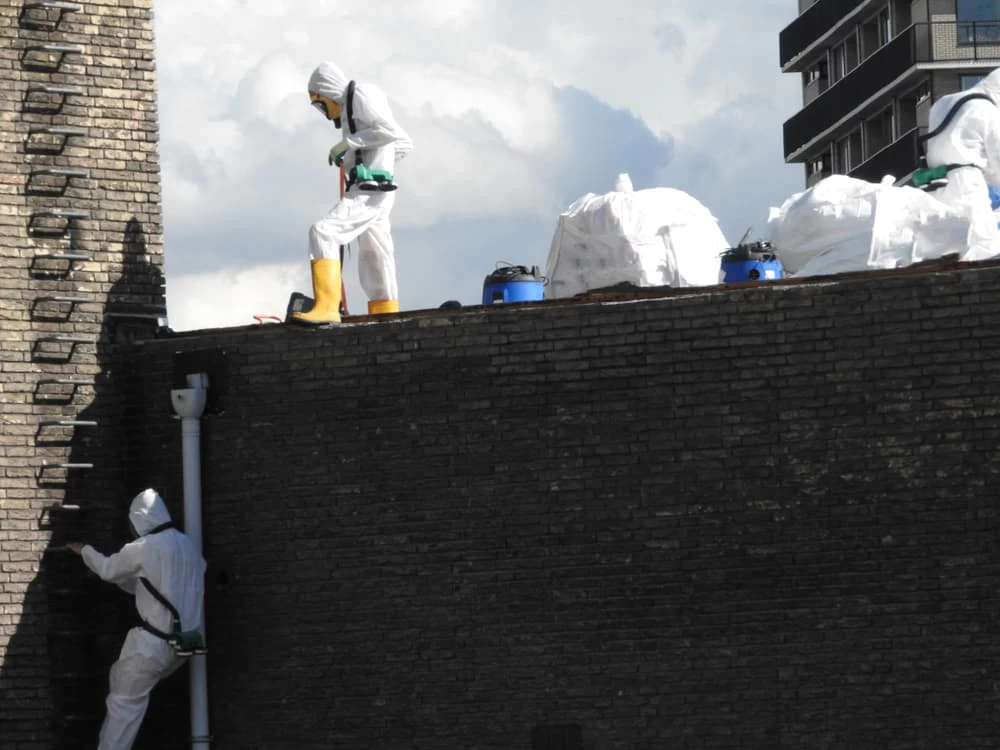
The abatement itself involves full containment of the work area, negative air pressure to prevent fiber migration, and removal by NYS DOL-certified workers following 12 NYCRR Part 56 procedures. When the physical work is complete, an independent industrial hygienist not a Green Island Group employee conducts post-abatement air monitoring. If the air clears, you get a written clearance certificate. That document is the finish line. It’s what your contractor needs to resume work, what your real estate attorney needs to close, and what your family needs to come home.
Asbestos Tile and Popcorn Ceiling Removal, Vails Gate
Every Material Type, Handled Under One Roof
The older homes throughout Vails Gate and the surrounding area tend to carry asbestos in predictable places but that doesn’t make the removal any less specific. The 9-inch and 12-inch vinyl floor tiles common in post-war basements and kitchens are among the most frequently encountered materials in this region. Popcorn acoustic ceilings from the 1960s and 1970s are another common find, particularly in the single-family homes and condo units along the Route 32 corridor. Pipe and boiler insulation in mechanical rooms is a third category that comes up often, especially in homes with original steam or hot water heating systems which are not uncommon in Orange County’s older housing stock.
We handle all of these material types: asbestos tile removal, asbestos popcorn ceiling removal, pipe and duct insulation, roofing felt, transite siding, and joint compound. If your project involves more than one hazard which is common in pre-1980 homes where asbestos, lead paint, and mold can all coexist we manage all of it without requiring you to coordinate multiple contractors. One scope, one timeline, one set of documentation.
For projects where the cost is unexpected or unbudgeted, we offer 0% APR financing for qualifying projects up to $200,000. If your abatement need surfaced during a renovation you’d already committed to financially, that option exists. We also bill insurance directly for projects tied to water damage, fire damage, or storm-related events and we advocate through the claims process so you’re not navigating that on your own.
Do I need a permit for asbestos removal in Vails Gate, NY?
Because Vails Gate is a hamlet within the Town of New Windsor not its own municipality there’s no separate Vails Gate building department or local asbestos ordinance to deal with. The regulatory framework here is state-level. Under New York State Department of Labor 12 NYCRR Part 56, any licensed asbestos abatement contractor working in Orange County must file a notification with the NYS DOL before work begins. For standard projects above threshold quantities, that notification needs to go in at least 10 business days in advance. Emergency notification procedures exist for smaller or urgent projects with shorter timelines.
If your abatement is connected to a broader renovation or demolition project, the Town of New Windsor’s building department handles the related building permits. The key point is that asbestos-containing materials need to be identified and addressed before demolition work proceeds not after. Getting the abatement done in the right sequence keeps your renovation on track and keeps you on the right side of the state’s requirements.
How do I know if my Vails Gate home actually contains asbestos?
The honest answer is that you can’t know for certain without testing. Age is the most reliable indicator if your home was built before 1980, there’s a real possibility that asbestos-containing materials are present somewhere. The homes throughout Vails Gate and the surrounding area are heavily concentrated in the post-World War II through 1970s build era, which is exactly the window when asbestos was used most widely in residential construction.
The materials most commonly found in homes from this period include 9-inch and 12-inch vinyl floor tiles, textured popcorn ceilings, pipe and boiler insulation, roofing felt, and the joint compound used in drywall finishing. None of these materials look any different from non-asbestos versions you can’t identify asbestos by sight. The only way to confirm it is through laboratory analysis of a collected sample. That’s where the process starts, and it’s a straightforward step that gives you a clear answer before any decisions get made.
What happens after the asbestos is removed how do I know the job is actually done?
This is the step that separates a properly completed abatement from one that just looks finished. After the physical removal work is done, an independent industrial hygienist someone who has no financial relationship with us conducts post-abatement air monitoring in the work area. They test the air for residual asbestos fibers and compare the results against regulatory clearance thresholds set by the NYS DOL.
If the air passes, they issue a written clearance certificate. That document is the official confirmation that the abatement met state standards and the space is safe to reoccupy. It’s not a form we fill out ourselves it’s a third-party professional’s certification. For Vails Gate homeowners in the middle of a real estate transaction, this certificate is often the specific document a lender or buyer’s attorney will ask for. For families returning home after abatement, it’s the only objective proof that the job was done correctly.
How much does asbestos abatement cost in the Vails Gate area?
Cost varies depending on the material type, the quantity, the location within the home, and the complexity of the containment required. A small asbestos tile removal in a single room will cost significantly less than a whole-home abatement involving multiple material types across several spaces. For most residential projects in the Orange County area, homeowners should expect costs to range from a few thousand dollars on the lower end to $15,000 or more for larger or more complex scopes.
What matters as much as the number is what’s included. A written estimate should clearly itemize the materials being removed, the containment procedures, the disposal method, and the post-abatement clearance process. If a quote doesn’t include independent air monitoring and a clearance certificate, that’s a gap worth asking about because without that documentation, you don’t have a finished job, you have a partially finished one. We provide written estimates upfront, and for projects where the cost is unbudgeted, 0% APR financing is available for qualifying projects up to $200,000.
Does my family need to leave the house during asbestos abatement in Vails Gate?
In most cases, yes at least for the areas being worked on. During active abatement, the work zone is sealed under negative air pressure with full containment barriers to prevent fiber migration into the rest of the home. Certified workers wear respirators and full protective equipment inside the containment area. For the safety of everyone in the home, occupants especially children should not be present in or near the work area while abatement is in progress.
Whether you need to vacate the entire home depends on the scope and location of the work. A contained basement or mechanical room abatement may allow the rest of the home to remain occupied with proper precautions in place. A larger project involving multiple rooms or HVAC-adjacent materials may require full displacement for the duration. We walk you through the specific containment plan for your project before work begins, so you know exactly what to expect and how long the displacement will last. We operate around the clock, including weekends, which can help compress the timeline when your family needs to get back home.
Can asbestos abatement be covered by homeowners insurance in Orange County?
It depends on how the asbestos was disturbed or discovered. Standard homeowners insurance policies typically don’t cover asbestos removal as a standalone maintenance issue if you simply find old floor tiles or pipe insulation in a home you’ve owned for years, that’s generally not a covered event. However, if asbestos-containing materials were disturbed or damaged as a result of a covered peril a water damage event, a fire, or storm damage to an older structure there’s a reasonable basis to file a claim for the abatement as part of the broader remediation.
Orange County’s older housing stock, combined with the Hudson Valley’s seasonal weather patterns, means storm-related damage to pre-1980 structures is not uncommon. When that damage disturbs asbestos-containing materials, the abatement becomes part of the restoration scope. We bill insurance companies directly and work through the claims process on your behalf so you’re not trying to figure out policy language while also managing a displaced household and a stalled renovation. If there’s a legitimate insurance angle on your project, we’ll help you pursue it.