Valley Stream's Older Homes Deserve More Than a Guess
Most homes in Valley Stream were built when asbestos was standard. If you’re renovating, selling, or just not sure what’s in your walls — get a straight answer before it becomes a real problem.
I needed a professional consultation explanation of procedure for safe removal of Asbestos in my apartment complex. Without having an account yet, I was very impressed with the caring, knowledgeable and generous advice offered by Jessica, and will look forward to doing business in the future. Thank you so much! I feel much more informed about a sometimes scary endeavor. Peace. Nancy Silva Mineola, NY.
Mia Munoz
Used this company to clean up some water flood in my house. They were fast and easy to work with.very professional, Would recommend to anyone!
Nini Valle
Great company, had a flood and they responded quickly and efficiently. Billed my insurance company directly. I highly recommend this company!
joe colapietro, jr
I had pipe freeze in my basement right before a snow storm and they made to within an hour to help start the clean up process. They we by our side throughout the entire process and even helped with the insurance company. They did such a great job with the cleanup, repair, remidiation, I contracted them to perform the repairs and finishes in the basement. They came with enough manpower and material to get the job done. Leo and Jessica were nothing but a pleasure to deal with!!
Cristian Arredondo c
I had some water damage in my home and Green Island was able to take care of my issue quickly and effectively. I am very pleased with the work they did. They responded quickly and were very professional.
Michael M
Outstanding service! From the office to the field crew everyone was friendly, helpful and responsive. I highly recommend Green Island Group.
You stop wondering. That’s the first thing. When asbestos-containing materials are properly identified, removed, and cleared — not just painted over or ignored — you get documentation that says your home is safe. That matters whether you’re raising a family there, putting it on the market, or finally finishing that basement renovation you’ve been putting off.
Valley Stream’s housing stock is almost entirely pre-1960. The Cape Cods and post-war Colonials that define neighborhoods like Gibson and Mill Brook were built during the decades when asbestos showed up in floor tiles, pipe insulation, popcorn ceilings, and roofing materials as a matter of routine. That’s just what was used then. The risk isn’t in the material sitting undisturbed. The risk is in disturbing it without knowing it’s there.
With home values in Valley Stream now exceeding $600,000, the stakes of getting this wrong — during a renovation, a sale, or a post-flood repair in the areas near Hungry Harbor Road — are significant. A proper abatement with documented clearance testing protects your investment, satisfies your buyer’s inspector, and means you’re not handing a health problem to the next family who lives there.
We are a New York State Department of Labor certified asbestos abatement contractor serving Valley Stream and the surrounding Nassau County communities. Our team holds Nassau County Home Improvement Licensing and carries full insurance — not because it sounds good on a webpage, but because working in occupied homes in a dense, transit-connected village like Valley Stream requires accountability at every step.
This isn’t a general contracting company that added asbestos removal to a service menu. Asbestos abatement is the work. We’ve spent years in Valley Stream’s post-war housing stock — the same 1940s and 1950s construction that fills the streets off Rockaway Avenue and throughout the Gibson neighborhood — and we understand what’s typically found, where it hides, and how to handle it correctly under New York State law.
When you call, you’re talking to people who already know what a Valley Stream home from this era looks like inside. That familiarity matters when the goal is accuracy, not guesswork.
No Surprises — Here's Exactly What Happens During Valley Stream Abatement
It starts with an inspection and material sampling. A certified inspector walks the property, identifies suspect materials — floor tiles, pipe wrap, ceiling texture, roofing, joint compound — and collects samples that go to an accredited laboratory. You get real results, not assumptions. In Valley Stream’s older homes, it’s common to find more than one type of asbestos-containing material, so a thorough inspection upfront saves time and money compared to discovering something mid-project.
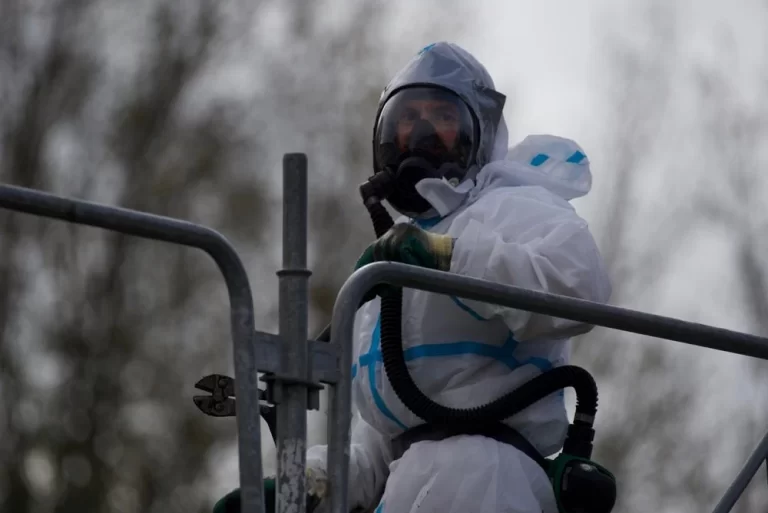
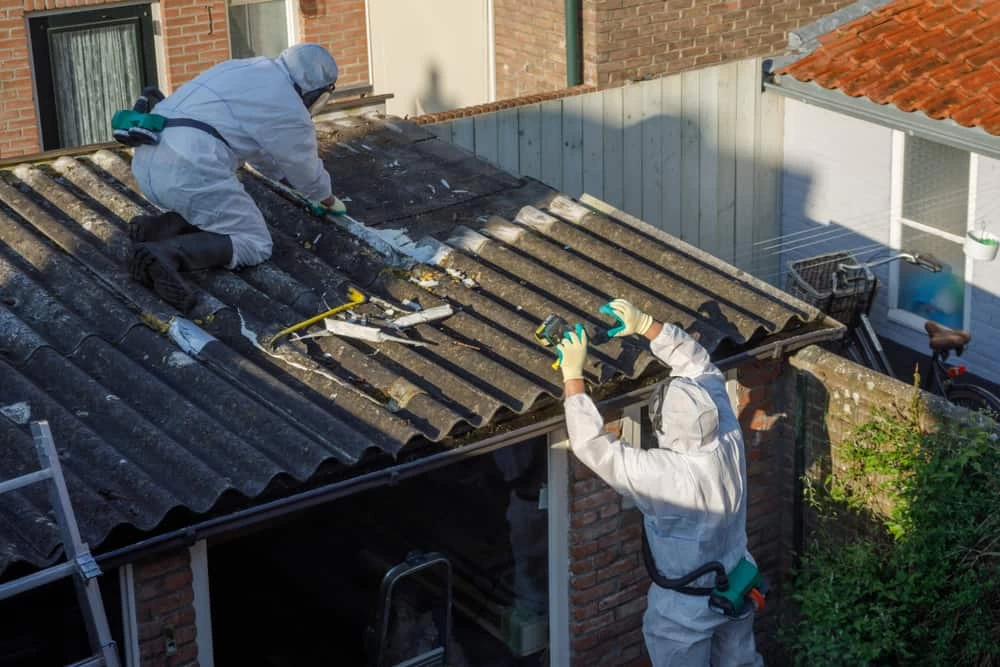
Once the lab confirms what’s there, the abatement plan gets built around what New York State Department of Labor regulations require for that specific material and quantity. Some materials qualify for encapsulation. Others require full removal with negative air pressure containment, personal protective equipment, and sealed disposal in approved waste containers. We handle the NYSDOL notification requirements and coordinate with Valley Stream’s Building Department when permits are required — that’s not your problem to figure out.
After the work is done, air clearance testing is performed by an independent party. That test confirms the space is safe before containment is removed and before you or your family re-enters the area. You receive the clearance documentation — which your real estate agent, your contractor, or your own peace of mind may require. That’s the full process, start to finish.
Every Material Type Found in Valley Stream Homes, Handled Correctly
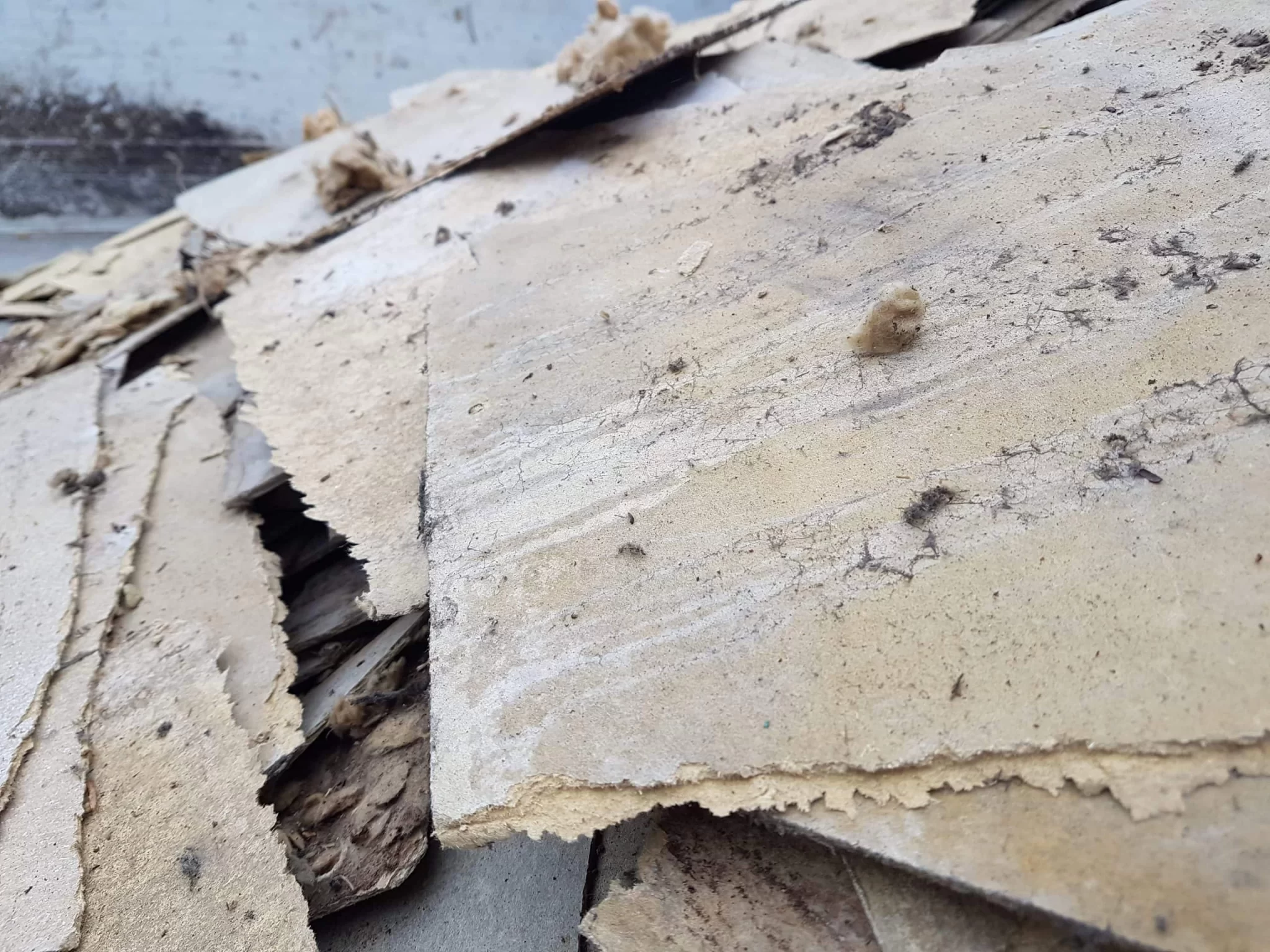
The most common asbestos-containing materials we find during abatement work in Valley Stream are 9-inch-by-9-inch vinyl asbestos floor tiles — a standard feature in kitchens, hallways, and basements of homes built between the 1940s and 1960s. These tiles are often hidden under carpet or newer flooring, and the adhesive mastic beneath them frequently contains asbestos as well. Both the tile and the mastic require proper handling and disposal under state law.
Asbestos popcorn ceiling removal is another frequent request in Valley Stream. Textured ceilings were applied widely through the 1970s, and Valley Stream’s post-war homes have them throughout. Before any sanding, painting, or demo touches that surface, it needs to be tested. If asbestos is confirmed, we perform full wet removal with containment and proper disposal — not a scrape-and-hope approach. Pipe and boiler insulation removal is also common in homes with older heating systems, which describes a large percentage of the village’s housing stock.
For Valley Stream homeowners near the Mill Brook area or the southern neighborhoods that experienced flooding during Hurricane Sandy, water-damaged ACMs present an added urgency — saturated or deteriorating asbestos materials are more likely to release fibers and require immediate professional attention. Whatever the material or the circumstance, the scope of work is scoped accurately, explained clearly, and completed to full NYSDOL compliance before any clearance certificate is issued.
Does my Valley Stream home likely have asbestos if it was built before 1960?
Statistically, yes — and in most cases, more than one type. Homes built in Valley Stream before 1960 fall squarely within the era when asbestos was used as a standard construction material across nearly every building system. Floor tiles, pipe insulation, ceiling texture, roofing shingles, siding, and joint compound all commonly contained asbestos during this period. The Gibson neighborhood and the streets developed through the 1940s and 1950s throughout the village represent exactly this type of housing stock.
The presence of asbestos doesn’t automatically mean danger. Asbestos-containing materials that are intact and undisturbed generally don’t pose an immediate health risk. The concern arises when those materials are damaged, deteriorating, or about to be disturbed by renovation work. If you’re planning any project that involves demo, flooring removal, ceiling work, or HVAC updates in a pre-1960 Valley Stream home, testing before you start is the right move — not something to circle back to after the fact.
How much does asbestos removal typically cost for a Nassau County home?
Asbestos removal costs in Nassau County vary depending on the type of material, the quantity, the accessibility of the area, and the specific disposal and documentation requirements for that project. For a single-room floor tile removal in a Valley Stream home, you might be looking at a few hundred dollars on the lower end. A more involved project — pipe insulation throughout a basement, a full ceiling removal, or multiple material types across several rooms — can run into the thousands.
What drives cost up isn’t the labor alone. It’s the containment setup, the certified disposal, the air clearance testing, and the documentation required under New York State law. Cutting corners on any of those isn’t just a compliance risk — it’s a liability risk, especially in a real estate market where Valley Stream homes are selling above $600,000 and buyers’ inspectors are thorough. Get an itemized estimate so you understand exactly what you’re paying for before any work begins.
Do I need a permit for asbestos abatement work in Valley Stream, NY?
It depends on the scope of the project. New York State Department of Labor regulations require notification for asbestos abatement projects that exceed certain thresholds — and those requirements apply regardless of whether you’re in Valley Stream or anywhere else in Nassau County. What makes Valley Stream slightly different from unincorporated Nassau County communities is that it has its own incorporated village Building Department, which enforces both New York State Building codes and the Village of Valley Stream’s local codes.
For renovation or demolition projects that disturb asbestos-containing materials, your abatement contractor needs to be NYSDOL-certified, and the project may require permits from the village’s Building Department depending on the scope of the surrounding construction work. We handle the NYSDOL notification process and coordinate with the local Building Department when applicable — so you’re not left trying to figure out which forms go where. If you’re also working with a general contractor on a larger renovation, we can coordinate directly with them to keep the project on schedule.
What happens if asbestos is found during a home inspection before closing?
It’s one of the more stressful moments in a real estate transaction, but it’s also more common than most buyers and sellers expect — especially in Valley Stream where the majority of homes were built before 1980. When asbestos is flagged during a pre-sale inspection, the transaction doesn’t have to fall apart. What it does require is a fast, accurate response.
Typically, the seller will need to either remediate the identified materials before closing or negotiate a price adjustment that accounts for the buyer handling it post-sale. If remediation is the path forward, timing matters. We can move quickly on abatement scoped for real estate transactions — completing the work, obtaining the air clearance certificate, and providing the documentation your real estate attorney or title company needs to satisfy the inspection contingency. In Valley Stream’s competitive market, where deals move fast and buyers have options, having a contractor who understands the real estate timeline — not just the abatement process — makes a real difference.
Can I stay in my home while asbestos abatement is being done?
In most cases, no — at least not in the area where the work is being performed. During asbestos abatement, the work zone is sealed with plastic sheeting and placed under negative air pressure using HEPA-filtered equipment. This containment is designed to prevent fibers from migrating to other parts of the home, but it also means the affected area is off-limits until air clearance testing confirms it’s safe.
Whether you can remain in other parts of the home depends on the size of the project and the layout of the property. For a contained single-room or basement project in a Valley Stream Cape Cod or Colonial, it’s sometimes possible to remain in the home while work is underway in a fully sealed area. For larger projects — or in smaller homes where the work zone is near primary living spaces — temporary relocation during the abatement and clearance phase is the safer and more practical approach. This is something to discuss during the initial inspection so you can plan accordingly, especially if you have children or family members with respiratory sensitivities.
Does flooding or water damage make asbestos in a Valley Stream home more dangerous?
Yes, and it’s a real concern for homeowners in the southern parts of Valley Stream — particularly the Mill Brook area and neighborhoods near Hungry Harbor Road that experienced stream overflow and storm surge during Hurricane Sandy. When asbestos-containing materials are saturated or physically damaged by water, they’re far more likely to become friable — meaning they can crumble and release fibers into the air. A floor tile that’s been sitting intact for 60 years becomes a different kind of problem once it’s been submerged and dried out multiple times.
Post-flood remediation and reconstruction work in Valley Stream’s flood-prone neighborhoods often uncovers asbestos materials that were never disturbed before. Waterlogged pipe insulation, damaged ceiling tiles, and deteriorating floor coverings are common findings in basements and crawl spaces that took on water. If your home was affected by flooding and you’re planning any repairs or reconstruction, having an asbestos inspection done before demolition work begins isn’t optional — it’s the step that keeps a manageable situation from becoming a serious health and legal issue. We are familiar with the specific conditions in these neighborhoods and can assess water-damaged materials accurately.