When Your Historic Washington Property Hides a Hazard
Washington’s pre-war estates and century-old homes are beautiful and statistically, many of them contain asbestos. We provide licensed asbestos abatement in Washington, NY so your renovation doesn’t become a liability.
I needed a professional consultation explanation of procedure for safe removal of Asbestos in my apartment complex. Without having an account yet, I was very impressed with the caring, knowledgeable and generous advice offered by Jessica, and will look forward to doing business in the future. Thank you so much! I feel much more informed about a sometimes scary endeavor. Peace. Nancy Silva Mineola, NY.
Mia Munoz
Used this company to clean up some water flood in my house. They were fast and easy to work with.very professional, Would recommend to anyone!
Nini Valle
Great company, had a flood and they responded quickly and efficiently. Billed my insurance company directly. I highly recommend this company!
joe colapietro, jr
I had pipe freeze in my basement right before a snow storm and they made to within an hour to help start the clean up process. They we by our side throughout the entire process and even helped with the insurance company. They did such a great job with the cleanup, repair, remidiation, I contracted them to perform the repairs and finishes in the basement. They came with enough manpower and material to get the job done. Leo and Jessica were nothing but a pleasure to deal with!!
Cristian Arredondo c
I had some water damage in my home and Green Island was able to take care of my issue quickly and effectively. I am very pleased with the work they did. They responded quickly and were very professional.
Michael M
Outstanding service! From the office to the field crew everyone was friendly, helpful and responsive. I highly recommend Green Island Group.
Your Washington Renovation Moves Forward Safely and on Schedule
When asbestos gets discovered mid-project, everything stops. The general contractor steps back, the schedule falls apart, and suddenly you’re managing a compliance problem on top of a renovation. That’s the reality for a lot of Washington homeowners especially those working on pre-war estate properties along Route 44, where more than a third of homes were built before 1939. The longer that pause drags on, the more it costs.
What proper asbestos abatement actually gives you is momentum back. Once the material is removed, contained, and cleared by a licensed contractor, your renovation can proceed without the legal exposure or the health risk hanging over it. For Washington’s part-time residents managing projects from the city, that clearance documentation also means you have written proof your property is safe something that matters when it comes time to sell.
Washington’s freeze-thaw winters don’t help either. Older pipe insulation, floor tiles, and roofing materials that were once stable can crack and crumble after repeated cold seasons, turning a manageable situation into one that needs immediate attention. Catching it early and handling it right keeps your property protected and your project on track.
Licensed Asbestos Contractor Serving Washington, NY
5,000 Projects In. We Know What We're Looking At.
We’ve been doing asbestos abatement work across New York State for over 12 years. More than 5,000 completed projects. That’s not a number to fill space it means our team has seen what’s inside the walls of pre-war carriage houses, converted barns, and estate-scale manor homes. The kind of properties that define the Town of Washington.
We’re MWBE-certified and approved as a contractor for New York State agencies credentials that matter when your property is significant and the work needs to hold up to scrutiny. Whether your Washington home is off Route 44 near Mabbettsville or on a private lane deeper into the hills, our team knows Dutchess County’s regulatory environment and has active experience in the Millbrook market specifically.
You also get one point of contact for the full scope. If asbestos leads to mold in the basement or water damage in a crawl space which it often does in older Washington properties we handle that too. No coordinating between three different contractors.
It usually starts with a call often mid-renovation, when something unexpected turns up behind a wall or under a floor. From there, the first step is a licensed inspection to confirm whether asbestos-containing materials are present and assess their condition. Under NYS Industrial Code Rule 56, any building in Washington constructed before 1974 requires a licensed asbestos survey before renovation or demolition work can legally proceed. That covers the overwhelming majority of properties in this town.
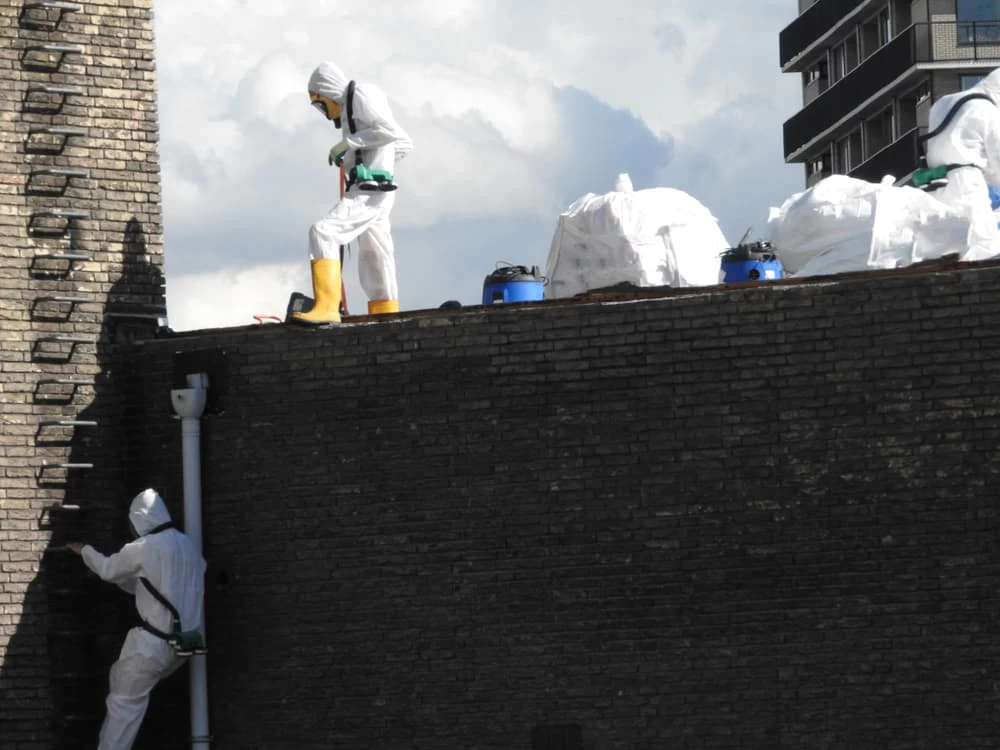
Once the assessment is complete, we put together a clear scope of work. Containment is set up to isolate the affected area whether that’s a basement boiler room, a service kitchen with original floor tiles, or a section of original plaster. Removal is performed by NYS DOL-certified handlers following strict protocols for packaging, transport, and disposal at an approved facility. The work area stays sealed throughout.
After removal, air clearance testing is conducted before the space is reopened. You receive the documentation lab-backed results confirming the area is safe to reoccupy. That paperwork matters for your contractor, your insurance carrier, and any future buyer of the property. We keep the process moving so your project doesn’t stay on hold longer than necessary.
What's Included When Washington's Oldest Homes Need It Most
Asbestos doesn’t show up the same way in every property, and Washington’s housing stock makes that especially true. In the estate and equestrian properties throughout the town, you might be dealing with asbestos pipe insulation wrapped around an original heating system, asbestos floor tiles in a service kitchen or utility room, textured ceilings in older sections of a manor home, or roofing and siding on an outbuilding that hasn’t been touched in decades. Each of those scenarios requires a different approach.
We handle the full range inspection and testing, complete asbestos removal, encapsulation assessment where removal isn’t the right call, cleanup, proper disposal, and post-abatement air clearance documentation. For Washington homeowners navigating a renovation on a historic property, that last piece is especially important. The NYS DOL Albany regional office enforces Code Rule 56 compliance across Dutchess County, and having a licensed contractor who understands those requirements and documents everything protects you on both the regulatory and the real estate side.
If your project also involves mold remediation, water damage, or demolition work, we offer those services through the same team. In older Washington properties, these issues tend to travel together. Having one contractor who can assess and address the full picture saves time, reduces friction, and keeps your renovation moving in the right direction.
Does my Washington, NY home actually need an asbestos survey before renovation work starts?
Yes and in New York State, this isn’t optional. Under NYS Industrial Code Rule 56, any building whose construction commenced before 1974 requires a licensed asbestos survey before any renovation, demolition, remodeling, or repair work begins. In Washington, that applies to the vast majority of residential properties. Millbrook’s housing stock is documented as among the oldest in the country, with over a third of homes built before 1939 well within the window of peak asbestos use in American construction.
The survey has to be conducted by a licensed professional, and the results determine what happens next. If asbestos-containing materials are found, removal must be performed by a NYS DOL-licensed contractor before the renovation proceeds. Skipping the survey isn’t a calculated risk it’s a violation that can result in stop-work orders, fines, and serious liability exposure. If you’re planning any work on a Washington property this season, the survey is the first call you make.
What does asbestos abatement typically cost for a Dutchess County property?
The statewide average for asbestos removal in New York runs around $2,170, with most residential projects landing between $1,296 and $3,050. That range covers straightforward jobs a single room, a contained section of flooring, or a limited pipe insulation removal. For the estate-scale properties common in Washington, the number often goes higher. A large basement mechanical system with original pipe wrap, multiple rooms of pre-war floor tile, or asbestos materials spread across an outbuilding and a main house are all scenarios that push the total up.
The variables that affect cost most are the type of material, how much of it there is, where it’s located, and whether it’s friable meaning it can be crumbled by hand or still intact. Friable material is more hazardous and more labor-intensive to remove safely. The best way to get an accurate number for your specific property is a licensed inspection first. We offer free assessments, so you’re not guessing at a budget before you know what you’re actually dealing with.
Can I stay in my home while asbestos removal is being done?
In most cases, yes but it depends on where the asbestos is located and how extensive the removal is. For a contained job in a basement utility room or a single section of flooring, the work area is sealed off and the rest of the home remains accessible. For larger removals that affect main living areas, HVAC systems, or multiple rooms, temporary relocation is often the safer and more practical choice.
For Washington’s part-time residents, this question sometimes answers itself if you’re managing the project remotely and not in residence during the work, the logistics are simpler. What matters most is that the containment is properly set up before work begins and that air clearance testing confirms the space is safe before anyone reoccupies it. We walk you through what’s realistic for your specific property and scope before the job starts, so there are no surprises about what the timeline looks like.
What types of asbestos materials are most common in Washington, NY's older homes?
Given that so much of Washington’s housing stock predates 1940, the materials that come up most often are the ones that were standard in American construction during that era. Pipe and boiler insulation is extremely common in older estate properties heating systems from that period were almost universally wrapped in asbestos-containing materials, and many of those systems are still in place. Nine-inch floor tiles in kitchens, basements, and service areas are another frequent find, as is asbestos-containing plaster in older sections of manor homes.
Outbuildings are worth paying attention to as well. Carriage houses, converted barns, and detached garages on Washington’s larger properties often have asbestos roofing shingles or siding that hasn’t been assessed in decades. These materials can be stable when intact but become a hazard when they start to deteriorate and Washington’s freeze-thaw winters accelerate that process. A licensed inspection will identify exactly what’s present and in what condition, so you know what actually needs to be addressed versus what can be monitored.
What happens if asbestos is found unexpectedly during an active renovation in Washington, NY?
Work stops immediately. Under NYS Code Rule 56, if asbestos-containing materials are disturbed or discovered during a renovation, the affected area must be vacated and isolated right away. Your general contractor cannot make the call on how to proceed a licensed asbestos contractor has to be brought in to assess the situation and handle the cleanup. This is not a gray area, and it applies regardless of how small the discovery seems.
This scenario happens regularly in Washington, where renovation projects on older estate properties frequently uncover materials that weren’t on anyone’s radar. The key is response time. We’re available 24/7 and have documented response times as fast as two hours which matters when your renovation crew is standing by and every day of delay has a real cost. The faster a licensed contractor can assess, contain, and clear the situation, the sooner the project gets back on track. If you’re mid-renovation and something unexpected turns up, call before doing anything else.
How do I know the asbestos abatement work was done correctly and my property is actually safe?
The answer is documentation specifically, post-abatement air clearance testing conducted by a qualified professional after the removal is complete. This isn’t a visual inspection or a contractor’s word that the job is done. It’s laboratory-backed air sampling that confirms asbestos fiber levels in the treated area are within safe limits before the space is reopened. In New York, this clearance documentation is part of proper Code Rule 56 compliance, and it’s what a licensed contractor provides at the end of a legitimate abatement project.
For Washington homeowners especially those managing estate properties that will eventually be sold this paperwork is a tangible asset. Sophisticated buyers and their attorneys will ask about the history of any known asbestos in a property, and having a complete file of licensed inspection results, abatement records, and air clearance reports is the difference between a clean disclosure and a negotiating problem. We provide full documentation at the close of every project, so you have exactly what you need for your own peace of mind and for any future transaction involving the property.