When Older Shawangunk Homes Hide More Than You Bargained For
Asbestos abatement in Watchtower, NY doesn’t have to derail your renovation or leave you guessing. We’re NYS DOL licensed, we handle the permits, and we give you written air clearance when the job is done.
I needed a professional consultation explanation of procedure for safe removal of Asbestos in my apartment complex. Without having an account yet, I was very impressed with the caring, knowledgeable and generous advice offered by Jessica, and will look forward to doing business in the future. Thank you so much! I feel much more informed about a sometimes scary endeavor. Peace. Nancy Silva Mineola, NY.
Mia Munoz
Used this company to clean up some water flood in my house. They were fast and easy to work with.very professional, Would recommend to anyone!
Nini Valle
Great company, had a flood and they responded quickly and efficiently. Billed my insurance company directly. I highly recommend this company!
joe colapietro, jr
I had pipe freeze in my basement right before a snow storm and they made to within an hour to help start the clean up process. They we by our side throughout the entire process and even helped with the insurance company. They did such a great job with the cleanup, repair, remidiation, I contracted them to perform the repairs and finishes in the basement. They came with enough manpower and material to get the job done. Leo and Jessica were nothing but a pleasure to deal with!!
Cristian Arredondo c
I had some water damage in my home and Green Island was able to take care of my issue quickly and effectively. I am very pleased with the work they did. They responded quickly and were very professional.
Michael M
Outstanding service! From the office to the field crew everyone was friendly, helpful and responsive. I highly recommend Green Island Group.
The moment a contractor pulls up old flooring or cuts into a wall in a pre-1980 home near Watchtower, the project can stop dead. That’s the reality for a lot of homeowners in the Wallkill and Pine Bush corridor older ranch homes, farmhouses, and mid-century split-levels that look perfectly fine until someone starts renovating. When suspect material shows up, you need answers fast, not a week of phone tag with contractors who may or may not be licensed to touch it.
Here’s what actually changes when you work with a licensed abatement team: the material is removed correctly the first time, documented the way New York State requires, and confirmed safe with post-abatement air monitoring. You’re not left wondering if the job was done right. You get written clearance results something that matters enormously if you’re selling a property in the Shawangunk area or refinancing with a lender who asks for environmental documentation.
The other thing that changes is your timeline. The freeze-thaw cycles that hit southern Ulster County hard every winter crack old pipe insulation and disturb materials that had been sitting stable for decades. When that happens, you’re not dealing with a planned renovation you’re dealing with an emergency. Having a contractor who can respond, contain, and clear the area without a weeks-long wait is the difference between a manageable situation and one that spirals.
Licensed Asbestos Contractor Serving Watchtower, NY
One License, One Call, No Runaround
We hold the NYS DOL Asbestos Handling License the specific state credential that legally authorizes asbestos work in New York. Not a general contractor license. Not just an OSHA card. The actual license that New York State requires before anyone touches asbestos-containing material at scale. That distinction matters more than most homeowners realize until they’re already in the middle of a job and something goes wrong.
We serve Ulster County, the Hudson Valley, Long Island, and New York City and the Watchtower and Wallkill area is established territory for us, not a new market. We know the building stock in the Town of Shawangunk. We know what Route 300-area homes from the 1960s and 70s tend to hide. And we handle the NYS DOL notification, permit paperwork, and air clearance documentation from start to finish, so you’re not piecing together a regulatory process you’ve never navigated before.
What you also get is a single point of contact across multiple scopes. If the asbestos situation is connected to water damage, mold, or a demolition project, we handle all of it. That’s not a small thing when you’re in a rural area where coordinating three separate specialty contractors adds weeks to an already stressful situation.
From First Call to Written Clearance Here's the Sequence
It starts with a site assessment. A certified asbestos investigator comes to your property, identifies the suspect materials, and collects samples for laboratory analysis. In the Town of Shawangunk and surrounding areas, this step frequently turns up asbestos in places homeowners didn’t expect the black mastic adhesive under old floor tiles, the insulation wrapped around a boiler, the textured ceiling in a room that hasn’t been touched in thirty years. The assessment tells you exactly what you’re dealing with before any decisions are made.
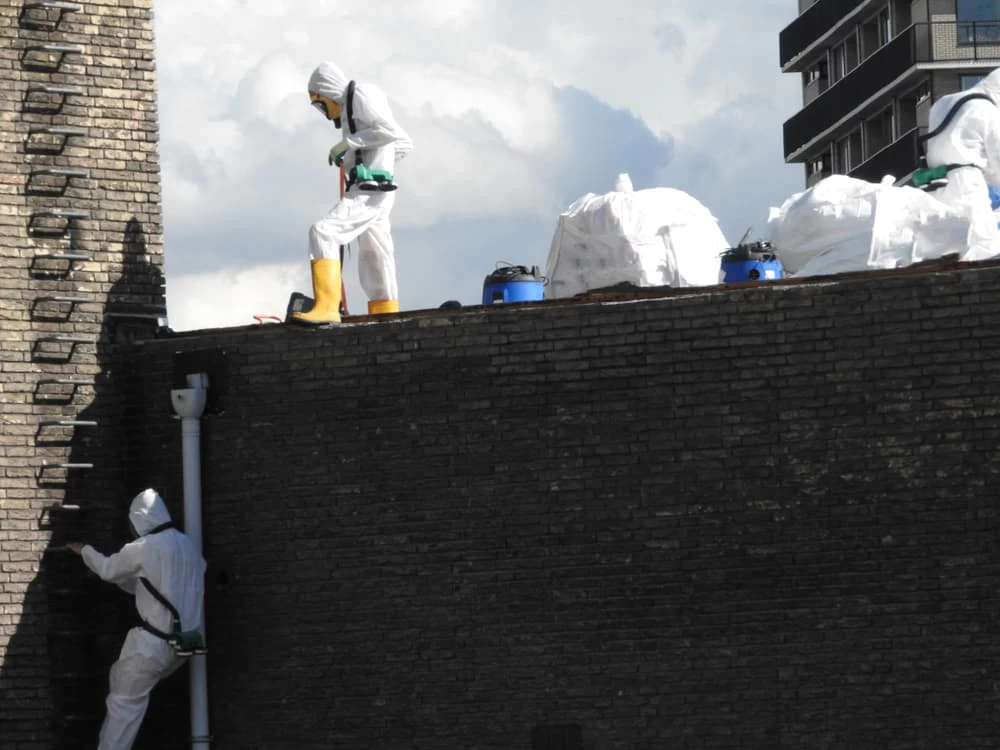
Once the scope is confirmed, we file the required advance notification with the NYS Department of Labor a mandatory step under Industrial Code Rule 56 that many property owners in rural Ulster County don’t know about until they’re already mid-project. The abatement itself is performed under full containment with negative-pressure enclosures and HEPA filtration, meaning the rest of your home or building stays unaffected while the work is done in the affected area.
After removal, air monitoring is conducted to confirm that fiber levels are within safe limits. You receive written documentation of those results. That clearance report is yours to keep for your own records, for your insurance file, or for a future buyer who wants to know the property’s history. The job isn’t done until that report is in your hands.
Asbestos Tile and Popcorn Ceiling Removal, Watchtower NY
What's Covered and Why It's Built for This Area's Homes
We handle the full range of residential and commercial asbestos abatement floor tile and mastic removal, pipe and boiler insulation, popcorn and textured ceiling removal, attic insulation including vermiculite, joint compound, roofing materials, and asbestos cement siding. For homes in the Wallkill and Pine Bush area, the most common jobs involve 9×9 vinyl floor tiles with asbestos-containing black adhesive underneath, and pipe insulation on older heating systems both extremely common in the mid-century housing stock throughout the Town of Shawangunk.
For properties on or near the Watchtower CDP area, where some structures date to the 1960s and 1970s, asbestos remediation often comes up during renovation or infrastructure upgrades on older institutional and farm buildings. The process for these larger-scope commercial jobs follows the same NYS DOL framework licensed crews, full containment, documented disposal with manifests maintained for thirty years but the scale and coordination are handled accordingly.
Every job includes permit and notification management, containment and HEPA filtration during removal, licensed waste transport and disposal, and post-abatement air clearance testing with written results. If your situation involves insurance storm damage that disturbed asbestos roofing, for example, or a pipe failure that cracked old insulation we coordinate directly with your carrier so you’re not managing that process on top of everything else.
Do I need a licensed contractor for asbestos removal in Watchtower, NY?
Yes and the licensing requirement in New York State is more specific than most people realize. Under NYS Industrial Code Rule 56, any asbestos disturbance involving 10 square feet or more of material (or 25 linear feet for pipe insulation) must be performed by a contractor holding a valid NYS DOL Asbestos Handling License. This is not the same as a general contractor license, and it’s not satisfied by an OSHA certification alone. It’s a distinct, state-issued credential that authorizes the work legally.
For homeowners in Watchtower, Wallkill, Pine Bush, and the broader Town of Shawangunk, this matters because unlicensed work creates real exposure not just to asbestos fibers, but to legal liability. If an unlicensed contractor does the work and it’s later discovered during a home sale or inspection, you may be responsible for the cost of re-remediation, and the original work won’t be documentable in any way that satisfies a lender, buyer, or insurer. We hold the NYS DOL license and provide documentation that stands up to scrutiny.
How much does asbestos removal typically cost in Ulster County, NY?
Cost in New York State runs higher than national averages, and that’s not arbitrary it reflects the real requirements of licensed abatement here. NYS DOL notification fees, mandatory air monitoring, HEPA containment systems, and licensed disposal with 30-year manifest records all add to the baseline cost of the job. For a small residential project like a single room of floor tile removal, you’re generally looking at $1,500 to $3,500. For larger scopes pipe insulation throughout a basement, a full popcorn ceiling in multiple rooms, or a combination of materials costs can range from $5,000 to $15,000 or more depending on what’s found.
The factor that drives cost most significantly is scope, which is why the initial assessment matters so much. In older homes in the Shawangunk and Wallkill area especially those built in the 1960s and 70s it’s common to find asbestos in more than one material once the investigation begins. Getting a thorough assessment upfront means no surprises mid-project. We provide detailed estimates after the assessment so you know exactly what you’re committing to before any work starts.
What happens if asbestos is found during a home renovation near Watchtower, NY?
Work stops at least on the affected area until the material is assessed and either confirmed safe or properly abated. This is the situation that catches a lot of homeowners off guard, especially those who are renovating older properties in the Wallkill and Pine Bush corridor and didn’t budget for an asbestos discovery mid-project. If your general contractor pulls up flooring, opens a wall, or disturbs pipe insulation and finds suspect material, they are legally required to stop work on that scope until a licensed abatement contractor evaluates and clears it.
The good news is that the process, while regulated, doesn’t have to take months. We can typically get to a site for an assessment quickly, file the required NYS DOL advance notification, and schedule abatement within a timeline that keeps your renovation moving. The key is not trying to work around it disturbing asbestos-containing material without proper containment and licensing creates health risk and legal exposure that far outweighs the cost of doing it right.
Do I have to leave my home during asbestos abatement in Shawangunk, NY?
It depends on the scope and location of the work. For a contained job say, floor tile removal in a basement or a single bathroom it’s often possible to remain in other parts of the house while work is underway, because the abatement area is sealed under negative pressure with HEPA filtration to prevent fibers from migrating. For larger projects, or work in central living areas like main floor rooms or HVAC-connected spaces, temporary displacement may be the safer and more practical choice.
We walk through this with every client before work begins, so you’re not guessing. We’ll tell you specifically what the containment setup looks like for your project, which areas of the home will be affected, and how long the work is expected to take. For families in the Wallkill and Shawangunk area who need to plan around school schedules, work, or other contractors on-site, that kind of clear communication upfront makes a real difference in how manageable the whole process feels.
Can asbestos in old floor tiles or popcorn ceilings be left alone instead of removed?
Sometimes, yes and a licensed contractor will tell you honestly when that’s the case. Asbestos-containing materials that are in good condition and not being disturbed don’t necessarily pose an immediate health risk. This is called “encapsulation” or “management in place,” and it’s a legitimate option for materials that aren’t being renovated or demolished. If your 1970s floor tiles are intact, covered by another floor layer, and you have no plans to disturb them, removal may not be the right call right now.
Where it becomes non-negotiable is when you’re renovating, selling, or when the material is already deteriorating. In the older housing stock throughout the Town of Shawangunk, freeze-thaw cycles and age-related deterioration can cause previously stable materials particularly pipe insulation on older boilers to crack and become friable, which is when fibers become airborne. At that point, management in place is no longer a safe option. A proper assessment will tell you which category your materials fall into, and we’ll give you a straight answer either way.
How do I know the asbestos abatement job was actually done correctly in my home?
The clearest answer is post-abatement air clearance testing and written documentation of the results. After every abatement job, we conduct air monitoring to confirm that asbestos fiber levels in the treated area are within the limits required by New York State. You receive a written clearance report that shows the test results. That’s not just peace of mind it’s a document you can show a home inspector, a real estate buyer, a lender, or an insurance adjuster if the question ever comes up.
This matters especially in the Watchtower and Wallkill area, where real estate transactions on older properties are increasingly common and buyers are more likely to ask for environmental documentation before closing. A verbal assurance from a contractor isn’t the same as a lab-verified clearance report. The documentation we provide closes that loop completely you know the work was done, you know it was done right, and you have the paperwork to prove it to anyone who asks.