If your Waterloo Mills home was built before 1980, asbestos abatement isn’t a maybe it’s a real conversation worth having before your next renovation goes sideways.
I needed a professional consultation explanation of procedure for safe removal of Asbestos in my apartment complex. Without having an account yet, I was very impressed with the caring, knowledgeable and generous advice offered by Jessica, and will look forward to doing business in the future. Thank you so much! I feel much more informed about a sometimes scary endeavor. Peace. Nancy Silva Mineola, NY.
Mia Munoz
Used this company to clean up some water flood in my house. They were fast and easy to work with.very professional, Would recommend to anyone!
Nini Valle
Great company, had a flood and they responded quickly and efficiently. Billed my insurance company directly. I highly recommend this company!
joe colapietro, jr
I had pipe freeze in my basement right before a snow storm and they made to within an hour to help start the clean up process. They we by our side throughout the entire process and even helped with the insurance company. They did such a great job with the cleanup, repair, remidiation, I contracted them to perform the repairs and finishes in the basement. They came with enough manpower and material to get the job done. Leo and Jessica were nothing but a pleasure to deal with!!
Cristian Arredondo c
I had some water damage in my home and Green Island was able to take care of my issue quickly and effectively. I am very pleased with the work they did. They responded quickly and were very professional.
Michael M
Outstanding service! From the office to the field crew everyone was friendly, helpful and responsive. I highly recommend Green Island Group.
When asbestos is properly removed and cleared, you stop carrying the weight of not knowing. You can move forward with your renovation, close your real estate deal, or simply live in your home without that question mark sitting in the back of your mind. That’s what this is really about not just compliance, but clarity.
Waterloo Mills sits in the heart of the Town of Wallkill, and a significant portion of the housing stock here was built during the post-war boom of the 1950s through 1970s exactly the era when asbestos-containing materials were standard in residential construction. Floor tiles, pipe insulation, popcorn ceilings, joint compound these materials are common in homes throughout Waterloo Mills, and they don’t always announce themselves. The only way to know is to test.
Orange County’s freeze-thaw winters add another layer to this. Repeated temperature cycles crack and deteriorate older insulation and tile materials over time, which can push non-friable asbestos into a more dangerous, airborne state. If your Waterloo Mills home has an older boiler, original basement flooring, or a textured ceiling that’s never been touched, a professional assessment isn’t an overreaction it’s the responsible next step.
We’ve been handling asbestos abatement, mold remediation, lead paint removal, and environmental restoration across Orange County for over 12 years. We’re not a franchise with a call center somewhere else. We’re a locally rooted company that knows Waterloo Mills and the Town of Wallkill the building department’s process, the permit requirements, and what real estate professionals in the Middletown market need to see in a clearance package.
Our NYS Department of Labor Asbestos Contractor License isn’t a claim it’s a number you can look up on the state’s website. We also hold dual NYS and NYC M/WBE certification, USEPA Lead/RRP Certification, and have completed projects for the NYS Office of General Services, the Dormitory Authority of the State of New York, and multiple county agencies. Those clients don’t hire contractors without vetting them thoroughly.
We pick up the phone at 2 AM if that’s when you need us. And when the job is done, an independent licensed industrial hygienist clears the air literally before we consider the project closed.
No Surprises Here's What to Expect From Start to Clearance
It starts with a call and a site assessment. We come to your Waterloo Mills home, identify the materials in question, and collect samples for laboratory testing. You’ll know what you’re dealing with before any decisions are made. If asbestos-containing materials are confirmed, we walk you through a written scope of work and a transparent estimate no vague ranges, no pressure.
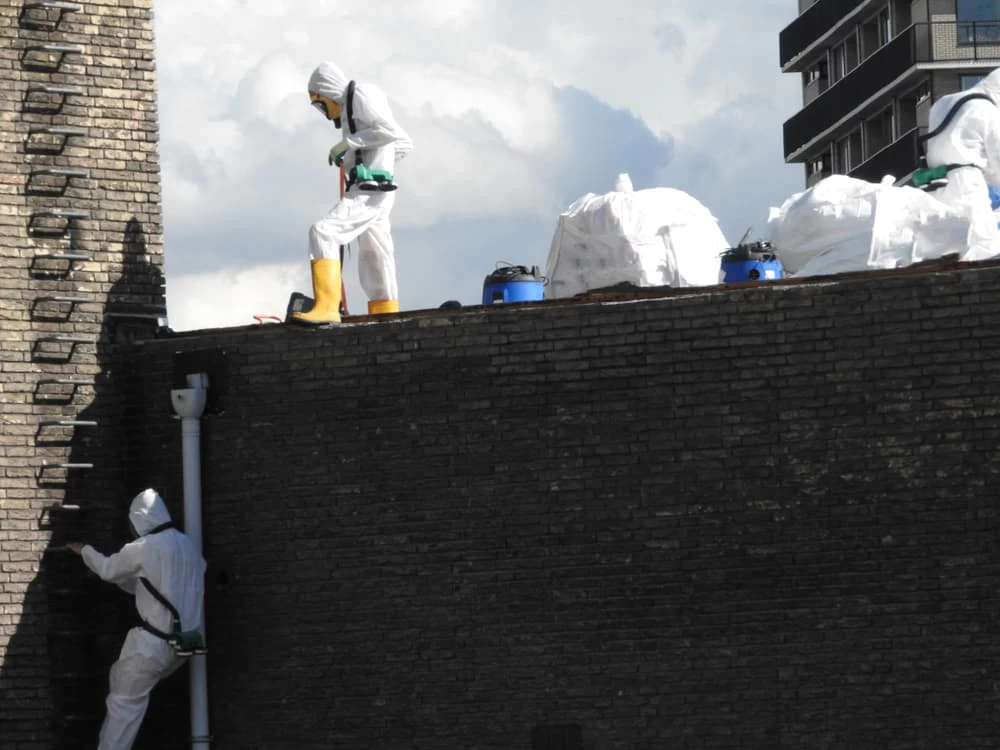
Once you’re ready to move forward, we handle all required notifications and documentation for the Town of Wallkill’s building department. Permits for work in Waterloo Mills flow through the town, not a city office, and we know that process. The abatement itself is performed by NYS-certified handlers using containment, negative air pressure, and proper disposal protocols every step regulated under New York State’s 12 NYCRR Part 56.
After removal, we don’t hand you a receipt and call it done. An independent licensed industrial hygienist conducts post-abatement air monitoring, and you receive a written clearance certificate when the space passes. That document is what satisfies your building department, your lender, your real estate attorney, and anyone else who needs proof the work was done right. If your project also involves water damage or mold which is common in older Waterloo Mills homes after a wet Orange County winter we handle that under the same scope so you’re not coordinating multiple contractors.
The homes in and around Waterloo Mills were built across several decades, and the asbestos-containing materials we find reflect that range. Nine-inch and twelve-inch vinyl asbestos floor tiles are among the most common discoveries in mid-century homes throughout the Town of Wallkill especially in kitchens, basements, and utility rooms. Popcorn ceilings applied through the late 1970s are another frequent find, particularly in finished lower levels. Pipe and boiler insulation, transite siding panels, roofing felt, and asbestos-containing joint compound round out the list of materials we regularly test and remove in this area.
Our asbestos removal services cover all of these material types. We don’t sub out the work or hand it off the same licensed team that assesses your home handles the abatement from containment through final clearance. If testing reveals multiple hazard types, which is common in pre-1980 homes that have experienced any water intrusion, we can address asbestos, mold, and lead paint under one project scope. That matters when your renovation is on hold and every day of delay has a cost.
We also offer 0% APR financing up to $200,000 for qualifying projects and bill insurance companies directly when the work is tied to a covered damage event. Asbestos abatement is almost always unplanned the financing option exists because we know that, and we don’t think cost should be the reason a family stays in an unsafe environment.
Does my Waterloo Mills home actually need asbestos testing before I renovate?
Under New York State law specifically 12 NYCRR Part 56 any renovation or demolition project in a pre-1980 structure requires asbestos review before work proceeds. That applies to homes in Waterloo Mills just as it does anywhere else in the state. Permits for renovation work in Waterloo Mills are issued through the Town of Wallkill’s building department, and the regulatory requirement doesn’t disappear just because the project feels small.
In practical terms, if your Waterloo Mills home was built before 1980 and you’re planning to demo a wall, pull up flooring, replace a ceiling, or disturb any existing insulation, you need to either test first or assume asbestos is present and treat the materials accordingly. Testing is almost always the smarter move it’s not expensive, it gives you a clear answer, and it protects you from the legal liability that comes with hiring an unlicensed contractor or skipping the process entirely. A general contractor who tells you not to worry about it is putting their convenience ahead of your safety and your legal standing.
How do I know if the floor tiles in my older Waterloo Mills home contain asbestos?
You can’t tell by looking at them. The most common asbestos-containing floor tiles found in mid-century homes throughout Waterloo Mills the nine-inch and twelve-inch vinyl tiles that were standard in kitchens, basements, and utility rooms from the 1940s through the late 1970s look completely ordinary. Some are still in excellent condition. The only way to confirm whether a tile contains asbestos is laboratory testing of a collected sample.
What you can do before calling anyone is note the approximate age of your home and the approximate age of the flooring. If your Waterloo Mills home was built or significantly renovated between 1940 and 1980, and the original flooring hasn’t been replaced, there’s a meaningful probability that asbestos is present. The same goes for the adhesive beneath newer flooring that was installed over the original tiles the mastic used to bond older tiles was also frequently asbestos-containing. Don’t assume that covering old tiles with new flooring solved the problem. If those tiles are ever disturbed, the hazard is still there.
What happens if asbestos gets disturbed during a renovation before anyone knew it was there?
Stop work immediately. Don’t try to clean it up, don’t run fans or open windows to air the space out, and don’t let anyone back into the affected area. Disturbed asbestos releases microscopic fibers that are invisible to the naked eye and can remain airborne for hours. The instinct to clean up quickly is understandable, but it typically makes the situation worse by spreading contamination further.
Call a licensed asbestos contractor not your general contractor, not a general cleaning service. In New York State, only a NYS DOL-licensed asbestos contractor can legally assess, contain, and remediate the situation. We operate 24 hours a day for exactly this kind of scenario. We’ll assess the extent of the disturbance, establish containment, and determine whether air monitoring is needed before anyone re-enters. The sooner you call, the more contained the situation stays. Waiting, or attempting a DIY cleanup, turns a manageable problem into a significantly more expensive and legally complicated one.
How long does asbestos abatement take for a typical home in Waterloo Mills, NY?
It depends on the scope specifically, what materials are present, how much square footage is involved, and whether the affected areas require significant containment setup. For a straightforward floor tile removal in a single room, the abatement work itself can often be completed in one to two days. A more complex project involving pipe insulation throughout a basement, popcorn ceilings across multiple rooms, or materials in hard-to-access areas will take longer typically three to five days for the abatement phase, followed by post-abatement air monitoring.
The part that surprises most homeowners is the timeline around the clearance certificate. After the physical removal is complete, an independent licensed industrial hygienist needs to conduct air monitoring and issue a written clearance report before the space can be reoccupied or work can resume. That process typically adds one to two business days. If you’re managing a renovation timeline or a real estate closing deadline in the Middletown area, let us know upfront we can often sequence the work to minimize disruption to your broader project schedule.
Can asbestos abatement be covered by homeowners insurance in New York?
It depends on how the asbestos was discovered and what triggered the need for removal. Standard homeowners insurance policies generally do not cover asbestos abatement as a standalone remediation project meaning if you simply discover asbestos during a planned renovation, that’s typically an out-of-pocket expense. However, if the asbestos exposure was caused by a covered event a water damage incident, a storm that damaged your roof or siding, or a heating system failure that disturbed pipe insulation the abatement may be covered as part of the broader damage claim.
This distinction matters, and it’s worth a direct conversation with your insurance carrier before assuming you’re on your own. We bill insurance companies directly and have experience working through the claims process on multi-hazard projects. If your situation involves both a covered damage event and asbestos, we can help document the scope in a way that supports your claim. The 0% APR financing we offer is also available for projects where insurance coverage falls short or doesn’t apply because the cost of proper abatement shouldn’t be the reason the job doesn’t get done.
Why does asbestos abatement in Orange County require a specific contractor license?
New York State treats asbestos abatement as a regulated activity not because of bureaucratic formality, but because improper removal is genuinely dangerous and the consequences of cutting corners are serious. Under state law, only contractors holding a current NYS Department of Labor Asbestos Contractor License can legally perform abatement work anywhere in New York, including Orange County and the Town of Wallkill. Individual workers on the job must also hold NYS asbestos handler certifications. These aren’t optional credentials performing abatement without them is a violation that carries significant fines, and property owners who knowingly hire unlicensed contractors can share in that liability.
The practical reason this matters to you is documentation. When the job is finished, you need a clearance certificate issued after independent air monitoring by a licensed industrial hygienist. That certificate is what satisfies the Town of Wallkill’s building department, your mortgage lender, your real estate attorney, and any future buyer of your home. An unlicensed contractor cannot produce compliant documentation which means even if the physical work looks fine, you have no legally defensible proof that it was done correctly. In a real estate market as active as Orange County’s has been since 2020, that gap in documentation can derail a closing or create liability that follows the property for years.