I needed a professional consultation explanation of procedure for safe removal of Asbestos in my apartment complex. Without having an account yet, I was very impressed with the caring, knowledgeable and generous advice offered by Jessica, and will look forward to doing business in the future. Thank you so much! I feel much more informed about a sometimes scary endeavor. Peace. Nancy Silva Mineola, NY.
Mia Munoz
Used this company to clean up some water flood in my house. They were fast and easy to work with.very professional, Would recommend to anyone!
Nini Valle
Great company, had a flood and they responded quickly and efficiently. Billed my insurance company directly. I highly recommend this company!
joe colapietro, jr
I had pipe freeze in my basement right before a snow storm and they made to within an hour to help start the clean up process. They we by our side throughout the entire process and even helped with the insurance company. They did such a great job with the cleanup, repair, remidiation, I contracted them to perform the repairs and finishes in the basement. They came with enough manpower and material to get the job done. Leo and Jessica were nothing but a pleasure to deal with!!
Cristian Arredondo c
I had some water damage in my home and Green Island was able to take care of my issue quickly and effectively. I am very pleased with the work they did. They responded quickly and were very professional.
Michael M
Outstanding service! From the office to the field crew everyone was friendly, helpful and responsive. I highly recommend Green Island Group.
You stop guessing. That’s the most honest way to put it. Whether you’ve got a bungalow colony property near Cragsmoor you’re converting to year-round use, a Victorian-era home in Ellenville you’re finally renovating, or a basement in Napanoch with pipe insulation that’s been there since the Eisenhower administration the moment you have a licensed contractor confirm what’s there and remove it properly, the uncertainty is gone. You get documentation. You get clearance. You move forward.
For a lot of Wawarsing homeowners, the trigger is a renovation that uncovers something unexpected floor tiles that crumble wrong, ceiling texture that doesn’t look right, pipe wrap that falls apart when touched. The Rondout Creek watershed means moisture intrusion is a recurring issue in this valley, and water damage has a way of disturbing exactly the kind of materials that need to stay undisturbed. When that happens, you need someone who can handle the abatement, document the clearance, and coordinate with your insurance not a general contractor who figures it out as they go.
The other thing that changes is your legal exposure. New York State requires a specific asbestos handling license for any disturbance over 10 square feet and that requirement doesn’t care whether you knew the material was there or not. Working with us means you’re protected, your renovation stays on track, and you’ve got a paper trail that holds up whether you’re selling the home, renting it, or just want to sleep well at night.
We hold the NYS Department of Labor Asbestos Handling License the specific credential New York State requires for legal asbestos removal work in Ulster County. Not a general contractor license. Not a handyman certification. The actual state-issued license that authorizes this work under Industrial Code Rule 56. That distinction matters more than most people realize until they’re standing in front of a stop-work order.
Beyond asbestos, we’re certified for mold remediation, water damage restoration, fire damage, lead, and HVAC cleaning which matters in a town like Wawarsing, where older homes rarely have just one problem. The Ellenville area’s aging housing stock, the bungalow colony conversions happening across Wawarsing, and the active redevelopment pushing through the DRI program all create situations where asbestos is part of a larger picture. We handle that whole picture, not just one piece of it.
Our credential stack also includes NYS MBE, WBE, IICRC, USEPA Lead, and USEPA RRP certifications relevant for property managers, landlords, and anyone tied to publicly funded projects in the area.
It starts with an assessment. Before anything is touched, we identify what materials are present, where they are, and what the scope of removal actually looks like. For older Wawarsing properties especially the mid-century bungalow colony structures and pre-war homes common along the Route 209 corridor this step often turns up materials in multiple locations: floor tiles, pipe insulation, joint compound, roofing, or acoustic ceiling texture. You’ll know what you’re dealing with before any work begins.
From there, we handle the NYS DOL permit application and required notifications to the Albany District Office, which has regulatory jurisdiction over Ulster County. This is the step that trips up a lot of renovation projects in the area the permitting process is real, it has teeth, and skipping it is how projects end up with stop-work orders. That paperwork is handled for you.
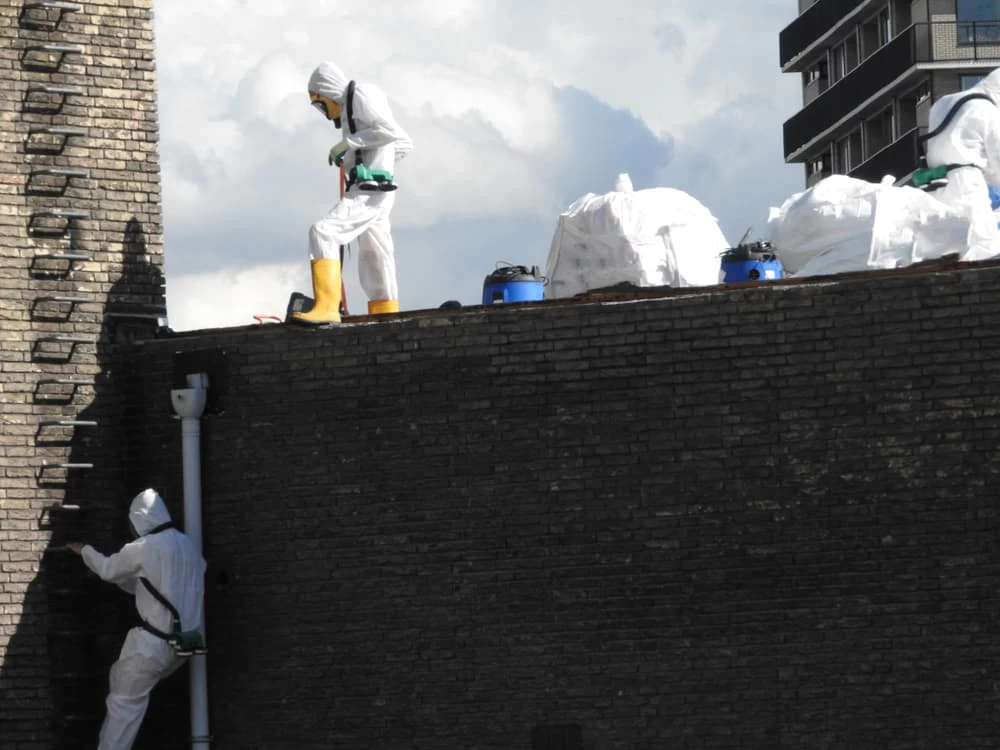
The abatement itself follows strict containment and removal protocols under Industrial Code Rule 56. Once the work is complete, post-abatement air monitoring is conducted to confirm the space is clear and you receive written documentation of that clearance. That’s not a formality. It’s the piece of paper that protects you when you sell the home, when a tenant asks questions, or when an inspector shows up. If your project involves water damage or mold alongside the asbestos which is common in Wawarsing’s older housing stock near the creek corridors that can be addressed in the same scope of work.
Asbestos doesn’t show up in just one place. In Wawarsing’s older homes particularly the Borscht Belt-era bungalows built between the 1940s and 1970s the most common locations are 9×9 floor tiles with black mastic adhesive underneath, pipe and boiler insulation in basements and utility rooms, popcorn or acoustic ceiling texture in living spaces, and roofing or exterior transite siding on older structures. Each of these materials requires a different removal approach, and not all of them are friable meaning the risk level and handling method vary depending on condition and location.
Asbestos tile removal and asbestos popcorn ceiling removal are two of the most frequently requested services for residential properties in Wawarsing, especially as homeowners renovate older spaces or convert seasonal structures to year-round use. Pipe insulation abatement comes up regularly in Ellenville’s older multi-family and commercial buildings, and roofing material abatement is common in properties along the Shawangunk Ridge foothills where mid-century construction is still standing.
For every project, the scope includes assessment, permitting, containment, licensed removal, waste disposal in accordance with NYS regulations, and post-abatement air monitoring with written clearance documentation. If your project is tied to an insurance claim which applies more often than people expect, particularly when water damage is the trigger we coordinate the billing directly with your carrier. Pricing for standard residential asbestos removal in the Wawarsing area typically ranges from $1,300 to $3,100 depending on material type, quantity, and access, with larger or more complex commercial projects running higher.
How do I know if my Wawarsing home actually contains asbestos?
The honest answer is that you can’t know for certain without testing. Visual inspection alone isn’t reliable asbestos-containing materials often look identical to their non-asbestos counterparts, and the only way to confirm is through laboratory analysis of a collected sample. That said, if your home was built before 1980, the probability is meaningful. Wawarsing has a significant amount of pre-1980 housing stock, including bungalow colony properties built during the 1940s through 1970s, Victorian-era homes in Ellenville’s historic neighborhoods, and older farmhouses and rural structures spread across the town’s 133 square miles.
The materials most likely to contain asbestos in these homes are 9×9 floor tiles and the black adhesive underneath them, pipe and boiler insulation in basements, textured or popcorn ceiling coatings, joint compound used in drywall finishing, and certain roofing and siding materials. If you’re planning any renovation that disturbs these materials even something as routine as pulling up old flooring or replacing a boiler testing before you start is the right move. It protects your health, keeps your project legally compliant, and avoids the kind of situation that resulted in a stop-work order at a demolition project right here in Ellenville in 2014.
Is asbestos removal in Wawarsing required by law before I renovate?
Yes, under New York State Industrial Code Rule 56, any asbestos disturbance of 10 square feet or 25 linear feet or more requires a licensed abatement contractor, proper permitting, and notification to the NYS Department of Labor before work begins. This applies to residential and commercial properties alike. The regulatory body with jurisdiction over Ulster County is the NYS DOL Albany District Office, and they do enforce these requirements the 2014 stop-work order at the former Schrade building in Ellenville is a documented local example of what non-compliance looks like in practice.
It’s worth knowing that this law applies even if you didn’t know the asbestos was there when you started the project. If a contractor disturbs asbestos-containing material without the proper license and permits, the consequences fall on the property owner as well as the contractor. For anyone in Wawarsing undertaking a kitchen remodel, bathroom renovation, basement finishing, HVAC replacement, or any project that involves older flooring, ceilings, or pipe systems, having a licensed assessment done before demolition begins is both a legal requirement and a practical protection.
What does asbestos abatement actually cost for a home in Wawarsing?
For a standard residential project in the Wawarsing area, most homeowners pay somewhere between $1,300 and $3,100. Where your project falls within that range depends on the type of material being removed, how much of it there is, where it’s located in the home, and how accessible the work area is. Asbestos floor tile removal in a single room is on the lower end. Full basement pipe insulation abatement or popcorn ceiling removal across multiple rooms will run higher. Exterior materials like transite siding or roofing are priced separately and typically cost more due to the scope and disposal requirements.
One thing worth knowing: if the asbestos disturbance was triggered by water damage a burst pipe, flooding from one of the creek tributaries, or storm intrusion your homeowner’s insurance may cover a portion of the abatement cost. We coordinate directly with insurance carriers, which can significantly reduce your out-of-pocket exposure. The best way to get an accurate number for your specific situation is a direct assessment, not an online estimate the variables matter too much to guess from a square footage figure alone.
Can I stay in my home during asbestos abatement in Wawarsing?
It depends on the scope and location of the work. For smaller, contained projects removing floor tiles in a single room, for example it’s sometimes possible to remain in other parts of the home while work is in progress, provided the containment barriers are properly established and the work area is isolated. For larger projects involving multiple rooms, HVAC system components, or materials in shared living spaces, temporary relocation is typically the safer and more practical approach.
The containment setup we use during asbestos abatement creates a negative-pressure environment in the work area, which prevents fibers from migrating to other parts of the home. That’s a required part of the process under Industrial Code Rule 56, not an optional upgrade. After abatement is complete, post-clearance air monitoring confirms that fiber levels in the living space are within acceptable limits before re-occupancy. For Wawarsing homeowners in older, smaller bungalow-style homes where the work area and living space aren’t easily separated, the timeline and displacement question is worth discussing directly during the initial assessment the answer will be specific to your floor plan and the scope of your project.
How long does the asbestos abatement process take from start to finish?
The timeline has a few moving parts. The assessment itself is typically completed in a single visit. Lab results for collected samples usually come back within a few business days, though rush processing is available if your renovation timeline is tight. Once the scope is confirmed, the NYS DOL permit application and required pre-project notification add a mandatory waiting period before physical work can begin this is a state requirement and applies to all licensed abatement projects in Ulster County, regardless of project size.
The abatement work itself can range from a single day for a smaller residential project to several days for larger or more complex scopes. Post-abatement air monitoring is conducted after the work area is cleaned and sealed, and written clearance documentation is issued once the results confirm the space is within acceptable limits. From initial assessment to final clearance, most standard residential projects in the Wawarsing area run one to two weeks when permit timing is factored in. If you’re working against a real estate closing deadline or a contractor schedule, that timeline is worth building into your planning early the permitting step is the one that catches people off guard most often.
What happens if a contractor disturbs asbestos without a license in Wawarsing?
The consequences are serious and they land on multiple parties. An unlicensed contractor who disturbs asbestos-containing material in New York State is in violation of Industrial Code Rule 56, which carries civil and criminal penalties enforced by the NYS Department of Labor. But the property owner isn’t automatically off the hook either if you hired the contractor and the work was done without proper licensing and permitting, you can face liability for the violation, costs associated with remediation of the improperly disturbed material, and potential issues with your insurance coverage.
Beyond the legal side, there’s the practical reality of what happens to the material itself. Asbestos that’s disturbed without proper containment releases fibers into the air fibers that settle into HVAC systems, wall cavities, and living spaces and don’t go away on their own. Cleaning up after an improper disturbance is significantly more expensive and complicated than doing the job right the first time. In Wawarsing specifically, where a lot of the housing stock hasn’t been touched in decades and asbestos-containing materials may be present in multiple locations throughout a home, the risk of a cascading problem from one unlicensed job is real. The NYS DOL license isn’t bureaucratic paperwork it’s the line between a job that’s done safely and one that creates a bigger problem than it solves.