West Babylon's Ranch Homes Deserve More Than a Guess
If your home was built before 1980, asbestos abatement in West Babylon isn’t a maybe it’s a conversation you need to have before the first wall comes down.
I needed a professional consultation explanation of procedure for safe removal of Asbestos in my apartment complex. Without having an account yet, I was very impressed with the caring, knowledgeable and generous advice offered by Jessica, and will look forward to doing business in the future. Thank you so much! I feel much more informed about a sometimes scary endeavor. Peace. Nancy Silva Mineola, NY.
Mia Munoz
Used this company to clean up some water flood in my house. They were fast and easy to work with.very professional, Would recommend to anyone!
Nini Valle
Great company, had a flood and they responded quickly and efficiently. Billed my insurance company directly. I highly recommend this company!
joe colapietro, jr
I had pipe freeze in my basement right before a snow storm and they made to within an hour to help start the clean up process. They we by our side throughout the entire process and even helped with the insurance company. They did such a great job with the cleanup, repair, remidiation, I contracted them to perform the repairs and finishes in the basement. They came with enough manpower and material to get the job done. Leo and Jessica were nothing but a pleasure to deal with!!
Cristian Arredondo c
I had some water damage in my home and Green Island was able to take care of my issue quickly and effectively. I am very pleased with the work they did. They responded quickly and were very professional.
Michael M
Outstanding service! From the office to the field crew everyone was friendly, helpful and responsive. I highly recommend Green Island Group.
Your West Babylon Renovation Doesn't Have to Stop at the Permit Office
West Babylon is one of the most densely built post-war communities on Long Island’s South Shore. The ranch and hi-ranch homes that line the streets off Great East Neck Road and Old Farmingdale Road were built in the 1950s and 1960s and the materials used back then weren’t built with your future renovation in mind. Floor tiles, pipe insulation, popcorn ceilings, joint compound asbestos was standard, not exceptional.
When those materials get disturbed without proper abatement, the health risk is real. Asbestos fibers don’t smell, don’t show up on a test you can run yourself, and don’t announce themselves. What they do is linger in the air, in your HVAC system, in the spaces where your family spends the most time. With nearly 20% of West Babylon residents under 18, that’s not a risk worth taking.
The other thing that stops projects cold in this town is paperwork. The Town of Babylon won’t issue a building permit until you submit a certificate of asbestos removal and a copy of the disposal manifest. That’s not optional it’s a hard stop. Getting the abatement done right, with the right documentation, is what keeps your contractor on schedule and your permit application moving forward without a second trip to the building department.
We Know West Babylon's Housing Stock And Its Permitting Process
We’re a Long Island environmental services company focused specifically on asbestos not as a side service attached to water damage or mold, but as the core of what we do. That focus matters when you’re dealing with a 1962 ranch in West Babylon that has three layers of flooring and a popcorn ceiling in every room.
We know the housing stock here. We know the 9″x9″ vinyl tiles that show up under newer floors, the black mastic adhesive underneath them, and the pipe insulation on oil-heated homes that were standard in this part of Suffolk County. We also know the Town of Babylon’s permitting process what documentation is required, how the disposal manifest needs to be formatted, and what the building department expects to see before they’ll move your application forward.
You’re not explaining your situation to someone learning on the job. You’re talking to a team that has seen this exact scenario in West Babylon, in homes like yours and knows how to move through it efficiently.
No Surprises Here's What the Process Actually Looks Like
It starts with an assessment. Before anything is removed, we identify what materials are present, where they are, and whether they’re friable meaning they can release fibers when disturbed. In a typical West Babylon ranch, that means checking under flooring, inside ceiling texture, around older pipe systems, and in any area slated for renovation. If testing is needed, samples go to a certified lab.
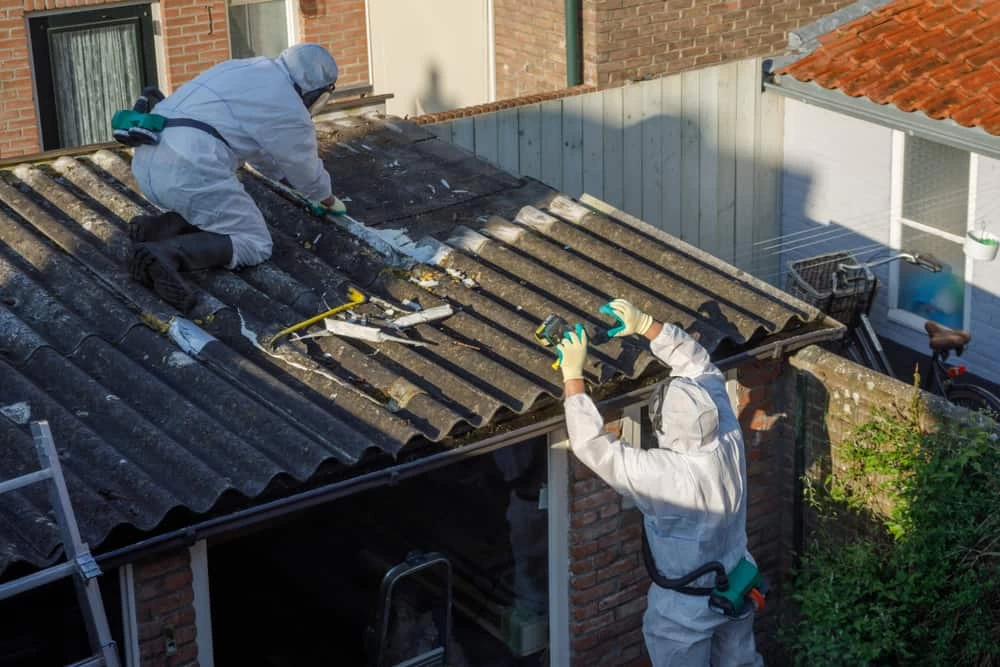
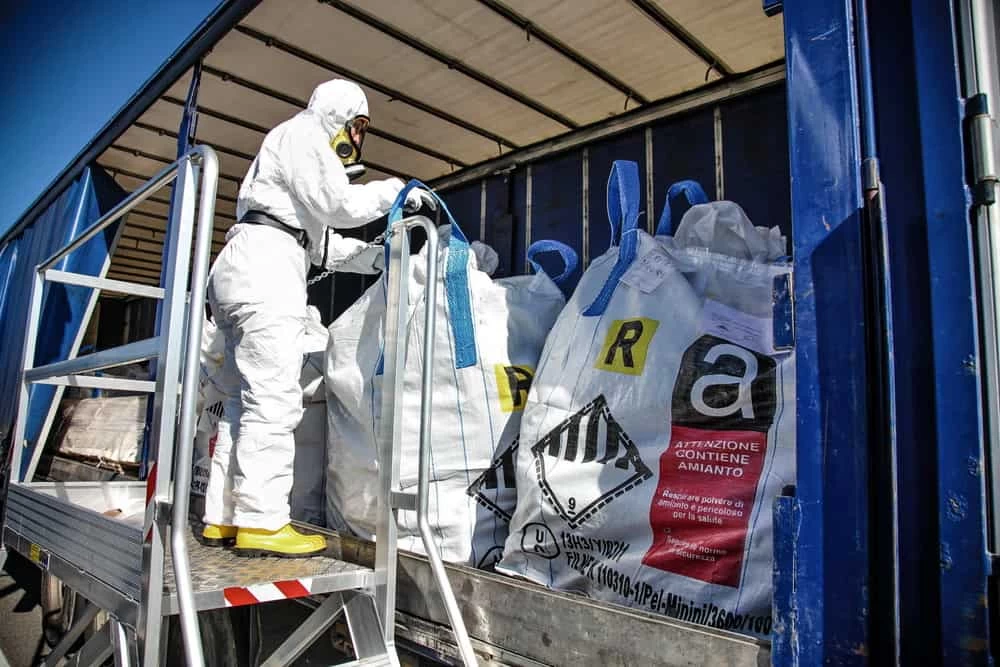
Once we know what we’re dealing with, we build a scope of work and give you a clear estimate not a range that shifts when the crew shows up. The abatement itself follows New York State Industrial Code Rule 56 requirements: full containment of the work area, negative air pressure to prevent fiber migration, HEPA filtration, and proper handling of all removed materials. Nothing gets bagged and left at the curb. Everything is transported by a licensed waste hauler to an approved disposal facility, and you get the manifest to prove it.
After the work is done, air clearance testing confirms the space is safe before containment comes down. Then we hand you the complete documentation package the disposal manifest, the air clearance results, and the compliance certificates the Town of Babylon requires before they’ll issue your building permit. That’s the finish line, and we get you there cleanly.
We handle the full range of asbestos-containing materials found in West Babylon homes. Asbestos tile removal is one of the most common requests specifically those 9″x9″ vinyl composite floor tiles and the black mastic adhesive beneath them, which were used extensively in mid-century Long Island construction. Asbestos popcorn ceiling removal is the other frequent call, particularly in homes where the original acoustic texture was never replaced or was simply painted over.
Beyond floors and ceilings, we also handle pipe and duct insulation, exterior transite siding, drywall joint compound, roofing materials, and vermiculite attic insulation. If your West Babylon home is getting a full gut renovation, we can assess and abate the entire structure before demolition begins which is exactly what the Town of Babylon’s permitting process requires before a building permit is issued. For waterfront properties in areas like Venetian Shores, where flood damage or storm repairs may have already disturbed existing materials, we can assess the situation and determine whether emergency abatement is warranted.
Every project whether it’s a single room or a whole-house scope includes testing, abatement, air clearance monitoring, and the complete documentation package. You won’t need to coordinate multiple vendors or chase down paperwork. One call covers the full process from start to finish.
Does my West Babylon home actually need asbestos testing before I renovate?
If your home was built before 1980, the honest answer is yes and in many cases, the Town of Babylon makes it a requirement, not just a recommendation. The Town will not issue a building permit until you submit a certificate confirming asbestos has been properly removed and disposed of, along with a copy of the disposal manifest. That means if you skip testing and your contractor pulls a permit, the project can be stopped before it starts.
Beyond the permit requirement, the practical reality is that West Babylon’s housing stock is overwhelmingly from the post-war building boom the exact era when asbestos was used in floor tiles, ceiling texture, pipe insulation, siding, and joint compound as a matter of course. You may not see it, but that doesn’t mean it isn’t there. A professional assessment before renovation is the only way to know for certain what you’re working with and whether abatement is needed before the walls come down.
How do I know if my floor tiles or popcorn ceiling contain asbestos?
You can’t tell by looking. The only way to confirm whether a material contains asbestos is to have a sample collected and analyzed by a certified laboratory. That said, there are strong indicators based on age and material type. The 9″x9″ vinyl composite floor tiles found in a large percentage of West Babylon’s mid-century ranch homes are one of the most reliable visual cues that tile size was heavily associated with asbestos-containing formulations used from the late 1940s through the 1970s. The black adhesive mastic underneath those tiles often contains asbestos as well, even when the tiles themselves don’t.
Popcorn ceiling texture applied before 1978 is another high-probability material. It was widely used across Long Island during the 1960s and early 1970s, and many homes in West Babylon still have it sometimes painted over, sometimes intact. If you’re planning any work that would disturb either of these materials, testing first is the only responsible path forward. Disturbing asbestos-containing materials without proper containment is both a health risk and a regulatory violation under New York State Industrial Code Rule 56.
What does the asbestos abatement process involve, and how long does it take?
The process starts with a site assessment and, if needed, laboratory testing to confirm which materials contain asbestos. Once that’s established, we scope the work and give you a clear timeline before anything begins. For a typical West Babylon ranch say, floor tile removal in a kitchen and basement, or popcorn ceiling abatement in two or three rooms the abatement work itself usually runs one to three days depending on the scope.
During abatement, the work area is fully sealed and placed under negative air pressure so fibers can’t migrate into the rest of your home. All removed materials are bagged, labeled, and transported by a licensed waste hauler to an approved disposal facility not left at the curb or handled informally. After the work is done, air clearance testing is conducted to confirm the space is safe before containment comes down. The full documentation package, including the disposal manifest required by the Town of Babylon for your building permit, is provided at project close. From first call to final paperwork, most residential projects are completed within a week.
Will asbestos abatement hold up my renovation or real estate closing in West Babylon?
It can but only if you wait too long to schedule it. The Town of Babylon’s building permit process has a hard requirement: no permit is issued until asbestos removal is documented and the disposal manifest is submitted. If you’re mid-renovation planning and just found out about this requirement, the faster you get the assessment scheduled, the less disruption you’ll face. Contractors waiting on a permit start date lose money every day the permit is delayed, and that pressure lands on you.
For real estate transactions, the timeline is similarly tight. If asbestos is flagged during a home inspection which is common in West Babylon’s pre-1980 housing stock buyers and sellers often need abatement completed or at minimum assessed before a closing can move forward. We work with homeowners, real estate attorneys, and agents to prioritize scheduling when a transaction is involved. The key is not waiting until the last possible moment. Getting us on-site early gives you the documentation you need without turning it into a closing-day crisis.
How much does asbestos abatement typically cost for a West Babylon home?
Cost depends on what materials are present, how much square footage is involved, and whether the asbestos is friable meaning it can release fibers when disturbed or non-friable. For a small, contained scope like a single room of floor tile removal, you might be looking at a few hundred dollars on the lower end. A more typical residential project in West Babylon floor tiles and mastic in a kitchen and basement, or popcorn ceiling abatement across multiple rooms generally runs in the range of $1,500 to $4,000 depending on scope and conditions.
Whole-house abatement ahead of a full gut renovation will naturally cost more, but it’s also the most efficient way to handle it doing everything at once before demolition begins is faster and less expensive than piecemeal abatement as materials are discovered mid-project. We provide itemized estimates before any work starts so you know exactly what you’re paying for. No scope creep, no surprise line items when the invoice arrives.
Is asbestos common in West Babylon homes, and what materials should I be most concerned about?
Yes it’s a demographic reality tied directly to West Babylon’s post-war building boom. The Town of Babylon experienced a 485% population increase between 1940 and 1960. That explosive growth produced the majority of West Babylon’s current housing stock thousands of ranch and hi-ranch homes built during the exact window when asbestos was used as a standard construction material. The community’s stable, long-term homeownership profile means many of these homes have never had a full renovation, and the original materials are still in place.
The materials most commonly found in West Babylon homes are 9″x9″ vinyl floor tiles and their black mastic adhesive, popcorn acoustic ceiling texture, pipe and duct insulation on older oil-heated systems, exterior transite siding, pre-1977 drywall joint compound, and vermiculite attic insulation. Of these, the floor tiles and popcorn ceilings are the most frequently encountered and the most frequently disturbed during renovation without the homeowner realizing what they’re dealing with. If your home is from the 1950s, 1960s, or early 1970s and you’re planning any work that involves floors, ceilings, walls, or mechanical systems, a professional assessment before you start is the responsible first step.