Your 1970s West Mahopac Home Deserves a Real Answer
If your renovation just hit a wall or you’re not sure what’s hiding in your floors, ceilings, or pipes we handle asbestos abatement in West Mahopac from inspection to clearance, so you’re not left guessing.
I needed a professional consultation explanation of procedure for safe removal of Asbestos in my apartment complex. Without having an account yet, I was very impressed with the caring, knowledgeable and generous advice offered by Jessica, and will look forward to doing business in the future. Thank you so much! I feel much more informed about a sometimes scary endeavor. Peace. Nancy Silva Mineola, NY.
Mia Munoz
Used this company to clean up some water flood in my house. They were fast and easy to work with.very professional, Would recommend to anyone!
Nini Valle
Great company, had a flood and they responded quickly and efficiently. Billed my insurance company directly. I highly recommend this company!
joe colapietro, jr
I had pipe freeze in my basement right before a snow storm and they made to within an hour to help start the clean up process. They we by our side throughout the entire process and even helped with the insurance company. They did such a great job with the cleanup, repair, remidiation, I contracted them to perform the repairs and finishes in the basement. They came with enough manpower and material to get the job done. Leo and Jessica were nothing but a pleasure to deal with!!
Cristian Arredondo c
I had some water damage in my home and Green Island was able to take care of my issue quickly and effectively. I am very pleased with the work they did. They responded quickly and were very professional.
Michael M
Outstanding service! From the office to the field crew everyone was friendly, helpful and responsive. I highly recommend Green Island Group.
Most homeowners in West Mahopac don’t go looking for asbestos they find it mid-renovation, during a home inspection, or when a contractor stops work and tells them they can’t proceed. When that happens, what you need isn’t a sales pitch. You need someone who can tell you exactly what you’re dealing with, handle the removal correctly, and give you documented proof that it’s gone.
The Stillwater and West Mahopac area is made up largely of ranch homes, raised ranches, and split-levels built in the 1960s and 1970s right in the window when asbestos was used in floor tiles, pipe insulation, duct wrap, popcorn ceilings, and roofing materials. These homes are well-built and well-loved, but they carry risk that doesn’t announce itself. A 1968 raised ranch on a wooded lot off Stillwater Road looks perfectly fine until someone pulls up the kitchen floor or opens a basement wall.
What changes after proper asbestos remediation isn’t just the air quality it’s the certainty. Your renovation can move forward. Your home inspection clears. Your family isn’t breathing something that shouldn’t be there. And when you’re sitting on a property worth close to a million dollars in this neighborhood, having the paperwork to prove the work was done correctly isn’t optional it’s part of protecting what you’ve built.
We’ve been doing licensed asbestos abatement work across New York State for over 12 years including active projects throughout Putnam County and the broader West Mahopac area. This isn’t a company stretching its service map to pick up a job. We know the housing stock here, the regulatory requirements under NYS Industrial Code Rule 56, and what it takes to get a project completed cleanly and on record.
Every credential is real and checkable. Our NYS Department of Labor Asbestos Contractor License is state-mandated not a marketing badge and we carry it along with full liability insurance and worker’s compensation coverage. Our client list includes the NYS Office of General Services, the Dormitory Authority of New York, and multiple county governments. If New York State holds us to that standard, your home in West Mahopac is in the same hands.
We also hold certifications for lead, mold, and water damage which matters in older Putnam County homes where environmental issues rarely travel alone.
Asbestos Inspection and Removal Process, West Mahopac
No Surprises Here's Exactly What to Expect
It starts with an inspection. A licensed inspector surveys the areas of concern whether that’s a basement floor, popcorn ceiling, pipe insulation, or all of the above and collects samples for lab analysis. You get a clear report of what’s present, where it is, and what condition it’s in. No assumptions, no guesswork.
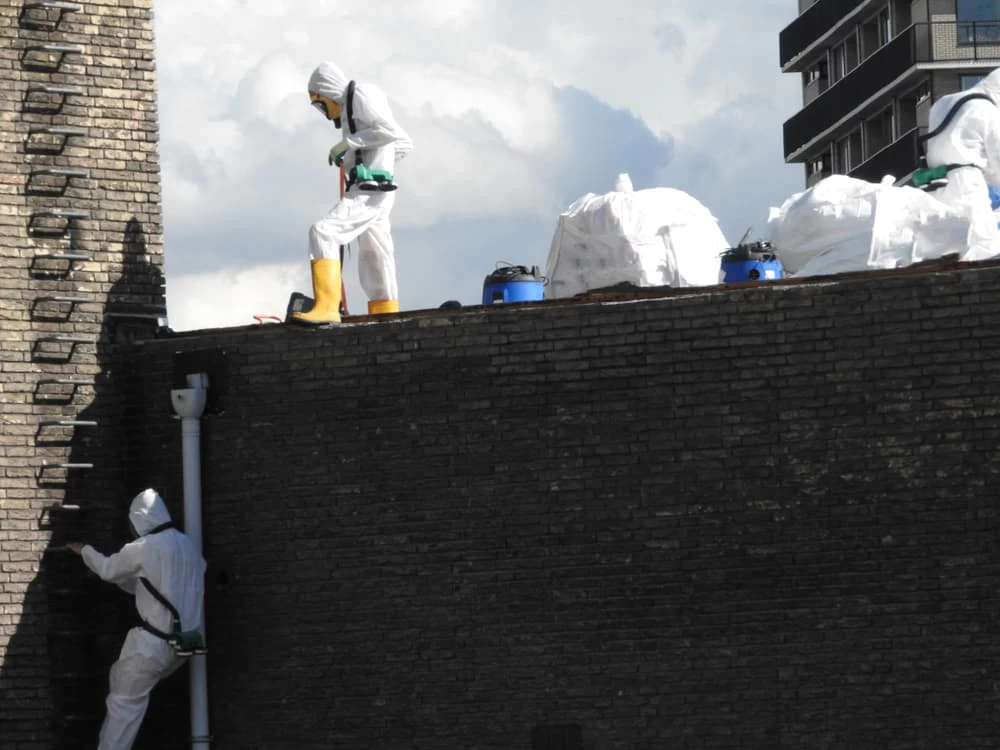
If asbestos is confirmed, the abatement phase begins. The work area is sealed off using negative air pressure containment, which keeps fibers from migrating into the rest of your home. Removal is done using wet methods as required under NYS Industrial Code Rule 56 the state regulation that governs all asbestos work in Putnam County. We handle the NYS DOL permit notifications and disposal documentation, so you’re not navigating that process on your own. For West Mahopac homeowners pulling a renovation permit through the Town of Carmel building department, having that compliance paperwork in order matters.
Once removal is complete, independent air clearance testing is conducted before the containment comes down. The results are documented in writing. That clearance report is yours to keep for your insurance file, your real estate disclosure, or simply your own peace of mind. The space isn’t handed back to you on a handshake. It’s handed back with proof.
Asbestos Tile and Popcorn Ceiling Removal, West Mahopac
What's Covered and Why It Matters Here Specifically
Two of the most common asbestos abatement requests in West Mahopac come down to floor tiles and popcorn ceilings and for good reason. The 9×9 and 12×12 vinyl floor tiles found in kitchens, basements, and hallways of 1960s and 1970s ranch homes are one of the most frequently identified asbestos-containing materials in this area’s housing stock. The adhesive beneath them often contains asbestos as well. Asbestos tile removal requires careful wet-method extraction and full containment not a shop vac and a weekend.
Asbestos popcorn ceiling removal is the other major ask, particularly in homes where the original acoustic texture was never replaced. That texture was widely used through the late 1970s and is almost always a candidate for testing in any pre-1980 West Mahopac home. If you’re renovating a bedroom, finishing a basement, or prepping a home for sale, it needs to be addressed before any other work touches the ceiling.
Beyond tile and ceiling work, we also handle pipe insulation removal, duct wrap, roofing materials, joint compound, and whole-home abatement for larger projects. If you own one of the older converted vacation cottages near Lake Secor some of which date back to the 1930s and 1940s the scope may extend to multiple systems. Whatever the project, the process ends the same way: documented clearance, compliant disposal, and a record you can stand behind.
Does my West Mahopac home built in the 1970s likely contain asbestos?
If your home was built before 1980, there’s a real probability that asbestos-containing materials are present somewhere in the structure. In West Mahopac specifically, the dominant housing stock ranch homes, raised ranches, and split-levels built during the 1960s and 1970s lines up almost exactly with the era when asbestos was most heavily used in residential construction. Floor tiles, pipe insulation, duct wrap, popcorn acoustic ceilings, roofing shingles, and joint compound were all common applications during that period.
That doesn’t mean every material in your home is a problem. Asbestos that’s intact and undisturbed is generally considered low-risk. The concern is when those materials are disturbed during a renovation, a repair, or even routine maintenance. The only way to know for certain is to have a licensed inspector collect samples and send them to an accredited lab. That’s where the process starts, and it’s the only answer worth trusting.
How much does asbestos removal typically cost in Putnam County, NY?
The honest answer is that it depends on what’s there and how much of it needs to come out. A single room of floor tile removal will cost considerably less than a full basement pipe insulation project or a whole-home abatement before a major renovation. Most projects we handle in the West Mahopac area range from $1,500 to $5,000, depending on scope and complexity.
In Putnam County, the cost also reflects the regulatory requirements that come with the job NYS DOL permit notifications, licensed personnel, containment setup, independent air clearance testing, and proper disposal documentation. Those aren’t add-ons. They’re required by law under Industrial Code Rule 56, and any contractor quoting you significantly below market is likely cutting corners on one or more of them. For a home in the Stillwater and West Mahopac area where values sit near $937,000, the cost of a properly documented abatement is a modest number relative to what’s at stake.
Do I have to leave my home during asbestos abatement in New York?
In most cases, yes at least for the areas being worked on, and often for the duration of the project. During active abatement, the work zone is sealed under negative air pressure containment to prevent fibers from spreading. Occupants are not permitted in or near those areas while removal is underway. Depending on the scope and layout of your home, that may mean vacating entirely for one or more days, or simply staying out of a specific floor or section.
The good news is that the timeline is usually manageable. A single-room tile removal might be completed in a day. A larger project involving multiple areas say, basement pipe insulation plus a popcorn ceiling on the main floor could take two to three days. We coordinate the schedule around your situation and communicate clearly about when it’s safe to return. You’ll know the answer before work starts, not after.
What happens if asbestos is found during a home inspection before selling in West Mahopac?
It’s one of the more stressful moments in a real estate transaction, but it’s also a solvable problem as long as it’s handled correctly. In New York State, sellers are required to disclose known material defects, and asbestos qualifies. At the price points that homes in the Stillwater and West Mahopac area command, buyers and their attorneys are thorough. An undisclosed or improperly handled asbestos issue can kill a deal, reduce the sale price significantly, or create legal exposure after closing.
The cleanest path is to address it before you list. Have a licensed contractor perform the abatement and provide you with the full documentation package inspection report, project completion certificate, air clearance test results, and disposal manifests. That paperwork gives buyers and their lenders something concrete to review, rather than a contingency hanging over the transaction. Sellers in West Mahopac who come to the table with documented remediation are in a measurably stronger position than those who leave it as an open question.
What is the difference between asbestos abatement and encapsulation?
Abatement means the asbestos-containing material is physically removed from the structure, contained, and disposed of according to NYS DOL requirements. Encapsulation means the material is treated with a sealant or covered in a way that prevents fiber release without removing it. Both are legitimate approaches under certain conditions, but they’re not interchangeable.
Encapsulation is typically considered when the material is in good condition, not friable, and not in an area that will be disturbed by renovation or regular use. It’s sometimes used for pipe insulation in areas that won’t be accessed or for floor tiles that will be covered with new flooring. However, if you’re renovating pulling up floors, opening walls, finishing a basement encapsulation isn’t a viable option because the work itself will disturb the material. In that scenario, removal is the only compliant path. A licensed inspector can tell you which approach applies to your specific situation after assessing the condition and location of the materials in your home.
Is asbestos abatement required before pulling a renovation permit in the Town of Carmel?
New York State’s regulatory framework under Industrial Code Rule 56 requires that asbestos-containing materials be identified and properly abated before renovation work disturbs them regardless of whether a local building permit is involved. In practice, when you pull a renovation permit through the Town of Carmel building department for work on a pre-1980 structure, the expectation is that asbestos has been assessed and addressed before demolition or structural work begins.
Skipping that step doesn’t just create a health risk it creates a compliance problem that can halt your project mid-construction and potentially void your permit. We handle the NYS DOL notification requirements and provide the documentation you need to show that abatement was completed correctly before renovation proceeds. If you’re planning a kitchen remodel, bathroom renovation, basement finishing, or addition on a home built before 1980 in West Mahopac, getting the asbestos question answered first is the move that keeps your project on schedule.