Historic Homes Here Don't Hide Much Asbestos Least of All
West Park’s older properties hold a lot of character. They also hold a lot of asbestos. We handle licensed asbestos abatement in West Park, NY permits, removal, and air clearance, all under one roof.
I needed a professional consultation explanation of procedure for safe removal of Asbestos in my apartment complex. Without having an account yet, I was very impressed with the caring, knowledgeable and generous advice offered by Jessica, and will look forward to doing business in the future. Thank you so much! I feel much more informed about a sometimes scary endeavor. Peace. Nancy Silva Mineola, NY.
Mia Munoz
Used this company to clean up some water flood in my house. They were fast and easy to work with.very professional, Would recommend to anyone!
Nini Valle
Great company, had a flood and they responded quickly and efficiently. Billed my insurance company directly. I highly recommend this company!
joe colapietro, jr
I had pipe freeze in my basement right before a snow storm and they made to within an hour to help start the clean up process. They we by our side throughout the entire process and even helped with the insurance company. They did such a great job with the cleanup, repair, remidiation, I contracted them to perform the repairs and finishes in the basement. They came with enough manpower and material to get the job done. Leo and Jessica were nothing but a pleasure to deal with!!
Cristian Arredondo c
I had some water damage in my home and Green Island was able to take care of my issue quickly and effectively. I am very pleased with the work they did. They responded quickly and were very professional.
Michael M
Outstanding service! From the office to the field crew everyone was friendly, helpful and responsive. I highly recommend Green Island Group.
You stop guessing. That’s the first thing. When you’re renovating a Victorian on Route 9W or opening up walls in a pre-war home near the river, the moment asbestos gets confirmed, everything stops. Your contractor steps back, your timeline shifts, and suddenly you’re trying to figure out who to call and how fast this can get resolved. Once it’s properly removed licensed, documented, air-tested your project moves again. That’s the outcome that matters.
For West Park specifically, this isn’t a rare situation. The housing stock along the Hudson’s western shore is genuinely old. The average property age in the Town of Esopus is close to 300 years, and West Park’s riverfront estates sit at the older end of that range. Pipe insulation, floor tile mastic, popcorn ceilings, vermiculite in the attic these aren’t hypothetical risks in a hamlet full of Gilded Age estates and Victorian homes. They’re what’s actually inside the walls.
The other thing that changes is your paper trail. Post-abatement air monitoring results give you documentation you can keep in your property file, hand to a buyer, or submit to your insurance carrier. In an active real estate market where Esopus median prices are up over 12% year-over-year, a clean environmental record isn’t just peace of mind it protects your transaction.
We've Worked in West Park and Ulster County This Isn't New Territory
We are a licensed environmental remediation company serving West Park and the broader Town of Esopus. We hold the NYS DOL Asbestos Handling License the specific state credential required by law for any asbestos abatement work in New York. We’re also IICRC-certified for water and fire damage restoration, EPA-certified for lead abatement, and NADCA-certified for HVAC cleaning. When you’re dealing with a 150-year-old home near the Hudson, those credentials tend to matter more than a single-service quote from someone who doesn’t know the area.
We already serve Ulster County including neighboring Ulster Park so we know the building stock in West Park, we know the Town of Esopus Building Department’s permit process, and we’re not learning on your property. From the institutional campuses along Route 9W to the historic estates closer to the river, we’ve handled abatement in the kinds of properties West Park actually has. Complex, layered, and built long before anyone stopped using asbestos.
It starts with an inspection. Before anything is quoted or scheduled, we assess the property thoroughly not a quick walk-through, but a real look at the materials that are present, where they are, and what condition they’re in. In West Park’s older homes, that means checking the obvious places and the ones contractors often miss: original steam pipe insulation in basement mechanical rooms, asbestos cement shingles layered under decades of re-roofing, floor tile mastic hiding under hardwood that was installed over it. We scope the full job before we give you a number.
From there, we handle the permits. The Town of Esopus Building Department doubles all permit fees when work starts without one that’s a real penalty, and it’s avoidable. We file the required notifications and permits as part of every project, so you’re not navigating that process on your own while also managing a renovation timeline.
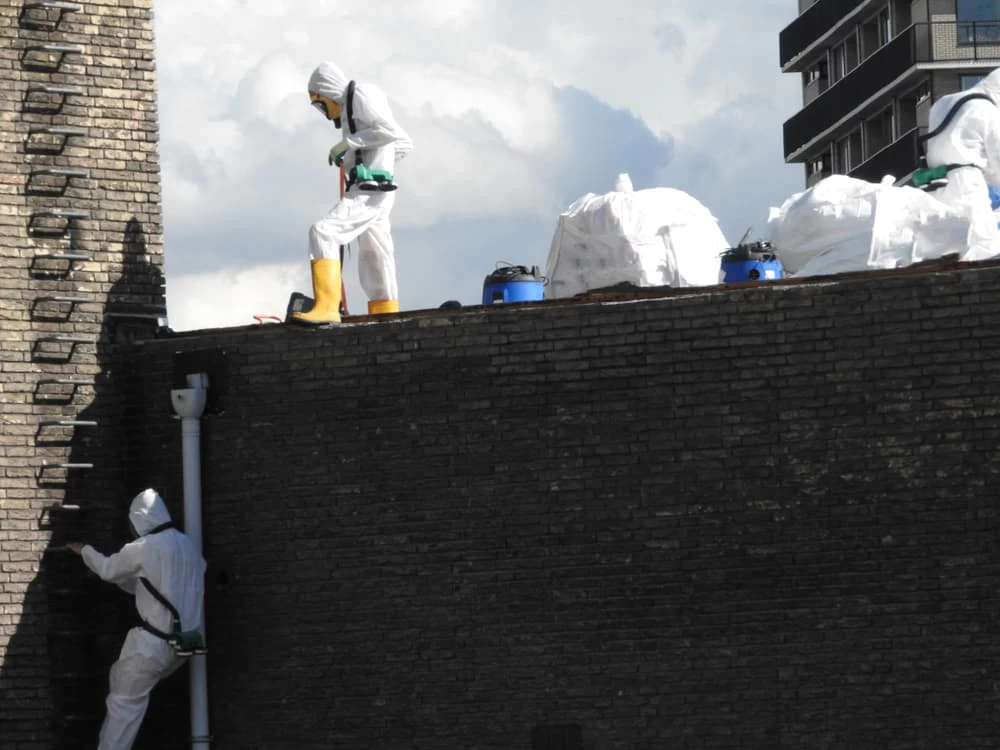
Once permits are in place, our licensed crew performs the removal using proper containment, negative air pressure, and regulated disposal procedures. When the work is done, we conduct post-abatement air monitoring and we give you the results in writing. That documentation is yours to keep. It’s the proof the job was done correctly, and in a market where older West Park properties change hands regularly, it’s worth having on file.
Asbestos abatement in West Park isn’t one-size-fits-all. The hamlet’s properties span nearly two centuries of construction, and the asbestos-containing materials found inside them reflect that range. We handle asbestos tile removal including the black mastic adhesive underneath, which is just as regulated as the tile itself. We handle popcorn ceiling removal, pipe and boiler insulation, plaster reinforcement, roofing and siding materials, and vermiculite attic insulation. If it’s in a pre-1980 structure in West Park, we’ve likely seen it before.
For the larger institutional properties in the hamlet the Holy Cross Monastery campus on Route 9W, or an estate-scale property like the Marist-affiliated Omega site we have the commercial capacity and regulatory documentation process to match. These aren’t residential tile jobs. They involve extensive mechanical systems, occupied spaces, and procurement requirements that need licensed, insured contractors with proper credentials. Our MBE, WBE, MWBE, and SBE certifications are government-verified and directly relevant to institutional and municipal procurement.
For homeowners, the scope usually comes down to what triggered the discovery a renovation, a storm, a burst pipe, or a pre-sale inspection. Whatever the starting point, we handle asbestos removal services alongside mold remediation, water damage restoration, and demolition when needed. One contractor, one timeline, no coordination gap between trades. We also bill insurance directly, which matters when the abatement is part of a larger weather or water damage claim.
Do I need a permit for asbestos removal in West Park, NY?
Yes and the consequences of skipping it are specific and documented. The Town of Esopus Building Department doubles all permit fees for any work started without a permit in place. Beyond the local building permit, New York State Industrial Code Rule 56 requires that any asbestos disturbance of 10 square feet or 25 linear feet or more be performed by a NYS DOL-licensed contractor, with mandatory project notifications filed before work begins.
In West Park, this applies to nearly any meaningful renovation in a pre-1980 structure which describes the vast majority of the hamlet’s housing stock. We handle both the state notification requirements and the local permit process as a standard part of every job. You don’t need to figure out which forms go where or which department handles what. That’s our responsibility, and we treat it that way.
How do I know if my older West Park home actually contains asbestos?
You don’t not without testing. Visual identification isn’t reliable, and many asbestos-containing materials look identical to their non-asbestos counterparts. The only way to confirm is through laboratory analysis of a collected sample, performed by a licensed inspector.
What you can do is assess the probability based on your home’s age and history. If your property was built or significantly renovated before 1980 which covers most of West Park’s housing stock there’s a reasonable chance asbestos-containing materials are present somewhere. The most common locations in the area’s older homes are steam pipe insulation in basement mechanical rooms, 9×9-inch vinyl floor tiles and the black adhesive beneath them, textured acoustic ceilings applied during mid-century updates, and vermiculite insulation in attics. If your home has multiple layers of flooring, original radiator systems, or hasn’t had a full mechanical update since the 1970s, those are the places to start. A licensed inspection gives you a definitive answer before any renovation work begins.
What happens if a burst pipe or flood disturbs asbestos materials in my West Park home?
This is one of the more common scenarios we see in West Park, and it’s worth understanding clearly. When water intrudes into a space where asbestos-containing materials are present pipe insulation, floor tiles, ceiling materials it can cause those materials to become wet and friable, meaning they start to break down and release fibers. A burst steam pipe wrapped in asbestos insulation is simultaneously a water damage event and an asbestos exposure event.
The Hudson River valley’s freeze-thaw cycle makes this a real seasonal risk in West Park. When pipes fail in January in a Victorian home that’s been sitting unoccupied through the winter, the damage can be significant before anyone discovers it. In that situation, you need a contractor who handles both sides water damage restoration and licensed asbestos abatement without requiring you to coordinate two separate companies on an emergency timeline. We are IICRC-certified for water and fire damage restoration and NYS DOL-licensed for asbestos abatement. We handle both, we’re available around the clock, and we bill insurance directly so the claim process doesn’t fall entirely on you.
How long does asbestos abatement typically take for a home in West Park?
It depends on the scope, and scope in West Park tends to be larger than average. A single-room tile removal in a modest home might take one to two days from setup to air clearance. A more complex project multiple material types, a larger square footage, or a historic property with original mechanical systems and extensive pipe runs can take several days to a week or more.
The permit and notification process adds time before the physical work begins. State notifications under Industrial Code Rule 56 have required lead times, and the Town of Esopus permit process has its own timeline. We factor all of that into the project schedule from the start, so you’re not surprised by regulatory delays mid-project. If you’re working against a renovation deadline or a listing date, tell us upfront we build the schedule around your real constraints, not a generic template.
Can asbestos abatement be done while I'm still living in the house?
In some cases, yes but it depends on where the asbestos is located and how extensive the work is. For a contained removal in a basement mechanical room or a single floor area, it’s often possible to maintain occupancy in other parts of the home with proper containment barriers and negative air pressure in the work zone. For larger projects, or when the work involves materials throughout the living space, temporary relocation is usually the safer and more practical option.
We walk through this during the initial assessment, before any work is scheduled. The goal is to give you an honest answer based on your specific property not a blanket policy. West Park’s older homes often have complex floor plans and original HVAC configurations that affect how containment can be set up. We account for that in the plan. Post-abatement air monitoring at the end of every job confirms the space is safe before you or your family returns to it.
Does asbestos abatement need to happen before I list my West Park home for sale?
New York State requires sellers to disclose known environmental hazards including asbestos to buyers. If you’re aware of asbestos in your home and don’t disclose it, you’re taking on legal and financial risk. If you do disclose it, it becomes a negotiating point that can affect your sale price, your timeline, or whether the deal closes at all.
Pre-sale abatement removes the issue from the transaction entirely. You complete the work, you receive the air clearance documentation, and you list the property with a clean environmental record. In West Park’s current market where Esopus median home prices have risen over 12% year-over-year and buyer competition is real removing a known liability from your listing is a straightforward way to protect your asking price and keep the sale on track. We work around listing timelines regularly, and we can give you a realistic schedule from inspection to clearance so you know exactly where you stand before you go to market.