Westhampton Beach Homes Built in the Wrong Era for Asbestos-Free Materials
Westhampton Beach homes carry decades of history and in many cases, decades of asbestos-containing materials hidden inside walls, under floors, and above ceilings. We handle asbestos abatement in Westhampton Beach from first inspection to final clearance, so your renovation moves forward without a stop-work order, a health risk, or a legal headache.
I needed a professional consultation explanation of procedure for safe removal of Asbestos in my apartment complex. Without having an account yet, I was very impressed with the caring, knowledgeable and generous advice offered by Jessica, and will look forward to doing business in the future. Thank you so much! I feel much more informed about a sometimes scary endeavor. Peace. Nancy Silva Mineola, NY.
Mia Munoz
Used this company to clean up some water flood in my house. They were fast and easy to work with.very professional, Would recommend to anyone!
Nini Valle
Great company, had a flood and they responded quickly and efficiently. Billed my insurance company directly. I highly recommend this company!
joe colapietro, jr
I had pipe freeze in my basement right before a snow storm and they made to within an hour to help start the clean up process. They we by our side throughout the entire process and even helped with the insurance company. They did such a great job with the cleanup, repair, remidiation, I contracted them to perform the repairs and finishes in the basement. They came with enough manpower and material to get the job done. Leo and Jessica were nothing but a pleasure to deal with!!
Cristian Arredondo c
I had some water damage in my home and Green Island was able to take care of my issue quickly and effectively. I am very pleased with the work they did. They responded quickly and were very professional.
Michael M
Outstanding service! From the office to the field crew everyone was friendly, helpful and responsive. I highly recommend Green Island Group.
The moment asbestos is properly identified and removed, a lot of things unlock. Your contractor can get back to work. Your renovation timeline stops being held hostage. And if you’re selling, your real estate attorney has the clearance documentation they need to move the deal forward without surprises.
For Westhampton Beach specifically, that matters more than most people realize. A significant portion of homes here were built or rebuilt in the years following the 1938 hurricane the storm that wiped out nearly every structure on the barrier beach. That post-war rebuilding boom produced homes loaded with the materials of that era: asbestos floor tiles, pipe insulation, textured ceilings, and roofing shingles that were standard practice at the time. If your home sits anywhere near Dune Road or dates back to the 1940s through the 1970s, the odds of encountering asbestos during a renovation are real.
The other thing that changes is peace of mind. Westhampton Beach has a median home value that’s crossed the million-dollar mark, and the market has been appreciating fast. A property with undocumented or improperly handled asbestos carries liability that follows it through every future transaction. When the abatement is done right and documented properly, that liability disappears and your asset is protected.
Licensed Asbestos Remediation in Westhampton Beach
We Know Westhampton Beach. We Know These Homes.
Green Island Group is a Long Island-based environmental services company specializing in asbestos abatement, lead remediation, and mold removal across Nassau and Suffolk Counties. We’ve worked on everything from mid-century beach cottages along the South Shore to high-value year-round residences in incorporated villages like Westhampton Beach where the permit process runs through the village’s own Building Department, not just the Town of Southampton.
That distinction matters. Westhampton Beach is one of the few communities on the East End with its own village government, its own zoning authority, and its own building department operating independently from Southampton Town. We understand how to coordinate filings at both levels, and we build that into every project from the start so nothing stalls because of a missed notification or a misunderstood jurisdiction.
Every project we take on is staffed by New York State-certified asbestos handlers and supervised by licensed project monitors. We carry all required credentials under NYS Code Rule 56, and we don’t subcontract the work out to someone else once you sign.
Asbestos Abatement Process in Westhampton Beach, NY
From Discovery to Clearance Here's the Full Picture
It starts with an inspection. A certified technician comes to your property, identifies any materials suspected of containing asbestos, and collects samples for laboratory analysis. This step is not optional in New York State under Code Rule 56, you cannot legally disturb asbestos-containing materials during a renovation or demolition without a prior survey. If your contractor hasn’t asked about this yet, that’s a conversation worth having before work begins.
Once the lab results come back, we walk you through exactly what was found, where it is, and what the abatement scope looks like. For many Westhampton Beach properties especially those with original flooring, older boiler systems, or textured ceilings from the 1960s and 1970s this is where homeowners find out they’re dealing with asbestos tile removal, pipe insulation, or popcorn ceiling material that needs to come out before the renovation can proceed. We give you a written scope and a clear estimate before anything else happens.
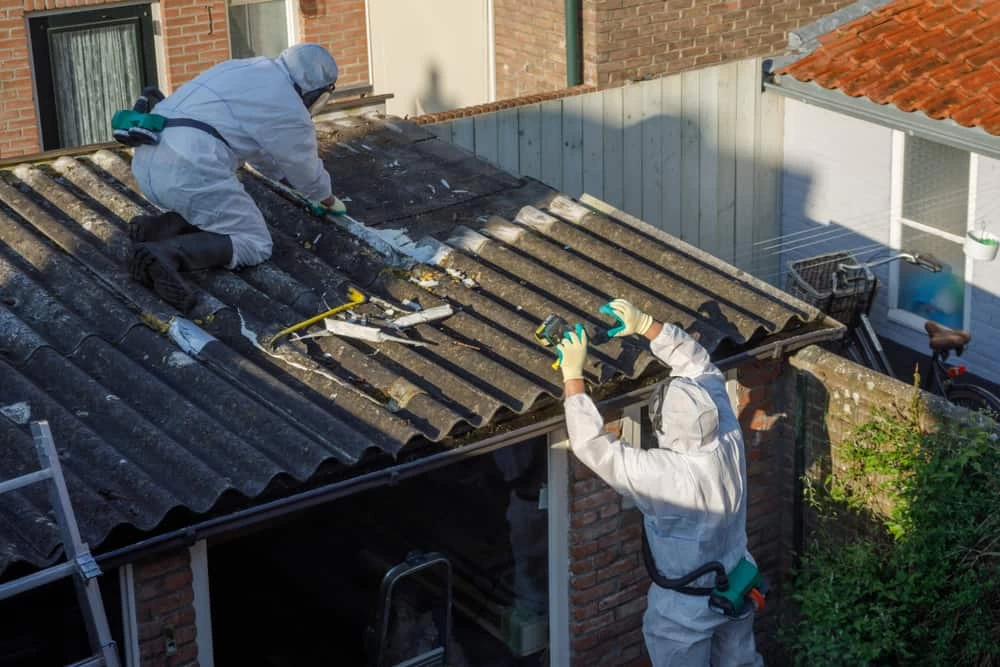
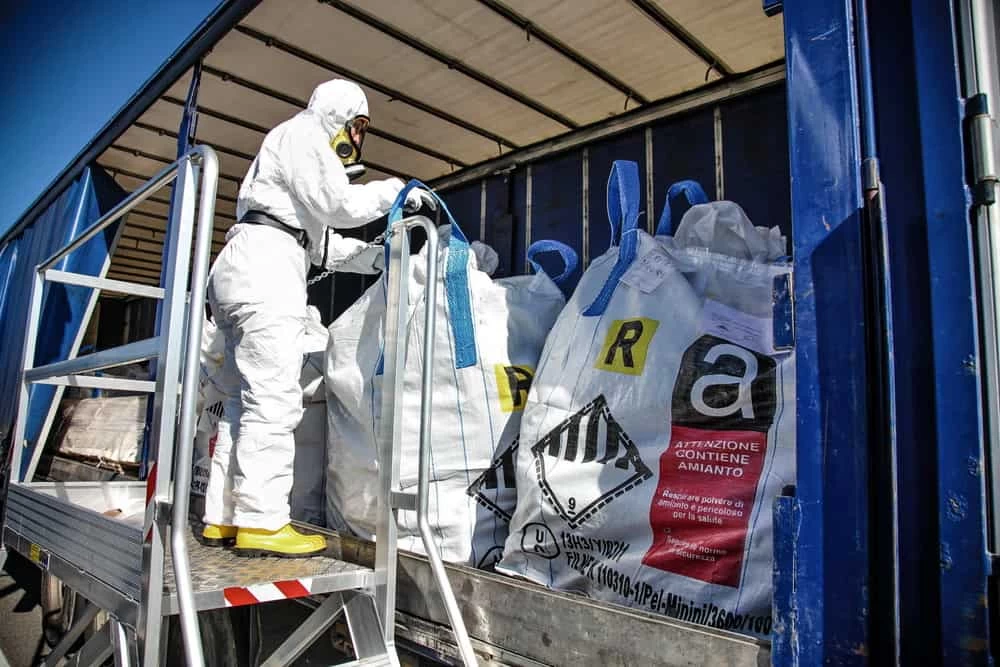
The abatement itself is performed by our licensed crew under containment protocols that prevent fiber migration to the rest of the property. Air monitoring runs throughout the project. When the work is done, a certified industrial hygienist conducts final clearance testing and you receive a full documentation package that includes the NYS DOL notification, air monitoring results, waste manifests, and the clearance letter. That package is what your attorney, your buyer, or your insurance company will ask for. We make sure you have it.
Asbestos Removal and Remediation Services Near You
Every Service Westhampton Beach Properties Actually Need
The most common asbestos abatement requests we handle in the Westhampton Beach area break down into a few specific categories, and they’re worth knowing about before your renovation gets underway.
Asbestos tile removal comes up constantly in homes built between the 1940s and 1970s exactly the era that defines most of the housing stock in this village. Vinyl asbestos floor tiles were one of the most widely used flooring materials of that period, and they’re still sitting under the hardwood, carpet, or luxury vinyl that was installed on top of them. When you’re doing a full renovation, those tiles have to be addressed properly before new flooring goes down. We handle the removal and disposal in full compliance with New York State regulations.
Asbestos popcorn ceiling removal is the other request we get regularly from Westhampton Beach homeowners, particularly those renovating homes from the 1960s and 1970s. Before any popcorn ceiling comes down, New York State requires testing. We handle both sampling first, and if asbestos is confirmed, full abatement before your contractor ever picks up a scraper. You don’t need to hire two separate companies for this.
Beyond tile and ceiling work, we also handle pipe insulation, joint compound, roofing materials, and siding all common ACM locations in coastal South Shore properties that have been through decades of weathering, storm damage, and layered renovations. If you’re not sure what you’re dealing with, the inspection will tell you.
Do I need a permit for asbestos removal in Westhampton Beach, NY?
Yes and in Westhampton Beach, that process is more layered than it is in most surrounding communities. Because Westhampton Beach is an incorporated village with its own Building Department, you’re dealing with two separate jurisdictions: the village itself and, depending on the scope of your project, the Town of Southampton as well. Renovation and demolition permits are issued at the village level, and the village’s Building Department operates Monday through Friday, 9 a.m. to 4 p.m.
On top of that, New York State’s Code Rule 56 requires notification to the NYS Department of Labor before any asbestos project above certain thresholds begins. For demolition work, federal EPA NESHAP regulations also apply, requiring a thorough asbestos survey before any structure comes down. We handle all of this the state notifications, the documentation, and the coordination with the local building department so you’re not trying to navigate two sets of requirements on your own while managing a renovation.
How do I know if my Westhampton Beach home actually contains asbestos?
The honest answer is that you can’t know without testing. Asbestos doesn’t have a color, a smell, or any visible marker that distinguishes it from non-asbestos materials. The only way to confirm it is laboratory analysis of a sample collected by a certified inspector.
That said, there are strong indicators based on your home’s age and construction history. If your property was built or substantially rebuilt between the late 1930s and 1980 which describes a large portion of Westhampton Beach’s housing stock, particularly homes on and around the barrier beach that were rebuilt after the 1938 hurricane there is a meaningful probability that asbestos-containing materials are present somewhere in the structure. Common locations include vinyl floor tiles, pipe and duct insulation, textured ceiling coatings, roofing shingles, and joint compound used in drywall finishing. If your home falls into that era and you’re planning any renovation work, an inspection before you start is the right call.
What does asbestos abatement actually cost in the Hamptons?
Cost depends on the scope what materials are involved, how much of it there is, where it’s located in the structure, and what the access conditions look like. For a targeted removal of asbestos floor tiles in a single room or a popcorn ceiling in one area of the home, you’re typically looking at a range starting around $2,000 to $5,000. Larger projects involving multiple material types, full-floor tile removal, or pipe insulation throughout a mechanical system can run $8,000 to $15,000 or more.
In the Westhampton Beach market, where renovation projects routinely involve high-value properties and larger overall scopes, asbestos abatement is generally a small line item relative to the full project budget. What matters more than the cost of abatement is the cost of doing it wrong a stop-work order mid-renovation, a failed clearance test, or undocumented removal that surfaces as a liability during a future sale can cost far more than the abatement itself. We provide written estimates with a clear scope before any work begins, so you know exactly what you’re paying for.
Can a contractor just work around asbestos instead of removing it?
Sometimes but it depends on the material, its condition, and what the renovation involves. There is a regulated approach called encapsulation, where intact, non-friable asbestos-containing materials are sealed or covered rather than removed. This is sometimes appropriate for materials that are in good condition and won’t be disturbed by the planned work. It is not a workaround for materials that will be cut, drilled, sanded, or demolished.
Under New York State Code Rule 56, any renovation or demolition activity that will disturb asbestos-containing materials requires a licensed asbestos contractor full stop. A general contractor who cuts through asbestos floor tile or sands down joint compound without proper containment and disposal is violating state law, regardless of whether they knew the material contained asbestos. The inspection step exists precisely to identify what’s there before work begins, so the right decision can be made about removal versus encapsulation before anyone picks up a tool.
I'm selling my Westhampton Beach home do buyers ask about asbestos?
In this market, yes and their attorneys ask even more directly. Westhampton Beach has one of the most active real estate markets on Long Island, with median listing prices around $1.86 million and year-over-year appreciation that has made buyers and their legal teams increasingly careful about environmental disclosures. Asbestos is a material fact that must be disclosed if known, and buyers’ inspectors in this price range are trained to flag suspect materials.
If asbestos has already been professionally abated and you have the clearance documentation the air monitoring results, the waste manifests, the NYS DOL notification, and the industrial hygienist’s clearance letter that package actually works in your favor. It tells a buyer that the issue was identified, handled by a licensed contractor, and closed out properly. That’s a very different conversation than discovering it mid-transaction and having to negotiate an abatement credit under pressure. Getting ahead of it before you list is almost always the better play.
Does storm damage to my home create an asbestos risk in Westhampton Beach?
It can, and it’s something coastal homeowners here should take seriously. Westhampton Beach sits directly on the South Shore of Long Island, in the path of Atlantic storms and nor’easters that can cause significant structural damage. When storm damage breaks open walls, cracks floor tiles, or disturbs pipe insulation in an older home, materials that were previously intact and non-friable can become friable meaning fibers can become airborne and create an inhalation hazard.
This is especially relevant for homes along Dune Road and the barrier beach, where storm exposure is highest and where much of the housing stock dates back to the post-1938 rebuilding era. If your property sustained structural damage in a storm and the home was built before 1980, an asbestos assessment should be part of your damage evaluation before any repair or reconstruction work begins. Beyond the safety issue, insurance documentation for storm-damaged properties often requires an environmental assessment, and having a licensed contractor’s report on file supports that process.