If you’ve just found something suspicious under your flooring or inside a wall, you don’t need a sales pitch you need someone who knows what they’re looking at. We provide licensed asbestos abatement in Westtown, NY, and we’ve been doing this long enough to know exactly what mid-century homes in Orange County tend to hide.
I needed a professional consultation explanation of procedure for safe removal of Asbestos in my apartment complex. Without having an account yet, I was very impressed with the caring, knowledgeable and generous advice offered by Jessica, and will look forward to doing business in the future. Thank you so much! I feel much more informed about a sometimes scary endeavor. Peace. Nancy Silva Mineola, NY.
Mia Munoz
Used this company to clean up some water flood in my house. They were fast and easy to work with.very professional, Would recommend to anyone!
Nini Valle
Great company, had a flood and they responded quickly and efficiently. Billed my insurance company directly. I highly recommend this company!
joe colapietro, jr
I had pipe freeze in my basement right before a snow storm and they made to within an hour to help start the clean up process. They we by our side throughout the entire process and even helped with the insurance company. They did such a great job with the cleanup, repair, remidiation, I contracted them to perform the repairs and finishes in the basement. They came with enough manpower and material to get the job done. Leo and Jessica were nothing but a pleasure to deal with!!
Cristian Arredondo c
I had some water damage in my home and Green Island was able to take care of my issue quickly and effectively. I am very pleased with the work they did. They responded quickly and were very professional.
Michael M
Outstanding service! From the office to the field crew everyone was friendly, helpful and responsive. I highly recommend Green Island Group.
Your Westtown Home Is Safe Again and You Can Prove It
When asbestos abatement is done right, you get more than a clean space. You get a written clearance certificate from an independent industrial hygienist documentation that confirms the air is safe, the material is gone, and the job was completed to New York State standards. That certificate matters whether you’re finishing a renovation, selling your home, or just trying to stop worrying.
Homes in Westtown and the surrounding Town of Minisink were built heavily during the 1950s, 60s, and 70s the exact decades when asbestos was used in nearly everything. Floor tiles, pipe insulation, popcorn ceilings, boiler jacketing, roofing felt. When Orange County’s freeze-thaw cycles and spring moisture work their way into an older basement or crawlspace, materials that were once stable can start to degrade. That’s when the risk becomes real.
Once abatement is complete, your renovation can move forward, your contractor can come back, and your home is no longer sitting in legal and health limbo. For Westtown homeowners selling a property, that clearance certificate is often the difference between a deal closing and a deal falling apart. Either way, you leave this process with something concrete not just a crew’s word for it.
Twelve Years In. Government-Vetted. Nothing to Hide.
We’ve been performing environmental remediation work across the New York metro area for 12 years. We hold the NYS Department of Labor Asbestos Contractor License required to legally perform abatement anywhere in New York State including right here in Orange County and Westtown. Our workers are individually certified under NYS requirements, and every project we complete includes post-abatement air monitoring and a written clearance certificate as standard.
We’ve worked for NYS Office of General Services, the Dormitory Authority of the State of New York, Nassau County, and Suffolk County. These aren’t references we drop to sound impressive they’re institutions that run formal procurement processes and verify every credential before a contract gets signed. That same standard applies to every residential project we take on in Westtown and the Town of Minisink, whether it’s a farmhouse off Route 284 or a 1970s ranch near Unionville.
We’re independently owned, not a franchise. That means when something goes wrong or when a homeowner in Westtown has a question at 9pm there’s a real company on the other end of the phone, not a call center routing you somewhere else.
It starts with an assessment. Before anything is removed, the suspected material gets tested. Sampling is done carefully and sent to an accredited lab. If asbestos is confirmed, we walk you through exactly what needs to come out, what the scope looks like, and what it’s going to cost before any work begins. No surprises.
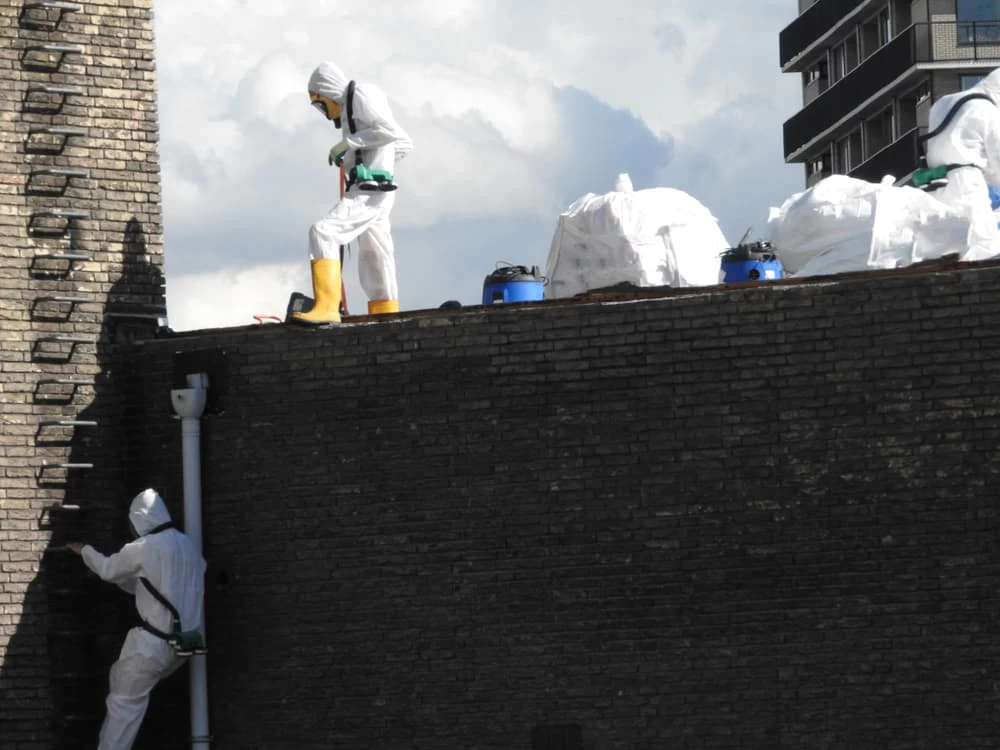
Once the project is scoped, we set up full containment around the work area. Negative air pressure systems keep fibers from migrating to other parts of your home. Our certified workers remove the material using proper PPE and NYS-compliant procedures, and all waste is sealed, labeled, and transported to a licensed disposal facility. For homes in the Town of Minisink, the governing framework is NYS DOL regulations under 12 NYCRR Part 56 there’s no additional NYC DEP layer to navigate here, which keeps the process more straightforward than it would be in the five boroughs.
After removal, an independent industrial hygienist conducts post-abatement air monitoring. If the space passes clearance and we don’t leave until it does you receive a written clearance certificate. That document is what your contractor, your real estate attorney, or your lender will need to see. It’s the finish line, and we don’t consider the job done until you have it in hand.
Asbestos Tile and Popcorn Ceiling Removal Westtown
What We Handle When Working on Your Westtown Home
Westtown’s housing stock is older, and older homes tend to have asbestos in more places than people expect. The most common materials we remove from homes in this area include vinyl asbestos floor tiles particularly the 9×9 and 12×12 tiles that were standard in mid-century construction popcorn ceiling texture applied through the late 1970s, pipe and boiler insulation common in oil-heated rural homes, roofing felt, and joint compound. If your home was built before 1980, there’s a reasonable chance more than one of these materials is present.
Beyond asbestos abatement, we also handle mold remediation, lead paint removal, water damage restoration, and fire damage cleanup. For a 1960s Westtown home with a basement moisture problem, those issues rarely travel alone you’ll often find asbestos pipe insulation and mold in the same space. Having one company handle all of it means fewer handoffs, fewer delays, and one person accountable for the whole project.
We also offer 0% APR financing up to $200,000 for qualifying projects and bill insurance companies directly when the work is tied to a covered event. If you discovered asbestos because a storm damaged your roof or a flood disturbed your basement both real scenarios in Orange County we can work directly with your insurer so you’re not managing that process on top of everything else.
Does asbestos abatement in Westtown require a permit or special approval?
Asbestos abatement in Westtown is governed by New York State Department of Labor regulations under 12 NYCRR Part 56 not by any local Westtown ordinance, since Westtown is a hamlet within the Town of Minisink without its own building authority. What that means practically is that the work must be performed by an NYS DOL-licensed asbestos contractor using certified workers, with proper containment, disposal, and post-abatement air monitoring. There’s no additional NYC DEP notification process or ACP-5 filing required here, which is one layer of complexity you don’t have to deal with compared to projects in the five boroughs.
The Town of Minisink’s building department handles local permits for renovation and construction work, and if your abatement is part of a larger renovation project, your general contractor may need to coordinate with the town on the broader scope. But the asbestos piece itself is regulated at the state level. The most important thing is making sure the contractor you hire is actually licensed you can verify any NYS DOL Asbestos Contractor License on the Department of Labor’s public website before you sign anything.
How do I know if my older Westtown home actually contains asbestos?
You can’t tell by looking at it. Asbestos fibers are microscopic, and the materials that contain them floor tiles, ceiling texture, pipe wrap, roofing felt look completely ordinary. The only way to confirm whether a material contains asbestos is to have it sampled and tested by an accredited laboratory. That’s the starting point for every legitimate abatement project.
What you can do is consider your home’s age and construction history. Homes built in Westtown and the broader Town of Minisink during the 1950s through the late 1970s were constructed during the peak era of asbestos use in American residential building. If your home has original flooring, an older oil boiler with pipe insulation, popcorn ceilings that have never been replaced, or roofing that hasn’t been touched in decades, there’s a real possibility asbestos is present in at least one of those materials. The safest approach before any renovation especially one that involves tearing out flooring, opening walls, or replacing a heating system is to have a licensed contractor assess the space and take samples before any work begins. Disturbing asbestos-containing material without knowing it’s there is how exposure happens.
Can I stay in my house while asbestos abatement is being done?
It depends on the scope and location of the work. For smaller, contained projects like removing asbestos floor tiles from a single room or addressing pipe insulation in a basement it’s sometimes possible for occupants to remain in unaffected parts of the home, provided the work area is fully sealed and under negative air pressure. For larger projects involving multiple rooms or materials throughout the living space, temporary relocation is usually the safer and more practical choice.
In Westtown, where most homes are detached single-family properties on larger lots, containment setup is generally more straightforward than in attached or multi-unit buildings. That said, the decision about whether you can stay isn’t one to make casually. A licensed contractor should walk through the project scope with you, explain what containment looks like for your specific home, and give you an honest answer based on the actual conditions not a blanket yes or no. If relocation is needed, even temporarily, that’s worth factoring into your planning before the project starts.
What does asbestos abatement typically cost for a home in Orange County?
Cost varies based on what materials are present, how much of them need to be removed, and where they’re located in the home. A straightforward removal of asbestos floor tiles in a single room might run a few thousand dollars. A more involved project like removing pipe insulation throughout a basement, addressing popcorn ceilings in multiple rooms, or handling materials discovered mid-renovation can range significantly higher depending on scope. For whole-house abatement before a major renovation, costs can reach into the tens of thousands.
For Westtown homeowners, the most important thing to understand is that the cost of proper abatement is almost always less than the cost of what happens when it’s done wrong whether that’s a failed real estate transaction, a regulatory fine for unlicensed work, or a health issue that surfaces years later. If cost is a concern, we offer 0% APR financing up to $200,000 for qualifying projects, which can make an unexpected expense manageable without derailing a renovation budget you were already committed to. The best way to get an accurate number is to have the space assessed and the materials tested estimates without sampling are just guesses.
What happens if asbestos is found during a home sale in Westtown, NY?
It’s one of the most common scenarios we deal with. A home inspector flags a potential asbestos-containing material, the buyer’s attorney gets involved, and suddenly the transaction is on hold until the issue is resolved. In some cases, the seller agrees to abatement before closing. In others, the parties negotiate a price adjustment. Either way, the timeline gets compressed fast and that’s when having a licensed contractor who can move quickly matters.
The documentation that resolves the situation is a post-abatement clearance certificate from an independent industrial hygienist. That’s the document your real estate attorney, the buyer’s lender, and the title company will want to see. It confirms that the material was removed by a licensed contractor, that post-abatement air monitoring was conducted, and that the space cleared. Without that certificate, the abatement might as well not have happened from a legal and transactional standpoint. If you’re in the middle of a home sale in the Town of Minisink or anywhere in Orange County and asbestos just became an issue, call us we understand the timeline pressure and we know what documentation you need to get to closing.
How long does asbestos abatement take from start to finish?
The timeline depends on the scope of the project. A targeted removal one material type in a single area can often be completed in one to two days, with post-abatement clearance testing following shortly after. Larger projects involving multiple materials or multiple areas of a home will take longer, sometimes several days to a week or more, before the clearance certificate is issued and the space is ready for reoccupancy or continued renovation.
For Westtown homeowners who discovered asbestos mid-renovation, the relevant question isn’t just how long abatement takes it’s how quickly we can get started. We operate around the clock, and we understand that every day your renovation is on hold is a real cost. We work to schedule assessments and mobilize quickly, especially when a general contractor is waiting to resume work. The full timeline from initial assessment to clearance certificate varies by project, but we’ll give you a realistic schedule upfront so you’re not guessing while your renovation sits idle.