White Plains Buildings Hide What Renovations Uncover
If your White Plains property was built before 1980, there’s a real chance asbestos is sitting inside it right now in the floor tiles, the ceiling, the pipes. We give you a clear answer and a licensed path forward.
I needed a professional consultation explanation of procedure for safe removal of Asbestos in my apartment complex. Without having an account yet, I was very impressed with the caring, knowledgeable and generous advice offered by Jessica, and will look forward to doing business in the future. Thank you so much! I feel much more informed about a sometimes scary endeavor. Peace. Nancy Silva Mineola, NY.
Mia Munoz
Used this company to clean up some water flood in my house. They were fast and easy to work with.very professional, Would recommend to anyone!
Nini Valle
Great company, had a flood and they responded quickly and efficiently. Billed my insurance company directly. I highly recommend this company!
joe colapietro, jr
I had pipe freeze in my basement right before a snow storm and they made to within an hour to help start the clean up process. They we by our side throughout the entire process and even helped with the insurance company. They did such a great job with the cleanup, repair, remidiation, I contracted them to perform the repairs and finishes in the basement. They came with enough manpower and material to get the job done. Leo and Jessica were nothing but a pleasure to deal with!!
Cristian Arredondo c
I had some water damage in my home and Green Island was able to take care of my issue quickly and effectively. I am very pleased with the work they did. They responded quickly and were very professional.
Michael M
Outstanding service! From the office to the field crew everyone was friendly, helpful and responsive. I highly recommend Green Island Group.
Most asbestos problems in White Plains don’t surface until someone starts a renovation and by then, the material is already disturbed. That’s the worst-case scenario, and it’s entirely avoidable. A proper inspection before any demo or remodel work begins puts you in control of the timeline, the cost, and the outcome.
White Plains has a lot of pre-1980 housing stock, especially in neighborhoods like Gedney Farms and Fisher Hill where older homes are still being updated and transacted at high prices. Those homes commonly contain asbestos in floor tiles, boiler insulation, acoustic ceiling texture, and pipe wrap materials that are fine when left alone but become a regulated problem the moment they’re disturbed without proper handling.
The downtown commercial buildings are a separate category entirely. The office towers and civic structures built during White Plains’ urban renewal era much of the 1960s and 1970s used asbestos heavily for fireproofing and insulation. If you manage or own one of those properties and a renovation or tenant buildout is coming, a pre-work asbestos survey isn’t optional. It’s required. Getting that handled early means no project shutdowns, no regulatory surprises, and documentation that protects you on every side.
We hold a NYS Department of Labor Asbestos Handling License, NYC DEP Asbestos Contractor License, EPA certification, and NYS DEC compliance for disposal. Those aren’t claims they’re public records you can look up. In a market like White Plains, where property managers, real estate attorneys, and institutional clients actually check credentials before signing anything, that matters.
We’re also M/WBE certified through the NYS Office of General Services a formal state designation that makes us eligible for county and municipal contracts. That’s relevant in White Plains specifically, given that this is the Westchester County seat and a significant portion of the local market includes government-managed and institutionally owned buildings.
With more than 5,000 completed projects across the New York metro area, we’ve handled everything from single-family homes in established Westchester neighborhoods to commercial abatement in occupied high-rise buildings. We know what these projects involve, and we give you the documentation to prove it was done right.
It starts with a free on-site inspection. A licensed representative comes to your White Plains property, assesses the materials in question, and tells you plainly what you’re dealing with. If testing is needed, we walk you through what that looks like and what it costs. No charge for the initial visit, no obligation to move forward.
If asbestos-containing materials are confirmed, we file the required notification with the NYS Department of Labor a mandatory step under Industrial Code Rule 56 that requires a minimum of 10 business days before abatement work can begin on most projects. We handle that filing. We also pull any permits required by the White Plains Building Department for your specific scope of work, so that piece doesn’t fall on you.
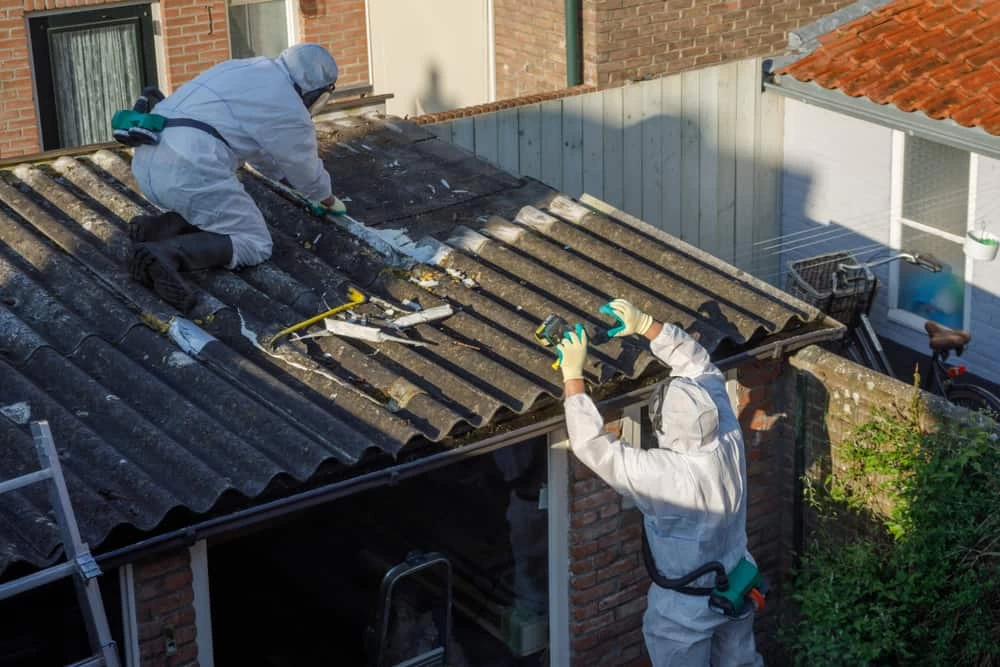
The abatement itself follows a contained, regulated process proper enclosure of the work area, wet removal methods where required, and air monitoring throughout. When the work is complete, we conduct post-abatement air clearance testing and provide you with full written documentation: clearance test results, a waste disposal manifest showing chain-of-custody disposal at an approved NYS DEC facility, and a project completion record. That paperwork is what protects you in a real estate transaction, a lease renewal, or a regulatory audit and it’s a standard deliverable on every project we complete.
We handle the full range of asbestos-containing materials found in White Plains’ residential and commercial building stock. In older single-family homes particularly in Gedney Farms, Fisher Hill, and the surrounding neighborhoods that typically means vinyl floor tiles, acoustic ceiling texture, pipe and boiler insulation, and drywall joint compound. In the downtown commercial buildings from the urban renewal era, we commonly encounter fireproofing spray on structural steel, acoustic ceiling tile systems, floor tile adhesives, and HVAC duct insulation.
For residential clients in White Plains, that often means asbestos tile removal or popcorn ceiling removal ahead of a kitchen or bathroom remodel, a basement finishing project, or a pre-sale remediation before listing. For commercial clients property managers, building owners, developers it typically means a pre-renovation or pre-demolition asbestos survey followed by licensed abatement that keeps the project timeline intact and the regulatory record clean.
We also handle emergency abatement when water damage disturbs asbestos-containing materials in older White Plains buildings a situation that comes up more than people expect, especially in basement mechanical spaces after heavy rain or a pipe failure. In those cases, we work directly with your insurance carrier and manage the billing on your behalf, so you’re not navigating two separate processes at once. Whatever the scope, you get a single point of contact and full documentation when the job is done.
Does my White Plains home actually need an asbestos inspection before renovating?
If your home was built before 1980, yes and in New York, it’s not just a recommendation. Under NYS Industrial Code Rule 56, any renovation that will disturb materials suspected of containing asbestos requires a pre-renovation inspection by a licensed asbestos investigator. That applies whether you’re updating a kitchen in a Gedney Farms Colonial or finishing a basement in an older Fisher Hill split-level.
The practical reason matters just as much as the legal one. If your contractor starts demo and hits asbestos-containing floor tiles or pipe insulation without a prior inspection, the project stops. The area has to be cleared, the material has to be tested, and now you’re dealing with an emergency abatement situation instead of a planned one. That costs more, takes longer, and creates a documentation gap that can surface later in a real estate transaction. A free inspection before the renovation starts eliminates all of that.
How long does asbestos abatement take for a typical White Plains property?
It depends on the scope, but for a standard residential project floor tile removal, popcorn ceiling abatement, or pipe insulation in a single area the actual removal work typically takes one to three days. What adds time is the mandatory NYS DOL notification period, which requires a minimum of 10 business days before abatement work can begin on most projects. That’s a regulatory requirement, not something any contractor can waive or speed up.
For commercial projects in White Plains tenant buildouts in downtown office buildings, pre-demolition abatement in larger structures the timeline extends based on the volume of material and the complexity of containment. If the building is occupied, sequencing the work around active tenants adds another layer of planning. The key is starting the process early. If you have a closing date, a lease deadline, or a renovation start date, bring us in as soon as possible so the notification period and project timeline don’t become a bottleneck.
What types of asbestos-containing materials are most common in White Plains buildings?
In White Plains’ older residential neighborhoods, the most frequently encountered materials are 9×9 and 12×12 vinyl floor tiles especially in kitchens, bathrooms, and basements along with the black mastic adhesive beneath them. Acoustic ceiling texture, commonly called popcorn ceiling, is another common find in homes built between the 1950s and late 1970s. Pipe insulation and boiler jacketing in basement mechanical rooms are also widespread, particularly in homes with older heating systems.
In the commercial buildings that define White Plains’ downtown many of them constructed during the 1960s and 1970s urban renewal period the picture is different. Fireproofing spray applied to structural steel beams, acoustic ceiling tile systems, and HVAC duct insulation are the primary materials we encounter in those structures. Each material type requires a different handling method, and some like fireproofing spray require more extensive containment protocols than others. Knowing what you likely have before the inspection helps set expectations, but the only way to confirm is a proper sample and lab analysis.
Can I stay in my home during asbestos abatement in White Plains?
For most residential abatement projects, the answer depends on where the work is being done and how the containment is set up. If the abatement is isolated to a single room or area a basement, a bathroom, or a specific section of flooring and proper containment barriers are in place, it’s sometimes possible to remain in other parts of the home. That determination gets made on a project-by-project basis based on the scope, the material type, and the layout of your property.
For larger projects, or any situation where the abatement involves materials that are more friable or widespread like ceiling texture throughout a main living area temporary relocation is the safer and more practical choice. We’ll tell you clearly what we recommend before work begins, and we won’t give you a vague answer just to make the project easier to sell. Your safety and the integrity of the clearance testing are what drive that recommendation, not convenience.
What documentation will I receive after asbestos abatement in White Plains, NY?
Every completed project includes three core documents: post-abatement air clearance test results confirming that fiber counts in the abated area meet the required clearance standard, a waste disposal manifest showing that all asbestos-containing material was transported and disposed of at an approved NYS DEC facility, and a written project completion record detailing the scope of work performed.
In White Plains’ active real estate market, that documentation is often what makes or breaks a transaction. Sellers of pre-1980 homes in neighborhoods like Gedney Farms or Fisher Hill need clearance records that will hold up to scrutiny from buyers, lenders, and real estate attorneys. Commercial property owners need compliance records that protect them in lease renewals, regulatory audits, and future renovation permits. We provide all of it as a standard deliverable not something you have to ask for separately or pay extra to receive.
Does Green Island Group handle asbestos abatement in White Plains commercial buildings?
Yes, and commercial work is a significant part of what we do in this market. White Plains has a large inventory of commercial buildings constructed during the 1960s and 1970s the office towers, civic structures, and mixed-use developments built during the city’s urban renewal period. Those buildings were constructed at the height of asbestos use in commercial construction, and many are now cycling through renovations, tenant buildouts, or redevelopment projects that trigger mandatory pre-work asbestos surveys under EPA NESHAP regulations.
We handle pre-renovation and pre-demolition asbestos surveys, licensed abatement in occupied commercial environments, and the full regulatory filing process including EPA NESHAP notifications and NYS DOL project filings so your team isn’t managing that paperwork on top of everything else. Our M/WBE certification through the NYS Office of General Services also makes us eligible for county and municipal contracts, which is directly relevant in White Plains given its role as the Westchester County seat. If you manage or own commercial property here, we’re set up to handle what your project actually requires.