1973 Buildings in Whitney Young Don't Keep Quiet About Asbestos
If you’re renovating, rehabbing, or managing property in Whitney Young, asbestos abatement isn’t optional it’s the law. We handle it right, start to finish.
I needed a professional consultation explanation of procedure for safe removal of Asbestos in my apartment complex. Without having an account yet, I was very impressed with the caring, knowledgeable and generous advice offered by Jessica, and will look forward to doing business in the future. Thank you so much! I feel much more informed about a sometimes scary endeavor. Peace. Nancy Silva Mineola, NY.
Mia Munoz
Used this company to clean up some water flood in my house. They were fast and easy to work with.very professional, Would recommend to anyone!
Nini Valle
Great company, had a flood and they responded quickly and efficiently. Billed my insurance company directly. I highly recommend this company!
joe colapietro, jr
I had pipe freeze in my basement right before a snow storm and they made to within an hour to help start the clean up process. They we by our side throughout the entire process and even helped with the insurance company. They did such a great job with the cleanup, repair, remidiation, I contracted them to perform the repairs and finishes in the basement. They came with enough manpower and material to get the job done. Leo and Jessica were nothing but a pleasure to deal with!!
Cristian Arredondo c
I had some water damage in my home and Green Island was able to take care of my issue quickly and effectively. I am very pleased with the work they did. They responded quickly and were very professional.
Michael M
Outstanding service! From the office to the field crew everyone was friendly, helpful and responsive. I highly recommend Green Island Group.
When a building constructed in 1973 gets touched whether that’s a kitchen gut, a bathroom overhaul, or a pipe repair after a winter freeze whatever’s inside those walls and floors becomes your legal responsibility. In Whitney Young, that’s not a hypothetical. The two towers at 354–358 Nepperhan Avenue are right in the middle of a multi-year, multi-million-dollar rehabilitation, and every interior renovation in a building of that age requires a proper asbestos assessment before a single tile gets pulled or a pipe gets cut.
Once abatement is done correctly, the project moves forward cleanly. No stop-work orders. No liability exposure. No scrambling to find a licensed contractor after the fact. For property managers and building owners in Whitney Young, that kind of clean documentation trail matters especially when institutional funders, NYSERDA reviewers, or the Yonkers IDA are watching the project.
For residents and small landlords in the surrounding Nepperhan Avenue corridor, it’s simpler than that. You get to renovate without worry. You get a paper record that proves the work was done right. And you don’t have to wonder whether the air in your building is safe because you’ll have the clearance testing results to confirm it.
Licensed Asbestos Contractor in Westchester County
Every License, Every Step, No Subcontracting
We hold the NYS Department of Labor Asbestos Handling License the specific credential the City of Yonkers’ building code requires before any abatement work can legally proceed. We also carry EPA certification, NYS DEC disposal compliance, and a state-issued M/WBE certification from the NYS Office of General Services. That last one matters more in the Whitney Young market than most, because the Yonkers IDA and Westchester County both have M/WBE participation goals for publicly-supported projects and Whitney Young Manor’s ongoing rehabilitation falls squarely in that category.
What sets us apart from a lot of contractors in this space is that nothing gets handed off. Inspection, containment, removal, disposal, and post-abatement air clearance testing all happen under one roof, with one accountable team. Over 5,000 completed projects. Westchester County is an active service area not a one-off trip. And the first step, a free on-site inspection, costs you nothing.
It starts with a free on-site inspection. One of our technicians comes to your property, walks the space, and assesses which materials may contain asbestos floor tiles, pipe insulation, duct wrap, ceiling texture, joint compound, whatever the building’s age and construction type suggest. For a 1973-built high-rise like the towers on Nepperhan Avenue in Whitney Young, that list can be long. For a smaller building in the surrounding southwest Yonkers corridor, it might be more targeted. Either way, you get a clear scope and a written estimate before anything else happens.
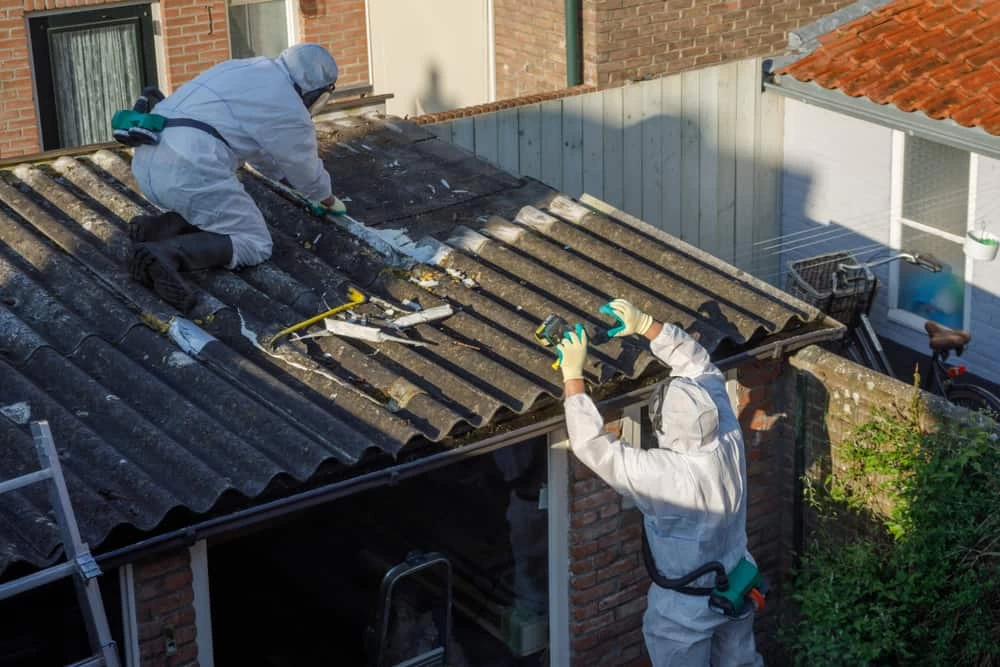
If abatement is required, our crew sets up negative air pressure containment which means airflow moves into the work area, not out of it. That’s the engineering control that protects residents in adjacent units from fiber migration during active removal. It’s a regulatory requirement under NYS Industrial Code Rule 56, and it’s standard practice on every job we run, not something we do only on big contracts.
After removal, air monitoring confirms that fiber counts are within acceptable limits. You receive formal clearance documentation the paper record that satisfies Yonkers building inspectors, IDA compliance reviewers, insurance carriers, and anyone else who needs proof that the work was done correctly. That documentation is a standard deliverable, not an add-on.
Asbestos Removal and Tile Removal in Whitney Young
What's Covered When We Show Up
The material types that show up most often in Whitney Young and the surrounding southwest Yonkers housing stock are exactly what we handle every day. Vinyl asbestos tile and the adhesive underneath it. Pipe and duct insulation throughout aging mechanical systems. Acoustic ceiling texture the popcorn finish that was standard in multifamily construction through the 1970s. Drywall joint compound. Boiler and heating system insulation. Fireproofing on structural steel. In a building built in 1973, these aren’t rare finds they’re expected.
For the Whitney Young Manor rehabilitation specifically, the scope of interior renovation underway all 195 units, kitchens, bathrooms, mechanical systems means virtually every material category is in play. We handle the full inventory in a single coordinated scope, so there’s no need to bring in multiple specialty contractors for different material types and no gaps in the documentation chain.
For smaller jobs in the surrounding Getty Square and Nepperhan Avenue corridor a landlord renovating a pre-1960s apartment, a property manager dealing with a water-damaged unit the same process applies at a smaller scale. Every worker on every job holds an individual NYS DOL asbestos handler certificate. Every disposal manifest is tracked and documented. Every project ends with clearance testing results in hand.
Does renovating a 1973 apartment building in Whitney Young require asbestos testing first?
Yes and it’s not optional. Under NYS Industrial Code Rule 56 and the City of Yonkers’ Chapter 55 building code, any renovation that disturbs materials in a pre-1980 building triggers mandatory asbestos assessment requirements. A building constructed in 1973, like the towers at Whitney Young Manor, falls squarely in the highest-risk era for asbestos-containing materials. Floor tiles, pipe insulation, ceiling texture, and joint compound were all commonly asbestos-containing in construction of that period.
If you start renovation work without assessing those materials first and asbestos is later found, the project stops. You’re looking at a stop-work order, potential fines, and the cost of emergency abatement on top of whatever work was already underway. Getting the inspection done before demo begins is not just the legally correct move it’s the financially smart one. We offer free on-site inspections with no obligation, so there’s no cost barrier to getting that answer before work starts.
What materials in older Whitney Young apartment buildings most commonly contain asbestos?
In the Whitney Young housing stock and the broader southwest Yonkers area buildings along the Nepperhan Avenue corridor and Getty Square, most of which were built between 1940 and 1973 the most common asbestos-containing materials are vinyl floor tiles and the black mastic adhesive underneath them, pipe insulation wrapped around steam and hot water lines, duct insulation, acoustic ceiling texture (the popcorn finish), drywall joint compound, and boiler insulation. Fireproofing on structural steel is also common in high-rise buildings of that era.
The tricky part is that these materials don’t always look dangerous. Vinyl asbestos tile can look like ordinary flooring. Pipe insulation that’s been painted over for decades doesn’t announce itself. That’s why a professional inspection matters not a visual guess, but actual material sampling and lab analysis. Our inspectors know what to look for in buildings of this age and construction type, and we’ll give you a clear picture of what’s present before any work begins.
What happens if a pipe bursts in winter and disturbs asbestos insulation in my building?
This is one of the most common emergency scenarios in Whitney Young and southwest Yonkers, where older buildings with aging plumbing are subject to freeze-thaw pipe failures every winter. When a pipe bursts and the resulting water damage disturbs asbestos-containing pipe insulation or floor tiles, that disturbance creates a regulated asbestos condition under New York State law even if the damage was accidental and even if the building owner had no idea the insulation contained asbestos.
In that situation, you can’t just dry out the unit and move on. The disturbed material has to be assessed, and if asbestos is confirmed, the area needs to be properly contained and abated by a licensed contractor before any restoration work proceeds. We handle exactly this kind of scenario. We work directly with insurance carriers and manage billing on behalf of the property owner, which removes a significant administrative burden when you’re already dealing with a water damage claim. The faster you get a licensed contractor on-site to assess and contain the situation, the better both for resident safety and for limiting your liability exposure.
Does Green Island Group's M/WBE certification matter for Whitney Young Manor's rehabilitation project?
It matters quite a bit. The Yonkers Industrial Development Agency, which approved a $79.5 million private investment package for Whitney Young Manor’s rehabilitation in 2022, and Westchester County both maintain M/WBE participation goals for publicly-supported development projects. When a rehabilitation is financed through IDA approvals, LIHTC tax credits, or NYSERDA funding all of which are involved in the Whitney Young Manor renovation contractors with verified M/WBE status are not just preferred, they’re often required to meet participation thresholds.
We hold a formal M/WBE certification from the NYS Office of General Services. This is a government-issued designation that required documentation and state agency review not a self-designation or a marketing label. For development entities, general contractors, or property managers working on publicly-supported rehabilitation projects in Whitney Young, hiring a state-certified M/WBE abatement contractor is a compliance move, not just a preference. It’s also worth noting that no other asbestos abatement contractor identified in the local Westchester market publicly holds or claims this certification.
How long does asbestos abatement take in a multifamily building, and will residents be displaced?
The timeline depends on the scope of materials being abated and how many units or areas are involved. A single-unit abatement in an occupied building say, floor tile and pipe insulation in one apartment can typically be completed in one to three days. A building-wide or multi-unit scope, like what’s underway at Whitney Young Manor, is phased over a longer period and coordinated with the overall renovation schedule.
Resident displacement during abatement is determined by the location and type of materials being removed. In occupied buildings, we use negative air pressure containment to prevent fiber migration into adjacent units and common areas which is the engineering control that allows abatement to proceed in one part of a building while residents continue to occupy other areas. Whether a specific unit needs to be temporarily vacated depends on the work scope in that unit. Your inspection and scope of work will spell out exactly what’s required, so there are no surprises for residents or property managers once the job starts.
Is asbestos abatement in Whitney Young, NY covered by homeowner's or property insurance?
It depends on how the abatement need was triggered. If asbestos-containing materials were disturbed by a covered event a pipe burst, water damage, or another sudden incident the abatement required to address that disturbance is often covered under a standard property insurance policy as part of the broader remediation claim. This is a common situation in the older housing stock throughout Whitney Young and southwest Yonkers, where aging plumbing and building systems create recurring water damage events.
If the abatement is part of a planned renovation you’re updating kitchens, replacing flooring, or upgrading mechanical systems that’s typically treated as a project cost rather than an insurance claim. For the Whitney Young Manor rehabilitation specifically, abatement costs are built into the overall renovation budget as a required line item, not an insurance matter. We work directly with insurance carriers on covered claims, handling the documentation and billing coordination so property owners and managers aren’t stuck navigating that process on their own during an already stressful situation.