When the Black Dirt Region's Oldest Homes Reveal What's Hidden Inside
Asbestos abatement in Wilcox starts with a licensed contractor who actually knows what they’re dealing with and gets it done right so your renovation, your sale, or your peace of mind isn’t stuck waiting.
I needed a professional consultation explanation of procedure for safe removal of Asbestos in my apartment complex. Without having an account yet, I was very impressed with the caring, knowledgeable and generous advice offered by Jessica, and will look forward to doing business in the future. Thank you so much! I feel much more informed about a sometimes scary endeavor. Peace. Nancy Silva Mineola, NY.
Mia Munoz
Used this company to clean up some water flood in my house. They were fast and easy to work with.very professional, Would recommend to anyone!
Nini Valle
Great company, had a flood and they responded quickly and efficiently. Billed my insurance company directly. I highly recommend this company!
joe colapietro, jr
I had pipe freeze in my basement right before a snow storm and they made to within an hour to help start the clean up process. They we by our side throughout the entire process and even helped with the insurance company. They did such a great job with the cleanup, repair, remidiation, I contracted them to perform the repairs and finishes in the basement. They came with enough manpower and material to get the job done. Leo and Jessica were nothing but a pleasure to deal with!!
Cristian Arredondo c
I had some water damage in my home and Green Island was able to take care of my issue quickly and effectively. I am very pleased with the work they did. They responded quickly and were very professional.
Michael M
Outstanding service! From the office to the field crew everyone was friendly, helpful and responsive. I highly recommend Green Island Group.
Your Project Moves Forward. Your Family Stays Safe.
When asbestos turns up mid-renovation in an older Warwick-area farmhouse, everything stops. Your contractor steps back, your timeline falls apart, and suddenly you’re searching for someone who can assess the situation, remove the material legally, and get you a clearance certificate before the whole project stalls out completely. That’s the moment most Wilcox homeowners find themselves in and it’s exactly what we handle.
The housing stock in and around Wilcox is older, rural, and often untouched for decades. Pre-1980 farmhouses along County Route 1 and the Pine Island Turnpike corridor carry asbestos in places that look completely harmless floor tiles, pipe insulation, popcorn ceilings, roofing, duct wrap. You don’t always know it’s there until something gets disturbed. And in this area, where the Wallkill River’s flooding history means older structures have absorbed decades of moisture and settling, the materials that contain asbestos are often the same ones showing wear.
Once the abatement is done correctly contained, removed, and independently air-monitored you get a written clearance certificate. That document is what your lender needs, what a buyer’s agent will ask for, and what lets your contractor get back to work. In a market where Warwick-area homes are trading near $620,000, a clean clearance isn’t just a formality. It’s what keeps your deal alive.
Vetted by New York State Before We Ever Showed Up at Your Door
We’ve been doing licensed environmental remediation work across New York for over 12 years not as a franchise, not as a call center routing jobs to whoever’s available, but as an independently owned company with a real team and real accountability on every project we take on in Wilcox and the surrounding Orange County area.
The credentials that matter here are the ones the State of New York issues and verifies. We hold the NYS Department of Labor Asbestos Contractor License the license required for any legal asbestos removal in New York State, including right here in Orange County. We also carry EPA Lead/RRP Certification and hold dual M/WBE certification from both NYS and NYC, which requires ongoing government audits to maintain. Our completed work for the NYS Office of General Services, DASNY, and the NYS Office of Mental Health isn’t a marketing claim those agencies vet contractors rigorously before awarding a single contract.
For a homeowner in Wilcox dealing with an older property in the Pine Island area, that level of documented accountability matters. You’re not guessing whether the work was done right. There’s a paper trail, a clearance certificate, and our licensed contractor’s name attached to every job.
Most calls start the same way: someone pulled up old floor tiles, opened a wall, or got a flag on a home inspection and now they need to know what happens next. Here’s how it actually goes.
First, the material gets assessed. If testing confirms asbestos-containing material, the scope of work gets documented and a written estimate is provided before anything else moves forward. In New York State, the NYS Department of Labor requires notification before most abatement projects begin we handle that on your behalf as part of the process, not something you need to navigate separately. For properties in the Town of Warwick, any permitted renovation work that disturbs ACMs also needs to be addressed before the building department will sign off, so the documentation trail matters from the start.
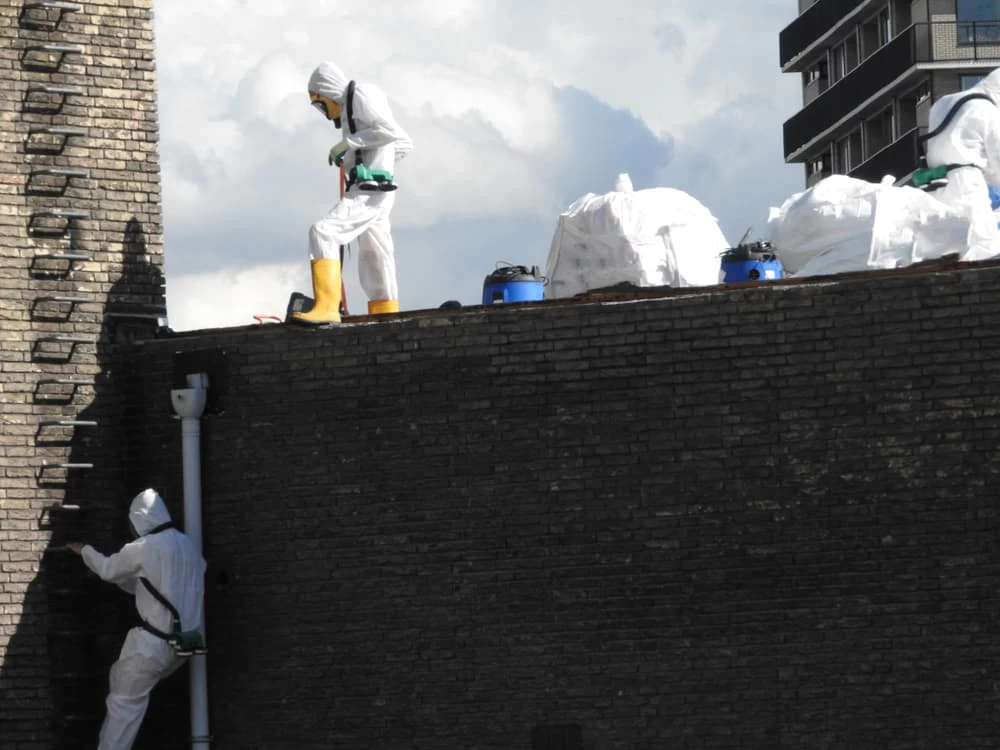
Once the project is underway, the affected area is contained using regulated protocols negative air pressure, sealed containment, and proper protective equipment for the crew. The material is removed, packaged, and disposed of according to NYS DOL and EPA requirements. After removal, an independent industrial hygienist conducts air monitoring to confirm the space is clear. That monitoring results in a written clearance certificate the document your contractor, your lender, and your buyer’s agent will all want to see. From the first call to final clearance, the process is designed to be straightforward, documented, and done right the first time.
Every Material Type, Every Structure, Fully Documented
Asbestos abatement in Wilcox and the Pine Island area isn’t a one-size situation. The properties here range from mid-century ranch homes to colonial-era farmhouses to agricultural structures that have been standing since the black dirt farming economy was built and each one carries its own asbestos profile.
In residential properties, the most common materials we encounter include vinyl floor tiles and the mastic adhesive underneath them, popcorn ceilings, pipe and HVAC insulation, roofing materials, and joint compound. In older farm structures and agricultural buildings common to this part of Orange County, you’re also looking at corrugated asbestos cement roofing and siding sometimes called transite which was widely used in agricultural construction through the 1970s. We handle asbestos tile removal, popcorn ceiling removal, pipe insulation abatement, and full structural remediation across all of these material types.
Beyond asbestos, the same older properties in Wilcox often have lead paint, mold from decades of moisture exposure, or water damage from the kind of flooding events the Wallkill River basin has always been prone to. We handle all of it under one roof asbestos, mold, lead, water damage, and demolition so you’re not coordinating four different contractors while your project sits idle. Financing up to $200,000 at 0% APR is available for qualifying projects, which matters when an asbestos discovery lands in the middle of an already-committed renovation budget.
Does my Wilcox farmhouse likely have asbestos if it was built before 1980?
If your home was built before 1980, there’s a real chance it contains asbestos-containing materials somewhere and in Wilcox and the Pine Island area, where a significant portion of the housing stock is older rural farmhouses and agricultural properties, that’s not a rare situation. It’s the norm.
The materials most commonly found in pre-1980 homes in Orange County include vinyl floor tiles and the black mastic adhesive beneath them, popcorn or textured ceilings, pipe insulation, HVAC duct tape and wrap, roofing shingles, and joint compound used in drywall finishing. In older farm structures throughout Wilcox and the surrounding black dirt region, corrugated asbestos cement roofing and siding transite was widely used and is still present on many agricultural buildings. None of these materials look dangerous, which is exactly why so many homeowners don’t know they have asbestos until a contractor starts demo work. If you’re planning any renovation that involves disturbing walls, floors, ceilings, or mechanical systems in a pre-1980 structure, testing before you start is the right move.
Can my general contractor remove asbestos during a renovation in New York State?
No and this is one of the most important things to understand before any renovation project in an older Orange County home. In New York State, asbestos abatement must be performed by a contractor holding a valid NYS Department of Labor Asbestos Contractor License. A general contractor even a very good one cannot legally remove asbestos-containing materials unless they hold that specific license. The work also requires certified asbestos handlers, proper containment and air monitoring protocols, and NYS DOL notification before the project begins.
This matters practically because if a general contractor removes asbestos without the proper license, the work won’t produce a clearance certificate. Without that certificate, you can’t satisfy a lender’s requirements, you can’t document compliance for a building permit, and you can’t prove to a future buyer that the material was removed legally. In a real estate market where Warwick-area homes are selling near $620,000, that missing documentation can become a serious problem at closing. The right move is to pause the renovation, bring in a licensed abatement contractor, get the clearance certificate, and then let your general contractor resume.
What is a clearance certificate and why does it matter for my home sale in Warwick?
A clearance certificate is the written documentation issued after asbestos abatement that confirms the space has been independently tested and is safe for reoccupancy. In New York State, post-abatement air monitoring must be conducted by an independent industrial hygienist not the contractor who did the removal and the results of that monitoring are what produce the clearance certificate.
For homeowners in Warwick and the surrounding area who are selling a property, this document is often non-negotiable. Buyers’ agents flag it, lenders require it, and home inspectors note the absence of it. If asbestos was present and removed without proper documentation, the transaction can stall or fall apart entirely even if the physical removal was done correctly. The clearance certificate is also what a building department needs before a permitted renovation can resume after an abatement. Every project we complete includes this step as a standard part of the process, not an add-on because the paperwork is just as important as the physical work when it comes to protecting your investment.
How much does asbestos removal typically cost for an Orange County, NY home?
The cost of asbestos abatement varies depending on what material is involved, how much of it there is, where it’s located, and how complex the containment needs to be. For a straightforward floor tile removal in a single room, costs might start in the range of $1,500 to $3,000. A larger project full pipe insulation removal, popcorn ceiling abatement across multiple rooms, or remediation of an older agricultural structure with transite roofing can run significantly higher, sometimes into the $10,000 to $30,000 range or beyond depending on scope.
What affects cost most is the amount of material, the accessibility of the space, and whether multiple material types are involved. In Wilcox and the Pine Island area, where older farmhouses and agricultural buildings often have several generations of building materials layered together, it’s not unusual for an initial assessment to reveal more than one type of ACM. We provide written estimates before any work begins so you know exactly what you’re looking at. For projects where the expense is unexpected which describes most renovation-triggered discoveries financing up to $200,000 at 0% APR is available for qualifying projects.
What happens if asbestos is discovered during a home inspection in Wilcox, NY?
A home inspector who flags suspected asbestos-containing materials during a pre-purchase inspection in Wilcox or the broader Warwick area is doing exactly what they’re supposed to do but it doesn’t automatically mean the deal is over. What happens next depends on how the buyer, seller, and their agents handle it.
In most cases, the buyer will request either remediation before closing or a price adjustment to cover the cost of abatement. If remediation is agreed upon, a licensed asbestos contractor needs to assess the material, perform the removal under NYS DOL protocols, and produce a clearance certificate before the transaction can move forward. The timeline for this from assessment to clearance can range from a few days to a couple of weeks depending on the scope of work and scheduling. In a market where buyers are motivated and closings are time-sensitive, having a contractor who can move quickly and produce clean documentation is critical. We operate year-round, including emergency response, and can work within closing timelines when the situation requires it.
Is asbestos abatement covered by homeowners insurance in New York State?
In most cases, standard homeowners insurance policies do not cover asbestos abatement as a routine or planned removal. Asbestos is generally treated as a pre-existing condition in the home, and most policies explicitly exclude remediation costs for materials that were present before any covered event occurred.
Where insurance may come into play is when asbestos-containing materials are disturbed as a direct result of a covered loss for example, if a storm damages an older structure in the Wilcox area and exposes pipe insulation or roofing materials that contain asbestos, the abatement required as part of that storm damage repair may be covered under your policy’s damage restoration provisions. The key is documentation: you need a licensed contractor’s assessment tying the asbestos disturbance directly to the covered event. It’s worth reviewing your specific policy language and speaking with your insurance agent before assuming coverage either way. For costs that fall outside of insurance, we offer 0% APR financing up to $200,000 for qualifying projects designed specifically for situations like this, where the expense wasn’t planned and the budget needs some room to breathe.