If your Wingdale home was built before 1980, asbestos abatement isn’t a maybe it’s a conversation worth having before you touch a single wall. We give you straight answers, licensed removal, and a clear path forward.
I needed a professional consultation explanation of procedure for safe removal of Asbestos in my apartment complex. Without having an account yet, I was very impressed with the caring, knowledgeable and generous advice offered by Jessica, and will look forward to doing business in the future. Thank you so much! I feel much more informed about a sometimes scary endeavor. Peace. Nancy Silva Mineola, NY.
Mia Munoz
Used this company to clean up some water flood in my house. They were fast and easy to work with.very professional, Would recommend to anyone!
Nini Valle
Great company, had a flood and they responded quickly and efficiently. Billed my insurance company directly. I highly recommend this company!
joe colapietro, jr
I had pipe freeze in my basement right before a snow storm and they made to within an hour to help start the clean up process. They we by our side throughout the entire process and even helped with the insurance company. They did such a great job with the cleanup, repair, remidiation, I contracted them to perform the repairs and finishes in the basement. They came with enough manpower and material to get the job done. Leo and Jessica were nothing but a pleasure to deal with!!
Cristian Arredondo c
I had some water damage in my home and Green Island was able to take care of my issue quickly and effectively. I am very pleased with the work they did. They responded quickly and were very professional.
Michael M
Outstanding service! From the office to the field crew everyone was friendly, helpful and responsive. I highly recommend Green Island Group.
You stop guessing. That’s the first thing. When our licensed team has inspected your home, removed what needs to go, and handed you post-abatement air clearance documentation, you’re not left wondering whether the job was done right. You have proof on paper that the air in your Wingdale home is safe to breathe again.
For homeowners along Route 22 and the surrounding hillside roads of the Wingdale CDP, that peace of mind carries extra weight. Homes in this part of southeastern Dutchess County were largely built in the mid-20th century the exact decades when asbestos was standard in floor tiles, pipe insulation, boiler wrap, and ceiling materials. Many of those materials are still in place, undisturbed, waiting to become a problem the moment a renovation starts or a basement floods.
The Harlem Valley’s freeze-thaw winters don’t help. Cold cycling cracks older pipe insulation and deteriorates roofing materials over time, turning previously stable asbestos into something that can actually release fibers into the air. Catching it before that happens or handling it cleanly after it already has is the difference between a manageable project and a health risk you didn’t see coming.
Over 12 Years Serving Wingdale and the Harlem Valley
We’ve been doing this work in New York State for over 12 years, with more than 5,000 completed environmental remediation projects behind us. We serve Dutchess County directly, including the Town of Dover where Wingdale sits. We understand that asbestos work here falls under NYS DOL Industrial Code Rule 56 and the Albany District Office not New York City’s regulatory system. That distinction matters when you’re pulling permits, managing documentation, and disposing of waste through licensed haulers. Getting it wrong isn’t just an inconvenience; it’s a liability.
Beyond asbestos, we also handle mold remediation, water damage restoration, and fire damage recovery. For older Wingdale homes where one problem rarely comes alone, that full-service capability is worth more than it might sound.
From First Call to Clearance Here's the Honest Walkthrough
It starts with an assessment. Before anything is touched, our team identifies what materials are present, where they are, and whether they’re friable meaning they can release fibers or still stable. In older Wingdale homes, that inspection often turns up more than one material type: 9×9 vinyl floor tiles in kitchens, pipe insulation in basements, popcorn ceilings in rooms that haven’t been updated since the 1970s. The assessment tells you exactly what you’re dealing with.
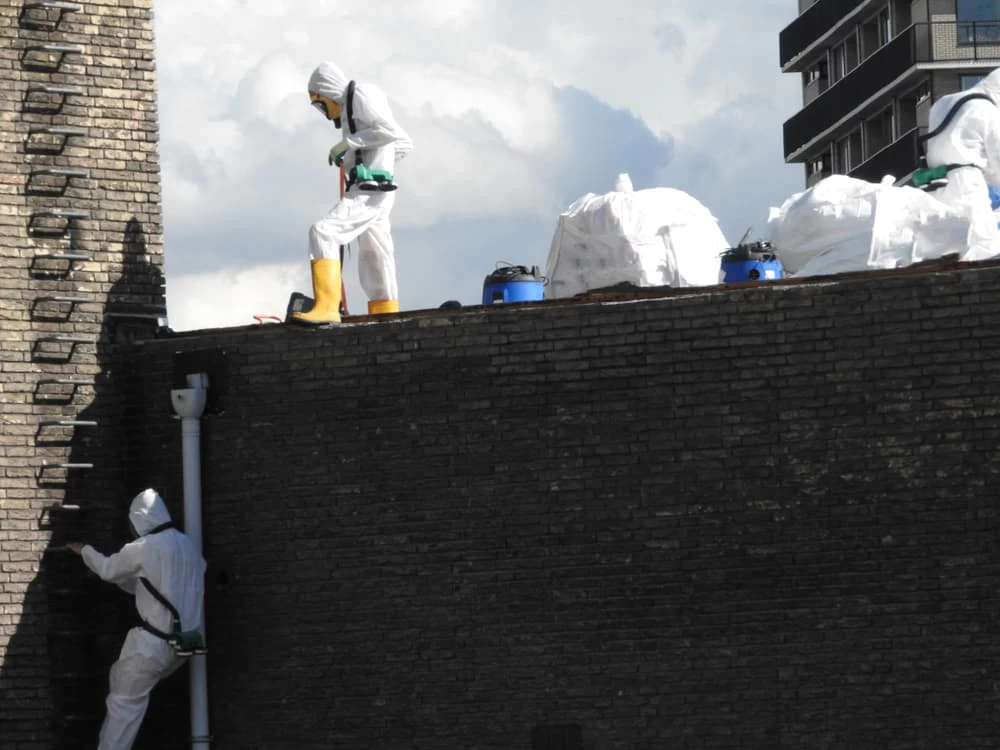
From there, containment goes up. The work area is sealed and negative air pressure is established so fibers can’t migrate to the rest of your home during removal. Everything removed is bagged, labeled, and transported by a licensed waste hauler to a state-approved disposal facility that’s a non-negotiable requirement under New York State law, and we handle it entirely.
Once removal is complete, post-abatement air clearance testing is conducted. This is the step that actually confirms the job is done. You receive documentation showing that fiber levels in the air have returned to safe levels something your insurance company and any future buyer of your home may want to see. In New York, that clearance record isn’t optional; it’s the standard.
Asbestos abatement in Wingdale covers more ground than most people expect when they first call. The full scope includes inspection and testing, containment setup, material removal, licensed waste disposal, and post-abatement air clearance testing all under one contractor, all compliant with NYS DOL Industrial Code Rule 56. You’re not coordinating between an inspector, a hauler, and a testing lab. It’s handled as one project.
The specific materials most commonly found in Dutchess County homes of this era include asbestos floor tiles, pipe and boiler insulation, textured ceiling coatings, roofing shingles, and joint compound. Each material type requires a different handling approach some can be encapsulated rather than fully removed, depending on condition and location. We’ll tell you which approach applies to your situation and why, not just what costs less.
For homeowners in Wingdale dealing with a real estate transaction, the timeline matters as much as the work itself. We work within closing schedules and provide the documentation your real estate attorney or buyer’s agent will need. We also bill insurance directly where applicable which, for a community where the average residential abatement project runs between $1,296 and $3,050 in New York, can make a real difference in what comes out of your pocket.
How do I know if my older Wingdale home actually contains asbestos?
The only way to know for certain is to have a sample tested by a licensed professional. Visual inspection alone isn’t reliable asbestos-containing materials often look identical to non-asbestos versions of the same product. If your Wingdale home was built before 1980, there’s a reasonable chance that some combination of floor tiles, pipe insulation, textured ceiling coatings, or roofing materials contains asbestos. Homes built in the 1940s through the 1960s are particularly likely candidates given when those materials were most widely used in residential construction throughout the Harlem Valley.
The safest approach before any renovation is a professional inspection. If materials are intact and undisturbed, they may not pose an immediate risk but the moment you start cutting, sanding, or demolishing, that changes. We can tell you what’s there, what condition it’s in, and whether it needs to be removed or can be safely left alone.
What does asbestos abatement typically cost for a home in Dutchess County?
For most residential projects in New York State, asbestos removal runs between $1,296 and $3,050, with a statewide average around $2,170. That range shifts based on the type of material, how much of it there is, where it’s located, and whether encapsulation is an option or full removal is required. Pipe insulation in a tight basement space, for example, costs more to remove than floor tiles in an open room because of the access and containment challenges involved.
It’s also worth knowing that New York’s regulatory requirements make asbestos abatement more expensive here than in most other states. Updated NYS DOL licensing requirements, higher disposal fees at permitted facilities, and mandatory post-abatement air clearance testing all add to the cost but they also mean the job is being done to a standard that protects you legally and physically. Getting a lower quote from an unlicensed contractor isn’t a savings; it’s a liability. We provide clear, itemized estimates upfront so you know exactly what you’re paying for before work begins.
Do I need a permit for asbestos removal in Wingdale or the Town of Dover?
Wingdale is an unincorporated hamlet within the Town of Dover, which means there’s no local municipal asbestos ordinance to navigate on top of the state requirements. The governing regulation for all asbestos abatement work in this area is New York State Industrial Code Rule 56, enforced by the NYS DOL Asbestos Control Bureau through the Albany District Office which covers all of Dutchess County. That’s a different regulatory body than New York City’s DEP, and it matters for how permits, documentation, and variance requests are handled.
Under Rule 56, the licensed abatement contractor is responsible for maintaining project record documents on-site throughout the job and producing them on request from the Asbestos Control Bureau. Emergency abatement situations may also require a variance under Article 2, Section 30 of the Labor Law. We handle all of this as part of the project you don’t need to decode state code language or figure out which office to call. That compliance work is built into how we operate.
Can I stay in my home while asbestos removal is happening?
It depends on where the work is happening and how extensive it is. For a contained removal in a single room a basement, a bathroom floor, or an isolated section of pipe insulation it’s sometimes possible to remain in the home in unaffected areas, provided proper containment barriers are in place and negative air pressure is maintained throughout the work area. For larger projects involving multiple rooms or materials throughout the living space, temporary relocation is typically the safer and more practical choice.
We assess the scope of each project individually and give you a clear recommendation based on the specific conditions in your Wingdale home not a one-size-fits-all answer. For older homes where asbestos may be present in multiple locations, that upfront conversation about occupancy is part of the planning process, not an afterthought.
What's the difference between asbestos encapsulation and full removal?
Encapsulation means the asbestos-containing material is sealed in place with a binding compound rather than physically removed. It’s an option when the material is in good condition, not friable, and not in a location where it’s likely to be disturbed. Full removal means the material comes out entirely and is disposed of through a licensed waste hauler at a state-approved facility. Each approach has legitimate applications the right choice depends on the material’s condition, its location, and what’s planned for the space.
In Wingdale homes where renovation is the trigger for discovery, encapsulation is often not the practical answer. If you’re gutting a kitchen, finishing a basement, or updating flooring, you can’t leave asbestos-containing materials in place and build around them. Full removal is usually the only option that actually clears the path for the work you’re trying to do. We’ll assess which approach applies to your specific situation and explain the reasoning not just recommend the option that’s faster or cheaper to execute.
Does Green Island Group handle asbestos abatement for home sales in Wingdale?
Yes, and it’s one of the more common scenarios we handle in this area. Pre-sale asbestos abatement typically comes up one of two ways: a home inspector flags suspected asbestos-containing materials during the buyer’s inspection, or a seller proactively tests before listing to avoid a delayed closing. Either way, the timeline is usually tight often two to four weeks before a scheduled closing and the documentation requirements are real. Buyers, lenders, and real estate attorneys will want to see post-abatement air clearance testing results, not just a contractor’s word that the work was done.
We work within real estate transaction timelines and provide the clearance documentation your closing will require. We also bill insurance directly where applicable, which matters in a community like Wingdale where many homeowners are dealing with an unexpected cost on top of an already complex transaction. If asbestos comes up during your home sale process, the priority is getting it handled correctly and quickly and having the paperwork to prove it.