Woodsburgh's Older Homes Deserve More Than a Guess
Most homes in Woodsburgh were built long before asbestos was pulled from the market. If you’re renovating, selling, or just dealing with materials that are starting to show their age, asbestos abatement in Woodsburgh starts with knowing exactly what you’re dealing with — and having a certified team that handles it correctly from the first call.
I needed a professional consultation explanation of procedure for safe removal of Asbestos in my apartment complex. Without having an account yet, I was very impressed with the caring, knowledgeable and generous advice offered by Jessica, and will look forward to doing business in the future. Thank you so much! I feel much more informed about a sometimes scary endeavor. Peace. Nancy Silva Mineola, NY.
Mia Munoz
Used this company to clean up some water flood in my house. They were fast and easy to work with.very professional, Would recommend to anyone!
Nini Valle
Great company, had a flood and they responded quickly and efficiently. Billed my insurance company directly. I highly recommend this company!
joe colapietro, jr
I had pipe freeze in my basement right before a snow storm and they made to within an hour to help start the clean up process. They we by our side throughout the entire process and even helped with the insurance company. They did such a great job with the cleanup, repair, remidiation, I contracted them to perform the repairs and finishes in the basement. They came with enough manpower and material to get the job done. Leo and Jessica were nothing but a pleasure to deal with!!
Cristian Arredondo c
I had some water damage in my home and Green Island was able to take care of my issue quickly and effectively. I am very pleased with the work they did. They responded quickly and were very professional.
Michael M
Outstanding service! From the office to the field crew everyone was friendly, helpful and responsive. I highly recommend Green Island Group.
When asbestos is properly identified and removed, your renovation can move forward without legal exposure, health risk, or a contractor walking off the job mid-project. In Woodsburgh, where homes routinely date back to the 1920s through the 1960s, the odds that your original floors, ceiling texture, or pipe insulation contain asbestos-containing materials are genuinely high — not a worst-case scenario, just the reality of the era these homes were built in.
The coastal position of the Five Towns area adds another layer to this. Proximity to Hewlett Bay means higher humidity, salt air, and seasonal moisture working their way into older building materials year after year. That kind of sustained exposure accelerates deterioration — and deteriorating asbestos is the kind that releases fibers into the air. If the floor tiles in your basement are starting to crack, or the popcorn ceiling in an older room is flaking, those aren’t cosmetic issues anymore.
Beyond the health side, there’s the practical side. Under New York State’s Industrial Code Rule 56, any building constructed before 1974 requires a certified asbestos survey before renovation or demolition work begins. With median home values near $2 million in Woodsburgh, you’re not just protecting your family — you’re protecting a significant asset and a real estate transaction that can’t afford a compliance problem at the finish line.
We Know Woodsburgh's Housing Stock Better Than Any Out-of-Area Contractor
We’re a Nassau County-based environmental services company that has been serving Woodsburgh and the Five Towns area as part of our established local service territory. This isn’t a company that added your zip code to a directory. We have direct experience with the type of housing stock found throughout Woodsburgh: large, pre-war and mid-century residential properties with original building materials that require a contractor who actually knows what they’re looking at.
Woodsburgh’s building department requires all contractors to be licensed and insured to work within the village. We meet those requirements and carry the New York State certifications required for asbestos abatement work under Industrial Code Rule 56. That means the work is done legally, documented properly, and won’t create problems down the road — whether you’re mid-renovation or preparing for a sale.
In a village this size, reputation travels fast. We operate accordingly.
No Surprises — Here's What the Process Actually Looks Like
It starts with a certified inspection. A licensed inspector collects samples from suspected materials — floor tiles, ceiling texture, pipe insulation, joint compound, whatever applies to your specific home. Those samples go to an accredited laboratory, and the results tell you exactly what you’re working with before any abatement work begins. For homes in Woodsburgh built before 1974, this survey isn’t optional under New York State law — it’s a legal requirement that must be completed before any renovation or demolition permit is issued.
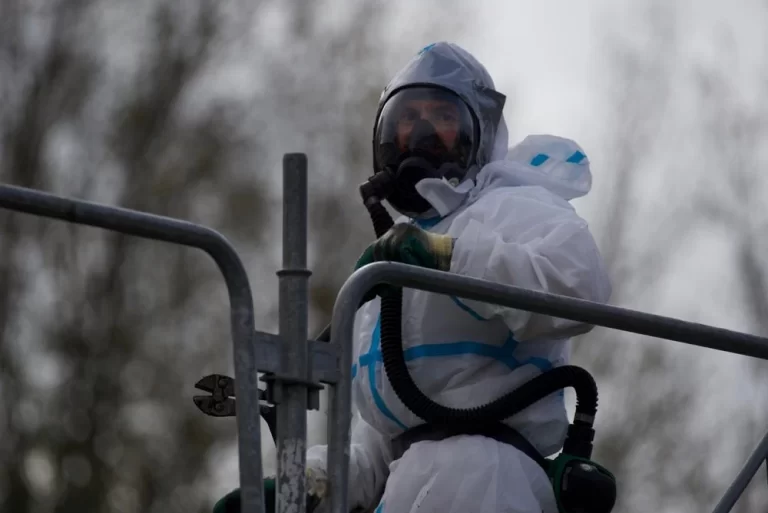
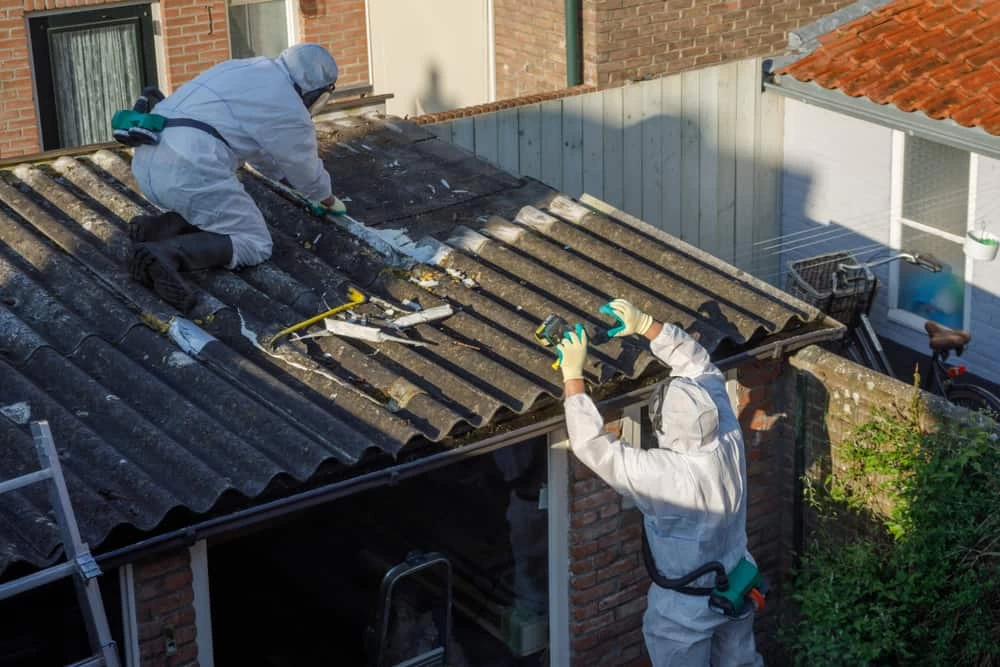
If asbestos-containing materials are confirmed, the abatement phase begins. We fully contain the work area using negative air pressure and sealed barriers to prevent fiber migration into the rest of your home. Our certified technicians remove the materials according to NYS Industrial Code Rule 56 protocols, and all waste is properly packaged and transported to a licensed disposal facility. Throughout this phase, we handle the required notifications to the NYS Asbestos Control Bureau and coordinate with Woodsburgh’s building department — so you’re not left managing paperwork on top of everything else.
Once abatement is complete, a post-clearance air test is performed by an independent party to confirm the space is safe for re-occupancy. You receive full documentation of the entire process — survey results, abatement records, and clearance testing — which satisfies both regulatory requirements and the due diligence demands of any real estate transaction.
Asbestos Tile and Popcorn Ceiling Removal, Woodsburgh NY
The Materials Most Commonly Found in Five Towns Homes
Asbestos tile removal is one of the most frequent requests we handle in Woodsburgh and the surrounding Five Towns communities. Vinyl asbestos tiles — commonly called VAT — were the standard flooring material in American homes built from the 1920s through the early 1970s. They’re often found in kitchens, bathrooms, basements, and utility areas, and they’re frequently buried under newer flooring layers that were installed on top rather than over properly removed originals. We handle safe removal and disposal of these tiles in full compliance with Nassau County and NYS regulations, so your renovation isn’t sitting on a liability.
Asbestos popcorn ceiling removal is the other major service for homes in this area. Acoustic texture applied before 1977 regularly contains chrysotile asbestos at concentrations up to 10%. In the larger estate-style homes common throughout Woodsburgh, these ceilings can cover thousands of square feet. Scraping or sanding them without professional abatement isn’t just risky — it’s a regulatory violation. We use full containment protocols, negative air pressure, and certified disposal to remove the material cleanly and completely.
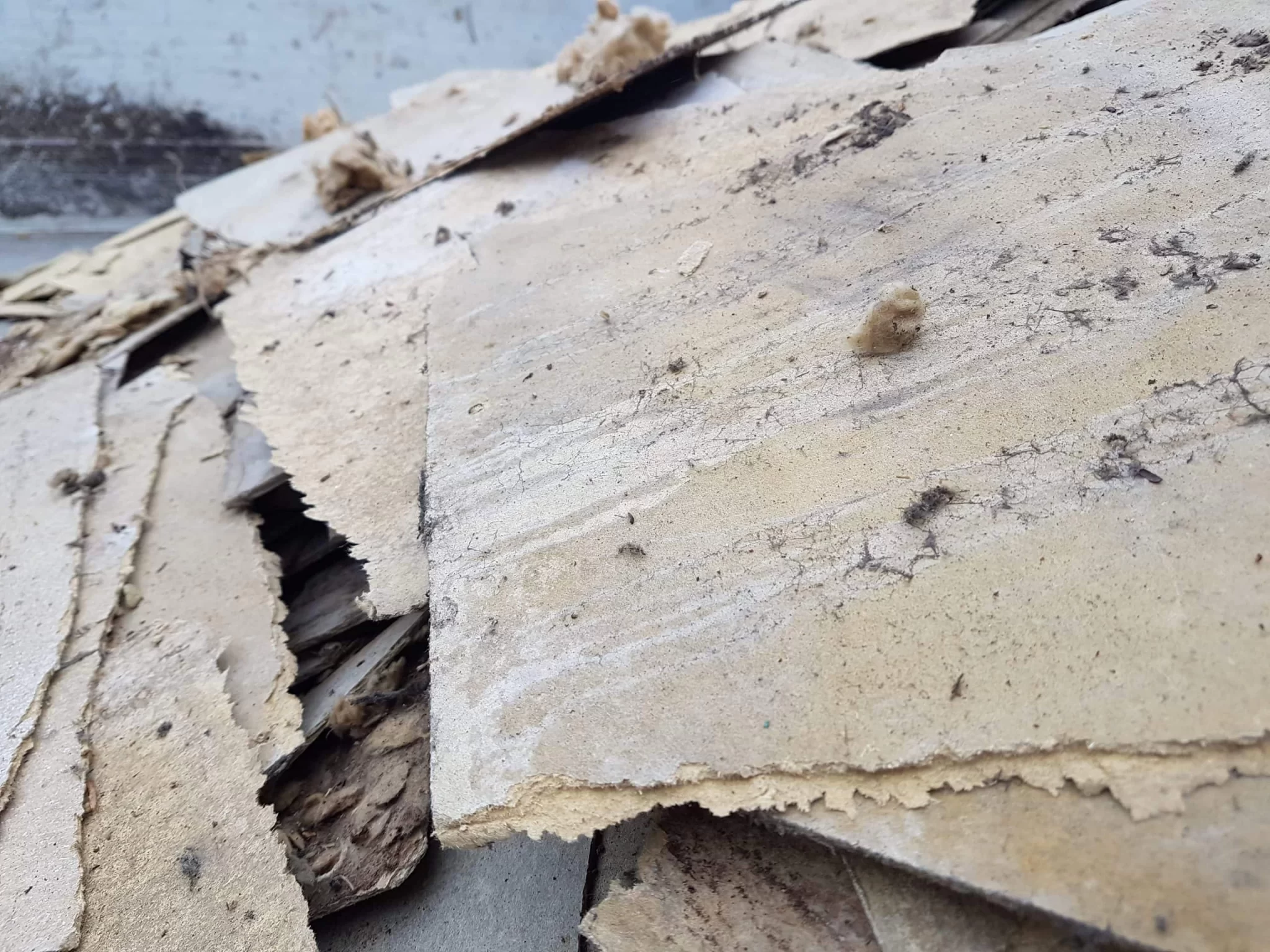
Beyond tiles and ceilings, asbestos remediation in older Woodsburgh homes often extends to pipe insulation around original boiler and steam heating systems, plaster walls, and roof or siding materials. Every project starts with a thorough inspection so nothing gets missed — and nothing gets disturbed that shouldn’t be.
Does my Woodsburgh home actually need an asbestos survey before renovation?
If your home was built before 1974 — which covers the vast majority of properties in Woodsburgh — then yes, a certified asbestos survey is legally required under New York State’s Industrial Code Rule 56 before any renovation, remodeling, or demolition work begins. This isn’t a suggestion or a best practice. It’s a state law with real penalties for non-compliance, and copies of the completed survey must be submitted to the local government entity issuing your building permit, which in Woodsburgh means the village’s own building department.
The practical reason this matters beyond compliance: contractors who discover suspected asbestos mid-project are required to stop work. That means delays, cost overruns, and a project that stalls at the worst possible time. Getting the survey done before work starts is the straightforward way to avoid that scenario entirely. We handle the survey, the sampling, and the regulatory filings — so the process doesn’t fall on you to manage.
How do I know if my popcorn ceiling in Woodsburgh contains asbestos?
You can’t tell by looking at it. Popcorn ceiling texture applied before 1977 frequently contains chrysotile asbestos, but the only way to confirm it is through laboratory testing of a collected sample. Homes in Woodsburgh that were built or renovated during the 1950s, 1960s, and early 1970s are particularly likely to have original acoustic ceiling texture that was never replaced — and in a large home, that can mean thousands of square feet of material that needs to be assessed before any ceiling work begins.
The risk isn’t in leaving it alone if it’s intact. The risk is in disturbing it — sanding, scraping, or drilling through a popcorn ceiling that contains asbestos releases fibers into the air that are invisible and don’t settle quickly. A certified inspector can collect a sample safely without triggering that risk, and the lab results will tell you definitively what you’re working with. From there, if abatement is needed, the process is straightforward and well-documented.
What happens if asbestos is found during a home inspection before a sale in Woodsburgh?
With median sale prices near $2 million in Woodsburgh, real estate transactions here involve serious due diligence on both sides. If a buyer’s inspector flags suspected asbestos-containing materials, it typically triggers one of two outcomes: the seller agrees to remediation before closing, or the parties negotiate a price adjustment to account for it. Neither outcome is ideal when you’re already under contract and working against a timeline.
The cleaner approach is to handle it before the home goes to market. A pre-listing asbestos survey gives you a documented, certified assessment of the property’s condition, which you can present to buyers upfront. If abatement is needed, completing it before listing removes the issue from the negotiation entirely. We provide both the survey and the abatement work, along with post-clearance documentation that satisfies buyer due diligence requirements and protects you from disclosure liability after the sale.
How long does asbestos abatement take for a typical Woodsburgh property?
It depends on the scope of what’s been identified. A single area — one bathroom with asbestos floor tiles, or a contained section of popcorn ceiling — can often be completed in one to two days. Larger projects involving multiple materials across a significant square footage, which is common in Woodsburgh’s estate-style homes, may take several days to a week or more depending on the extent of the abatement and the complexity of the containment setup.
The timeline also includes the front and back end of the process. The initial inspection and lab results typically take a few days before abatement can begin, and post-abatement air clearance testing needs to be completed and confirmed before the space is released for re-occupancy or further renovation. If you’re planning a spring renovation — which is peak season on Long Island — scheduling your survey in late winter gives you the best chance of keeping your project on track without delays caused by contractor availability or regulatory processing time.
Can I stay in my home during asbestos abatement work in Woodsburgh?
In most cases, yes — but it depends on where the work is being done and how extensive it is. When abatement is limited to a single room or contained area, the rest of your home typically remains occupiable as long as the work area is properly sealed and under negative air pressure. For larger projects involving multiple areas or materials distributed throughout the home, temporary relocation for the duration of the work is often the more practical choice.
We’ll walk you through what’s realistic for your specific project before any work begins. The containment protocols we use during abatement — sealed barriers, negative air pressure, HEPA filtration — are designed specifically to prevent fiber migration into unaffected areas of your home. Post-clearance air testing confirms the work area is safe before those barriers come down. You’ll know exactly what the situation looks like before you have to make any decisions about your schedule or living arrangements.
Does water damage or storm damage in a Woodsburgh home create an asbestos risk?
It can, and it’s worth taking seriously. Woodsburgh’s South Shore location exposes homes to nor’easters, coastal moisture, and storm events that can damage roofing, siding, basements, and insulation — all areas where asbestos-containing materials are commonly found in homes of this age and construction type. When those materials are physically disturbed by storm damage, they can shift from a stable, non-hazardous condition to a friable state that releases fibers.
The specific concern is that post-storm repairs often move quickly. A contractor arrives to fix the roof or address water intrusion in the basement, and if original materials are disturbed without a prior asbestos assessment, you’re looking at a potential regulatory violation and a health risk that wasn’t on anyone’s radar. For older homes in Woodsburgh that haven’t had a full asbestos survey, storm damage is a reasonable trigger to get one done — both to protect the people doing the repair work and to document the condition of the property before remediation begins.